MARIANI’SVirtual
Gourmet
July 21, 2014
NEWSLETTER
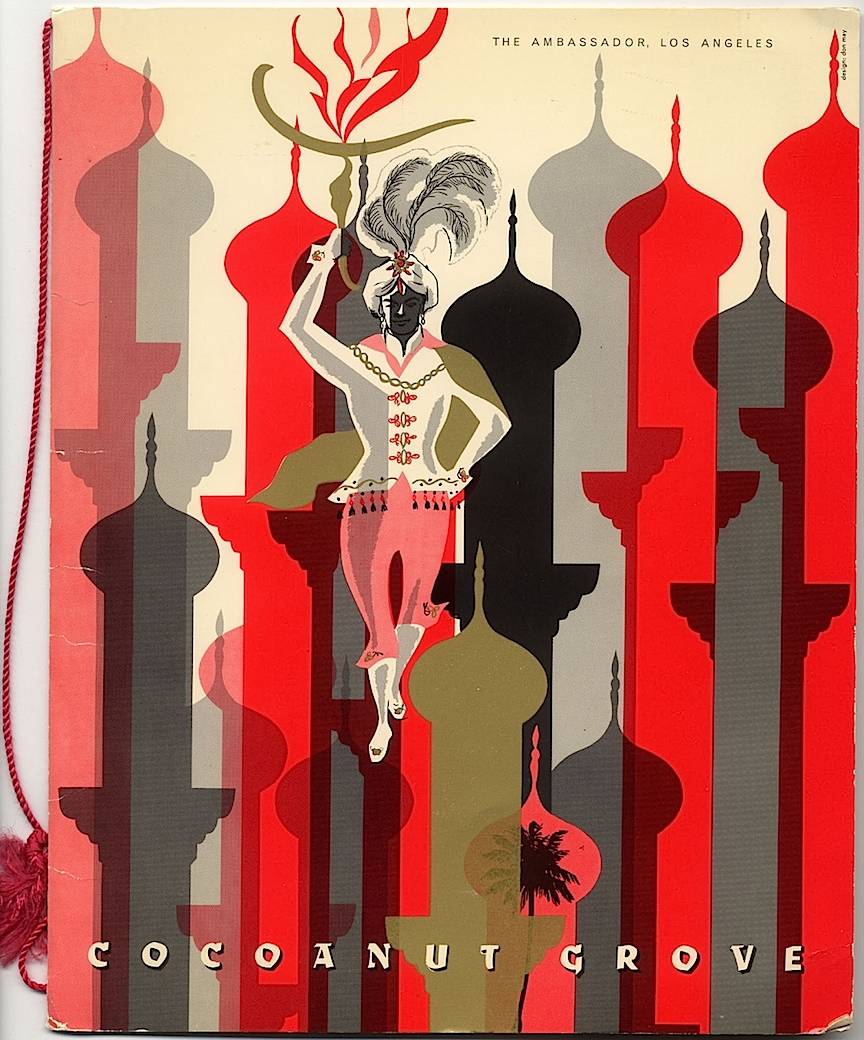
Menu cover
of Cocoanut Grove Nightclub, Los Angeles, circa
1940
IN THIS ISSUE
DINING OUT IN LONDON, Part One
NEW YORK CORNER
IL PUNTO and NONNA
By John Mariani and Mort Hochstein
NOTES FROM THE WINE CELLAR
❖❖❖
DINING OUT IN LONDON, Part One
By John Mariani
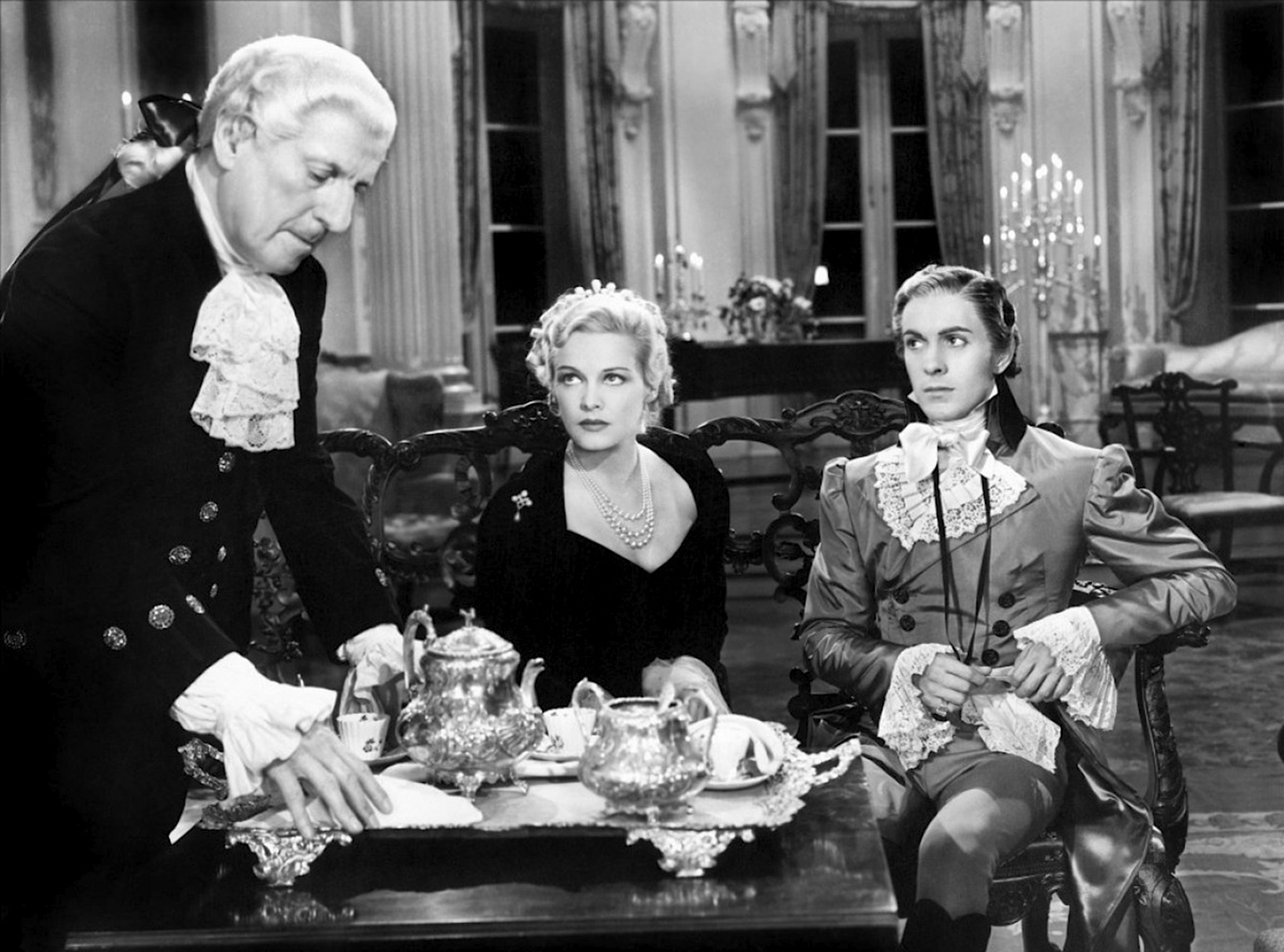
Madeleine Carroll and Tyrone Power in "Lloyd's of London" (1936)
If
you wish to hear the King’s English spoken, quite
possibly the last place you can now do so is in
London, where, owing to the vast number of
tourists and immigrants, it is more likely the
person you pass on the street is speaking Russian,
Gujarati, Hindi, Turkish, Arabic, Bengali, Chinese
or Hebrew.
The same is pretty much the case
in New York (which draws more than 50 million
tourists annually), but in London one still hopes to
hear the kind of accents that Prof. Henry Higgins
could “place within two streets”--Hoxton, Lisson
Grove, Hawkestone, Anwell, Selsey.
London is--far more than Paris,
Rome or Berlin--the epitome of the international
city, as much a melting pot of cultures now as the
United States. Perhaps, though, it is better
to call London a stew pot, for you find there that
multinationalism has created a vast array of ethnic
restaurants and eateries, starting with the old
curry houses of the last century now including
places with names like Pizarro, Wahaca, Bopshiu’s,
Umu, and Gymkhana, an Indian restaurant that just
won top spot on Restaurant
magazine’s National Restaurant Awards.
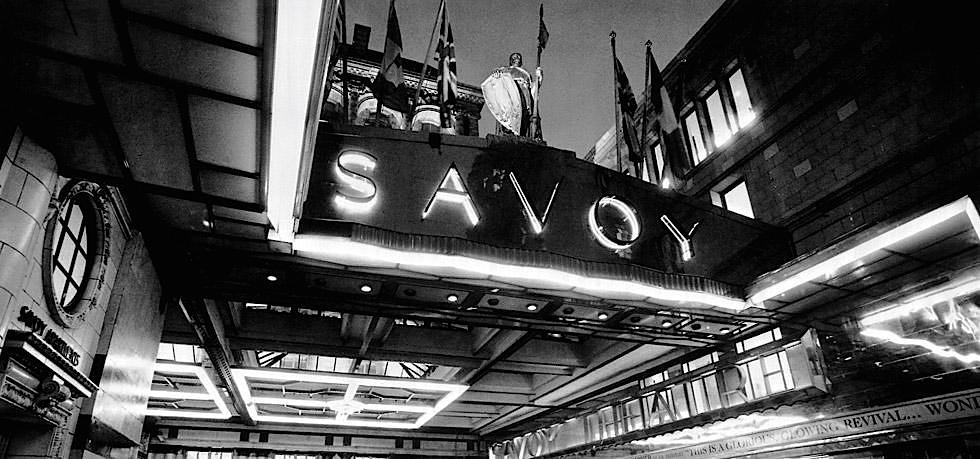 Thus, on a recent trip to
London, I ran the gamut between British and ethnic
restaurants, beginning by checking into the
magnificently restored (after a two-year closure)
Savoy Hotel, set right on the banks of the Thames
and in a cul de sac off the Strand. The last
time I stayed at the Savoy, now 125 years old, the
old dowager was showing more than a patina of age,
so I was delighted to return, driving into the broad
corridor that flanks the gleaming new façade
with the hotel’s backlighted name pronouncing that
you truly have arrived.
Thus, on a recent trip to
London, I ran the gamut between British and ethnic
restaurants, beginning by checking into the
magnificently restored (after a two-year closure)
Savoy Hotel, set right on the banks of the Thames
and in a cul de sac off the Strand. The last
time I stayed at the Savoy, now 125 years old, the
old dowager was showing more than a patina of age,
so I was delighted to return, driving into the broad
corridor that flanks the gleaming new façade
with the hotel’s backlighted name pronouncing that
you truly have arrived.
The foyer and concierge
desk (below)
have been refitted to the highest gloss of mahogany
and marble, leading down to the hotel’s two dining
rooms, Kaspar’s Seafood Grill and Wine Bar and
Gordon Ramsay’s Savoy Grill. Attached to the
hotel is the famous Simpson’s-in-the-Strand, of
which more in a moment. If you want a good look at
the Edwardian and art déco appointments, see
the (not very good) re-make of “Gambit” with Colin
Firth and Cameron Diaz. The movie camera loves the
Savoy.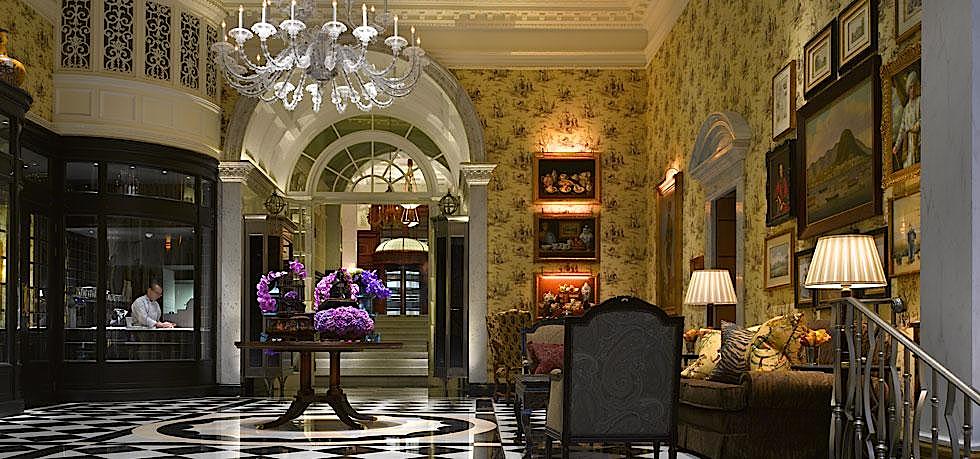
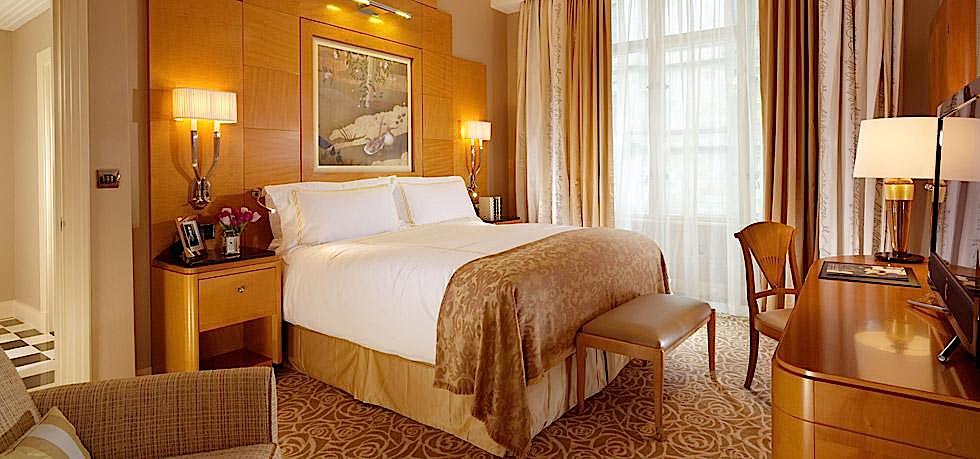
There are a dozen levels of
rooms, 193 of them, with 73 suites, from a Superior
Queen to the Royal Suite, all done with
state-of-the-art tech along with Murano glass, silk
wall coverings, leather desks and Mascioni bed
linens. A Business Center is open round the
clock. By the way, from now until Sept. 28,
guests can enjoy a complimentary Luxury Thames
Cruise on a river yacht.
During my
stay, I only had time for breakfast downstairs, and
it was a splendid array of options that
include everything from a continental breakfast
(£26) and Savoy Breakfast (£32) to
grilled kippers (£17.50), a toasted bagel with
smoked salmon (£17.50), a Chinese
breakfast with congee and dim sum (£36), and a
“stack of American banana pancakes” (£17.50).
 But I did have time to
return--after decades--to Simpson’s-in-the-Strand
(never
closed during the Savoy’s restoration), which has
been here since 1828, originally as a chess club and
coffee house, then, in 1848, under caterer John
Simpson, as a full-fledged restaurant whose
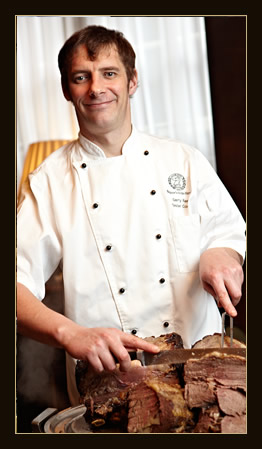
specialty was fine British beef brought out on a
silver trolley and carved at the table to guests’
liking. Noted clients of the restaurant have
included Charles Dickens, George Bernard Shaw,
Benjamin Disraeli, the fictitious Sherlock Holmes
and, surprisingly, Vincent Van Gogh.
But I did have time to
return--after decades--to Simpson’s-in-the-Strand
(never
closed during the Savoy’s restoration), which has
been here since 1828, originally as a chess club and
coffee house, then, in 1848, under caterer John
Simpson, as a full-fledged restaurant whose
specialty was fine British beef brought out on a
silver trolley and carved at the table to guests’
liking. Noted clients of the restaurant have
included Charles Dickens, George Bernard Shaw,
Benjamin Disraeli, the fictitious Sherlock Holmes
and, surprisingly, Vincent Van Gogh.
Even under rationing during World
War I, Simpson’s carried on, impressing P.G.
Wodehouse as “unique,” writing in 1915, “Here, if he
wishes, the Briton may, for the small sum of half a
dollar, stupefy himself with food. The God of Fatted
Plenty has the place under his protection. Its
keynote is solid comfort. It is a pleasant,
soothing, hearty place--a restful temple of food. No
strident orchestra forces the diner to bolt beef in
ragtime. No long central aisle distracts his
attention with its stream of new arrivals. There he
sits, alone with his food, while white-robed
priests, wheeling their smoking trucks, move to and
fro, ever ready with fresh supplies.”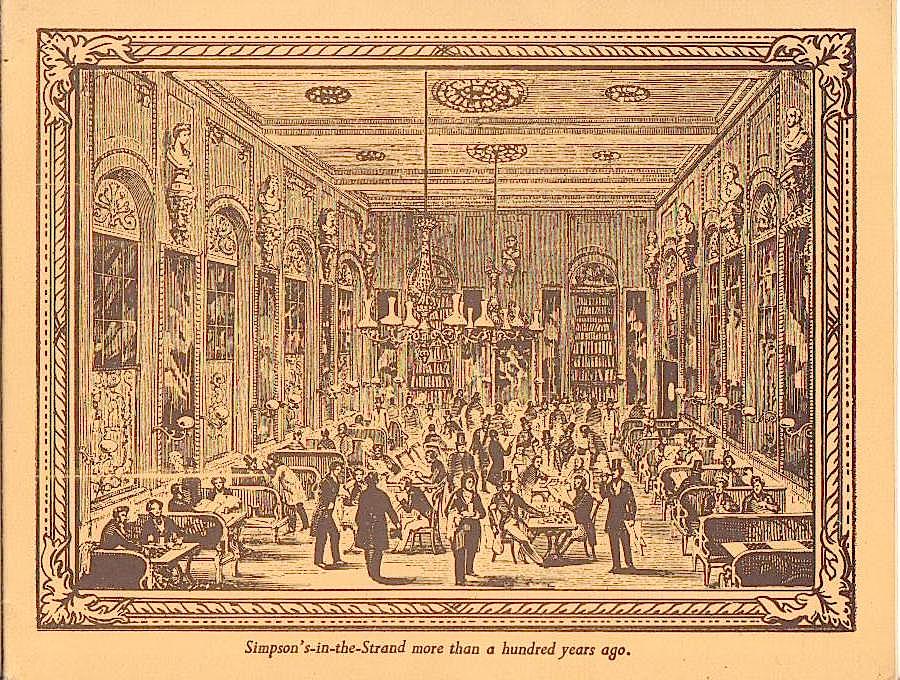
By the 1970s, Simpson’s had even
earned a rare Michelin star, one of only nine
awarded in London. It was not until 1984 that
“ladies” were allowed in the main, downstairs dining
room. Though not the original 19th century
décor, Simpson’s architecture hearkens back
to a British posh and formality that makes it a
requisite tourist attraction, so that today it is
flocked with foreigners who love the swallow-tail
frocked captains and waiters and the rolling of the
trolley to each table, its silver cloche pulled back
to reveal the steaming beef and lamb joints. (You
may even take a carvery class at Simpson’s.)
By the way, jackets, I’m sad to say, are no longer
required at the restaurant.
Regulars may go for the steak and
kidney pie or the beef Wellington, but most,
including myself, stay the course towards the
roasts. I enjoyed the signature potted shrimp
(£15.50), a ruddy, flavorful lobster bisque,
(£10.50), and wood pigeon breast with green
beans, new potatoes and bacon (€10.50). We also
shared a plate of roast lamb rump (£24), with
roasted tomato and zucchini in an olive-rosemary
sauce.
 Then
came the Scottish beef, aged 28 days (£31),
traditionally sliced quite thin, so ask for your
preference in slab size; sauced with the pan
juices, the beef is served with roasted
potatoes, Savoy cabbage and Yorkshire pudding. I was
thoroughly enjoying myself until the famous
Yorkshire pudding arrived, more resembling a large
American popover. Surprisingly, the puffy
muffin fin lacked the crisp but pliant exterior and
lovely yellow soft interior I expected; instead, the
crust was as unyielding as an eggshell and just as
dry. I asked for another and it was just as
disappointing. A dessert sampler for two, including
Devon burnt cream, runs
£14.50.
Then
came the Scottish beef, aged 28 days (£31),
traditionally sliced quite thin, so ask for your
preference in slab size; sauced with the pan
juices, the beef is served with roasted
potatoes, Savoy cabbage and Yorkshire pudding. I was
thoroughly enjoying myself until the famous
Yorkshire pudding arrived, more resembling a large
American popover. Surprisingly, the puffy
muffin fin lacked the crisp but pliant exterior and
lovely yellow soft interior I expected; instead, the
crust was as unyielding as an eggshell and just as
dry. I asked for another and it was just as
disappointing. A dessert sampler for two, including
Devon burnt cream, runs
£14.50.
Before 7 p.m., there is a
two-course (£27.75) or three-course
(£31) fixed-price dinner that includes the
beef. But the prices at Simpson’s are not as
high as so many high-end restaurants in London, and,
surrounded by an ambiance and service that hasn’t
changed for ages, you get to partake of something
truly unique.
At the other end of the gastronomic spectrum is Coya in Mayfair, a thoroughly 21st century restaurant, with all the attendant music--much of it live--and high decibel levels and a much younger crowd than Simpson’s. Opened by Arjun Waney, who also runs the successful Zuma, La Petite Maison and The Arts Club, Coya is loosely Peruvian, done up in a décor they call “luxurious dilapidated,” meaning a juxtaposition of Incan colors and rough metallic finishes, with antique, colonial-style Peruvian furniture.
After
two years in business, it is clearly still one of
the red hot spits in London, and it was packed on a
Sunday evening.
You push your way through
the large door off Piccadilly, and pass through--or
stick around for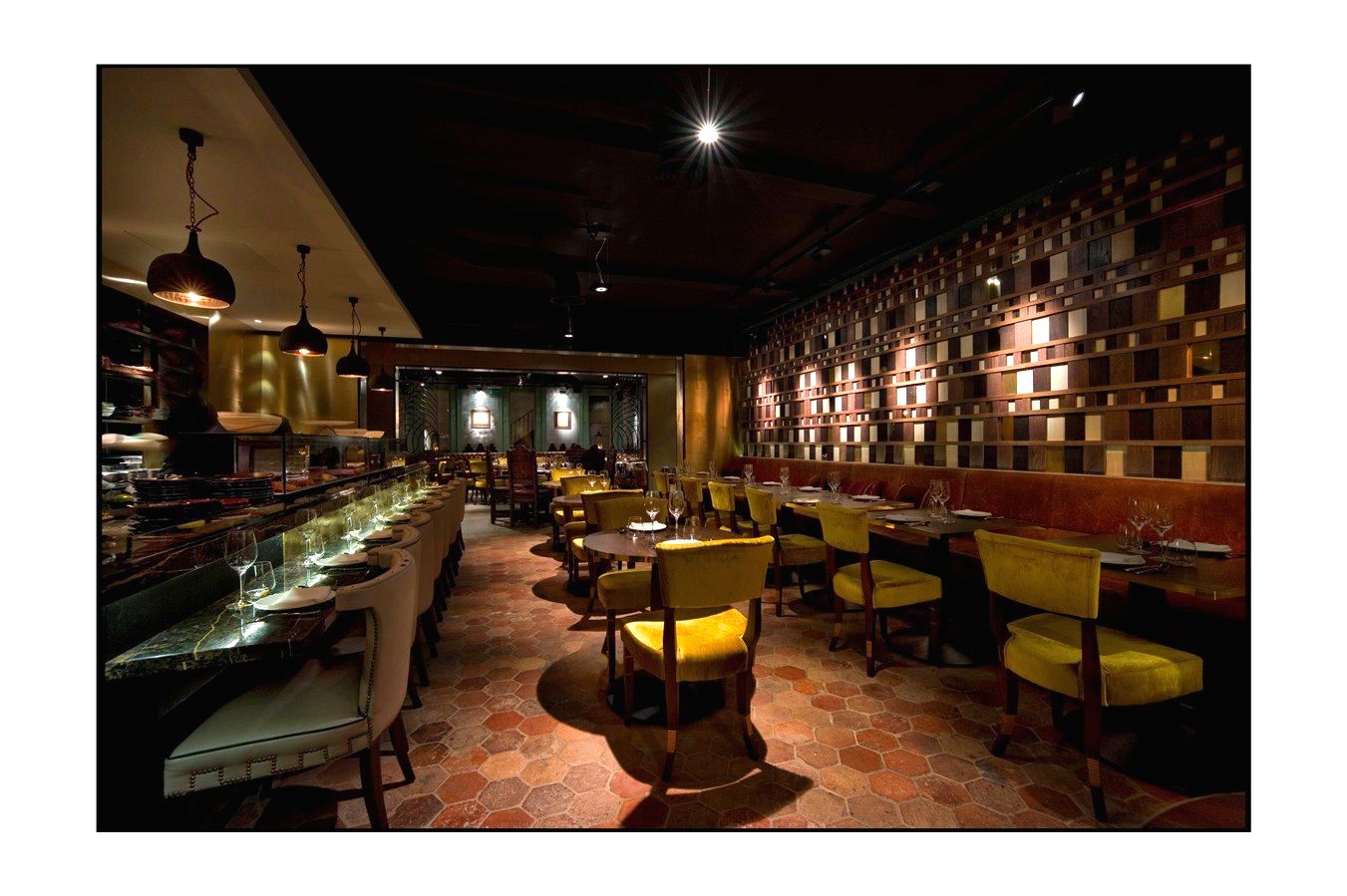 a cocktail in--the small,
well-stocked Pisco Bar and Lounge. Then
you descend to the main dining area (right), whose
colors--black ceiling, bare light bulbs, bare
tables--give it a dark moody cast. Downstairs
is a ceviche bar (£8-12), offering some
of the best items on Head Chef Sanjay Dwivedi’s long
menu, which also includes an array of anticuchos
(£9-13) of grilled skewered meats like ox
heart with parsley and ají rocoto, and parrillada dishes
(£17-27) like pechuga de pato--duck breast with
lúcuma,
soya sauce and coriander shoots. Another
section features meats and fish cooked in the
traditional Josper oven-grill.
a cocktail in--the small,
well-stocked Pisco Bar and Lounge. Then
you descend to the main dining area (right), whose
colors--black ceiling, bare light bulbs, bare
tables--give it a dark moody cast. Downstairs
is a ceviche bar (£8-12), offering some
of the best items on Head Chef Sanjay Dwivedi’s long
menu, which also includes an array of anticuchos
(£9-13) of grilled skewered meats like ox
heart with parsley and ají rocoto, and parrillada dishes
(£17-27) like pechuga de pato--duck breast with
lúcuma,
soya sauce and coriander shoots. Another
section features meats and fish cooked in the
traditional Josper oven-grill.
My friends and I trusted the
manager to guide our choice of items from
every category. Given the menu’s length, it promised
highs and lows. But I must say that among plenty of
highs the lows were minimal. Most dishes
retained the right textures and seasonings for the
ingredients and the style of cooking involved.
So, atún
chifa, yellowfin tuna with soy and sesame
seeds and a crispy shrimp cracker made for a fine
opening ceviche; of the tiraditos, I loved the pez limón,
more yellowtail, this time spicier, with green chili
and crunchy radish.
 Peru is the
motherland of potatoes, and Coya’s gold spud with
fresh crab and Josper-grilled peppers lived up to
reputation. Tiger prawns received a tempura
treatment, though the aji rocoto sauce was bland. Even
at a time when cooks everywhere seem to have
mastered octopus prep, the pulpo al olivo at Coya was
amazingly tender, with a creamy interior texture. An
iron pot dish of Chilean sea bass with rice, lime
and chili was simple but good, while the costillas de cerdo
of pork back ribs with tamarind juice and cashews
went fast at our table, despite being quite sweet.
Peru is the
motherland of potatoes, and Coya’s gold spud with
fresh crab and Josper-grilled peppers lived up to
reputation. Tiger prawns received a tempura
treatment, though the aji rocoto sauce was bland. Even
at a time when cooks everywhere seem to have
mastered octopus prep, the pulpo al olivo at Coya was
amazingly tender, with a creamy interior texture. An
iron pot dish of Chilean sea bass with rice, lime
and chili was simple but good, while the costillas de cerdo
of pork back ribs with tamarind juice and cashews
went fast at our table, despite being quite sweet.
I really
didn’t expect desserts (£8) to be as wonderful
as they were within the Peruvian theme: a chocolate fundido with
white chocolate ice cream; salted caramel with
chocolate and Pisco; and best of all, an
extraordinary sundae of sweet corn ice cream and
popcorn that was a perfect way to end a meal of such
diversity.
Coya’s wine list is extensive,
but very pricey, as is the spirits screed and the
requisite New World cocktails.
Make no mistake: Coya is not a
place for a quiet and romantic meal, although the
strolling mariachi musicians have a quaint charm
about them. This is a place you go with
your friends in their casually chic clothes and just
hope you're not the oldest person in the room.
You can’t help but have fun, and the bar is open
till 1:30.
(Coya also has
a private club with its own dining area. They’ve
also just launched Sunday brunch; for £55
guests can enjoy a menu of Coya’s signature dishes
along with unlimited champagne. Kids under 10 eat
brunch for free.)
❖❖❖
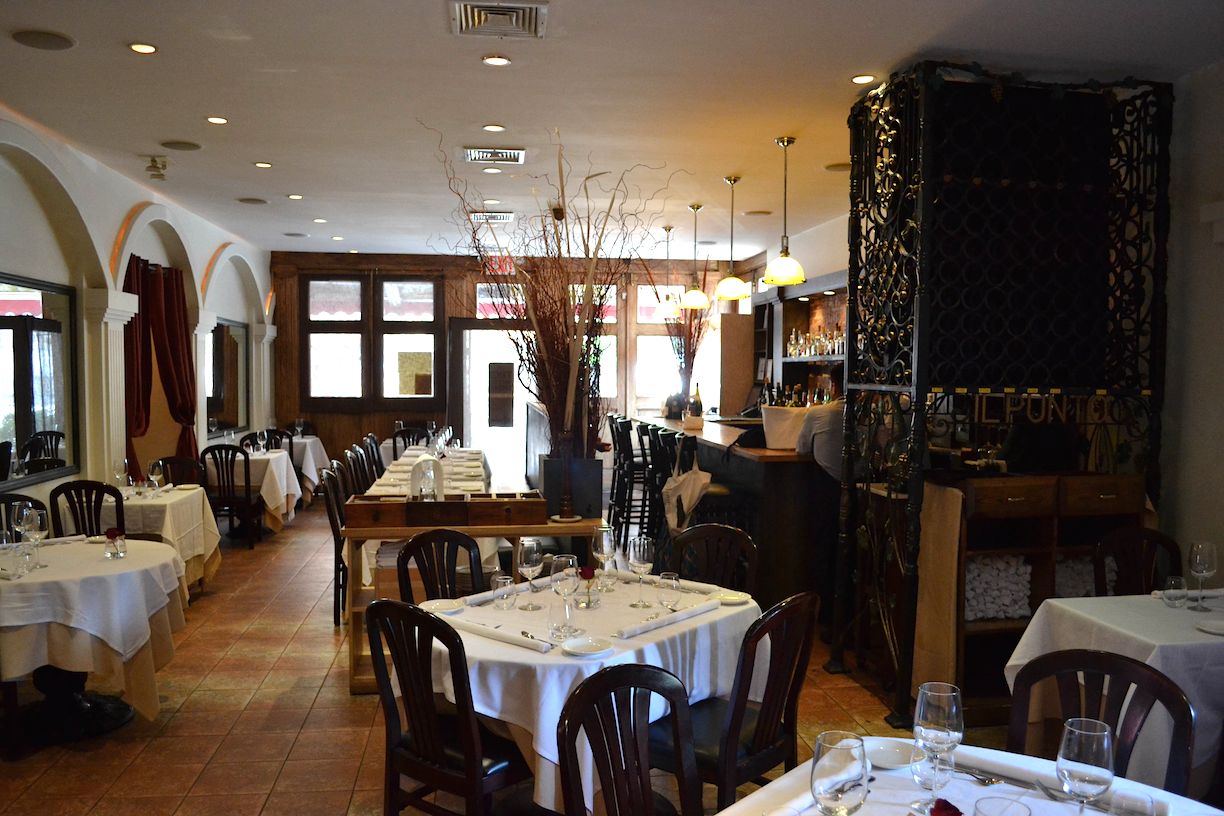 Il
Punto
Il
Punto By John Mariani
507 Ninth Avenue (on the corner of 38th Street)
212-244-0088
http://ilpuntoristorante.com/dinner-menu
I
am not at all unhappy about the number of Italian
restaurants that continue to open in New York,
these days largely by non-Italian owners or chefs,
and I am even happier to find a place that’s been
around a while that’s brand new to me.
Il Punto, under
one chef or another, has been in Hell’s Kitchen
for a dozen years or so, but its newest chef,
Antonio Mermolia, has revamped the menu to show
how endlessly creative a man of his talents can be
while always respecting the regional distinctions
of Italian cuisine.
Mermolia’s menu
is largely Mediterranean, which means it’s a bit
lighter than Italian food from Rome
northward. He was born 30 years ago in Gioia
Tauro in Calabria to a family of good cooks (they
own the renowned Hotel Villa Calliope) and, at the
age of 16, began apprenticing in various top
European hotels before opening his own restaurant
in Sicily.
Two years ago the
managers of Il Punto ate there, loved the food,
and asked him to consult at their trattoria.
That consultancy led to an infatuation with New
York, so Mermolia has stayed on, bringing his
style of seemingly simple cuisine to the city with
dishes not to be found on any other local
menus.
on any other local
menus.
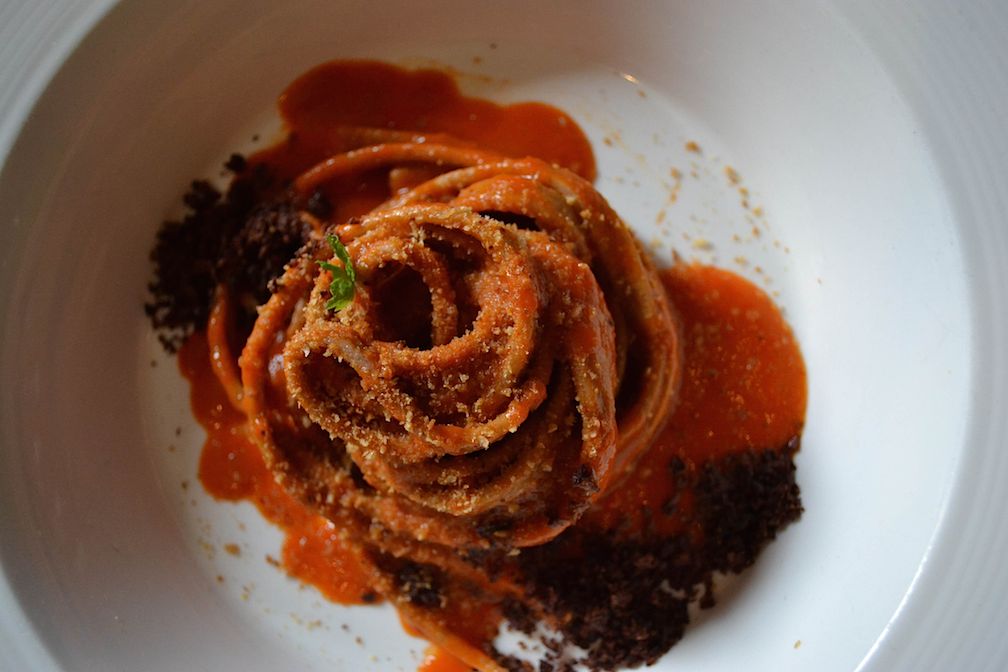
One of these is
made with an unusual Calabrian pasta called struncatura,
once a poor people’s dish made from the remains of
wheat and bran after the milling process. At
Il Punto, Mermolia uses buckwheat (below), which
retains the original’s rough, nutty texture, to
which he adds the southern flavors of dehydrated
olives, mint, tomato, spicy ‘nduja chili
condiment, and breadcrumbs. It is an
absolutely delicious dish and wholly his. So, too,
are the ways in which he puts his spin on more
traditional dishes, like crudi of red shrimp with white
beans perfumed with lemon and capers from the
island of Pantelleria.
As an appetizer he
takes a large, fat calamaro and bakes it till very
tender, again with olives and bread crumbs along
with truffled potatoes and a sweet-sour balsamic
reduction.
Unusual
indeed in the early part of the meal was a gelato
made from sweet onions, served with shrimps,
fennel, summer black berries, Parmigiano and
caramelized onions. It’s a brilliant stroke
on a hot summer’s day and prepares the way for the
pastas (which run $19-$22 for full portions).
 I love how he makes a
crispy tortellone--one
big
one—stuffed with smoked cauliflower and buffalo
mozzarella, splashed with a reduction of peppery
mint. His light potato gnocchi are some of
the best in the city, lavished with a veal liver
ragù and the very southern flavor of
figs. So many chefs make pasta with bottled
squid ink, but you can taste that Mermolia does it
the old-fashioned way, impressing tagliolini
with fresh squid ink then propping them up with
scallops, shrimps and tomatoes.
I love how he makes a
crispy tortellone--one
big
one—stuffed with smoked cauliflower and buffalo
mozzarella, splashed with a reduction of peppery
mint. His light potato gnocchi are some of
the best in the city, lavished with a veal liver
ragù and the very southern flavor of
figs. So many chefs make pasta with bottled
squid ink, but you can taste that Mermolia does it
the old-fashioned way, impressing tagliolini
with fresh squid ink then propping them up with
scallops, shrimps and tomatoes.
For main
courses, I was surprised that the meats were more
impressive than the seafood that precede them.
Veal tenderloin ($35) is breaded in crushed dried
mushrooms and served in a Marsala wine sauce, and
hefty sweetbreads ($26) come with tender broccoli
di rabe and a sweet garlic sauce with orange zest.
Curious, then, that he carries Chilean sea bass,
done with tomato confit, arugula pesto, stuffed
zucchini and lemon--a very good dish, but why use
Chilean sea bass ($27), which doesn’t swim
anywhere near the Mediterranean? So, too,
why serve salmon, which certainly doesn’t leap the
waters off the Calabrian coast. (Answer:  every chef
in American must
serve salmon because it is the most
asked-for fish.) Mermolia’s comes all the way from
New Zealand and gains nothing from a treatment of
asparagus reduction, beets, and lemon-laced mashed
potatoes.
every chef
in American must
serve salmon because it is the most
asked-for fish.) Mermolia’s comes all the way from
New Zealand and gains nothing from a treatment of
asparagus reduction, beets, and lemon-laced mashed
potatoes.
Mermolia returns to fine form with
desserts ($9) like his tiramisù with strawberry;
a warm, runny center chocolate cake with
strawberry sorbet; a superb chocolate panna cotta;
a not-too-sweet cannoli; and a wonderful carrot
cake with a carrot sorbet and warm carrot juice.
He also does a
lavish 11-course tasting menu at $80, paired with
wines $130.
The trim room is
colorful and just small enough to be intimate.
The waitstaff, mostly Eastern European
women, are extremely good at their jobs, balancing
cordiality with knowledge of what Mermolia is
trying to do.
So, if you’ve
never been to Il Punto, I think you’ll find it
largely innovative in the best sense; if you have
in the past, time for a savory update.
Il Punto is open for
lunch Mon.-Fri., for dinner nightly.
Casa Nonna
310 W 38th Street
212-736-3000
casa-nonna-new-york
By Mort Hochstein
Photos by Melissa Hom
The words "Casa
Nonna: Official Pizza of Madison Square Garden"
were splashed across the van in
midtown Manhattan.
That is a good recommendation,
but there are many other good reasons to dine at
this understated restaurant. Nestled
away on a quiet street close to Madison
Square Garden,
Casa Nonna blushes
almost unseen for much of the time. It is busy
during normal working hours, bustling
when there's an
event at the big arena, but rather quiet otherwise
in relation to the quality of the experience it
offers.
In
choosing where I dine, I look for a venue where I
can enjoy
a meal in peaceful surroundings. I avoid
restaurants where
normal conversation is close to impossible
and you have to shout to make yourself heard. Coupled
with the quality of its food, the
pleasant ambiance at Casa Nonna puts it up front as my go-to
restaurant, particularly when I want good Italian
food. Confession:
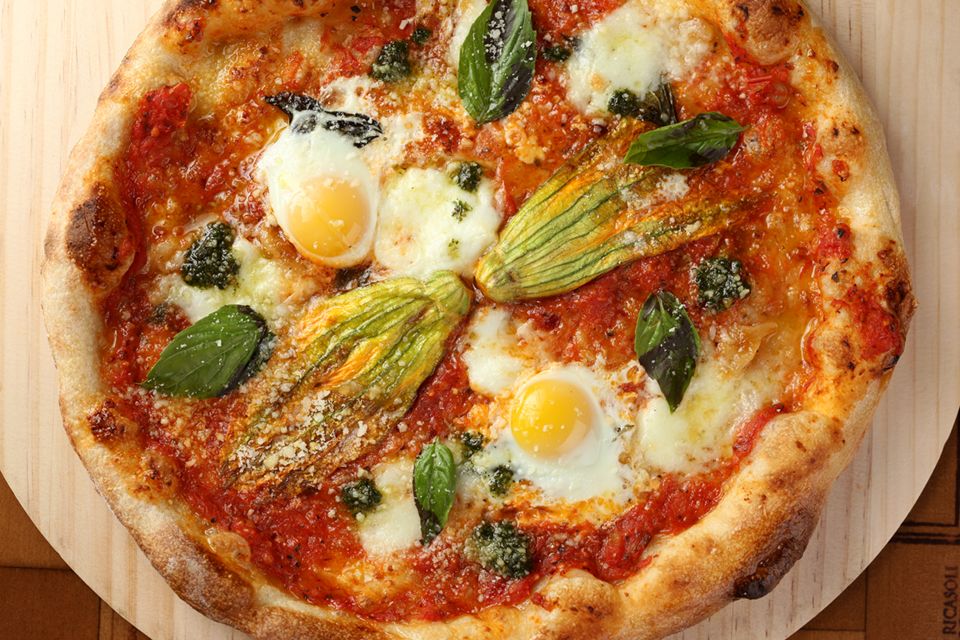
I have never sampled the Official Madison Square
Garden pizza. It is just one of many pizzas on the Casa
Nonna menu, including
one masterpiece I order too frequently. Chef
Julio Genao has a way with truffles and his Pizza al
Tartuffo, with
a brittle thin crust
hidden under fresh buffalo mozzarella, a
smattering of truffle oil and a generous
helping of
shaved black truffles is worth a detour from the
bright lights of Broadway.
 Genao
cooks what he describes as elegant rustic. Raised in the
Dominican Republic, he has blended the cooking
techniques he learned from the meals served by his
grandmother and mother with the best of
Roman and Tuscan cuisine. And as he did years ago
in his mother's kitchen, his Italian cooking starts
with the humble meatball. Meatballs can be a test of an
Italian restaurant
kitchen and his
melding of beef and veal and his own blend of
spices elevates
routine fare to star billing. Using
freshly ground veal and beef, no stuffing, he
assembles fresh meatballs each morning. Like that
truffle pizza ($44), his meatballs are not to be
overlooked.
Genao
cooks what he describes as elegant rustic. Raised in the
Dominican Republic, he has blended the cooking
techniques he learned from the meals served by his
grandmother and mother with the best of
Roman and Tuscan cuisine. And as he did years ago
in his mother's kitchen, his Italian cooking starts
with the humble meatball. Meatballs can be a test of an
Italian restaurant
kitchen and his
melding of beef and veal and his own blend of
spices elevates
routine fare to star billing. Using
freshly ground veal and beef, no stuffing, he
assembles fresh meatballs each morning. Like that
truffle pizza ($44), his meatballs are not to be
overlooked.
We
started off a recent meal with an amuse bouche,
giant langouste
dressed with truffle oil in salsa verde. The
crustacean's blending a scent of the sea with the
silkiness of the truffle oil could easily have been
a main dish, particularly if I had
dunked my bread in the green sauce. But I resisted
temptation, knowing more good plates would follow.
I've had
two types of bruschetta ($9) in my visits to Casa
Nonna. On the first occasion, Tuscan chicken liver
drizzled with golden raisins rode atop crisp,
crunchy Italian
bread, accompanied by eggplant caponata, and a
generous serving
of roasted cauliflower and herbed ricotta. Typical
of the restaurant,
it was almost enough for a main course. On a
second visit,
the bruschetta
featured baccala whipped
with creamy
mashed
potatoes and tinged with olive oil. The
antipasto was
a generous portion of fresh
off-the-plane imported polpo, octopus not rigid
as so often happens, flanked by thin onion strips,
semi-dried tomato, bits of roasted red pepper
dressed by a sherry vinaigrette.
We
followed with a zuppa
di cozze, giant mussels, a huge crostada, and couscous
with a smattering of fennel. Simple,
yet elegant.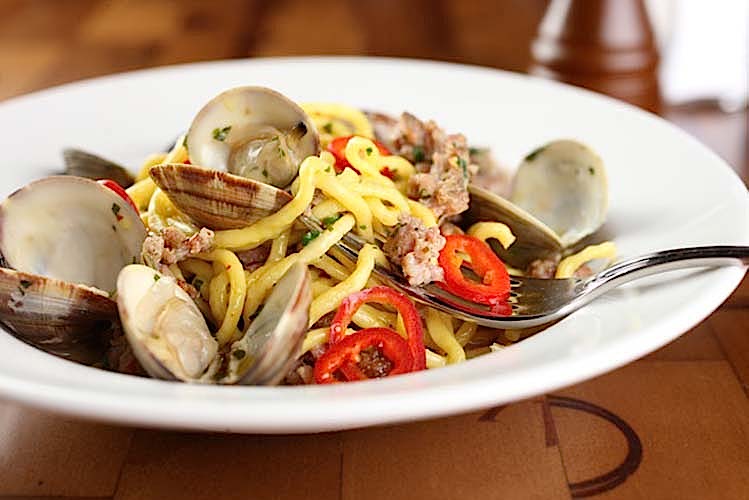 The final
appetizer was equally
simple, basically spaghettini con vongole ($16),
Manila clams
(right),
home made bigoli
spaghetti, fresh
cherry tomatoes, quite enough garlic and white wine
in the dressing.
We shared perfectly seared scallops ($29),
caramelized but
still extruding
the sweet briny flavor I look for in
scallops, flanked by crisp sweet swiss
chard. We
also shared salmon
, sort of sweet and sour treatment, fresh sweet
fish, dotted
sour by capers. Too often
salmon comes out soft and squishy, This was
perfectly moist,
as tasty as good salmon can be.
The final
appetizer was equally
simple, basically spaghettini con vongole ($16),
Manila clams
(right),
home made bigoli
spaghetti, fresh
cherry tomatoes, quite enough garlic and white wine
in the dressing.
We shared perfectly seared scallops ($29),
caramelized but
still extruding
the sweet briny flavor I look for in
scallops, flanked by crisp sweet swiss
chard. We
also shared salmon
, sort of sweet and sour treatment, fresh sweet
fish, dotted
sour by capers. Too often
salmon comes out soft and squishy, This was
perfectly moist,
as tasty as good salmon can be.
Dessert was cannoli, flavored by
pimento and basil, putting an edge on what is often simply
too sweet.
The wine list is small,
about 40 wines, limited to good basic regional
Italian wines, lowest being a Serradenari Prosecco
at $40, topping out with an
Tenuta dell' Ornellaia Le Volte at $76. Many by the
glass $10 to $14.
Although
there is a rustic theme throughout, the space is sleek
with dark wood, copper veneer, tables separated by
plenty of space, and terra cotta floors. For
takeaway, there are shelves carrying
Italian foodstuffs and a a variety of pastas. And,
oh yes, those who want that pizza can sit at Casa
Nonna's pizza
bar , a marble counter looking into the open kitchen
and the wood-fired oven. Casa Nonna is part of a group
of upscale restaurants that includes BLT Steak, LBT Market,
BLT Fish, Juni, and Horchata de Nueva York.
Casa Nonna is open for lunch Mon.-Fri., for dinner nightly.
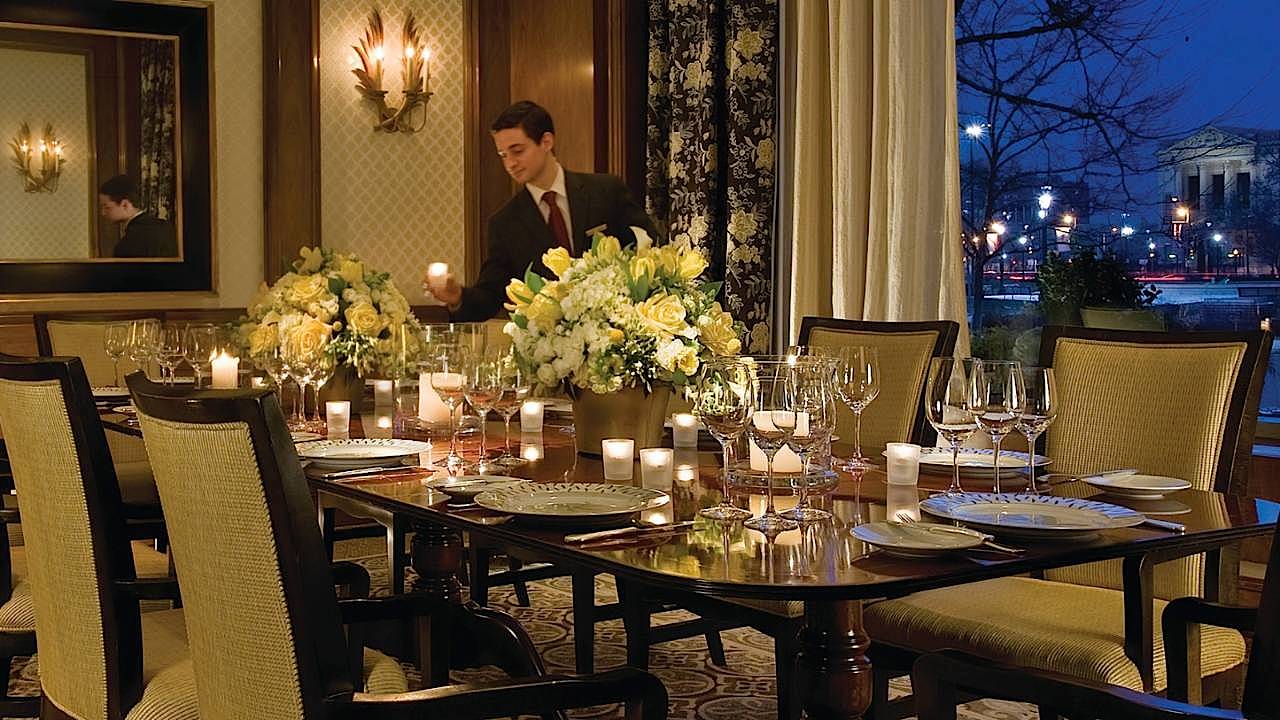
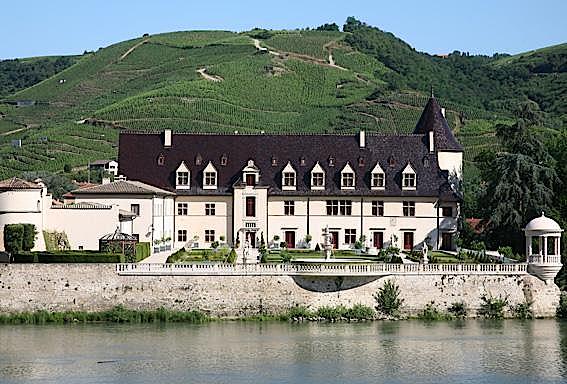 Every once
in a while, I get an invitation that brings the
day’s work to a screeching halt and necessitates my
spending the afternoon poking around the Internet,
researching every last morsel of information I can
find about the producer to be featured at an event to
which I’ve been invited. This happened a few
months ago when invited to a Guigal (left) wine
dinner at one of Philadelphia’s top fine-dining
destinations, the Fountain Restaurant at the Four
Seasons Hotel (below,
left), now under the watch of highly
talented executive chef William DiStefano and whose
beverage program is overseen by the hotel manager
Philip Clough.
Every once
in a while, I get an invitation that brings the
day’s work to a screeching halt and necessitates my
spending the afternoon poking around the Internet,
researching every last morsel of information I can
find about the producer to be featured at an event to
which I’ve been invited. This happened a few
months ago when invited to a Guigal (left) wine
dinner at one of Philadelphia’s top fine-dining
destinations, the Fountain Restaurant at the Four
Seasons Hotel (below,
left), now under the watch of highly
talented executive chef William DiStefano and whose
beverage program is overseen by the hotel manager
Philip Clough.And if that wasn’t enough, the dinner was to be hosted by Philippe Guigal, g-m and winemaker of his family’s legendary company, and would feature a lineup of wines that would put even the most jaded wine-lover into a state of heart-racing excitement. I was not disappointed. Over the course of the three-plus-hour event, I was reminded yet again why E. Guigal ranks among not just the greatest producers in the Rhône Valley but in the world of wine.
The family history goes back to 1946, in Ampuis, and continues to this day with the third generation of the Guigal family, helmed by the charming, passionate Philippe, who continues the estate’s tradition of producing wines of deep character and an inextricable connection to the land. This makes sense. The family itself, though its holdings have expanded over the years in addition to purchasing some of the top fruit in the region, remains the main determining factor in the finished wines, aside from their terroirs, of course.
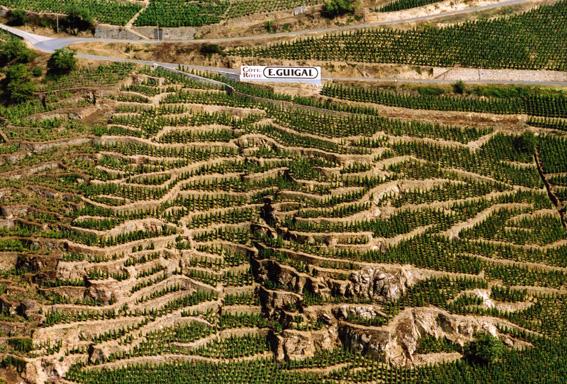
“We are extremely selfish,” Guigal said at the dinner, explaining that all blending is done to appeal to his and his father’s palates. This is a very good thing: Their refusal to cater to the supposed tastes of certain critics and to allow the stunning land of their vines to shine through, has resulted in wine s that among the most consistent and consistently lauded on the planet.
Selfishness, it turns out, at least in the hands of Philippe, his father Marcel, and the Guigal team, including their wives Eve and Bernadette, respectively, is spectacularly delicious, especially when paired with a menu as perfectly conceived and expertly executed as this one was. E. Guigal Condrieu 2012 was poured alongside a delicate yet decadent warm jumbo Cape May sea scallop lavished with royal osetra caviar and an accompanying lovage, tomato, and lobster salad, a citrus nage and a hit of scallion oil. The deep florality of the textbook Viognier, its peach and apricot aromas and feminine, concentrated flavors of pear, kumquat, honey, and flowers, set the evening off to a very auspicious start, indeed.
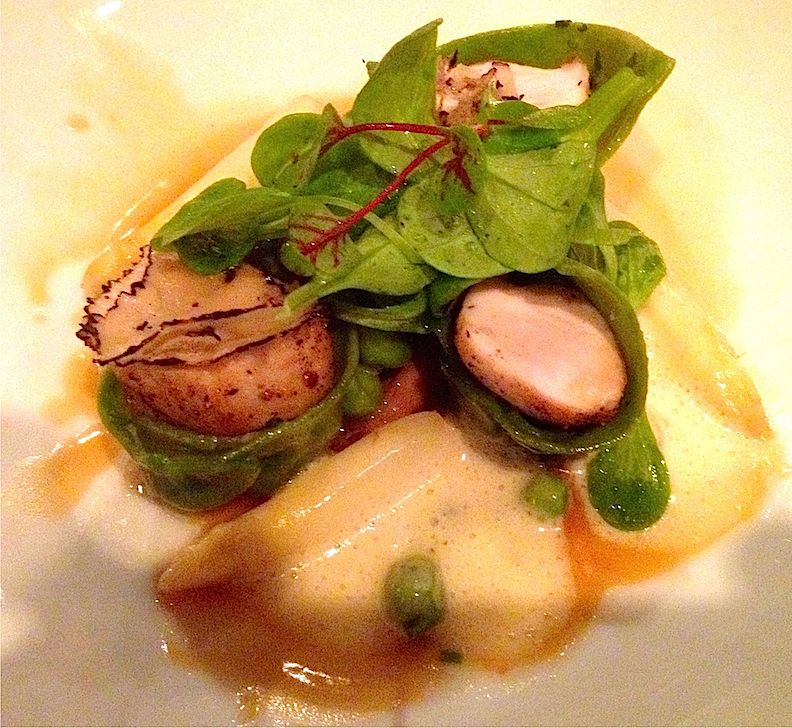
From there we headed south with the E. Guigal St.-Joseph “Vignes de l’Hospice” 2010, a vineyard that faces the famous Hermitage hillside and is composed of the same granitic rock. (The Vignes de l’Hospice is a 3.5-hectare Guigal monopole.) It was a stunner, especially alongside the spring rabbit stew with house-made tortellini, summer truffles, white rabbit jus, tarragon foam, and white asparagus tips (below). Four years old, the wine is evolving gorgeously: aromas of iron filings, black and red raspberries, mineral and smoke lead to flavors of spiced black cherry, mashed plums, and a hint of violets. It’s all both concentrated and expansive, with vivid acidity and a muscular yet fine-grained tannic structure. It’s drinking beautifully now, and should continue to improve easily through 2028 and beyond.
 Traveling further south, the E. Guigal Gigondas 2010
displayed dense black licorice and meat on the nose
and flavors of plum, spice, dark cherry and, again,
a sense of minerality. You could easily drink it
though 2020, but now, especially with a dish like
the roasted prime beef tenderloin with a sunchoke
puree, morel and Grenache reduction (a smart nod to
the Southern Rhône’s most important grape
variety), and foie gras torchon, it’s seriously hard
to resist.
Traveling further south, the E. Guigal Gigondas 2010
displayed dense black licorice and meat on the nose
and flavors of plum, spice, dark cherry and, again,
a sense of minerality. You could easily drink it
though 2020, but now, especially with a dish like
the roasted prime beef tenderloin with a sunchoke
puree, morel and Grenache reduction (a smart nod to
the Southern Rhône’s most important grape
variety), and foie gras torchon, it’s seriously hard
to resist.And then we came to the blockbuster trio of the evening, a triumvirate of wines (with accompanying cheeses) from Côte-Rotie that demonstrated exactly why we all should be drinking more wines from the appellation—even if stunners like the “La La” reds we finished with are out of the price range of many consumers. The Côte-Rotie “Château d’Ampuis” 2009—aromatically high-toned, bursting with red berries, mineral, bright acid, and the perfumed aroma of warm clay (drink 2017 - 2028 and beyond)—more than held its own alongside its more pricey partners in the trio. This makes sense, as this bottling is sought-after and coveted in its own right.
But the so-called "La La wines"-- La Landonne, La Mouline, La Turque--demonstrated exactly what makes them so exalted: they were, in a word, spectacular. I could have just smelled the E. Guigal Côte-Rotie “La Turque” 2009 all night, and from the time it was poured until it I’d finished the last drop, its profile included sweet fig paste, hoisin sauce, white truffles, toasted fennel seeds, peppercorns, morels, sappy
 cherry,
lavender, beef carpaccio, and vanilla. Its purity,
concentration, and balance were nothing short of
astounding. Amazing now, it promises to continue
evolving for another three decades. Its counterpart,
the E. Guigal
Côte-Rotie “La Landonne” 2009, was
deep, dark and grippy, with sage, porcini,
spice cake, plum, mineral, and espresso grounds. If
I’m lucky enough to get my hands on a bottle in
2050, I imagine it will still be going strong.
cherry,
lavender, beef carpaccio, and vanilla. Its purity,
concentration, and balance were nothing short of
astounding. Amazing now, it promises to continue
evolving for another three decades. Its counterpart,
the E. Guigal
Côte-Rotie “La Landonne” 2009, was
deep, dark and grippy, with sage, porcini,
spice cake, plum, mineral, and espresso grounds. If
I’m lucky enough to get my hands on a bottle in
2050, I imagine it will still be going strong.Over the course of the evening, Philippe Guigal kept on using the word “joy” to describe his work and wines, and I cannot argue with him, because, indeed, the sense of joy behind these wines and of familial pride and respect for the stunning terroirs of their origins, cannot be denied. “The first thing,” Guigal said, “is the joy and the passion we place in these soils.”
Tasting these wines, and savoring them at a great restaurant with others who derived as much joy from them as Philippe and his team clearly had in producing them, is, it seems to me, what wine is all about. The excitement I felt at receiving the invitation to this genuinely spectacular evening, it turns out, was well-founded. I just wish I ate and drank this well every night.
❖❖❖
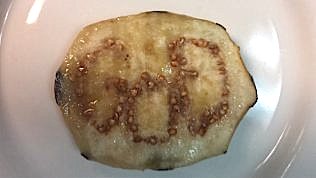
RELIGIOUS FIGURE IN AN EGGPLANT FOR 2014
Line cook Jermarcus Brady of Gino's restaurant in Baton Rouge, Louisiana, sliced into an eggplant and says he found Line che word "GOD" spelled out in seeds inside, calling it "miraculous image" in an interview with WAFB. He told local ABC affiliate WBRZ that he's "scared to slice another eggplant." Gino Marino, one of the restaurant's owners, said, "I went back there and he was overwhelmed. I looked at it, we were just drawn back."
 HEY, GREAT BRITAIN, GET OVER IT: YOU
LOST THAT WAR!
HEY, GREAT BRITAIN, GET OVER IT: YOU
LOST THAT WAR!"America's Fourth of July celebrations always provide fodder for uncomfortable conversations. Sure, there's that sophomore back from college running a Baby's First Howard Zinn rap to remind you that America owes its entire existence to the French military, a gay Prussian inspector general of the Continental Army, two giant oceans and a genocide. But those aren't big-picture issues. I'm talking about whether a hot dog is a sandwich."—Jeb Lun, The Guardian (July 3, 2014)
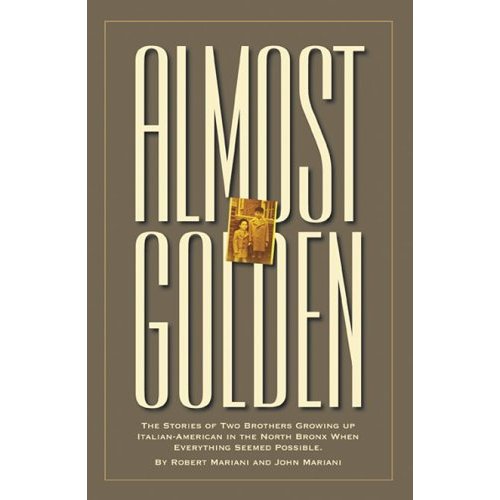
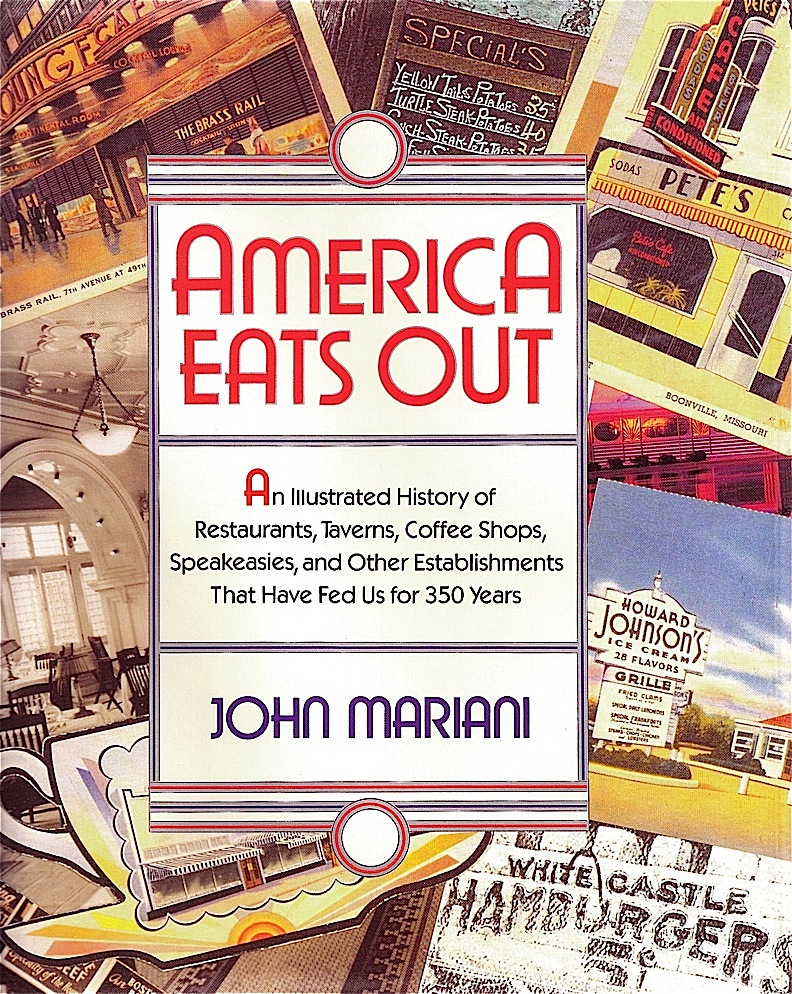
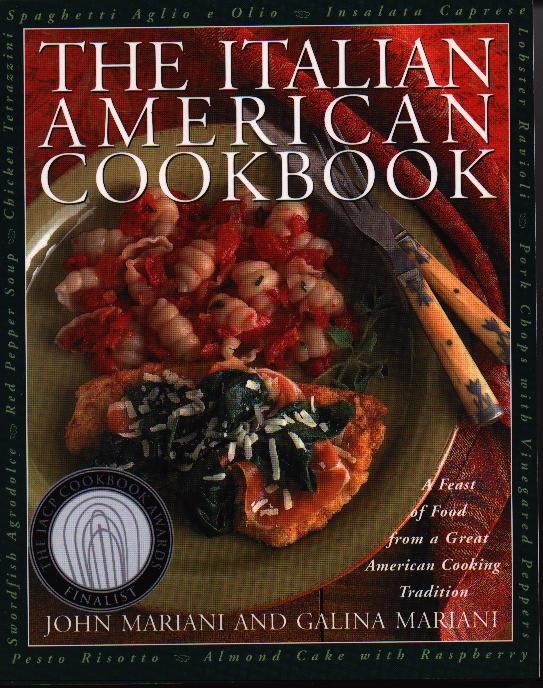
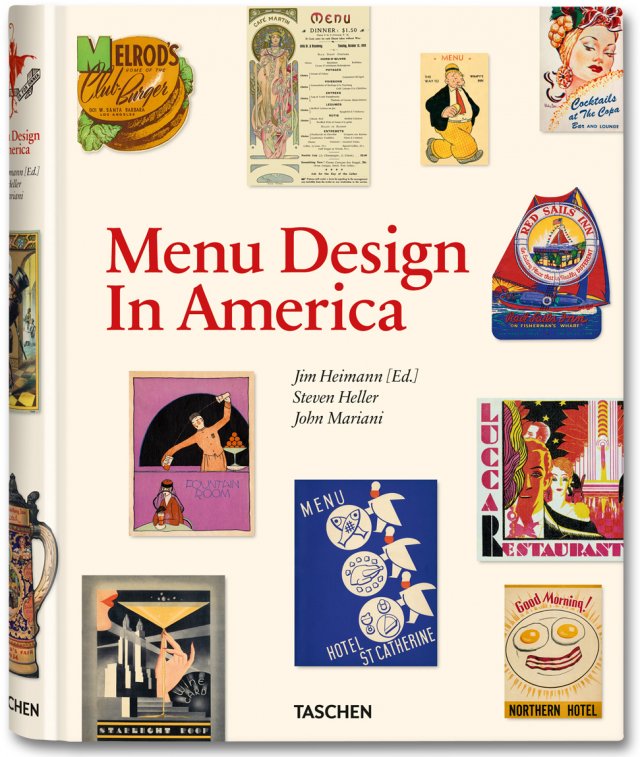
Any of John Mariani's
books below may be ordered from amazon.com.
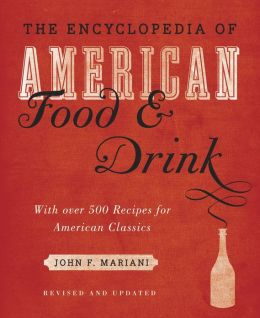 |
The Encyclopedia of American Food and Drink by John F. Mariani (Bloomsbury USA, $35) Modesty forbids me to praise my own new book, but let me proudly say that it is an extensive revision of the 4th edition that appeared more than a decade ago, before locavores, molecular cuisine, modernist cuisine, the Food Network and so much more, now included. Word origins have been completely updated, as have per capita consumption and production stats. Most important, for the first time since publication in the 1980s, the book includes more than 100 biographies of Americans who have changed the way we cook, eat and drink -- from Fannie Farmer and Julia Child to Robert Mondavi and Thomas Keller. "This book is amazing! It has entries for everything from `abalone' to `zwieback,' plus more than 500 recipes for classic American dishes and drinks."--Devra First, The Boston Globe. "Much needed in any kitchen library."--Bon Appetit. |
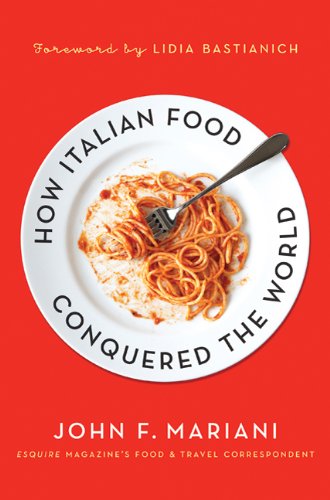
"Eating Italian will never be the same after reading John Mariani's entertaining and savory gastronomical history of the cuisine of Italy and how it won over appetites worldwide. . . . This book is such a tasteful narrative that it will literally make you hungry for Italian food and arouse your appetite for gastronomical history."--Don Oldenburg, USA Today. "Italian
restaurants--some good, some glitzy--far
outnumber their French rivals. Many of
these establishments are zestfully described
in How Italian Food Conquered the World, an
entertaining and fact-filled chronicle by
food-and-wine correspondent John F.
Mariani."--Aram Bakshian Jr., Wall Street
Journal.
"Equal parts
history, sociology, gastronomy, and just
plain fun, How Italian Food Conquered the
World tells the captivating and delicious
story of the (let's face it) everybody's
favorite cuisine with clarity, verve and
more than one surprise."--Colman Andrews,
editorial director of The Daily
Meal.com. "A fantastic and fascinating
read, covering everything from the influence
of Venice's spice trade to the impact of
Italian immigrants in America and the
evolution of alta cucina. This book will
serve as a terrific resource to anyone
interested in the real story of Italian
food."--Mary Ann Esposito, host of PBS-TV's
Ciao
Italia. "John Mariani has written the
definitive history of how Italians won their
way into our hearts, minds, and
stomachs. It's a story of pleasure over
pomp and taste over technique."--Danny Meyer,
owner of NYC restaurants Union Square
Cafe, The Modern, and Maialino.
|
 |
 |
 |
 |
 |
 |
 |
 |
 Everett Potter's Travel Report:
 Eating Las Vegas
is the new on-line site for Virtual Gourmet
contributor John A. Curtas., who since 1995
has been commenting on the Las Vegas food
scene and reviewing restaurants for Nevada
Public Radio. He is also the
restaurant critic for KLAS TV, Channel 8 in
Las Vegas, and his past reviews can be
accessed at KNPR.org.
Click on the logo below to go directly to
his site.
Eating Las Vegas
is the new on-line site for Virtual Gourmet
contributor John A. Curtas., who since 1995
has been commenting on the Las Vegas food
scene and reviewing restaurants for Nevada
Public Radio. He is also the
restaurant critic for KLAS TV, Channel 8 in
Las Vegas, and his past reviews can be
accessed at KNPR.org.
Click on the logo below to go directly to
his site.

Tennis Resorts Online: A Critical Guide to the World's Best Tennis Resorts and Tennis Camps, published by ROGER COX, who has spent more than two decades writing about tennis travel, including a 17-year stretch for Tennis magazine. He has also written for Arthur Frommer's Budget Travel, New York Magazine, Travel & Leisure, Esquire, Money, USTA Magazine, Men's Journal, and The Robb Report. He has authored two books-The World's Best Tennis Vacations (Stephen Greene Press/Viking Penguin, 1990) and The Best Places to Stay in the Rockies (Houghton Mifflin, 1992 & 1994), and the Melbourne (Australia) chapter to the Wall Street Journal Business Guide to Cities of the Pacific Rim (Fodor's Travel Guides, 1991).


MARIANI'S VIRTUAL GOURMET
NEWSLETTER is published weekly. Editor/Publisher: John
Mariani.
Editor: Walter Bagley. Contributing Writers: Christopher Mariani,
Robert Mariani, John A.
Curtas, Edward Brivio, Mort Hochstein, Andrew Chalk,
and Brian Freedman. Contributing
Photographers: Galina Stepanoff-Dargery,
Bobby Pirillo. Technical Advisor: Gerry McLoughlin.
To un-subscribe from this newsletter,click here.
© copyright John Mariani 2014