MARIANI’S
Virtual Gourmet
August
26, 2018
NEWSLETTER
❖❖❖
IN THIS ISSUE
DINING OUT IN ANTWERP
By John Mariani
NEW YORK CORNER
BAGATELLE
By John Mariani
NOTES FROM THE WINE CELLAR
NOBILO ICON
By John Mariani
❖❖❖
DINING OUT IN ANTWERP
By John Mariani
The
people of Antwerp revel in their food and
drink with good reason, not least their
exquisite chocolates--one of the best
shops is Günter-Watte
(right)
on Steenhouwersvest--Belgian waffles and hearty
Flemish
fare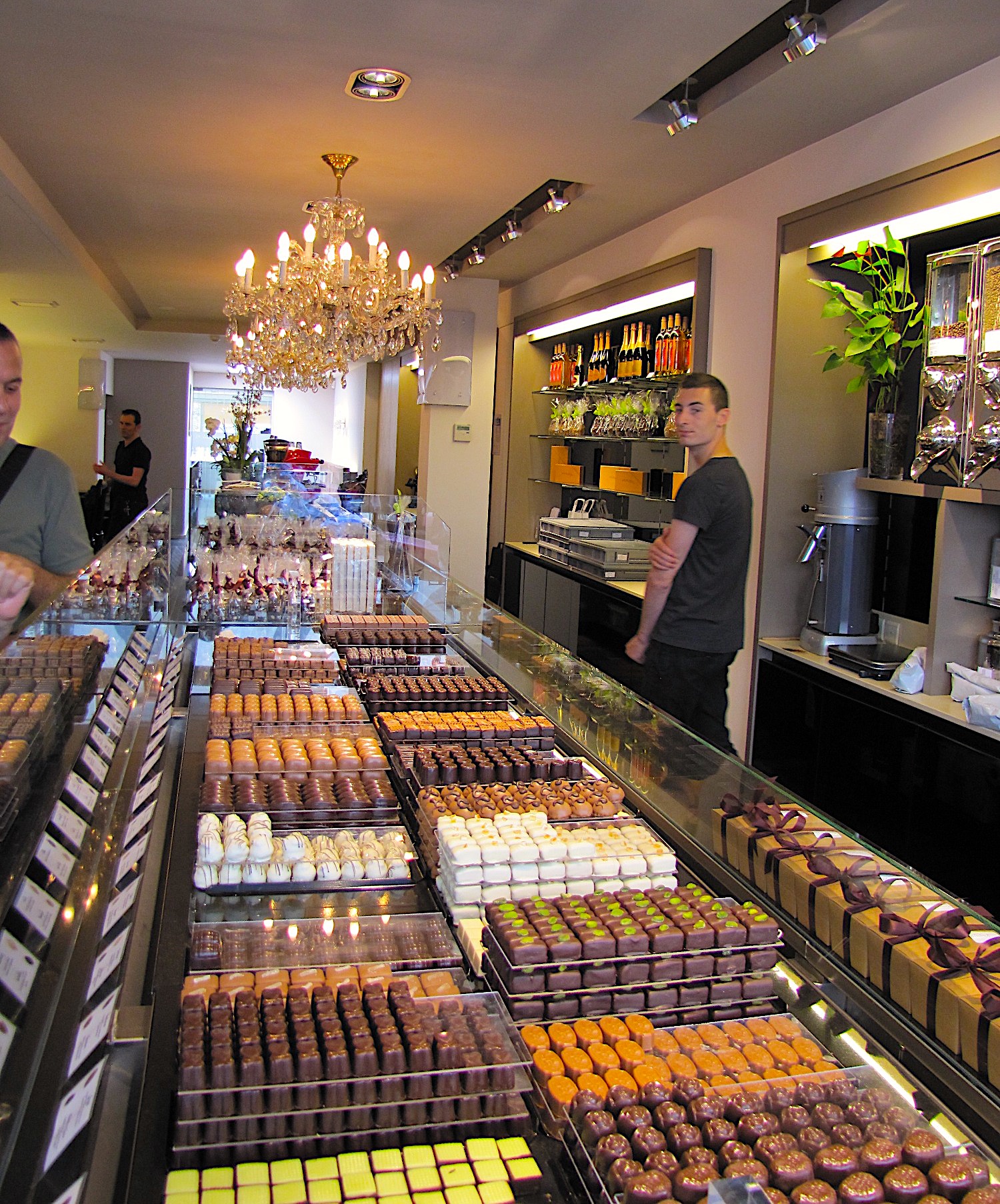 like
waterzooi and carbonnade stews.
At lunch people nosh on a smos sandwich,
whose
name means a "mess," an expected outcome of
eating many layers
of bread and garnishes.
like
waterzooi and carbonnade stews.
At lunch people nosh on a smos sandwich,
whose
name means a "mess," an expected outcome of
eating many layers
of bread and garnishes.
Everywhere there are “bruine (brown) cafés,” whose name may refer to the brownish color they acquire after decades, or centuries, in existence. One of the most famous is Den Engel at Grote Market, dating to the 15th century. Café Kulminator lists more than 700 beers in inventory. And if you’re a gin drinker, pace yourself at De Vagant (below), which stocks 300 kinds.
 The oldest restaurant in the
city—Est. 1750—is
the seafood-centric Rooden Hoed, whose six mussel
dishes are ranked among
the best in this mussel-mad city. But on a recent
visit I found it a poorly
run, badly serviced tourist spot that served a
bowl of mussels in which many
came with their shells shut, a sure sign they were
dead before they hit the
cooking pot. Only a pig's knuckle dish was as good
as it was huge. I was also alerted by locals that
the well-known Het
Elfde Gebod
(The Eleventh Commandment) next to the Cathedral
is not as good as it once was
and may be reserved just for a peek at the
interior arrayed with religious
artwork and a Trappist Westmalle dubbel beer.
The oldest restaurant in the
city—Est. 1750—is
the seafood-centric Rooden Hoed, whose six mussel
dishes are ranked among
the best in this mussel-mad city. But on a recent
visit I found it a poorly
run, badly serviced tourist spot that served a
bowl of mussels in which many
came with their shells shut, a sure sign they were
dead before they hit the
cooking pot. Only a pig's knuckle dish was as good
as it was huge. I was also alerted by locals that
the well-known Het
Elfde Gebod
(The Eleventh Commandment) next to the Cathedral
is not as good as it once was
and may be reserved just for a peek at the
interior arrayed with religious
artwork and a Trappist Westmalle dubbel beer.
De Groote Witte
Arend dates to 1488 as a
convent, but since 1976 as beer hall and
restaurant, now owned by Tim and
Ronald Ferket, who serve up very hearty Belgian
fare like beef stew with potato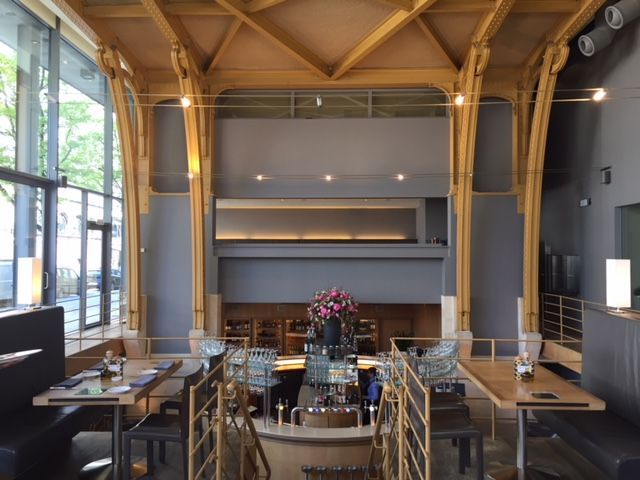 croquettes, sautéed plaice with mashed potatoes, a
loin of pork and some
delicious eel baked in cream. They carry 280
beers.
croquettes, sautéed plaice with mashed potatoes, a
loin of pork and some
delicious eel baked in cream. They carry 280
beers.
More contemporary spots have gleaned a lot of global cuisines, as has Horta (right), just down the street from the Rubenshuis museum. It’s a massive place set on two tiers, with outdoor dining, and the menu is just as large, with few dishes that are truly Belgian. That said, I did enjoy the crisp and meaty shrimp croquettes and a tempura of shrimp. A slice of foie gras was good and a traditional waterzooi made with tender chicken was both delicious and abundant in size, accompanied by a robust bottle of Rodenbach beer.
 Certainly
the most impressive meal I had in
Antwerp was at the restaurant in the newly opened
Franq Hotel,
where I also
stayed. Quietly located on a street away from the
city center and overlooking a
lovely garden with one of the city’s oldest houses
at the end, the hotel has
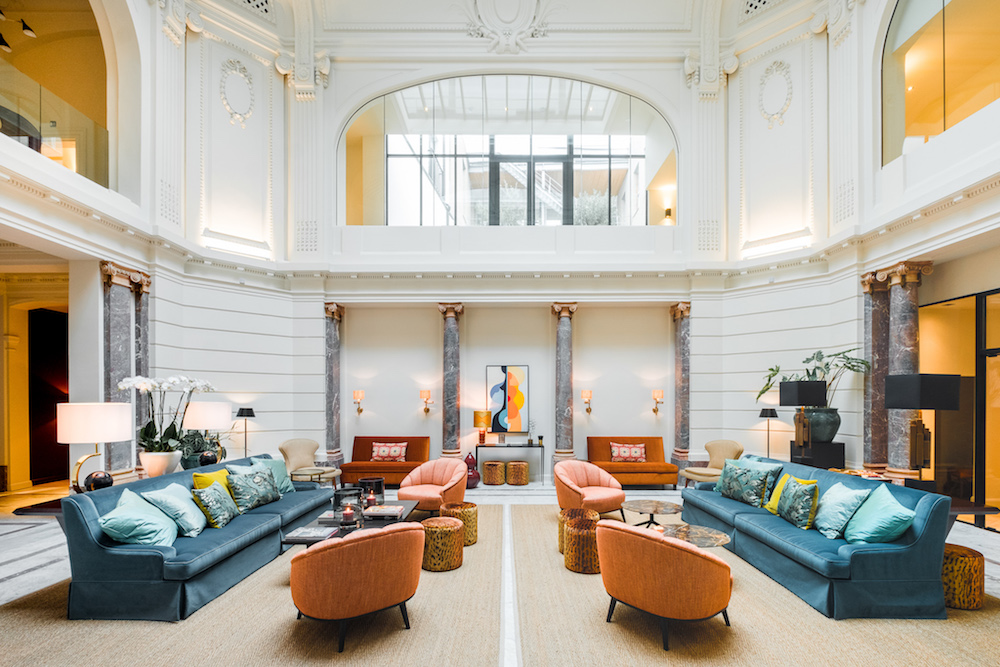
all the modern amenities and a splendid lobby (left), though
some rooms are small. The
restaurant is very bright at lunch, with superb
modern lighting, and the
outdoor tables are becoming equally popular.
Certainly
the most impressive meal I had in
Antwerp was at the restaurant in the newly opened
Franq Hotel,
where I also
stayed. Quietly located on a street away from the
city center and overlooking a
lovely garden with one of the city’s oldest houses
at the end, the hotel has
all the modern amenities and a splendid lobby (left), though
some rooms are small. The
restaurant is very bright at lunch, with superb
modern lighting, and the
outdoor tables are becoming equally popular. 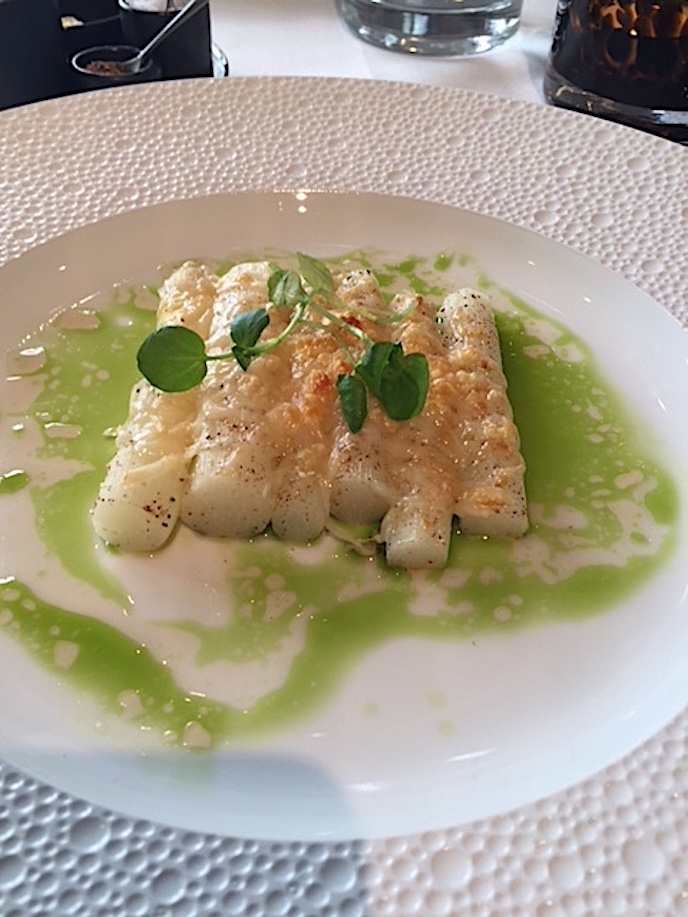
Chef Tim Meuleneire, formerly at the highly regarded Restaurant De Koopvaardij in Stabruek, Belgium, is proving himself one of the best in the country with a light cuisine based on the season’s best provender, beginning with the fat white asparagus that were then at their sweetest in May, with a browned gratin of parmesan cheese and a slick of olive oil (right). Red gurnard and razor clams were delicately poached in a dashi broth, while whitefish came with a spicy seasoned salad. For dessert, the iced coffee was a perfect midday sweet.
Open for breakfast, lunch and dinner daily. Two-course lunch €35; dinner €65.
 Graanmarkt
13 is also a new spot, set
downstairs from a market square near Rubenshuis,
functioning as a store,
restaurant and apartment in a building designed by
one of Belgian’s finest
architects, Vincent Van Duysen. The seductive
lighting in the main dining room
gives way to a tiny outdoor patio with a single
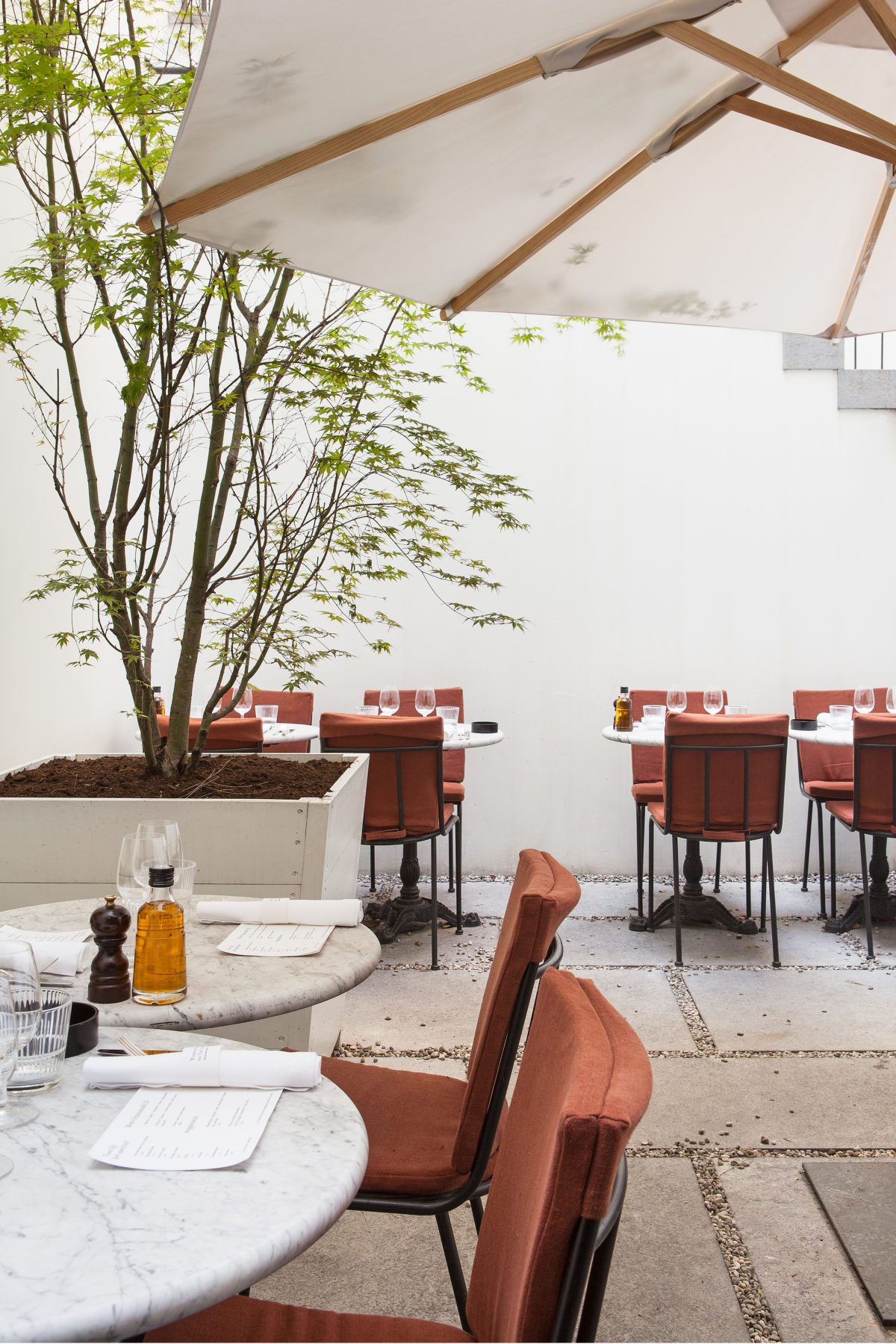
Godot-like tree (left).
Graanmarkt
13 is also a new spot, set
downstairs from a market square near Rubenshuis,
functioning as a store,
restaurant and apartment in a building designed by
one of Belgian’s finest
architects, Vincent Van Duysen. The seductive
lighting in the main dining room
gives way to a tiny outdoor patio with a single
Godot-like tree (left).
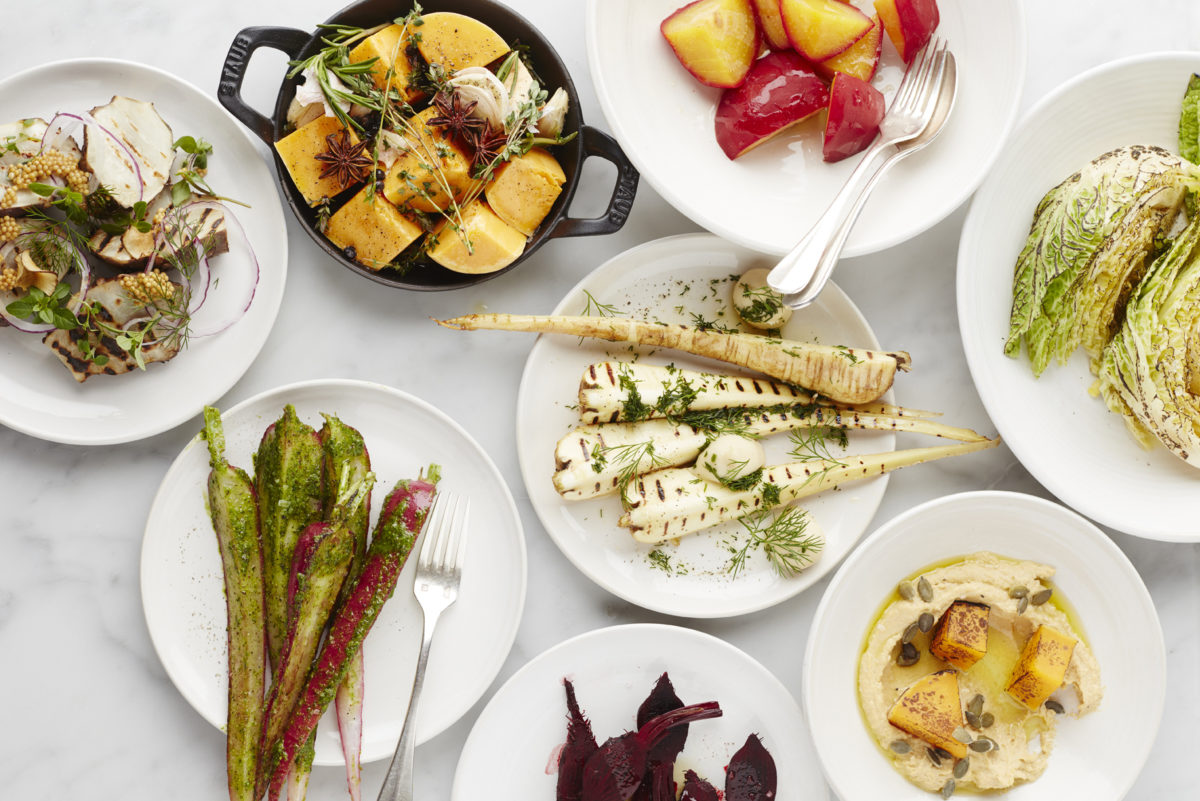
The menu by Chef Seppe Nobels revels in vegetable dishes and is set each week, with a few choices focused on lamb or Dover sole or whatever the chef wishes to make that night, which will include herbs from his rooftop garden. I enjoyed a very pretty carpaccio of beets, as well as Little Gem lettuce with a dash of hoisin sauce and lime. Then a plate of fat Dover sole simply sautéed in butter. A lamb fillet in puff pastry was accompanied by rhubarb and a perfectly rendered reduction of its juices. A pork belly with fennel-flavored sausage had plenty of richness, accompanied by braised spiced carrots. That night they were serving three raw milk cheeses from the Schoonvliet dairy in Beveren, one of them voted the “best bleu in the world.”
Nobels is also having fun with a food truck for fine fast fare, parked right outside the restaurant upstairs.
Open Mon.-Sat. for lunch and
dinner.
Lunch €35, dinner €45. 
Overlooking the River
Scheldt, RAS (right) is
atop the
Zuiderterras project designed by Flemish Master
Architect Bob Van Reeth, who
began it in the 1990s and has altered and restored
it several times since. As
RAS, it is the work of the architect firm
Co.Studio. I tell you all that
because it is a very pleasant outdoor place to
dine, all very modernistic and
sleek, but the menu is a fairly standard rendering
of contemporary global
cuisine, with a slight nod to Belgium found in the
shrimp croquettes with fried
parsley (€16.50).
Otherwise, as
you enjoy the view and one of the many Belgian
beers stocked there, you should
be happy with dishes like a salad of Hereford beef
carpaccio, summer truffle,
rocket, parmesan and grilled pine kernels (€18);
baby soles meunière with garden cress,
mashed potatoes or French fries
(€29.50); and
for dessert a
Belgian chocolate mousse (€10).
RAS is very popular for all the visible reasons. I’d go back for a cocktail or a beer and some light food while watching the sun set over the river.
Open for lunch and dinner daily.
❖❖❖
By John Mariani
By John Mariani

It’s
tough to argue with the good looks of
Bagatelle, which for a decade now has been
entertaining a young crowd as
comfortable there in New York’s Meatpacking
District as at the restaurant’s
branches in St. Barth’s, São Paulo, Rio de
Janeiro, Miami, Dubai, Monte Carlo
and elsewhere. The restaurants don’t all look
exactly alike, but the whiteness
of the dining room, the bistro tables and chairs
and the highly eclectic art
work are always part of the equation, and a dish
you find on one menu you’ll
likely find on another. 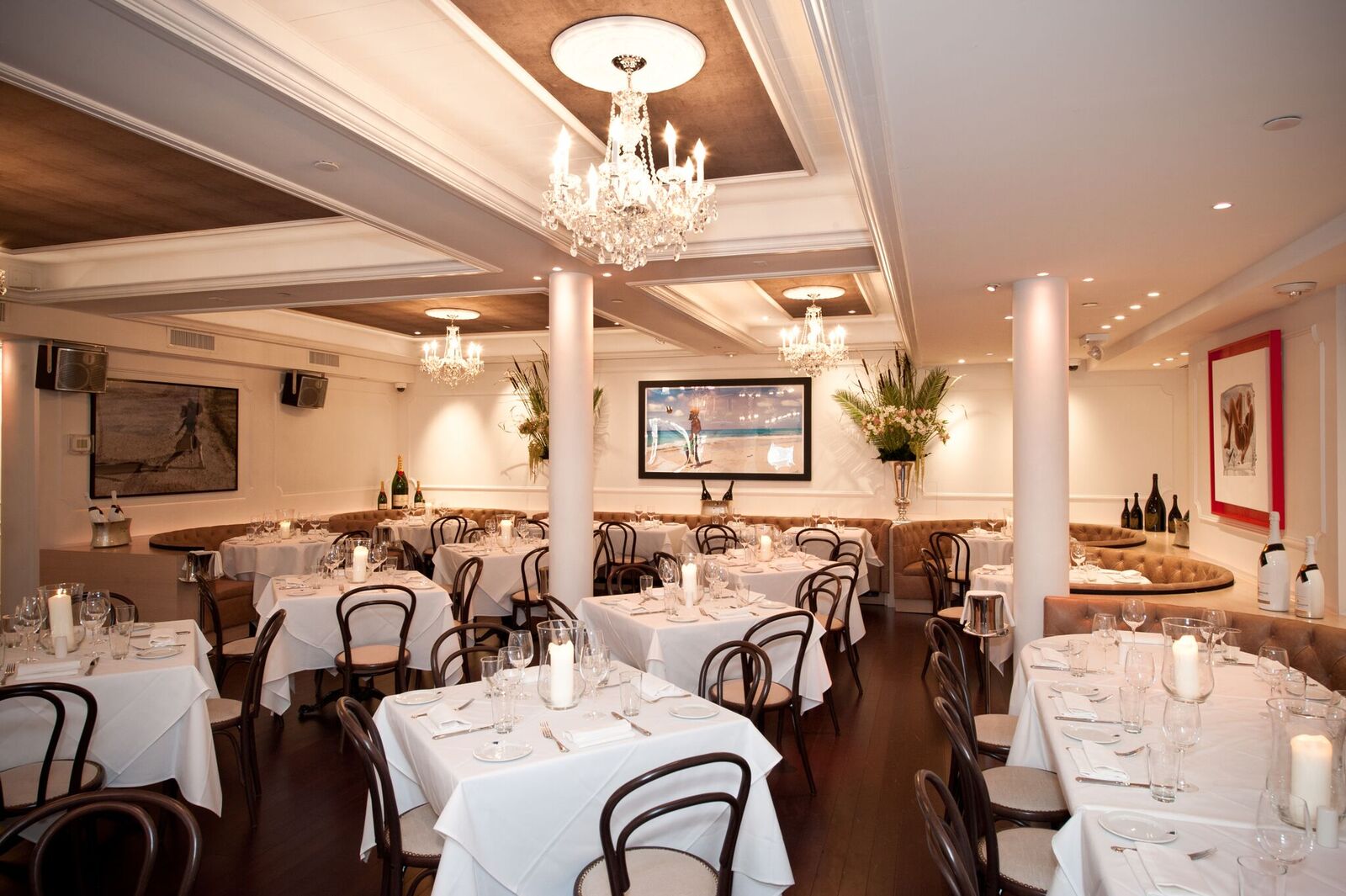
At the New York branch, the people who greet you will be handsome, the waiters will be fast on their feet, and, depending on the hour, the canned music will be either pleasantly in the background or blasting you across the room. On Thursday nights a deejay spins records from the eighties and nineties—always good to hear Madonna’s “Like a Virgin,” Paula Abdul’s “Ain’t Never Gonna Give You Up” and Hall & Oates’s “Your Kiss Is on My List” again!—and the tables are set with old LP records that serve as show plates.
For all these reasons the crowd is going to
include Gen-Xers and Millennials, with a
smattering of Baby Boomers, who
actually remember the eighties and nineties, and
whatever remains of the
wrinkly Eurotrash of two decades back. All the
women look as if they took a
long time deciding what to wear and what to hang 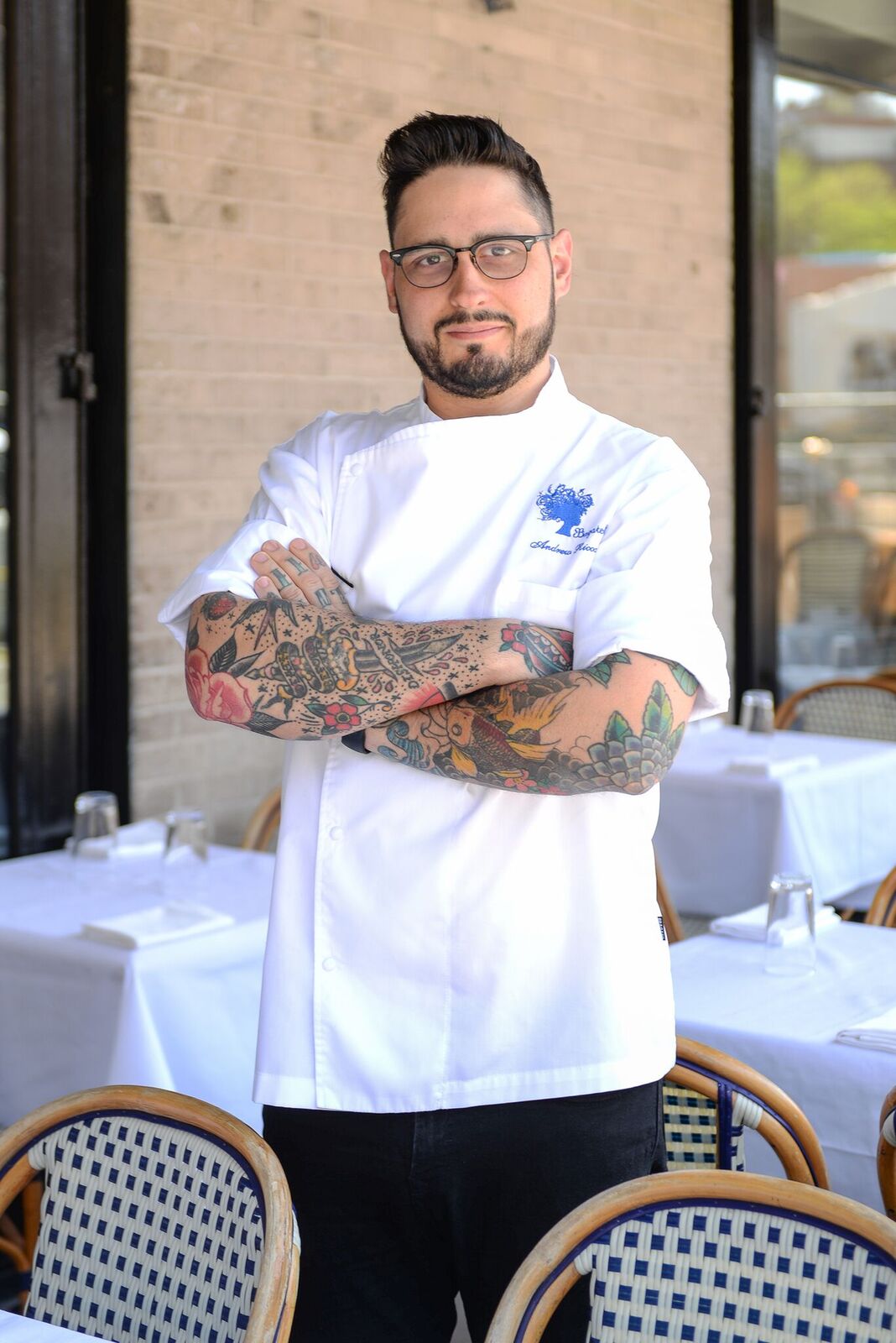 from their ears, while the
males in the room spiff up just enough to look
faintly louche—three-day-growth
beards being de rigueur, tattoos amply displayed. Page Six still cares who ate
there.
from their ears, while the
males in the room spiff up just enough to look
faintly louche—three-day-growth
beards being de rigueur, tattoos amply displayed. Page Six still cares who ate
there.
So
the food does not need to be all that
wonderful in a place like Bagatelle, but owners
Remi Laba and Aymeric Clemente
have in recent years hired very serious young
chefs who can buoy the staples on
the menu while adding their own personality to the
kitchen. Truffles
are a mainstay, caviar has its
own section on the menu, and there is a $1,000
tower of shellfish as an
appetizer—“24 oysters, 18 mussels, 18 shrimp, 2
whole lobsters, 1 lb king crab,
tuna tartar, ceviche, poke salmon, 30g Imperial
Osetra Caviar Petrossian, 6
shots of vodka.” A bag of the restaurant's own
olive oil is also set on the table.
Two years ago I applauded the work of a very promising young French chef at Bagatelle, and now I am equally enthusiastic about the new young chef, Andrew Riccatelli (left) who learned to cook alongside his Hungarian grandmother and in his Puerto Rican mother’s kitchen. His résumé includes stints at Bar Americain, Curate, Buddakan and Spice Market, so he shows a deft hand for various techniques and a good nose for spices.
The
menu at Bagatelle seems summery year-round,
but right now the season is at its peak of flavor,
so the watermelon salad with
cucumbers, candied pine nuts, ricotta salata
and basil vinaigrette ($18) is a great choice as
an appetizer.
So, too, hiramasu tataki with a yuzu glaze
and
pickled chilies with ponzu
sauce
($22) shows that very fine sushi can be found
outside of even the best Japanese
counters around town. 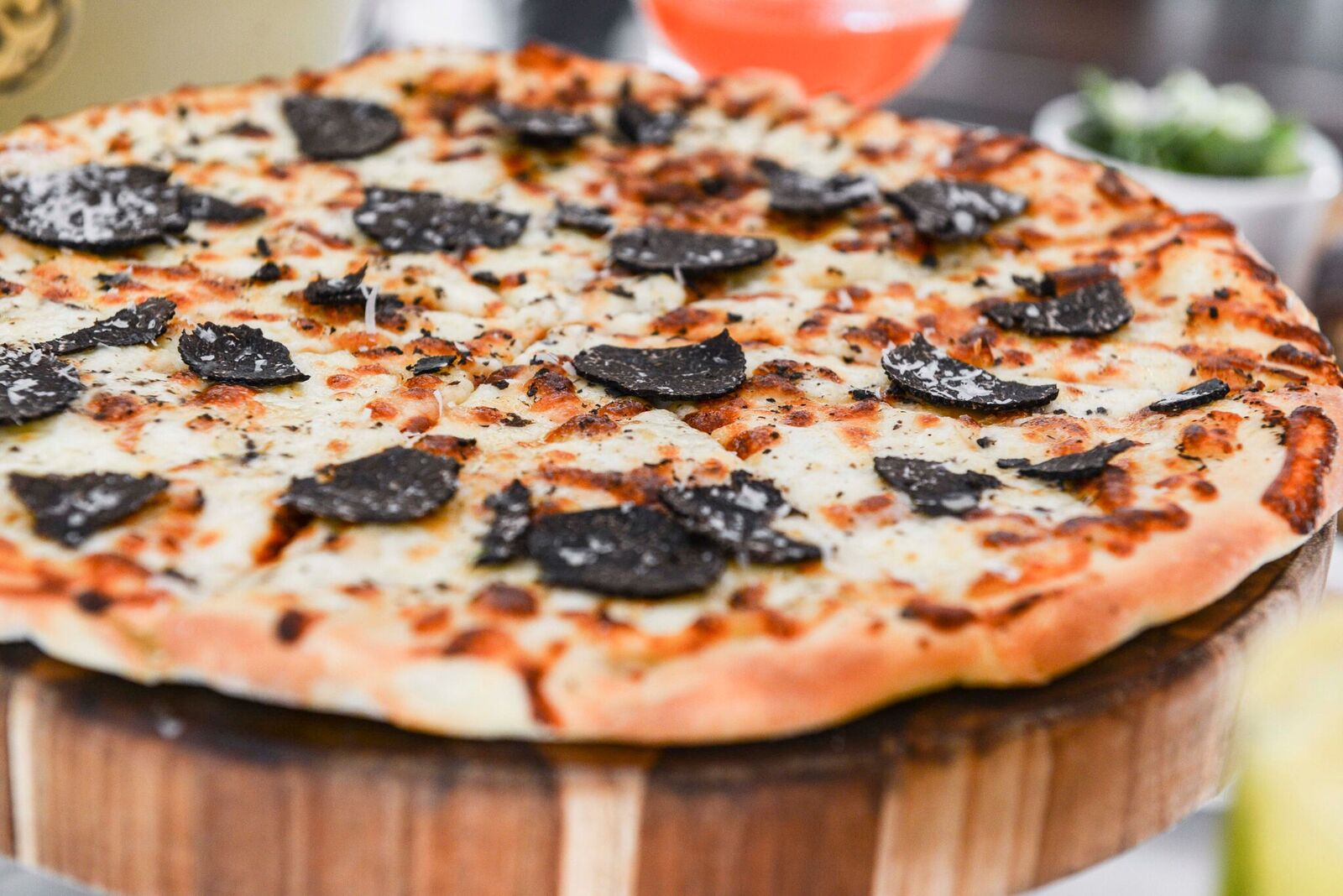
Among the warm apps, I enjoyed a very interesting risotto of grains ($25), wonderfully al dente with wild mushrooms, shiitake crumble and basil. Inevitably there always has to be an octopus dish on any menu, which Riccatelli does à la plancha with Kalamata olives, Sherry, romesco sauce and Marcona almonds for texture ($28). One of his own specials that night was foie gras in a red wine reduction with a cherry mostarda (MP), which proved that foie gras need not be too heavy for summer.
Bagatelle also has pushed its shaved truffle dishes, whether or not truffles are in season, so, although the pizza with black truffles, crème fraîche, black truffle oil and smoked mozzarella ($29) is pleasant enough, the truffles don’t add much to the mix.
Lotte,
also called less elegant names like
monkfish, goosefish, bellyfish and angler-fish, is
prized only for its tail,
which has a texture and taste not dissimilar to
lobster, and Riccatelli’s is a
sterling example of how good it can be, blackened
and served with a shishito
succotash and corn cream
($32). Pan-seared
scallops ($48)
took on a bit too much smokiness to my taste, but
the rest of the dish’s components—caramelized
peaches, bacon lardons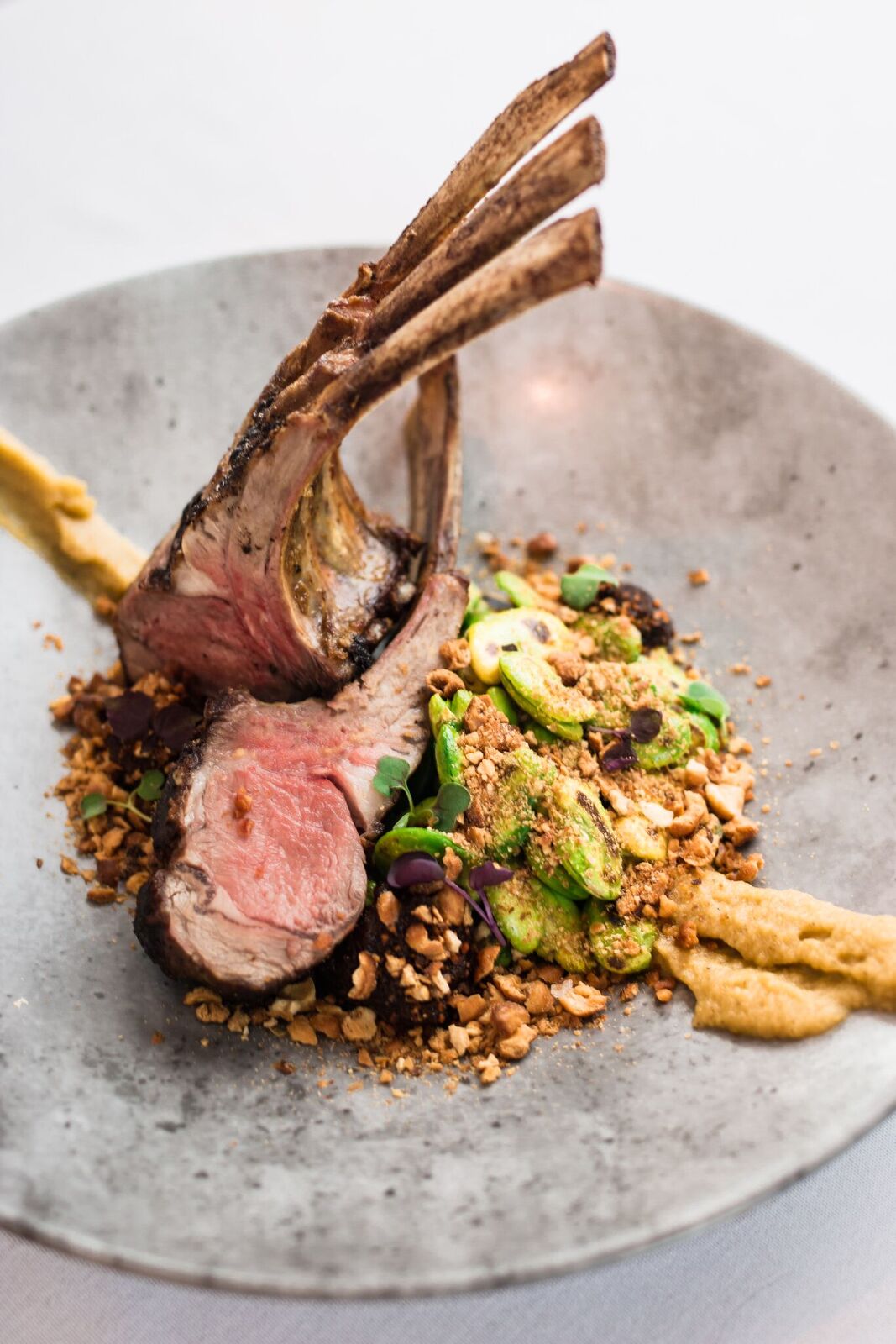 and a cashew cream—all
made perfect sense.
Do order the Aligot cheese-rich pomme purée
($12) on the side. A couple
of tablespoons per person is richly satisfying.
and a cashew cream—all
made perfect sense.
Do order the Aligot cheese-rich pomme purée
($12) on the side. A couple
of tablespoons per person is richly satisfying.
Mediterranean-style, spiced, marinated lamb
chops ($69) were of fine quality, served with
cranberry beans, chickpeas, mint
and a fiery harissa
(left),
while a roasted
chicken (half $45, whole $79) gets the truffle
treatment. The skin is crisp,
the meat juicy and it comes with potatoes,
caramelized baby onions, button
mushrooms and a thyme-laced chicken jus (below).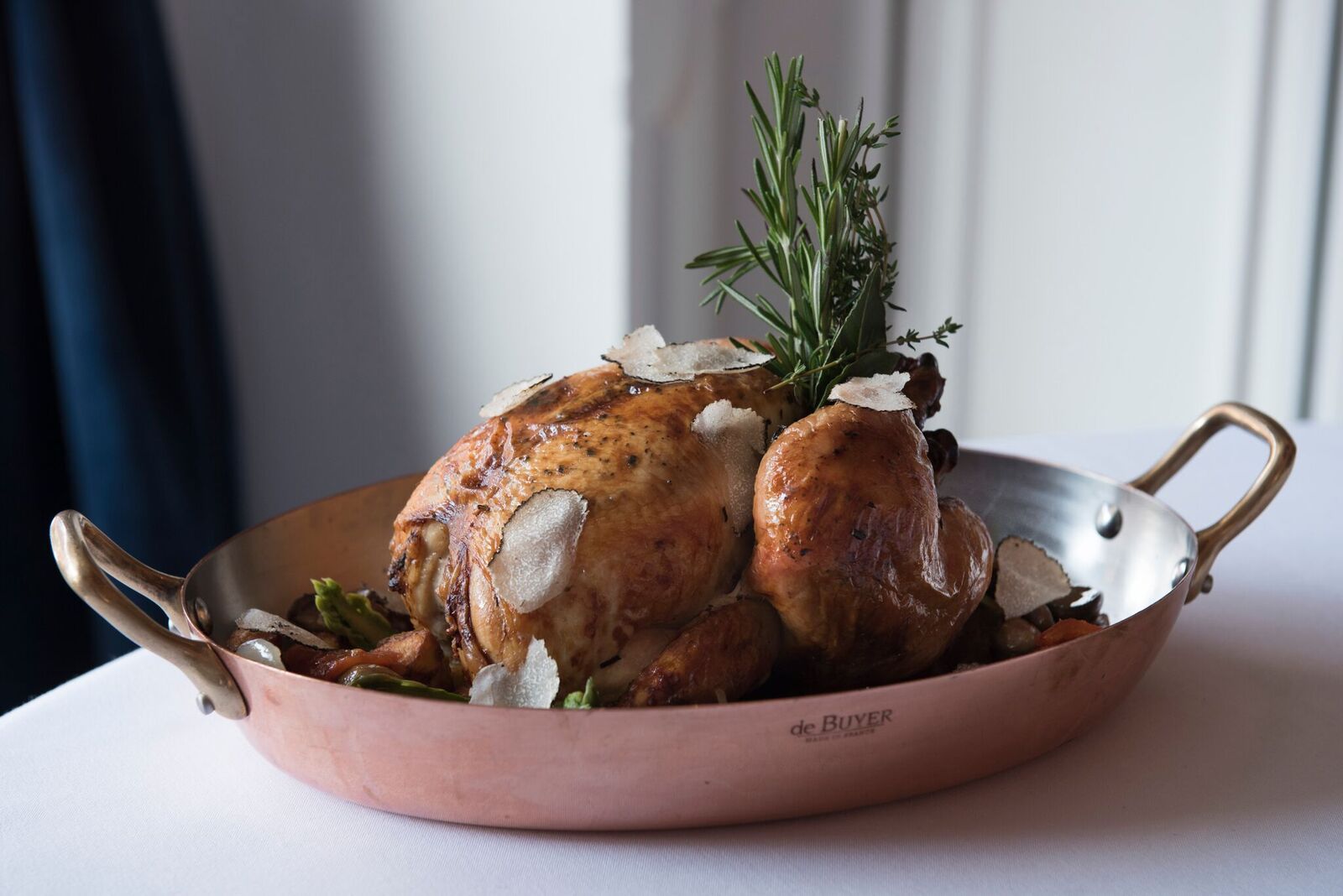
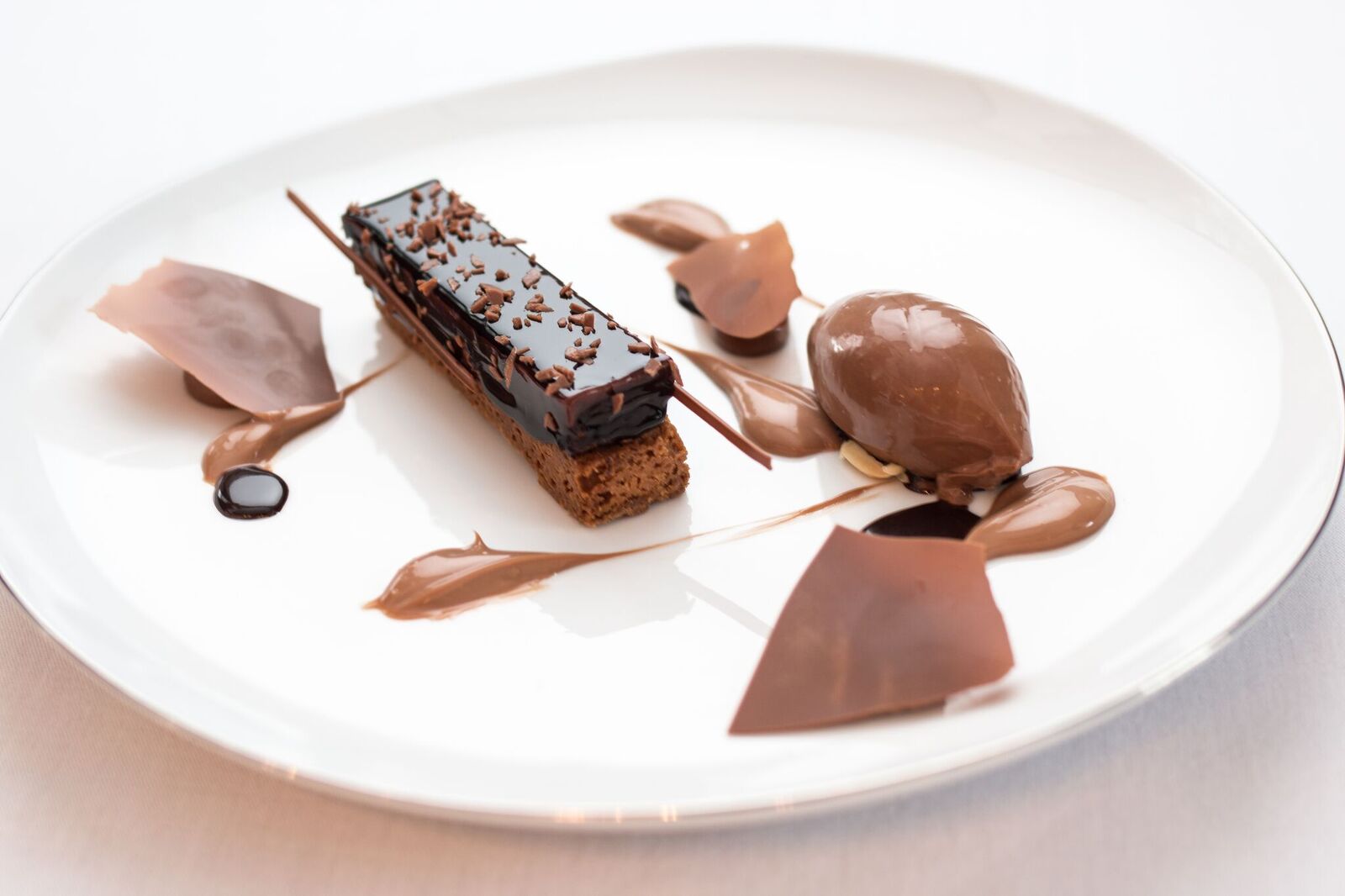
Bagatelle is a place where you want to indulge in desserts—there’s a $100 plateau of all of them for the table and an éclair tiramisù for five at $49 that’s a pretty good price. Otherwise, all the desserts are $16, including a meringue with mango confit, crispy mix, and Tahitian vanilla cream; an apricot confection with jam, short bread and almond sauce; and an “explosion” of chocolate with dark and milk chocolate, lime and crunchy salted pastry (below). There is also a selection of cheeses for $20.
 The wine list looks
impressive—pages and pages
of very expensive French wines, not all of them
with listed vintages. There
appear to be more pages of Champagnes than
anything else, and the least
expensive wine I could find was $65 for some blah
whites from the Pays d’Oc.
Some of the whites are over the hill, too.
The wine list looks
impressive—pages and pages
of very expensive French wines, not all of them
with listed vintages. There
appear to be more pages of Champagnes than
anything else, and the least
expensive wine I could find was $65 for some blah
whites from the Pays d’Oc.
Some of the whites are over the hill, too.
It’s easy enough to be dismissive of the vibe at Bagatelle, but it’s equally easy to get into the high spirit of it. Good looking people, a lively bar, splashy artwork, lots of Champagne and very good food make it as much fun as it is a true taste of the Mediterranean.
Open
nightly for dinner.
By John Mariani
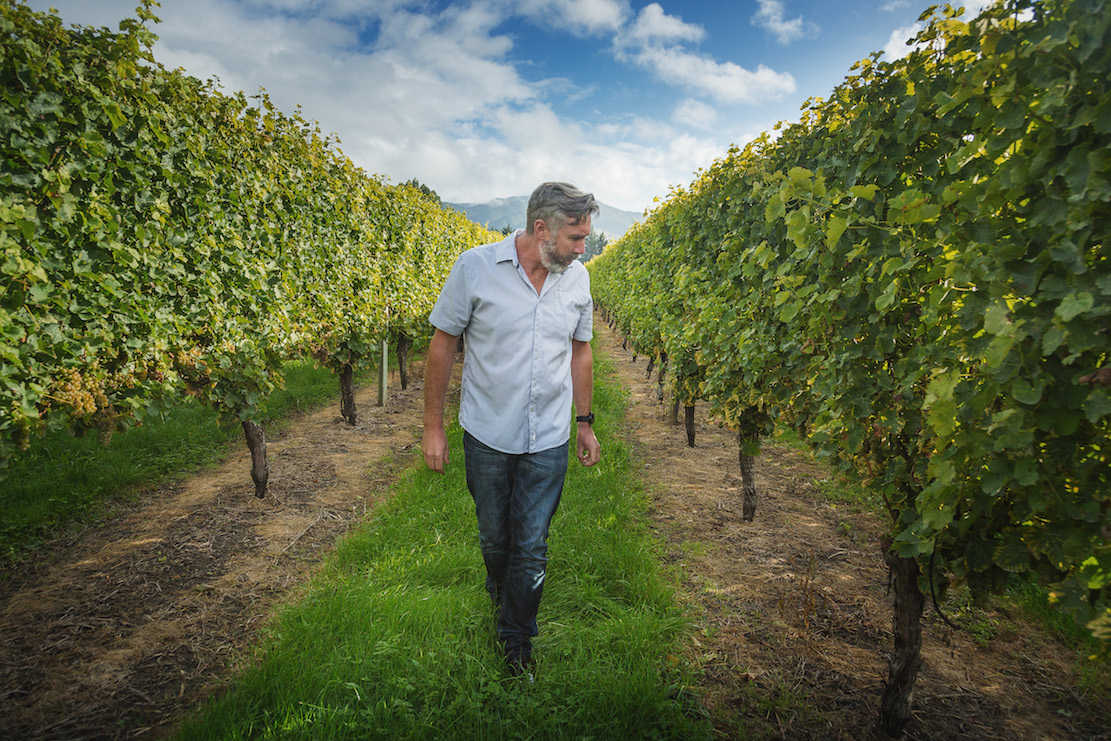
David Edmonds, winemaker Nobilo Icon
Not many
New Zealand winemakers visit the U.S. to
promote their wines, but I am always
happy to meet David Edmonds of Nobilo
Wines over dinner in New York to taste
his new releases. This time, with my wife,
I got to meet his lovely wife,
Sarah, for a meal at Tocqueville that
matched the sophistication of Edmonds’
well-made Sauvignon Blanc and Pinot Noirs.
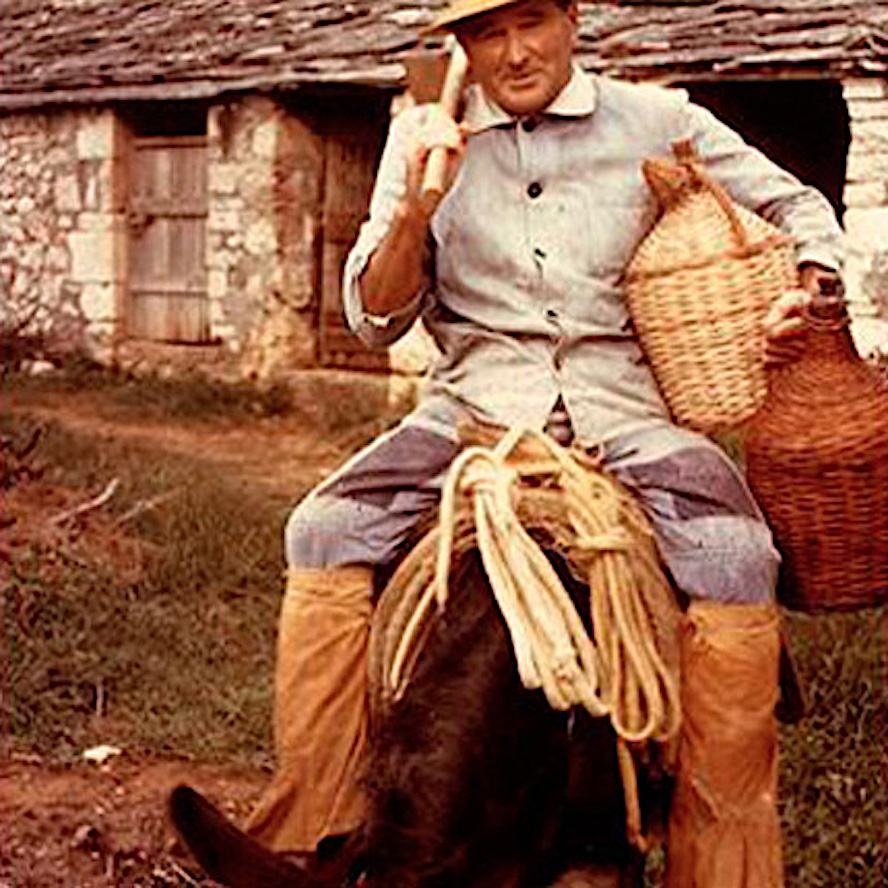
Edmonds, tall, bearded and with a voice I keep telling him sounds like the young Sean Connery's, joined Nobilo in 2002, an estate founded in 1943 by Croatian émigrés, Nikola (right) and Zuva Nobilo, whose family had had more than 300 years of winemaking tradition. In the region of Huapai, west of Auckland, they planted some of New Zealand’s first commercial grapes, and by the 1970s had replaced hybrid grapes with European vinifera. In 1995, for his contributions to the New Zealand wine industry, Nikola was awarded an Order of the British Empire medal. He died at the age of 94 in 2007. Today the winery is owned by Constellation Brands.
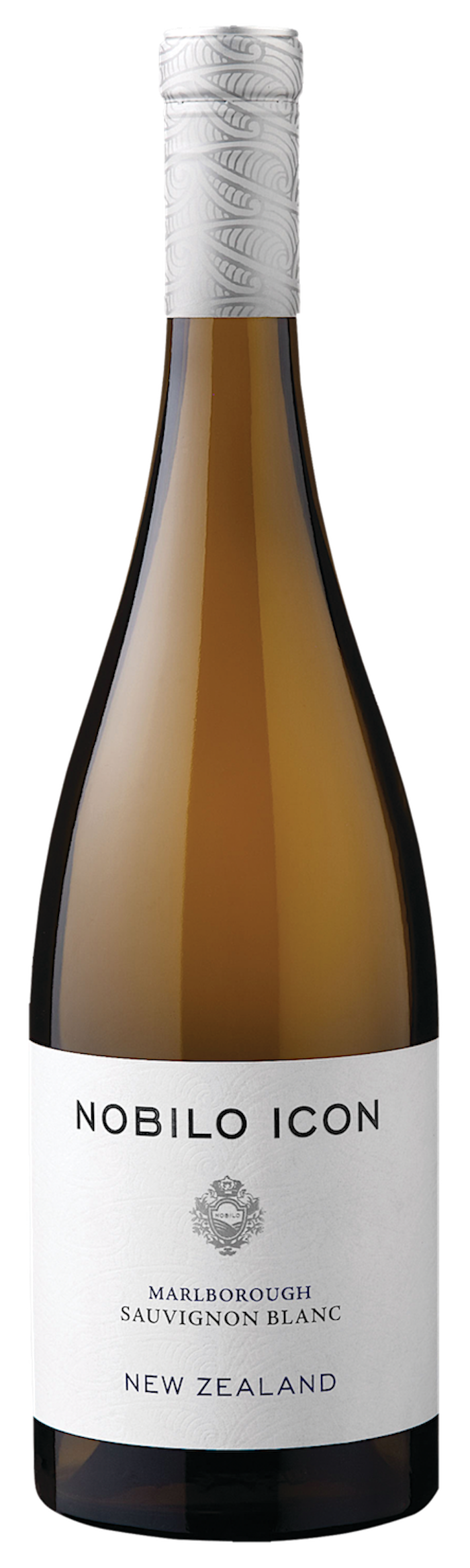 As we
did last year, we began the tasting
began with one of Edmonds’s proudest
achievements, his Icon Sauvignon Blanc, the
new 2017 vintage ($22), which is
possibly the finest of this varietal coming
out of New Zealand. With its
unexpected dryness, citrus and grapefruit
flavors, it avoids the cloying,
sugary grassiness of most Sauvignon Blancs,
both from New Zealand and the U.S.
West Coast. “I look for restraint when I make
our Sauvignon Blanc,” Edmonds
said, “and we blend from five vineyards to get
the complexity and balance
right.”
As we
did last year, we began the tasting
began with one of Edmonds’s proudest
achievements, his Icon Sauvignon Blanc, the
new 2017 vintage ($22), which is
possibly the finest of this varietal coming
out of New Zealand. With its
unexpected dryness, citrus and grapefruit
flavors, it avoids the cloying,
sugary grassiness of most Sauvignon Blancs,
both from New Zealand and the U.S.
West Coast. “I look for restraint when I make
our Sauvignon Blanc,” Edmonds
said, “and we blend from five vineyards to get
the complexity and balance
right.”
Still,
Nobilo is most famous for its velvety
Marlborough Pinot Noirs, which manage to
stay within a moderate alcohol range of 12.9%
to14.9%.
The Icon 2016
($22) is
about as well priced as you’ll find a Pinot
Noir anywhere. It’s a sunny wine, bright on
the palate yet with a pleasing density that
shows it to be a better
example than many thin Burgundies from weak
vintages.
The Icon
2015 ($22) was “all about fruit.” Edmonds
says, “We both hand
pick and machine pick Pinot Noir. It depends
on the season. However the Icon
Pinot Noir style is not reliant on any whole
berry character in the ferment.
The machine picking means we can bring the
fruit into the winery, cool it
through the must chiller and get it into open
top fermenters for a pre
fermentation cold soak. What I like about
machine picking is the intensity of
dark berry fruit we can achieve.”
His Pinot Noirs go as well with salmon as with lamb or pork.
Those were the current releases, and we tasted some older vintages—tough to find, so prices are not currently available—including a very luscious, almost viscous Icon 2012, surprisingly so for only 12.9% alcohol. The 2010 vintage was, on the other hand, from a hot year and the alcohol boomed to 14.9%. The finest wine of the evening was an extremely well knit, silky 2007, at 13% alcohol, which proved that Pinot Noirs from New Zealand terroir can show real class and elegance long after so many high alcohol New World bottlings lose their fruit-forward charms after just a few years in bottle, becoming one- or two-dimensional on the palate.
All winemakers have their own particular intensity—“Being a winemaker you can’t taste or smell anything without analyzing it!” Edmonds said—which is what a unique estate like Nobilo needs, especially since its owner, Constellation Brands which owns wineries (as well as spirits producers) that include everything from 7 Moons and Robert Mondavi to Clos du Bois and Simi. But Nobilo is one of their trophies and I hope it stays as fine and small as it is now.
❖❖❖

SHE'S ALSO SUING KITKAT FOR NOT
HAVING ANY CAT MEAT IN THE CANDY
New Yorker Julie Fletcher is filing a federal law suit
suing Canada Dry for not having real ginger in its
ginger ale, contending that these claims caused her
economic harm. Her lawyer told the press, “Ms. Fletcher
knew that ginger root can calm an
upset stomach and she purchased Canada Dry when her
children were sick, believing that the ginger root in
the beverage would soothe their stomach aches" and that
the soda has only a “miniscule” amount of ginger in
it.

"‘The menus don’t give a name at all.
They don’t look much like menus, either. They’re
notebooks in which the items available, presented in a
short à la carte list (in contrast to the hourslong
tastings offered for $255 at Ko), are handwritten on a
fresh page each day, by different employees using
different pens.”—Pete Wells, “The David Chang Restaurant
Almost Nobody’s Heard Of,” NY Times (Jul 25, 2018).
Wine
Column Sponsored by Banfi Vintners
SANGIOVESE
 Wine is a joy year-round but
in cooler weather one
grape varietal has really taken center stage in
my daily activities – that most Italian of
grapes, Sangiovese, and its ultimate expression
– Brunello di Montalcino.
Wine is a joy year-round but
in cooler weather one
grape varietal has really taken center stage in
my daily activities – that most Italian of
grapes, Sangiovese, and its ultimate expression
– Brunello di Montalcino.
From mid-September through mid-October,
the Sangiovese grown for our various styles of red
wines are be harvested, culminating with the top
selection for Brunello di Montalcino.
Second, cooler weather here means
it is time to start enjoying more red wines and
especially Sangiovese based wines. That
includes Banfi’s cru of Brunello, Poggio alle Mura,
literally the cream of the crop of our Sangiovese
vineyards. Alongside our Poggio alle Mura Brunello di
Montalcino, this year we introduced two more wines
from the cru Poggio alle Mura – a Rosso di Montalcino
and a Riserva of Brunello. Rosso is sort of like the
younger brother of Brunello, also made from 100%
Sangiovese grapes but usually a selection from younger
vines and the wine is aged only two years compared to
the four required for Brunello. The
Riserva, on the other hand, is an even more selective
harvest of Sangiovese, and ages for an additional year
before release.
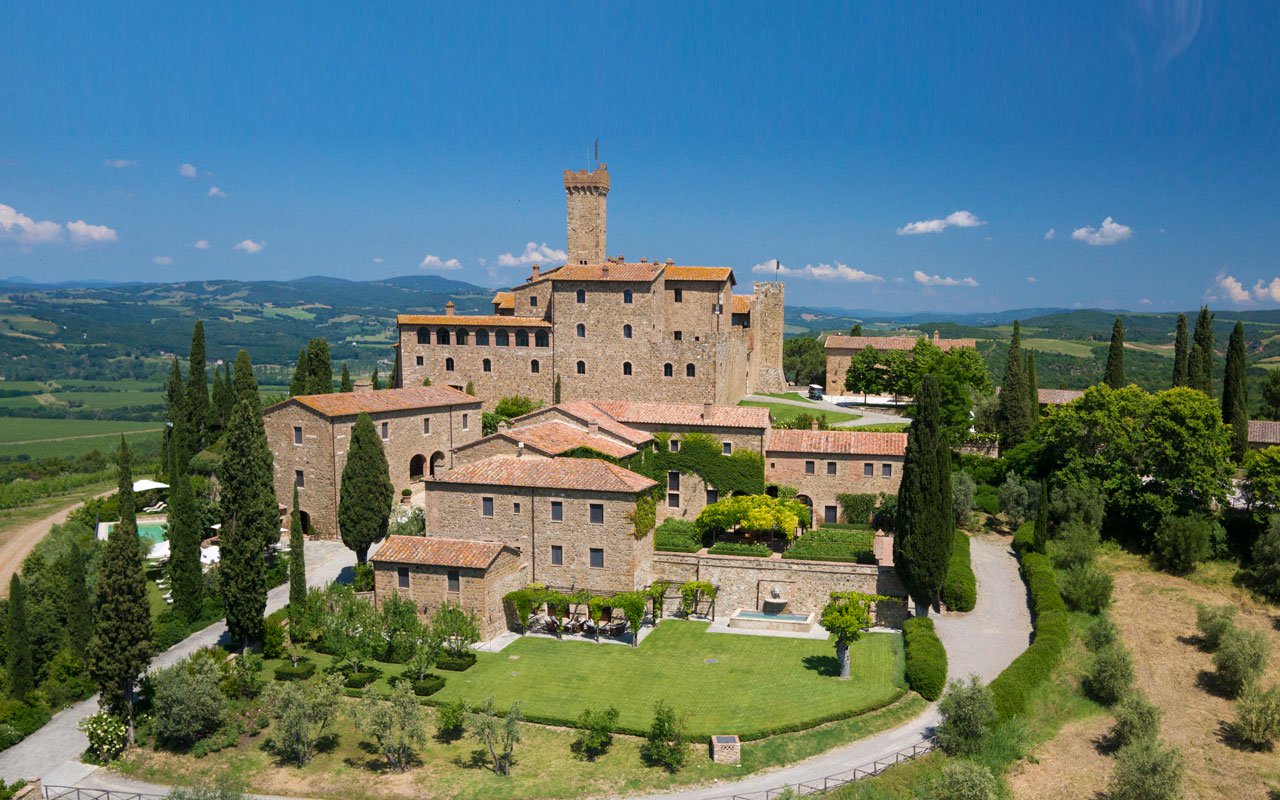
What is so special about this cru
Poggio alle Mura?
Well, it is the result our over 30 years of
ongoing research at my family’s vineyard estate,
Castello Banfi.
When we first began planting our vines there in
the late 1970s studies from the University of Bordeaux
indicated which strains of many varietals we should
plant, based on the soil type and microclimate of each
vineyard. But
when it came to the region’s native Sangiovese, there
was only local lore, no scientific research. So we took
it upon ourselves to figure out this vine, and set off
on three decades of incredibly detailed research.
We started
with 600 apparent variations on Sangiovese, because it
is so susceptible to variations in weather and soil,
and narrowed that down to 160 truly genetically
different clones.
We planted a vineyard with two rows of each
type, made wine from each of them, and charted the
differences – remember, you only get one chance a year
to make wine, so this took time.
It took about ten years to get some
concrete results, though we continue to experiment
today and always will – you never stop learning in
science and nature!
Once we determined which were the best,
complementary clones that could be planted together to
make the best Brunello, we chose to plant them in what
we determined to be the optimal vineyard sites. Coincidentally,
the best soils and climate conditions are in the
slopes surrounding the medieval fortress today known
as Castello Banfi, known since Etruscan times as
Poggio alle Mura – the walled hilltop. Hence the
name of our most special “cru” of Brunello,
representing a synthesis between tradition and
innovation.
Though the focus of this study was
our Brunello, all of our Sangiovese-based wines,
including the super Tuscans SummuS, Cum Laude, and
Centine, benefitted from this work. And that’s
the third reason for celebrating Sangiovese this
month, for the range of wonderful reds that usher us
into autumn! One
wine in particular was inspired by our research – the
BelnerO, a Sangiovese dominant blend with what I like
to call a kiss of Cabernet and a whisper of Merlot. We grow the
grapes a little differently for BelnerO than for
Brunello, make the wine with less oak aging and
released it earlier from the winery, providing a
counterpoint to Brunello and a lovely terroir-driven
wine in its own right.
If you
know Italians, you know that by nature we are
multi-faceted, varying in mood, and always passionate. As a
nation, we span from the hot sunny beaches of Sicily
near the African coast to the rugged mountains and
Alpine ski slopes of Trentino-Alto Adige in the north. Sangiovese
is grown in almost all of Italy’s regions and reflects
the unique nature of each; it is most famous
(rightfully so) in Tuscany, yet even there it reflects
the nuances of each hilltop, valley and subzone. It has
something a little different to say in Brunello than
Chianti, Morellino than Vino Nobile di Montepulciano,
Rosso di Montalcino than Super Tuscan blends.
Here is a smattering of
Sangiovese-based wines that you may wish to get to
know better, reflecting a spectrum that appeals to
every occasion, every taste, and every budget. We can
assure you that the conversation will never become
boring. 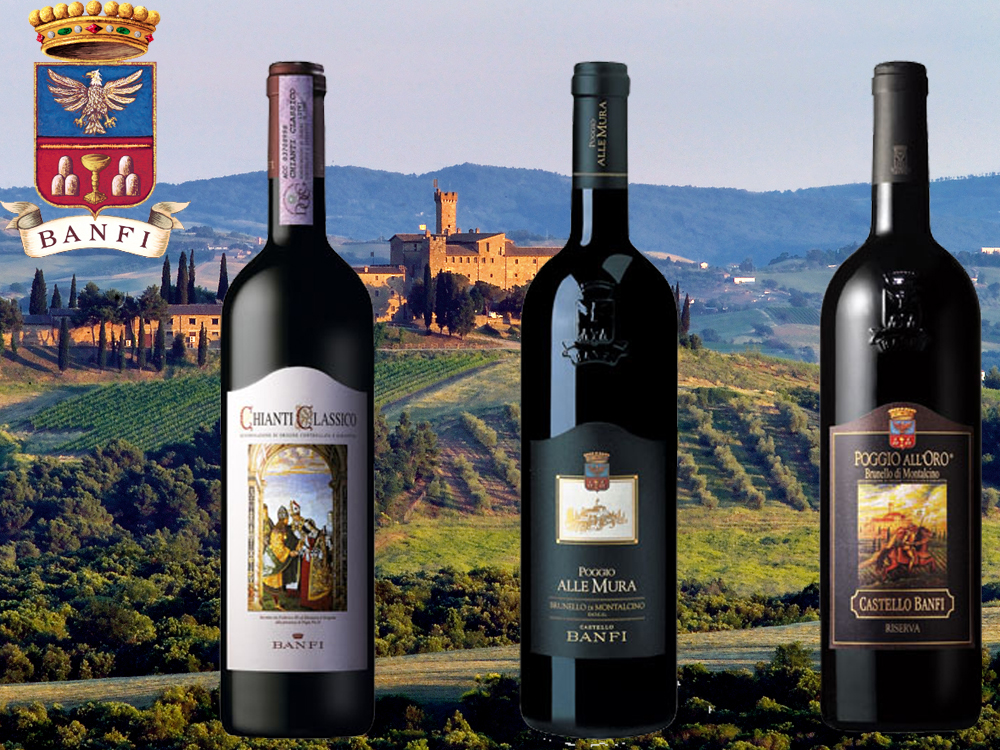
Recommendations for Celebrating
Sangiovese
BelnerO Proprietor’s Reserve Sangiovese
– A refined
cuvée of noble red grapes perfected by our pioneering
clonal research. This dark beauty, BelnerO, is
produced at our innovative winery, chosen 11
consecutive years as Italy’s Premier Vineyard Estate.
Fermented in our patented temperature controlled
French oak and aged approximately 2 additional years.
Unfiltered, and Nitrogen bottled to minimize sulfites.
Castello Banfi Brunello di Montalcino –
Rich, round, velvety and intensely
aromatic, with flavor hints of licorice, cherry, and
spices. Brunello di Montalcino possesses an intense
ruby-red color, and a depth, complexity and opulence
that is softened by an elegant, lingering aftertaste.
Unfiltered after 1998 vintage.
Castello Banfi Rosso di Montalcino – Brunello's "younger brother," produced
from select Sangiovese grapes and aged in barrique for
10 to 12 months. Deep ruby-red, elegant, vibrant,
well-balanced and stylish with a dry velvety
finish.
Poggio all’Oro Brunello di Montalcino
Riserva – A single vineyard selection of our most
historically outstanding Sangiovese, aged five years
before release, the additional year more than that
required of Brunello including 6 months in barrel and
6 months more in bottle to grant its “Riserva”
designation. Incredible
elegance and harmony. Intense with lots of fruit and
subtle wood influence. Round, complete, well balanced
with hints of chocolate and berries. Unfiltered after
1998.
Poggio alle Mura – The first tangible result of years of
intensive clonal research on Montalcino’s native
Sangiovese grape.
Estate bottled from the splendidly sun drenched
vineyards surrounding the medieval Castello from which
it takes its name.
The Brunello
di Montalcino is seductive, silky and smoky. Deep ruby
in color with an expressive bouquet of violets, fruits
and berries as well as cigar box, cedar and exotic
spices. The Rosso
di Montalcino is also intense ruby red. The bouquet
is fresh and fruity with typical varietal notes of
cherry and blackberry, enriched by more complex hints
of licorice, tobacco and hazelnut. It is full
bodied, yet with a soft structure, and a surprisingly
long finish. The Poggio alle Mura Brunello di Montalcino
Riserva is deep ruby red with garnet
reflections and a rich, ample bouquet that hints of
prune jam, coffee, cacao and a light balsamic note. It is full
and powerful, with ripe and gentle tannins that make
it velvety and harmonious; this wine is supported by a
pleasing minerality that to me speaks soundly of that
special hillside in southern Montalcino.
SummuS – A wine of towering elegance, SummuS is an
extraordinary blend of Sangiovese which contributes
body; Cabernet Sauvignon for fruit and structure; and
Syrah for elegance, character and a fruity bouquet. An elegant,
complex and harmonious red wine.
Cum Laude – A complex and elegant red which graduated
“With Honors,” characterized by aromas of juicy
berries and fresh spices.
Centine – A Cuvee that is more than half
Sangiovese, the balanced consisting of equal parts of
Cabernet Sauvignon and Merlot. Vinified in
a firm, round style that easily accompanies a wide
range of dishes, this is a smooth and fragrantly
satisfying wine with international character, and a
perennial favorite at my own dinner table.
Banfi Chianti Superiore – The “Superiore” designation signifies
stricter government regulations regarding production
and aging requirements, as compared to regular
Chianti. An
intense ruby red wine with fruit forward aromas and
floral notes. This
is a round wine with well-balanced acidity and fruit.
Banfi Chianti Classico – An enduring classic: alluring
bouquet of black fruit and violets; rich flavors of
cherry and leather; supple tannins and good acidity
for dining.
Banfi Chianti Classico Riserva – Produced from select grapes grown in the
"Classico" region of Chianti, this dry, fruity and
well-balanced red has a full bouquet reminiscent of
violets.
Fonte alla Selva Chianti Classico – This is our newest entry into the Chianti
arena, coming from a 99 acre estate in Castellina, the
heart of the Chianti Classico region. The wine is
a captivating mauve red that smells of cherry, plum
and blackberry with hints of spice. It is
round, full and balanced with very good
acidity.
Col di Sasso – Sangiovese and Cabernet Sauvignon. Luscious,
complex and soft with persistent notes of fruit and
great Italian style structure.
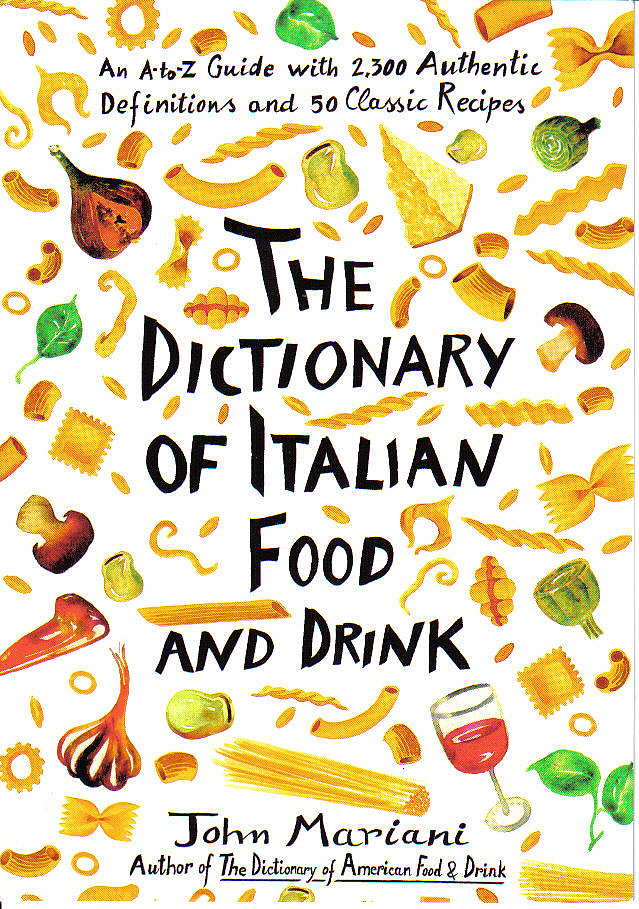
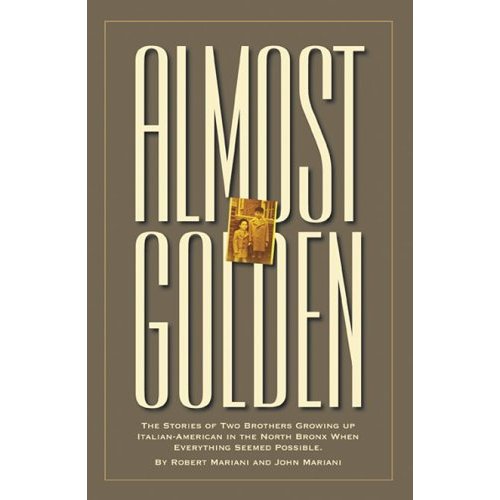
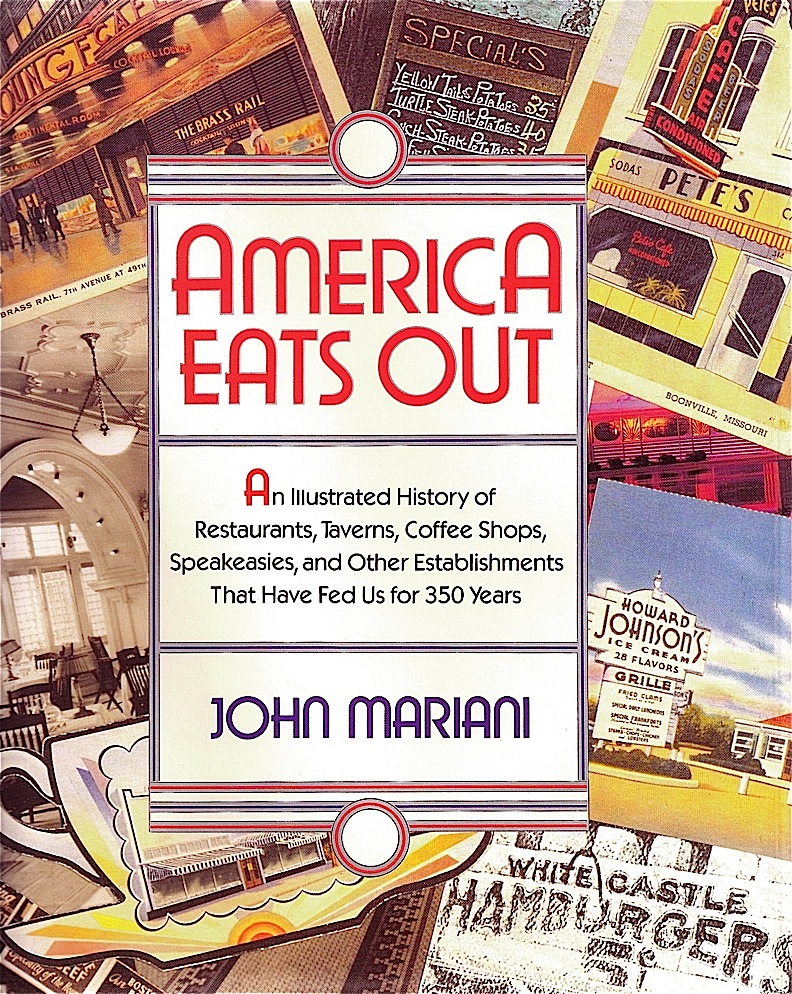
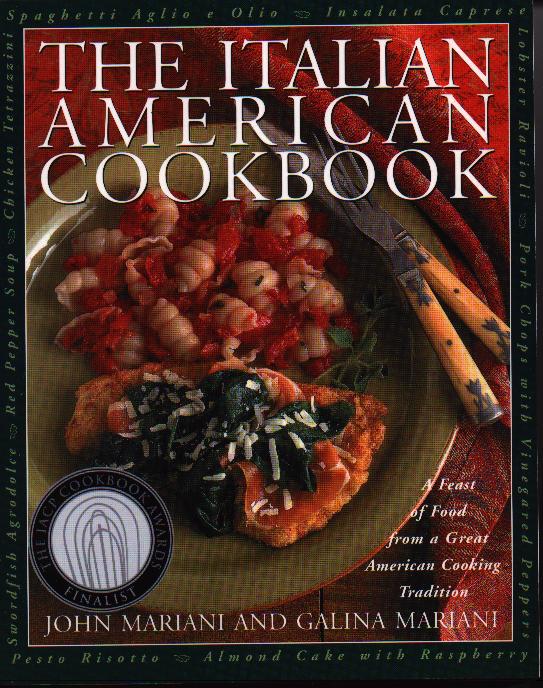
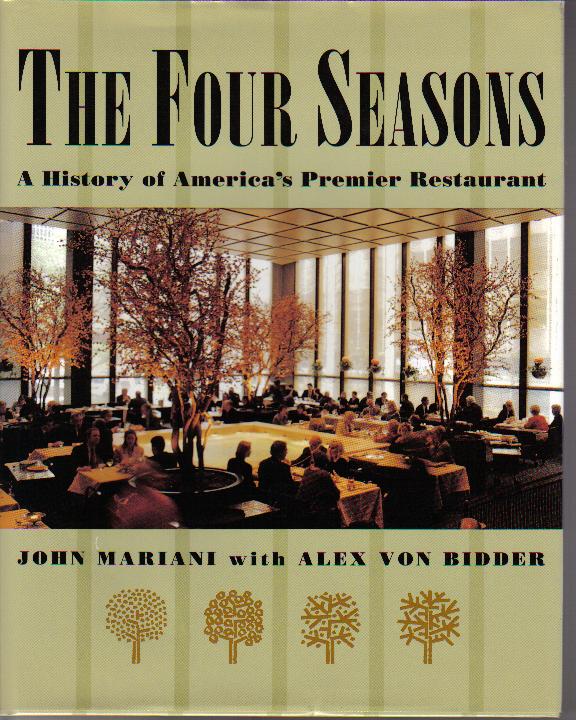
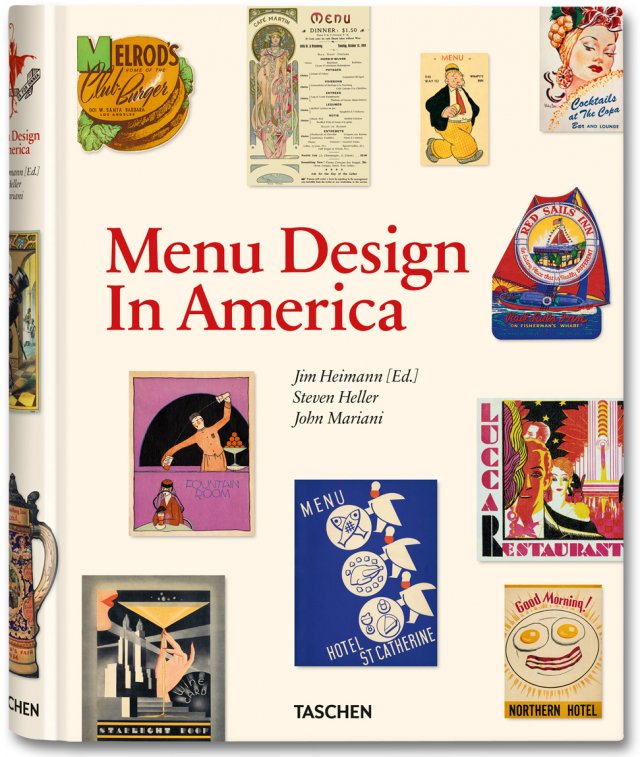
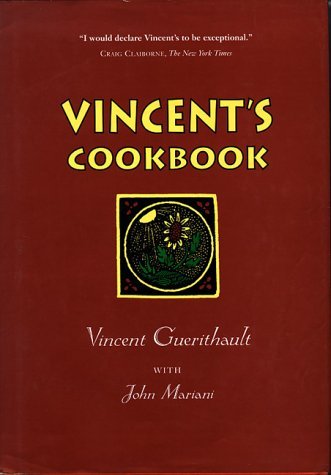
Any of John Mariani's books below may be ordered from amazon.com.
 The Hound in Heaven
(21st Century Lion Books) is a novella, and
for anyone who loves dogs, Christmas, romance,
inspiration, even the supernatural, I hope you'll find
this to be a treasured favorite. The story
concerns how, after a New England teacher, his wife and
their two daughters adopt a stray puppy found in their
barn in northern Maine, their lives seem full of promise.
But when tragedy strikes, their wonderful dog Lazarus and
the spirit of Christmas are the only things that may bring
his master back from the edge of despair.
The Hound in Heaven
(21st Century Lion Books) is a novella, and
for anyone who loves dogs, Christmas, romance,
inspiration, even the supernatural, I hope you'll find
this to be a treasured favorite. The story
concerns how, after a New England teacher, his wife and
their two daughters adopt a stray puppy found in their
barn in northern Maine, their lives seem full of promise.
But when tragedy strikes, their wonderful dog Lazarus and
the spirit of Christmas are the only things that may bring
his master back from the edge of despair. WATCH THE VIDEO!
“What a huge surprise turn this story took! I was completely stunned! I truly enjoyed this book and its message.” – Actress Ali MacGraw
“He had me at Page One. The amount of heart, human insight, soul searching, and deft literary strength that John Mariani pours into this airtight novella is vertigo-inducing. Perhaps ‘wow’ would be the best comment.” – James Dalessandro, author of Bohemian Heart and 1906.
“John Mariani’s Hound in Heaven starts with a well-painted portrayal of an American family, along with the requisite dog. A surprise event flips the action of the novel and captures us for a voyage leading to a hopeful and heart-warming message. A page turning, one sitting read, it’s the perfect antidote for the winter and promotion of holiday celebration.” – Ann Pearlman, author of The Christmas Cookie Club and A Gift for my Sister.
“John Mariani’s concise, achingly beautiful novella pulls a literary rabbit out of a hat – a mash-up of the cosmic and the intimate, the tragic and the heart-warming – a Christmas tale for all ages, and all faiths. Read it to your children, read it to yourself… but read it. Early and often. Highly recommended.” – Jay Bonansinga, New York Times bestselling author of Pinkerton’s War, The Sinking of The Eastland, and The Walking Dead: The Road To Woodbury.
“Amazing things happen when you open your heart to an animal. The Hound in Heaven delivers a powerful story of healing that is forged in the spiritual relationship between a man and his best friend. The book brings a message of hope that can enrich our images of family, love, and loss.” – Dr. Barbara Royal, author of The Royal Treatment.
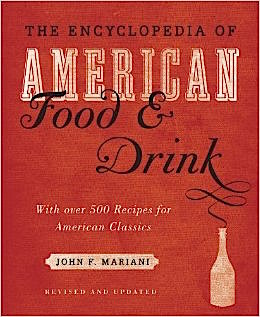 |
The Encyclopedia of American Food and Drink by John F. Mariani (Bloomsbury USA, $35) Modesty forbids me to praise my own new book, but let me proudly say that it is an extensive revision of the 4th edition that appeared more than a decade ago, before locavores, molecular cuisine, modernist cuisine, the Food Network and so much more, now included. Word origins have been completely updated, as have per capita consumption and production stats. Most important, for the first time since publication in the 1980s, the book includes more than 100 biographies of Americans who have changed the way we cook, eat and drink -- from Fannie Farmer and Julia Child to Robert Mondavi and Thomas Keller. "This book is amazing! It has entries for everything from `abalone' to `zwieback,' plus more than 500 recipes for classic American dishes and drinks."--Devra First, The Boston Globe. "Much needed in any kitchen library."--Bon Appetit. |
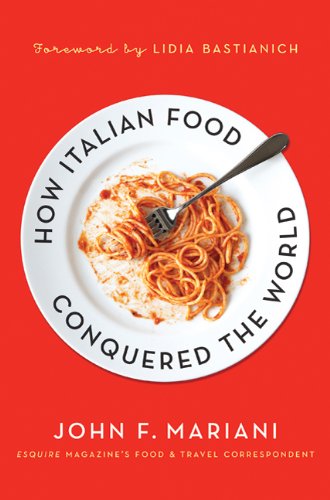
"Eating Italian will never be the same after reading John Mariani's entertaining and savory gastronomical history of the cuisine of Italy and how it won over appetites worldwide. . . . This book is such a tasteful narrative that it will literally make you hungry for Italian food and arouse your appetite for gastronomical history."--Don Oldenburg, USA Today. "Italian
restaurants--some good, some glitzy--far
outnumber their French rivals. Many of
these establishments are zestfully described
in How Italian Food Conquered the World, an
entertaining and fact-filled chronicle by
food-and-wine correspondent John F.
Mariani."--Aram Bakshian Jr., Wall Street
Journal.
"Equal parts
history, sociology, gastronomy, and just
plain fun, How Italian Food Conquered the
World tells the captivating and delicious
story of the (let's face it) everybody's
favorite cuisine with clarity, verve and
more than one surprise."--Colman Andrews,
editorial director of The Daily
Meal.com. "A fantastic and fascinating
read, covering everything from the influence
of Venice's spice trade to the impact of
Italian immigrants in America and the
evolution of alta cucina. This book will
serve as a terrific resource to anyone
interested in the real story of Italian
food."--Mary Ann Esposito, host of PBS-TV's
Ciao
Italia. "John Mariani has written the
definitive history of how Italians won their
way into our hearts, minds, and
stomachs. It's a story of pleasure over
pomp and taste over technique."--Danny Meyer,
owner of NYC restaurants Union Square
Cafe, The Modern, and Maialino.
|
 |
 |
 |
 |
 |
 |
 |
 |
 Everett Potter's Travel Report:
 Eating Las Vegas
JOHN CURTAS has been covering the Las Vegas
food and restaurant scene since 1995. He is
the co-author of EATING LAS VEGAS – The 50
Essential Restaurants (as well as
the author of the Eating Las Vegas web site: www.eatinglasvegas.
He can also be seen every Friday morning as
the “resident foodie” for Wake Up With the
Wagners on KSNV TV (NBC) Channel 3 in
Las Vegas.
Eating Las Vegas
JOHN CURTAS has been covering the Las Vegas
food and restaurant scene since 1995. He is
the co-author of EATING LAS VEGAS – The 50
Essential Restaurants (as well as
the author of the Eating Las Vegas web site: www.eatinglasvegas.
He can also be seen every Friday morning as
the “resident foodie” for Wake Up With the
Wagners on KSNV TV (NBC) Channel 3 in
Las Vegas.

MARIANI'S VIRTUAL GOURMET
NEWSLETTER is published weekly. Publisher: John Mariani. Editor: Walter Bagley. Contributing Writers: Christopher Mariani,
Robert Mariani, Misha Mariani, John A. Curtas, Gerry Dawes, Geoff Kalish,
and Brian Freedman. Contributing
Photographer: Galina Dargery. Technical
Advisor: Gerry
McLoughlin.
If you wish to subscribe to this
newsletter, please click here: http://www.johnmariani.com/subscribe/index.html
© copyright John Mariani 2017