MARIANI’S
Virtual
Gourmet
July 20, 2025
NEWSLETTER
Founded in 1996
ARCHIVE
THIS WEEK
MODERN MADRID,
Part One
By John Mariani
NEW YORK CORNER
CÓMODO
By John Mariani
HÔTEL ALLEMAGNE
CHAPTER TWENTY
By John Mariani
NOTES FROM THE WINE CELLAR
PROVENCE
By John Mariani
By John Mariani
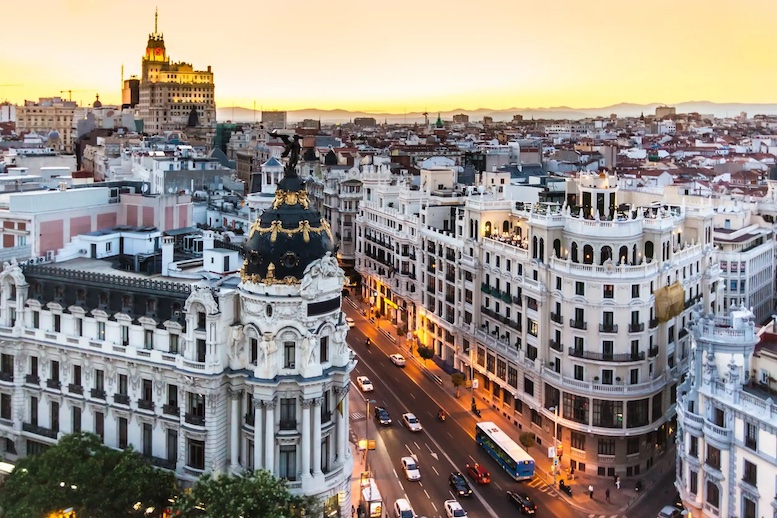
As I write this, Madrid is
sweltering, but when I visited this spring
the weather was ideal, as it will be again
in the fall. All the more reason to visit
this great capital city in those
seasons, especially since all the massive
construction work in its center has finally
been accomplished, opening up the avenues,
so that Madrid is 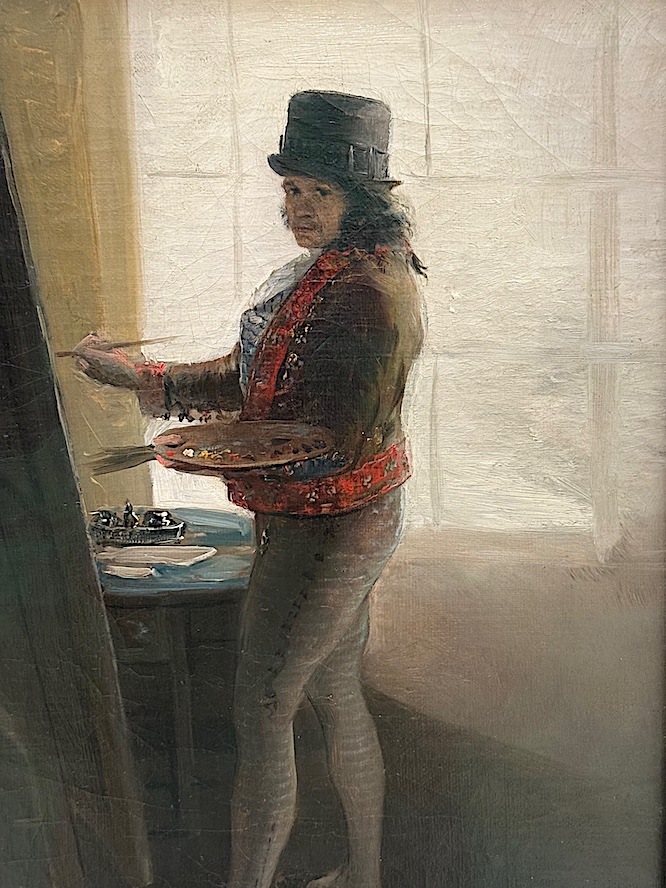 more
beautiful and scrubbed cleaner than ever.
Its position as one of Europe’s cultural
capitals has been assured since the 1990s,
with museums and artistic events expanded well
beyond the great Prado and Thyssen
museums, boosted by its industrial sector
but increasingly dominated by a strong service
sector. On my trip I “discovered” the Bellas
Artes de San Fernando, a large
collection that includes 13 Goyas (left)
and a vast number of his etchings and plates
for "Los Caprichos." Other recently enhanced
institutions include the Palacio de
Linares, seat of the Casa de América;
the Muséo Arqueologico Naçional; and
the Muséo Naçional del Romanticismo.
more
beautiful and scrubbed cleaner than ever.
Its position as one of Europe’s cultural
capitals has been assured since the 1990s,
with museums and artistic events expanded well
beyond the great Prado and Thyssen
museums, boosted by its industrial sector
but increasingly dominated by a strong service
sector. On my trip I “discovered” the Bellas
Artes de San Fernando, a large
collection that includes 13 Goyas (left)
and a vast number of his etchings and plates
for "Los Caprichos." Other recently enhanced
institutions include the Palacio de
Linares, seat of the Casa de América;
the Muséo Arqueologico Naçional; and
the Muséo Naçional del Romanticismo.
Today Madrid’s stock market
is the third largest in Europe and the city is
ranked fifth most important leading Centre of
Commerce after London, Paris, Frankfurt and
Amsterdam.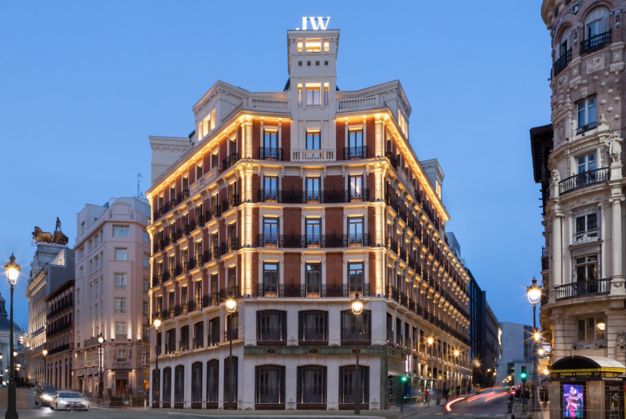
As a result, like
Barcelona, Madrid has become a very expensive
city to live in,
and tourists, with 11.2 million
visitors last year, gobbled up the BnBs that
were once apartments and spent more than 16
billion euros, with Americans leading the
invasion.
Responding to this
increasingly affluent market, major luxury
hotel groups have been popping up on or off
the main avenues to compete with longstanding
institutions like The Ritz, 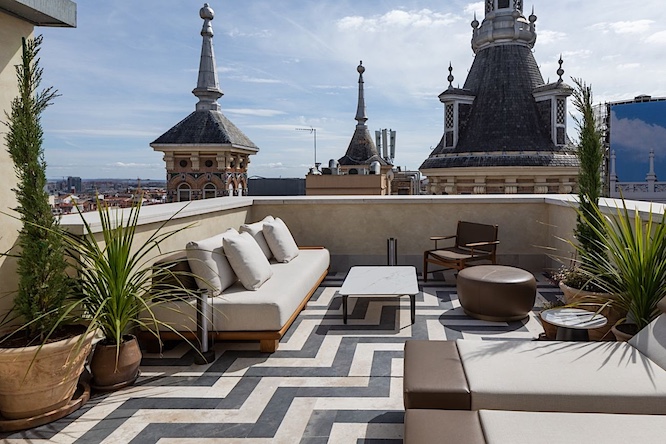 Gran
Hotel Ingles and
The Palace, now joined by the
thoroughly modern JW Marriott Madrid
(above; Sevilla 2), a block from
the main avenue, Calle Alcalá, with 139 rooms,
most with private balconies. Rates
are
considerably below other deluxe properties
like The Four Seasons up the block.
Gran
Hotel Ingles and
The Palace, now joined by the
thoroughly modern JW Marriott Madrid
(above; Sevilla 2), a block from
the main avenue, Calle Alcalá, with 139 rooms,
most with private balconies. Rates
are
considerably below other deluxe properties
like The Four Seasons up the block.
My room was quite spacious,
very quiet––Madrid is not a raucously loud
city––with a balcony set with chairs and small
table, a king-size bed and very well equipped
modern bath. The expansive lobby has a
separate area for the concierge’s desk.
There are now several
hotels in Madrid that have first-rate
restaurants rooms, and the JW Marriott’s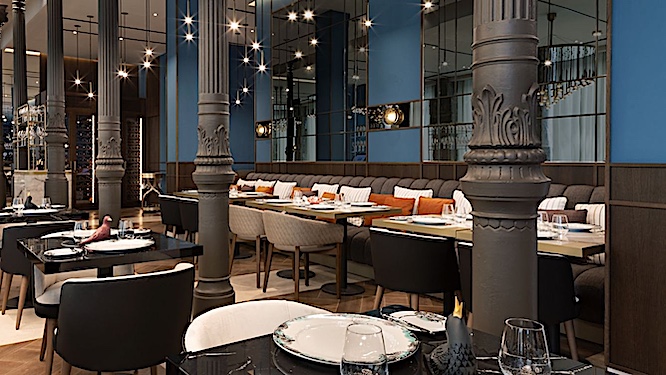 Qú by
Mario Sandoval joins them with an à la
carte dining room focusing on local products
(Madrid has splendid markets from which to
choose the best provender and meats). Sandoval
is head of
the Croque Group and comes from three
generations of chefs. In 2013 he won the
Spanish National Gastronomy Award, and his
primary restaurant, Croque, has
garnered two Michelin stars.
Qú by
Mario Sandoval joins them with an à la
carte dining room focusing on local products
(Madrid has splendid markets from which to
choose the best provender and meats). Sandoval
is head of
the Croque Group and comes from three
generations of chefs. In 2013 he won the
Spanish National Gastronomy Award, and his
primary restaurant, Croque, has
garnered two Michelin stars.
Q is
a simpler, more casual affair, with a smart
décor and lounge, antique pillars, tall
mirrors and star-like hanging
lights.
I 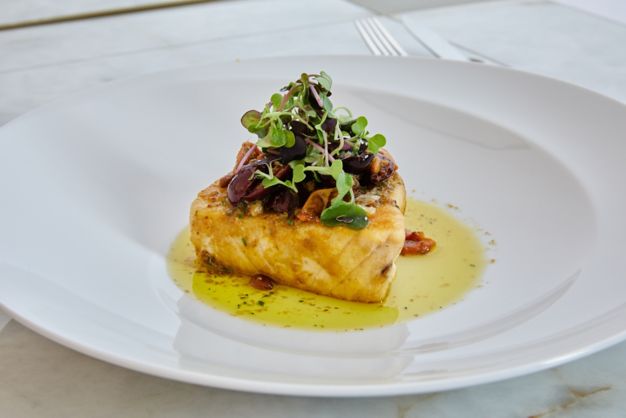 had
been eating a fair amount of Spanish ham on my
trip, but only Q was offering Cinco Jotas
Jamon Ibérico de bellota 5J, which is
considered the finest in Spain, founded in
Jabugo in 1879,
using only an ancient breed of
acorn-fed black pigs (most producers use
crossbreeds), and it has a sweet flavor and a
satiny sheen of white fat. My friend and I
also shared some cod fritters with aji
amarillo mayonnaise and a plate of softly
grilled artichokes.
had
been eating a fair amount of Spanish ham on my
trip, but only Q was offering Cinco Jotas
Jamon Ibérico de bellota 5J, which is
considered the finest in Spain, founded in
Jabugo in 1879,
using only an ancient breed of
acorn-fed black pigs (most producers use
crossbreeds), and it has a sweet flavor and a
satiny sheen of white fat. My friend and I
also shared some cod fritters with aji
amarillo mayonnaise and a plate of softly
grilled artichokes.
Lubina
is a sea bass grilled à la bilbaina,
with its characteristic, bold garlic and chile
oil. For dessert there was a millefoglie of
pineapple and cream with ginger ice cream;
some 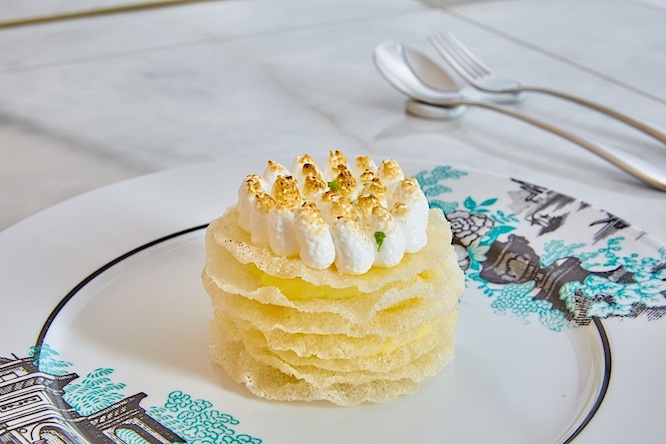 perfect
springtime strawberries slightly pickled and
served with a rich vanilla mascarpone and both
strawberry and mint ice creams; and a
chocolate, liquid center coolant with
pistachio and violet ice cream,
finishing
off with glasses of Sherry.
perfect
springtime strawberries slightly pickled and
served with a rich vanilla mascarpone and both
strawberry and mint ice creams; and a
chocolate, liquid center coolant with
pistachio and violet ice cream,
finishing
off with glasses of Sherry.
Afterwards,
at
about ten o’clock I took a stroll down the
Avenida, which was teeming with young people
returning from a huge Netflix kick-off party
in Retiro Park
buoyed as much by the music as by the
moonlight over Madrid.
In my next report on the city I’ll
recommend more restaurants.
NEW YORK CORNER
Freehand Hotel
23 Lexington Avenue
212-475-1924
By John Mariani
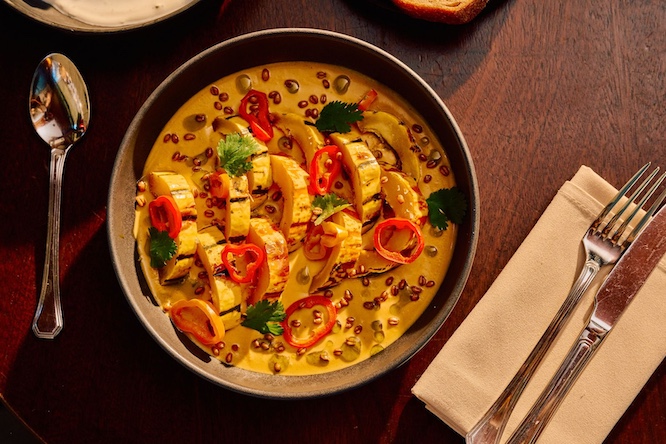
Moqueca
Felipe Donnelly and
his wife Tamy Rofe have worked together for a
long time now, at both Colonia Verde in
Brooklyn and Comparti, and right now at Cómodo
they are turning out their most ambitious
work, combining Latino and
American cuisines within a comfort zone of
very hearty, deeply flavorful dishes that
obviously come from the heart.
 They do so
within a most charming, comfortable and warm
dining room of a kind whose use of wood, soft
lighting, covered tables with lamps, flowers and
works by Colombian artists Luisa
Castellanos, Valentina Petalosi, Gogy
Farías very
much reminds me of similar restaurants in South
America. The crowd is not loud, and the midweek
night I was there the music was played softly.
They do so
within a most charming, comfortable and warm
dining room of a kind whose use of wood, soft
lighting, covered tables with lamps, flowers and
works by Colombian artists Luisa
Castellanos, Valentina Petalosi, Gogy
Farías very
much reminds me of similar restaurants in South
America. The crowd is not loud, and the midweek
night I was there the music was played softly. 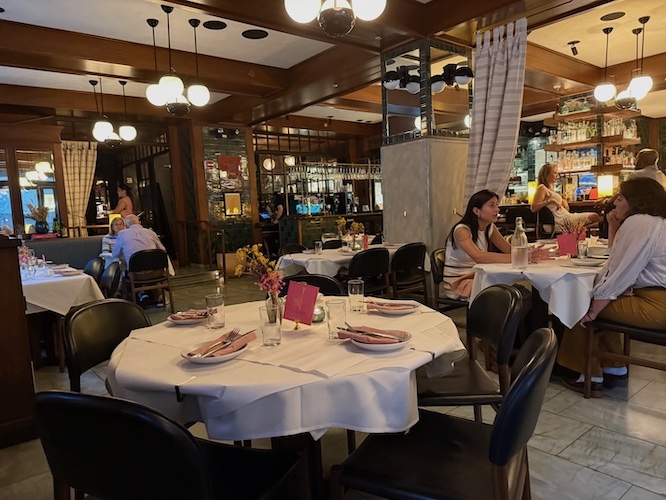
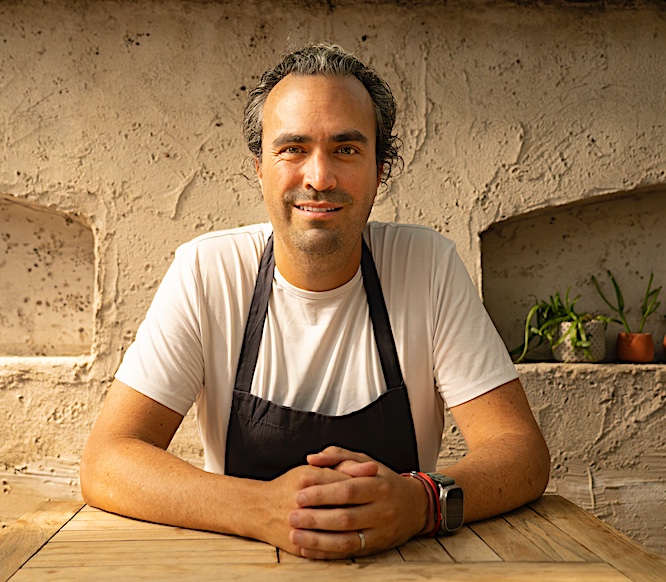
Donnelly, himself Colombian, is the co-owner and
Executive Chef of Cómodo, who, after moving to
the U.S. actually worked in advertising for over
a decade while practicing his love of cooking.
In 2010, he and Tamy hosted a series of supper
clubs at their apartment, and they decided to do
it full time, opening the original Cómodo (now
closed) in the SoHo neighborhood in 2012 and
Disco Tacos, a food
truck-turned-restaurant.
The menu is a very
sensible size, which makes it all the more
difficult to ignore a single item. We began
with sea bream ceviche, simply dressed with lime
juice, ricotta and olive oil. Among the many
tuna tartares I’ve had this year, Donnelly’s is
one of the best, spiked with habanero
ash aïoli, refreshing watermelon, the scent of
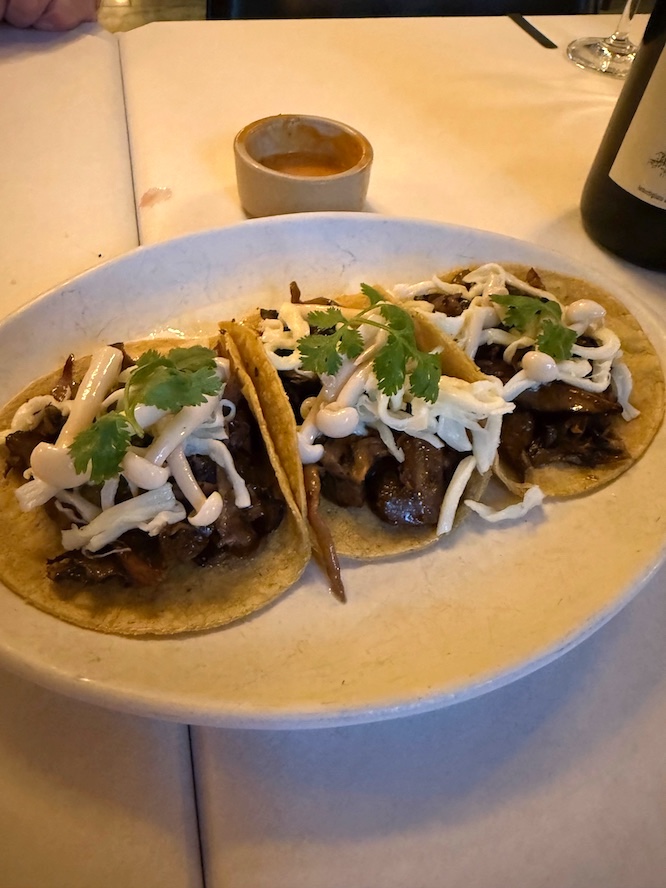
mint, sesame oil, and a tostada. Wild
mushroom tacos (below) were smartly
pickled, again with a hit of habanero ash and
the addition of Oaxaca cheese.
I love Brazilian pão de quejo––the
puffy, stretchy buns made with tapioca
flour––and they serve them at Cómodo, though
they were too dense and chewy.
 Moqueca is
also of Brazilian origin, usually made with
seafood, here with rich butternut
squash coconut milk, crunchy wheatberries,
pickled peppers and steamy white rice––a
delicious melding of many flavors in perfect
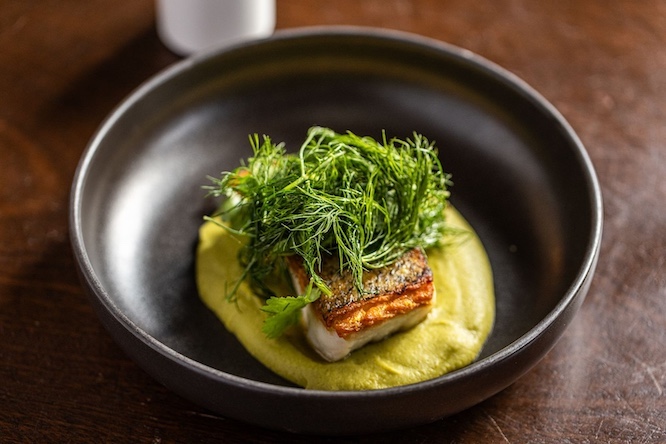
harmony. Golden tile fish (below) also
takes splendidly to a coconut lime sauce with
the great idea of plantain puree, and shorts
ribs had plenty of rocoto peppers, sweet
onions, peewee potatoes, tomatoes and white
rice, to be enjoyed by more than one person.
Moqueca is
also of Brazilian origin, usually made with
seafood, here with rich butternut
squash coconut milk, crunchy wheatberries,
pickled peppers and steamy white rice––a
delicious melding of many flavors in perfect
harmony. Golden tile fish (below) also
takes splendidly to a coconut lime sauce with
the great idea of plantain puree, and shorts
ribs had plenty of rocoto peppers, sweet
onions, peewee potatoes, tomatoes and white
rice, to be enjoyed by more than one person.
The idea of poblano pepper rigatoni with a
vegetarian bolognese would have been better had
it had more punch to the peppers and seasoning.
The menu also offers two beef dishes: A
Colombian picanha like steak frites, and
a bone-in ribeye with potatoes and
cilantro-scented aïoli.
This is rich food but please have a dessert at
Cómodo, either the profiteroles with chocolate
topping or the raspberry sorbet dashed with ruby
Port.
Cómodo is such a comfortable and civilized
restaurant without any pretensions, so it’s easy
enough to like for those virtues, but the real
draw is the out-of-the-ordinary, heart-felt
cooking here you will crave again and again.
Starters run
$10-$18, main courses $18-$78.
Open
nightly for lunch Mon.-Fri.; dinner nightly;
brunch Sat. & Sun.
HÔTEL ALLEMAGNE
By John Mariani
“So,
where’s the car?” asked David.
“It’s coming. I have a man driving it
over," said Marciano. "He should be here in a
minute. Sit down. You want a beer?”
The Americans refused the offer.
“So, what kind of car is it and what’s
the price?” asked David.
With that, Marciano pressed a button to
lower the garage door shut. David
instinctively looked for another open exit.
The room led only to the office towards the
front.
“First, we talk a little, okay?” said
Marciano. “I was wondering, a lot, about why
you want this car. You see, I deal with a lot
of very rich clients and none of them look
like you. Plus, they would never just drop by
to rent a car. They’d send someone to make a
deal. Such people don’t come here to talk to a
mechanic.”
“We’re not that kind of rich,
Monsieur,” said Katie. “This vacation is our
big splurge, and we just thought it would be
fun for a few days to drive to Paris in a
great car. That’s all.”
“And who told you to come here to see
me?”
David said, “The concierge at the
hotel.”
“The concierge at the hotel says he
knows me and knows I rent out fancy cars? I do
not believe you, Monsieur.”
There was silence for a few moments,
then David said, “You know what, Monsieur, if
you have a car, let’s see it; if you don’t
want to rent us a car, fine. As a matter of
fact, I think we’ll just pass on the deal,
okay? We are out of here. Please open the
door.”
David realized there never was a car
coming and that he and Katie had to leave as
quickly as possible. Then, from the office
came a large man in his thirties, maybe 220
pounds, wearing jeans and a windbreaker.
\
“Who’s this?” David asked, looking back
and forth between Marciano and the new man.
“My associate,” said Marciano. “He’s
the one who is going to go with you on, shall
we say, a test drive. You drive, he sits in
the back, oui?”
David almost spat, saying, “No way.”
Marciano came close to David’s face,
laughed, then went over to Katie and grabbed
her from behind. The other man picked up a
crowbar hung on the wall.
“Get your goddamn hands off her!”
shouted David.
Marciano
tightened his grip on Katie’s arms. “You said
you wanted to drive a fancy car to Paris,
well, my friend here won’t take you that far,
I’m afraid.”
“What’s this all about?”
“It is about you asking too
many of the wrong questions yesterday. I knew
when you walked in you had no interest in
renting a car you could have gotten at Avis
with two days’ notice. Then
you started this bullshit asking me about
hotels in Paris, like I’m some travel agent.
This was not good, mes amis, not good
at all.”
Then, nodding to the other
man to get closer to David, Marciano said,
“Who the fuck are you two? You’re not the
French police. You’re even too stupid for
that.”
“No,” said David, “we’re
not the French police, we’re just American
tourists—”
“Stop the bullshit,
Monsieur. I already know who you are.”
He told the man with the
crowbar to get David’s wallet and passport and
Katie’s handbag. The man took out their
passports and showed them to Marciano, who
quickly looked at the photo and ID pages then
put them into his pocket.
“I have many friends in
Marseille, even some among the police. Did
Iacovino tell you I sometime give him
information about things that go on in this
city?”
“Something tells me
everybody gives information to the police in
this city,” said David.
“You may be right. We love
to gossip. As long as you know who to believe,
some of it is useful.”
“You saying Iacovino gave
you information about us?”
“Even if he did, I would be
stupid to tell you, eh? Not that it matters
now. You won’t be seeing any more of him.”
The other man was now
wagging the crowbar in front of David’s face
and said, “You go with me. Now.”
“Think again,” said David
and rammed his knee into the man’s groin then
wrenched his arm to his back, breaking away
the crowbar from his hand. Marciano then
grabbed a screwdriver from the workbench and
stuck it into Katie’s neck.
“I don’t care how you two
die,” he shouted at David, “but it will be a
lot less painful if you do what I say. Or I
could just kill your girlfriend right
now.”
The other man was still
doubled over in pain from David’s knee kick
and David held the crowbar’s claws at the
man’s neck. Marciano sensed that David
would not slit the throat
of his accomplice and pushed the screwdriver
deeper into Katie’s skin.
“I give you five seconds to
let him go,” said Marciano. “Otherwise, it
doesn’t matter to me how she dies, then we see
if you are next or not.”
Marciano began a slow
count. David’s mind was racing, when, at the
count of three, two figures burst from the
office while three others stood outside the
garage with weapons aimed at Marciano. The
team was led by Iacovino, who shouted at
Marciano to let the girl go and get down on
the floor. Marciano had no choice. He dropped
the screwdriver, pushed Katie forward and got
down on his knees. The other man crumbled to
the floor, still sick to his stomach. David
let the crow bar drop on the floor. Katie ran
to David and held onto his arm.
“Thank God you’re here,
Iacovino.”
“I told you that you would
not be safe after what you told me about
Marciano. We’ve been doing surveillance on him
since you got here, David. So, you see, we did
take your—what do you call it? a
hunch?—seriously.”
“And use us as bait?” said
Katie, rubbing her neck, which showed a mark
of blood.
“Madame, we have had our
eyes on you from the beginning. There was no
real danger.”
David laughed and said,
“This asshole was down to three when you burst
in!”
“Two more to go after
that,” said Iacovino. “I doubt he would have
murdered Madame in cold blood. It would have
interrupted his plans.”
“Yeah, I’m sure that made
him real disappointed.”
“Alors, now we have
him on attempted murder, maybe kidnapping. I’m
sure he’ll want to talk about what he was
doing in Paris in order to make a deal with
the court.”
As grateful as Katie and
David were about the last-second rescue, they
thought Iacovino had cut their time way too
short.
“Our man outside the garage
had his rifle aimed right at Marciano’s head,”
said the detective. “Pas problème.”
By then Marciano and his
man were in handcuffs and led away through the
garage to a police van parked up the street.
Iacovino drove the two Americans back to their
hotel and they talked in the lobby.
“So,” said Iacovino, “two
down and one to go.”
Katie thought that sounded
like the police were satisfied that their
arrest of two of the perpetrators brought the
case close to being closed.
“What about finding out
where the virus was obtained and who hired
these guys?” asked Katie, who realized that
her story now had legs if she were given the
time to follow how the French police were able
to track the movement of a supply of virus
from a Russian laboratory to Paris. Was it one
theft by one individual who gave it directly
to three other individuals who did not know of
each other’s existence? And who masterminded
the theft and who wanted those hotels hit with
the virus. Katie felt that the police had only
captured two pawns but hadn’t come any closer
to the king.
Iacovino shrugged and said, “We
arrested a suspect. The Paris police and
Interpol will take it from here. And now I
wish you a safe return to Paris.”
© John Mariani, 2024
❖❖❖
THE WINES OF PROVENCE
By John Mariani
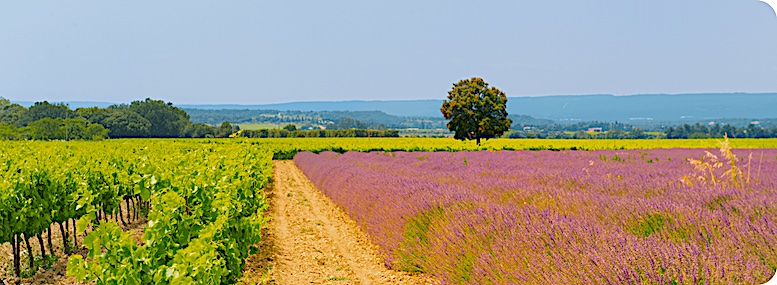
Vines and Lavender Fields in Provence
“Interesting” is hardly
high praise for the wines of any region, and too
often that adjective, as well as phrases like
“quite good” and “dependable,” are also applied to
the wines of France’s Mediterranean region of
Provence, which gets its name
from once being a province of the Roman empire.
 Tomes of 900 pages have been
written about Bordeaux and Burgundy, but the
authoritative Larousse Wine lumps Provence
in with Corsica in less than a dozen pages,
asserting “Sunshine, vacations and rosé: This is the
image of Provence.” The Oxford Companion to Wine
dismisses the region in less than one page, calling
it “full of potential,” which is what a French
school teacher jots down about an average student.
Tomes of 900 pages have been
written about Bordeaux and Burgundy, but the
authoritative Larousse Wine lumps Provence
in with Corsica in less than a dozen pages,
asserting “Sunshine, vacations and rosé: This is the
image of Provence.” The Oxford Companion to Wine
dismisses the region in less than one page, calling
it “full of potential,” which is what a French
school teacher jots down about an average student.
Granted, Provence is well regarded for its
rosé wines––80% of its production––and the Cȏtes de
Provence, a patchwork of parcels, some cooled by the
northern mountains, others scorched by the southern
sun, has delightful wines if you can ferret them
out. In recent years serious attention has been
given to ripping out the traditional Carignane
grapes and re-planting with more Rhone red varietals
like Grenache, Cinsault, Syrah and Mourvèdre.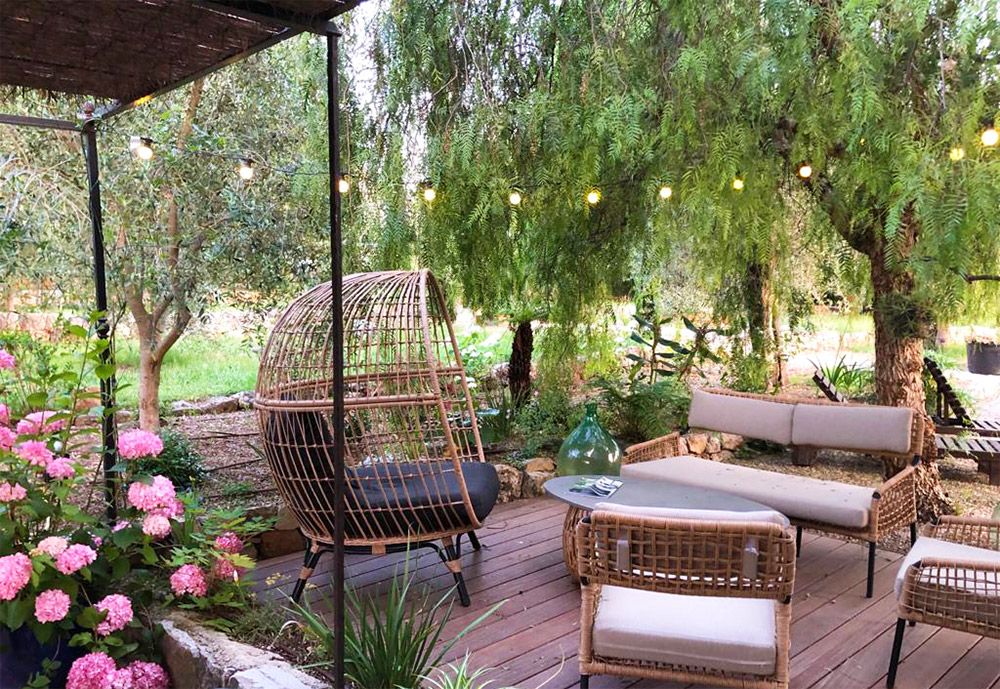
Yet every wine lover who has spent time on
the French Riviera has romantic memories of an
enchanting luncheon while overlooking the sea,
smelling the flowers and, inevitably, sipping
on a cold Provençal wine. Usually it’s a rosé with
some body and color, rather than the pale, innocuous
examples that sell for a few euros. But that’s also
the good news about Provence wines: They rarely cost
very much, rarely about $25, yet provide simple
pleasure, not least in their tropical aromas and
herbal notes.
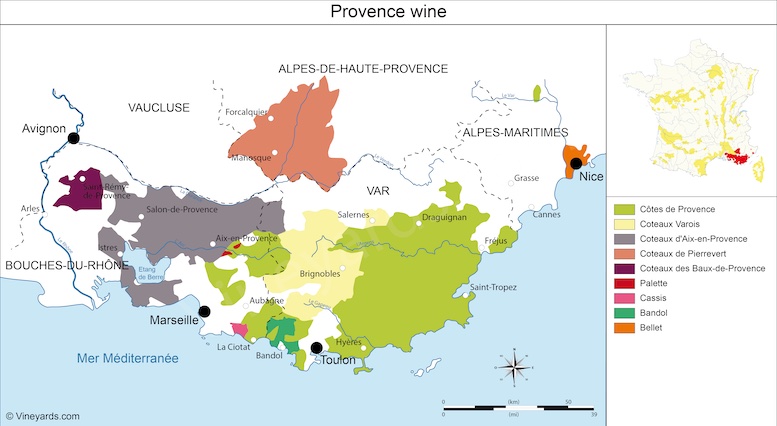
I’m finding that the most delightful
bottlings are coming from the regions of Bandol,
Bellet and Cassis. Production and expansion of
vineyards has been restricted in Bandol, east of
Marseille, because
it’s become so popular as a resort, with all the
usual over development––it’s less than
three-and-a-half miles square. Still, the Mourvèdre,
which has long been planted in the area, has a fine
late ripening virtue that brings the sugar and
alcohol to make for a full-bodied red. Bellet is
even smaller and most of its wines is consumed in
the surrounding area, but ferreting out a bottle of
flinty Bourboulenc or Rolle (what the Italians call
Vermentino) is worth the effort for a
well-structured white wine. Cassis, increasingly
encroached upon by the expansion of the city of
Marseille, is tinier still, known for its white
wines made from Clairette and Marsanne. (It is not
to be confused with the cordial named Crème de
Cassis, which
is made in Burgundy.)
 A good
number of Provence wines that come to the U.S. are,
well, interesting, but the better producers are also
fairly well represented on wine store shelves. Look
for labels like Château Miraval, made with
Grenache, Cinsault, Tibouren and Syrah; Guele de
Loup de Roquefort, which has a component of Cabernet
Sauvignon to add body; and Domaine de Trévallon,
which has been compared to a good Bordeaux, with a
blend of Cabernet Sauvignon and Syrah, aged for two
years and takes to aging, so that you can still find
the 2010 vintage, selling for a whopping $185.
A good
number of Provence wines that come to the U.S. are,
well, interesting, but the better producers are also
fairly well represented on wine store shelves. Look
for labels like Château Miraval, made with
Grenache, Cinsault, Tibouren and Syrah; Guele de
Loup de Roquefort, which has a component of Cabernet
Sauvignon to add body; and Domaine de Trévallon,
which has been compared to a good Bordeaux, with a
blend of Cabernet Sauvignon and Syrah, aged for two
years and takes to aging, so that you can still find
the 2010 vintage, selling for a whopping $185.
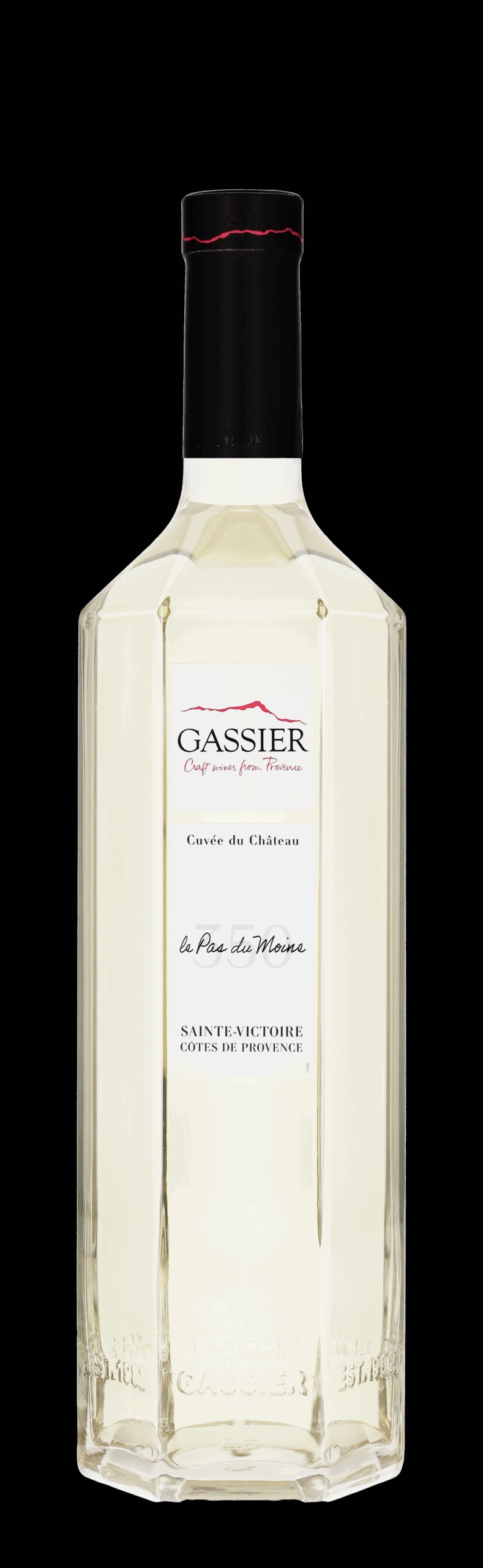
I have enjoyed Château Gassier ($25),
founded in 1982 and all organic, for its rosé is a blend of Grenache,
Cinsault, Syrah and Rolle, from clay
and limestone soil in the Cȏtes de Provence and
Cȏtes de Provence Sainte-Victoire appellations. It
is fresh and very ready to drink this summer with 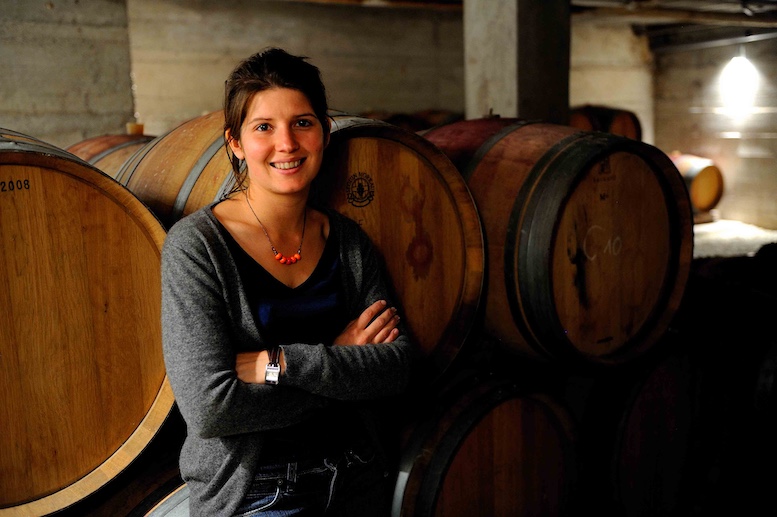 grilled poultry
and salmon.
grilled poultry
and salmon.
Sacha Lichine is Bordeaux born but he was
educated and worked extensively in the U.S. before
becoming a highly
regarded negociant in 1990, since purchasing Chateau
d’Ésclans in Provence.
His Pale Rosé($18) is a simple but refreshing rose
of Grenache, Rolle, Syrah and Cinsault.
Château Malherbe makes rose, white and an
impressive red wine ($55) from Syrah, Mourvèdre,
Black Grenache made by the fourth and fifth
generations of the Ferrari family and crafted by
Jean Laburthe in collaboration with Burgundy’s
Philippe Pacalet.
Jean-Luc Colombo and winemaker Laure Colombo
(right) make a pretty Cape Bleu Rose
for only $19––one of those sip by the shore wines
with a baguette and French ham and cheese.
❖❖❖
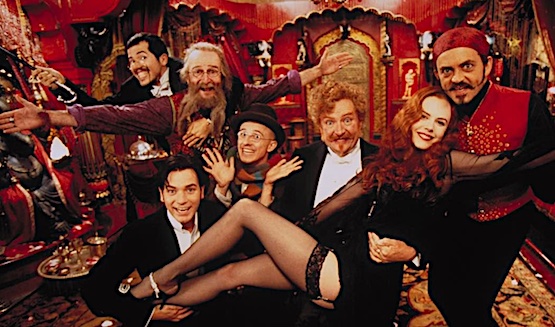
BLOCK THAT METAPHOR!
"Only the hungriest should
dare the chuletas can-can, a monument of pork: rib,
loin and belly, crisped and ruffled like a garter at
the Moulin Rouge." —Ligaya Mishan, "The Caribbean
Filtered Through One Chef's Imagination," NY
Times (7/8/25). ,
❖❖❖
Any of John Mariani's books below may be ordered from amazon.com.
 The Hound in Heaven
(21st Century Lion Books) is a novella, and
for anyone who loves dogs, Christmas, romance,
inspiration, even the supernatural, I hope you'll find
this to be a treasured favorite. The story
concerns how, after a New England teacher, his wife and
their two daughters adopt a stray puppy found in their
barn in northern Maine, their lives seem full of promise.
But when tragedy strikes, their wonderful dog Lazarus and
the spirit of Christmas are the only things that may bring
his master back from the edge of despair.
The Hound in Heaven
(21st Century Lion Books) is a novella, and
for anyone who loves dogs, Christmas, romance,
inspiration, even the supernatural, I hope you'll find
this to be a treasured favorite. The story
concerns how, after a New England teacher, his wife and
their two daughters adopt a stray puppy found in their
barn in northern Maine, their lives seem full of promise.
But when tragedy strikes, their wonderful dog Lazarus and
the spirit of Christmas are the only things that may bring
his master back from the edge of despair. WATCH THE VIDEO!
“What a huge surprise turn this story took! I was completely stunned! I truly enjoyed this book and its message.” – Actress Ali MacGraw
“He had me at Page One. The amount of heart, human insight, soul searching, and deft literary strength that John Mariani pours into this airtight novella is vertigo-inducing. Perhaps ‘wow’ would be the best comment.” – James Dalessandro, author of Bohemian Heart and 1906.
“John Mariani’s Hound in Heaven starts with a well-painted portrayal of an American family, along with the requisite dog. A surprise event flips the action of the novel and captures us for a voyage leading to a hopeful and heart-warming message. A page turning, one sitting read, it’s the perfect antidote for the winter and promotion of holiday celebration.” – Ann Pearlman, author of The Christmas Cookie Club and A Gift for my Sister.
“John Mariani’s concise, achingly beautiful novella pulls a literary rabbit out of a hat – a mash-up of the cosmic and the intimate, the tragic and the heart-warming – a Christmas tale for all ages, and all faiths. Read it to your children, read it to yourself… but read it. Early and often. Highly recommended.” – Jay Bonansinga, New York Times bestselling author of Pinkerton’s War, The Sinking of The Eastland, and The Walking Dead: The Road To Woodbury.
“Amazing things happen when you open your heart to an animal. The Hound in Heaven delivers a powerful story of healing that is forged in the spiritual relationship between a man and his best friend. The book brings a message of hope that can enrich our images of family, love, and loss.” – Dr. Barbara Royal, author of The Royal Treatment.
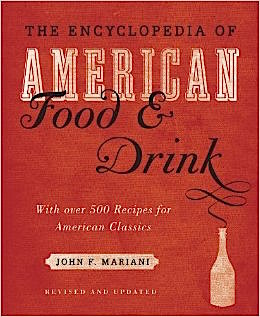 |
The Encyclopedia of American Food and Drink by John F. Mariani (Bloomsbury USA, $35) Modesty forbids me to praise my own new book, but let me proudly say that it is an extensive revision of the 4th edition that appeared more than a decade ago, before locavores, molecular cuisine, modernist cuisine, the Food Network and so much more, now included. Word origins have been completely updated, as have per capita consumption and production stats. Most important, for the first time since publication in the 1980s, the book includes more than 100 biographies of Americans who have changed the way we cook, eat and drink -- from Fannie Farmer and Julia Child to Robert Mondavi and Thomas Keller. "This book is amazing! It has entries for everything from `abalone' to `zwieback,' plus more than 500 recipes for classic American dishes and drinks."--Devra First, The Boston Globe. "Much needed in any kitchen library."--Bon Appetit. |
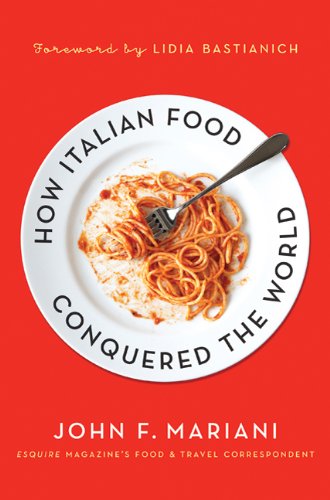
"Eating Italian will never be the same after reading John Mariani's entertaining and savory gastronomical history of the cuisine of Italy and how it won over appetites worldwide. . . . This book is such a tasteful narrative that it will literally make you hungry for Italian food and arouse your appetite for gastronomical history."--Don Oldenburg, USA Today. "Italian
restaurants--some good, some glitzy--far
outnumber their French rivals. Many of
these establishments are zestfully described
in How Italian Food Conquered the World, an
entertaining and fact-filled chronicle by
food-and-wine correspondent John F.
Mariani."--Aram Bakshian Jr., Wall Street
Journal.
"Equal parts
history, sociology, gastronomy, and just
plain fun, How Italian Food Conquered the
World tells the captivating and delicious
story of the (let's face it) everybody's
favorite cuisine with clarity, verve and
more than one surprise."--Colman Andrews,
editorial director of The Daily
Meal.com. "A fantastic and fascinating
read, covering everything from the influence
of Venice's spice trade to the impact of
Italian immigrants in America and the
evolution of alta cucina. This book will
serve as a terrific resource to anyone
interested in the real story of Italian
food."--Mary Ann Esposito, host of PBS-TV's
Ciao
Italia. "John Mariani has written the
definitive history of how Italians won their
way into our hearts, minds, and
stomachs. It's a story of pleasure over
pomp and taste over technique."--Danny Meyer,
owner of NYC restaurants Union Square
Cafe, The Modern, and Maialino.
|
 |
 |
 |
 |
 |
 |
MARIANI'S VIRTUAL GOURMET
NEWSLETTER is published weekly. Publisher: John Mariani. Editor: Walter Bagley. Contributing Writers: Christopher
Mariani, Misha Mariani, John A. Curtas, Gerry Dawes, Geoff Kalish.
Contributing
Photographer: Galina Dargery. Technical
Advisor: Gerry
McLoughlin.
If you wish to subscribe to this
newsletter, please click here: http://www.johnmariani.com/subscribe/index.html
© copyright John Mariani 2025