
THIS WEEK
ELEVEN MADISON PARK
ABANDONS ALL-VEGAN MENU
By John Mariani
NEW YORK CORNER
DUBROVNIK
By John Mariani
HÔTEL ALLEMAGNE
CHAPTER TWENTY-FOUR
By John Mariani
ELEVEN MADISON PARK
ABANDONS ALL-VEGAN MENU
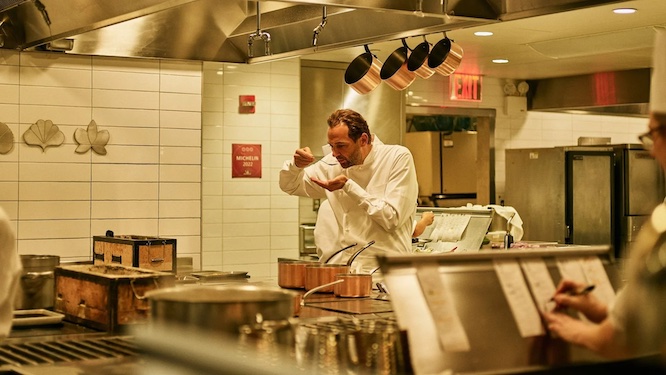
Daniel Humm
Daniel Humm, Chef-Partner of New
York’s Eleven Madison Park, has announced
that, after four years of serving a full,
multi-course vegan menu, “It
became clear that while we had built
something meaningful, we had also
unintentionally kept people out. This is
the opposite of what we believe
hospitality to be.” As a result, “Starting
October 14th, we will integrate our new
language into a menu that embraces choice.
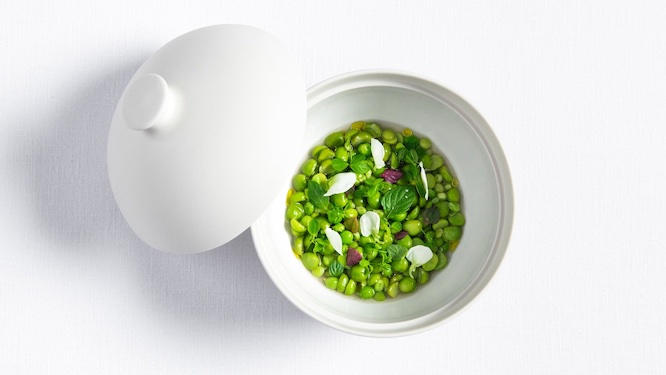
We will offer a plant-based menu, of
course, but also select animal products
for certain dishes.”
 This is a
remarkable but sensible change in a
particularly tough time for restaurants, for
despite near-full houses most nights at Eleven
Madison Park (EMP) business was lagging, and
highly profitable private events have fewer
and fewer bookings. “It’s
hard to get 30 people for a corporate dinner
to come to a plant-based restaurant,” he told
the New York Times.
This is a
remarkable but sensible change in a
particularly tough time for restaurants, for
despite near-full houses most nights at Eleven
Madison Park (EMP) business was lagging, and
highly profitable private events have fewer
and fewer bookings. “It’s
hard to get 30 people for a corporate dinner
to come to a plant-based restaurant,” he told
the New York Times.
EMP has a twenty-four year history,
opened originally in 2001 by Danny Meyer’s
Union Square Hospitality Group as a high-end
New York style dining room within an historic
Art Deco building overlooking Madison Park,
with a full-scale menu of meat, fish and
vegetables. It was highly regarded by the
critics for its fine cuisine under Chef Kerry
Heffernan and its sophisticated service and
wine list. Meyer hired Humm to continue that
tradition, then sold the restaurant to him and
partner (former general manager) Will Guidara,
who tried to tone down EMP’s formality with
gimmicks like pouring clams onto newspaper in
the middle of a nine-course meal, inviting
guests for a cocktail at the bar in the middle
of the meal, and
having captains do card tricks at the table.
(Guidara left the restaurant in 2019.)
After closing during Covid, EMP
re-opened in 2021. He
contended, “The
current food system is simply not sustainable,
in so many ways.”
This week he announced, “My team
and I felt liberated and cracked open. 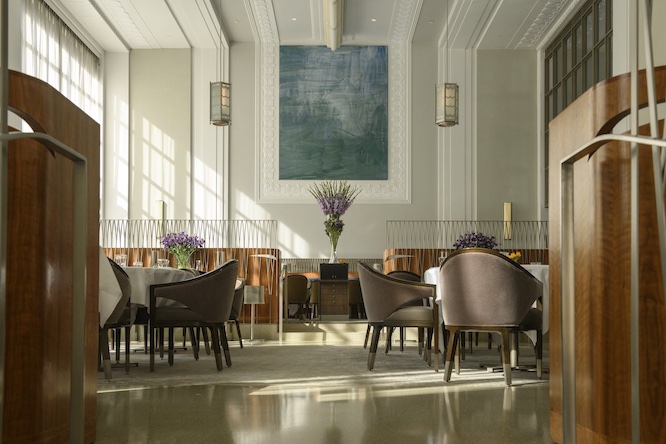 The
journey proved richer than any before. We
created a new culinary language: mille-feuille
without butter, meringue without eggs,
almond-milk ricotta, sunflower butter, koji
stocks, whipped cashew cream, even ‘land
caviar.’”
The
journey proved richer than any before. We
created a new culinary language: mille-feuille
without butter, meringue without eggs,
almond-milk ricotta, sunflower butter, koji
stocks, whipped cashew cream, even ‘land
caviar.’”
Humm was betting on a trend many chefs
have picked up on by offering alternative
vegetarian menus alongside their meat and
seafood menu, which makes capital sense,
whether it’s Alain Ducasse at the
Plaza-Athenée and Alain Passard at L’Arpège in
Paris or Massimo Bottura at Osteria
Francescana in Modena, Italy. But none
attempted to go total vegan. At the time Humm
went total vegan at EMP, I felt he was taking
a great risk.
Many fans of the restaurant as well as
food media wondered if Humm could pull off
selling nine course vegan menus for $335––now
$365––before wine, tax and tip, but at first
EMP was booked weeks in advance, even
garnering three Michelin stars––the first
vegan restaurant ever to win that high honor––
although
Times critic Pete
Well hit hard, writing, “With
time, Mr. Humm may stop overcompensating for
ditching the animal products, too. Beets
aren’t very good at pretending to be meat, but
their ability to taste like beets is
unrivaled.” Apparently that time has come.
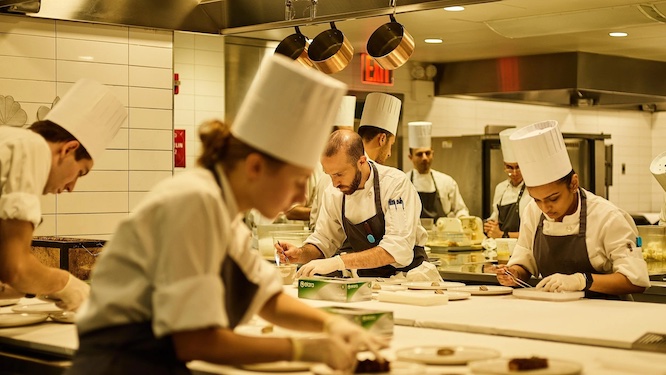 And after
all, running a restaurant is a business and
even if EMP drew the well-heeled curious diner
who probably enjoyed his meal once, how often
would an omnivore return? How many vegans
would seek out nine courses for that kind of
money on a regular basis?
And after
all, running a restaurant is a business and
even if EMP drew the well-heeled curious diner
who probably enjoyed his meal once, how often
would an omnivore return? How many vegans
would seek out nine courses for that kind of
money on a regular basis?
Four years later, Humm has now thrown
in the towel on his experiment, recognizing
that his crusading spirit and staff dedication
was not enough to keep the restaurant
profitable. “The
all-or-nothing approach was necessary to
develop our expertise,” he now says, “but
that, too, comes with its own limitations. As
a chef, I want to continue to open paths, not
close them.
Eating together is the essence of who
we are, and I’ve learned that for me to truly
champion plant-based cooking, I need to create
an environment where everyone feels welcome
around the table.”
Since I have always regarded Humm as
one of the finest chefs of any kind in
America, I welcome his change of mind and look
forward to returning to EMP, hopefully without
clambakes on the table or card tricks by the
waiters.
NEW YORK CORNER
DUBROVNIK
New Rochelle, NY
914-637-3777
Immigrants from those Mediterranean
countries carved out of the former
Yugoslavia have added measurably to New
York’s food culture, not least in the last
decade when a plethora of Italian
restaurants and steakhouses have been opened
by Albanians, Slovenians and Montenegrins.
 Croatian
restaurants, however, are still rare––about
24,000 Croatians live in the five
boroughs––but none that I know has the
deserved longevity of Dubrovnik, which has
been a success in the boom town suburb of New
Rochelle for the past twelve years.
Croatian
restaurants, however, are still rare––about
24,000 Croatians live in the five
boroughs––but none that I know has the
deserved longevity of Dubrovnik, which has
been a success in the boom town suburb of New
Rochelle for the past twelve years.
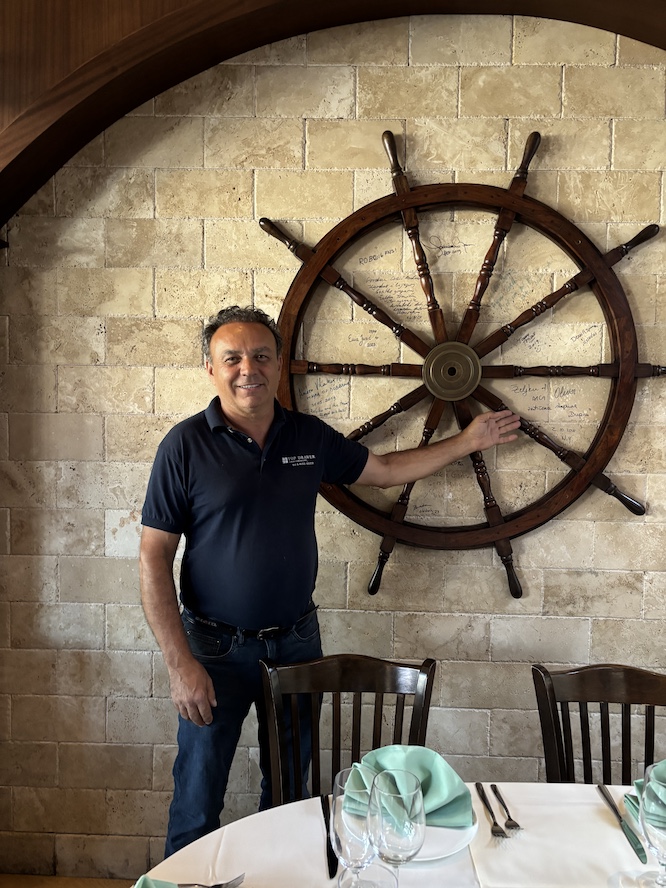
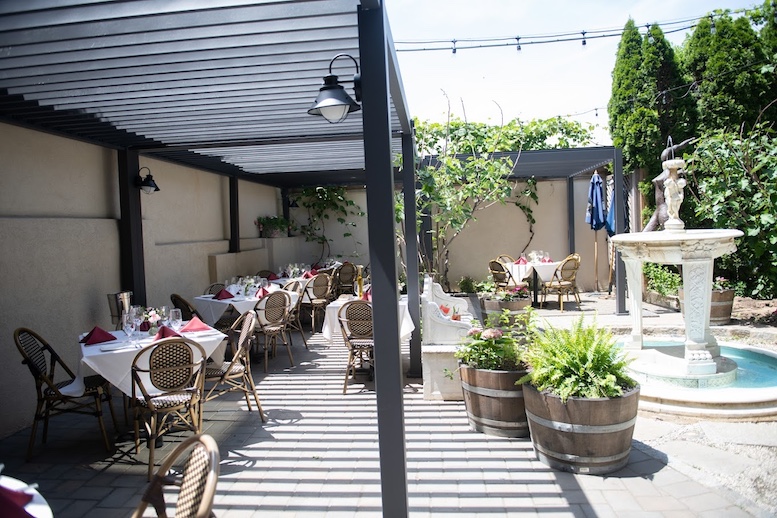
Founded
by Jerry Tomic, the two-level, 85-seat
establishment with an outdoor patio and
fountain draws a very faithful crowd, many
with families in tow, that lends it an Eastern
European conviviality within its motif of
brown and beige stone and wood, a ship’s
steering wheel and black-and-white photos of
Tomic’s own town (he also did much of the
décor out of his own next-door interiors
business). Tables are nicely separated and
tablecloths and settings of good quality.
There
is, too, an outdoor wood fired rotisserie and
BBQ used to give meats, poultry and seafood a
smoky patina. 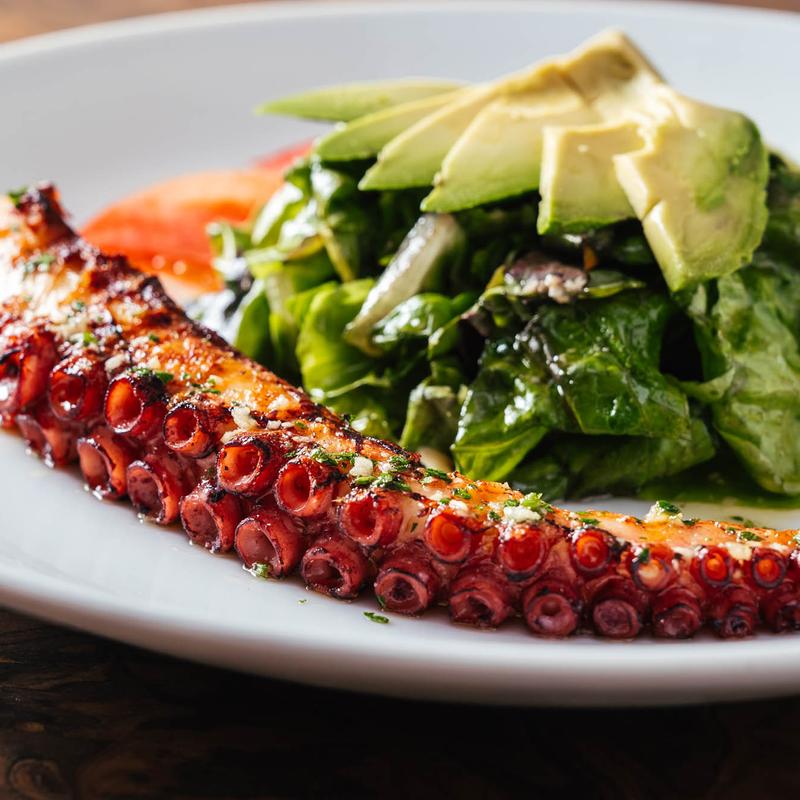
General
Manager Matija Zarak is the epitome of cordial
Croatian hospitality, and he also oversees a
wine cellar whose bottles are kept at the
right temperature and that holds several
bottles from Croatian wineries, including
wines from Tomic’s family vineyards on the
island of Korcula, like the varietals Pošip
Ivan Tomic and Cabernet Sauvignon
Tomic.
Everything served at
Dubrovnik is made in executive Chef Antonio
Selendic’s kitchen, including the warm puffy
pita rounds and
sourdough bread that goes well with a pool of
olive oil from Tomic’s own farm.
 As I found at restaurants on my recent trip to
Croatia, a large platter of the day’s fish is
brought to the table for you to choose from,
which might include some of the more exotic
Mediterranean species. They are priced by the
pound and can serve two, filleted tableside.
As I found at restaurants on my recent trip to
Croatia, a large platter of the day’s fish is
brought to the table for you to choose from,
which might include some of the more exotic
Mediterranean species. They are priced by the
pound and can serve two, filleted tableside.
You
might begin with a platter of Croatian cheese,
smoked and cured meats, or an equally ample
platter of grilled octopus, 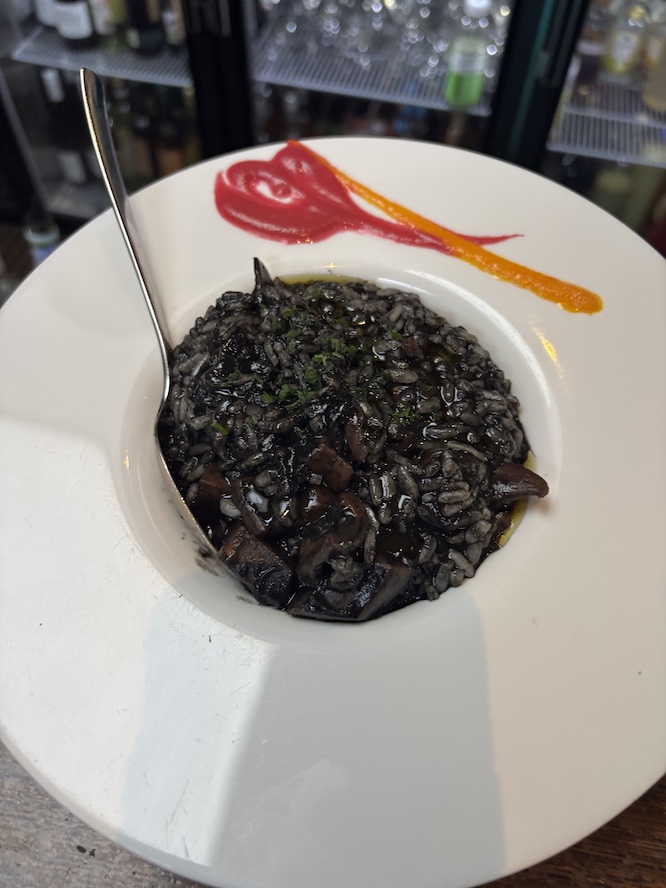 fried
calamari and shrimp.
fried
calamari and shrimp.
Croatian cooks are
famous for their seafood risottos and
Selendic’s version of slowly cooked rice with
cuttlefish is one of the best I’ve had this far
from the Aegean, dependent on absolute
freshness and careful incorporation of broth,
the cuttlefish ink and seasonings.
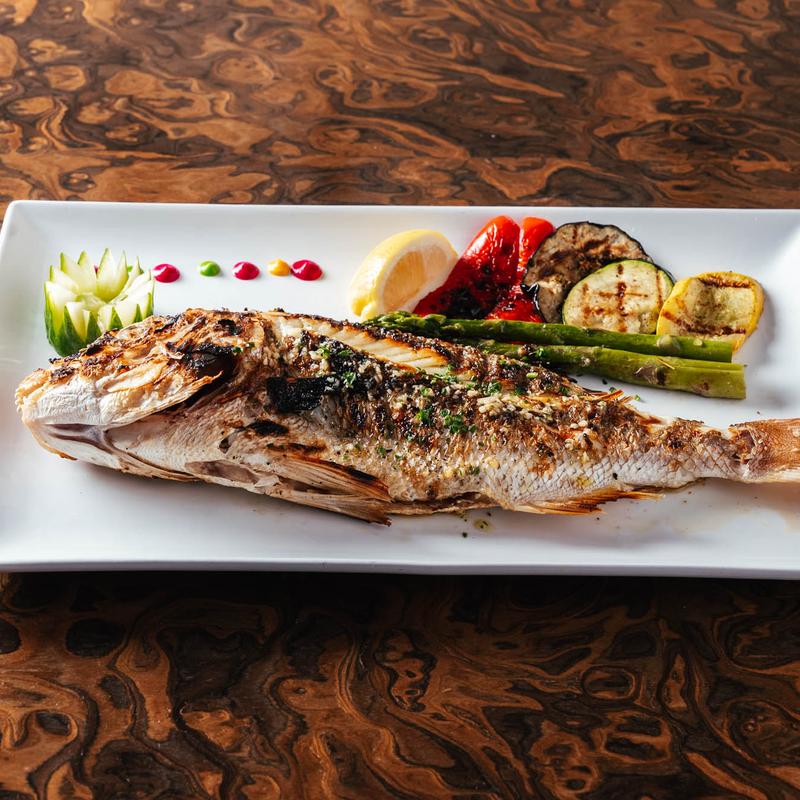 We also enjoyed two of the grilled fish, orata
with Swiss chard and New Zealand snapper with
grilled vegetables (though I can’t imagine why
that snapper had to be brought in from the
South Pacific rather than the Mediterranean).
We also enjoyed two of the grilled fish, orata
with Swiss chard and New Zealand snapper with
grilled vegetables (though I can’t imagine why
that snapper had to be brought in from the
South Pacific rather than the Mediterranean).
There are a few
pastas, including with gnocchi with a veal
ragù, and one; with lobster tail, mussels and
clams over fettuccine and tomato.
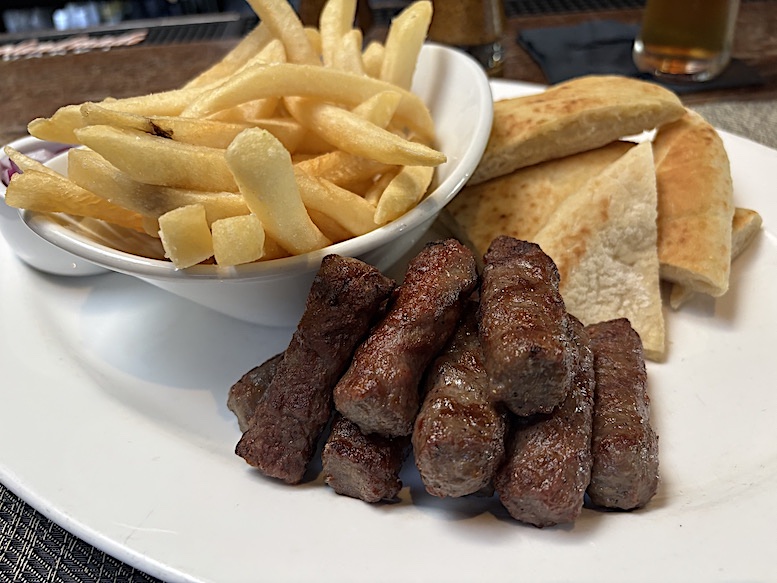
If you
opt for meat, the easiest way to appreciate an
array of them is to order the combination ‘Miješano Meso’ for
two
or more people that includes a large, rosy
filet mignon, succulent lamb chops and cavapi
sausages. Only the addition of chicken
breast misfired: It was under-seasoned and the
meat cooked too long, becoming chewy. Had its
skin been left on it might have been more
savory. 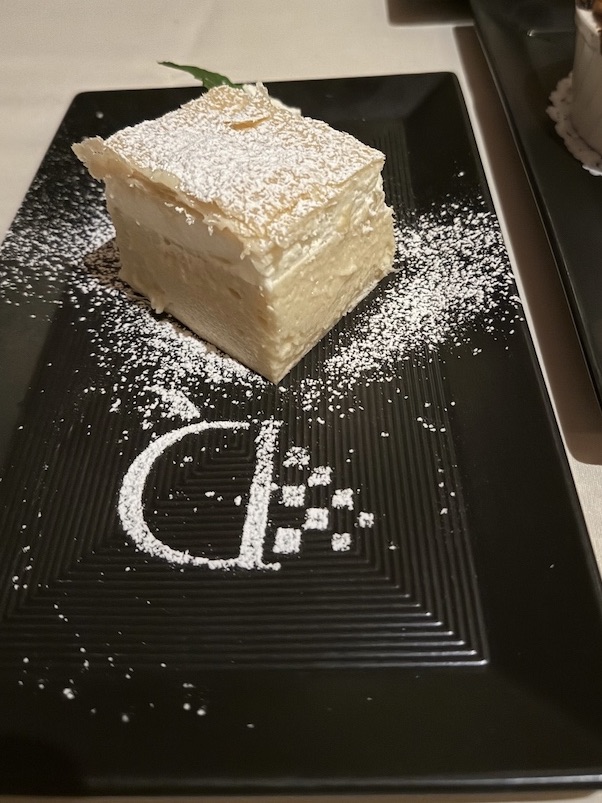
The
desserts at Dubrovnik, all made on premises,
shouldn’t be missed, especially the thin palačinke
with ice cream and Nutella ;
the peach cobbler just
right for summer; the espresso crème brûlée ;
and the kremšnita of delicate phyllo
pastry with vanilla custard crème .
A
century ago local resident George M. Cohan
wrote of New Rochelle as “Forty-five minutes
from Broadway,”
a town of “rubens” (rubes):
Not a café in the town;
Oh! The place is a bird
No one here ever heard
Of Delmonico, Rector or
Browne
With a ten-dollar bill you're
a spendthrift;
If you open a bottle of beer
You're a sport, so they say
And imagine
Broadway
Only forty-five minutes
from here.
These
days the city is in the throes of a major
building boom,
and what it needs are more good restaurants. For
now Dubrovnik, near the train station, serves as
a long-time anchor of what’s possible.
Dinner appetizers
$12 to $22; main courses $25 to $50.
Open
for lunch and dinner daily.
HÔTEL ALLEMAGNE
By John Mariani
It was now late afternoon, and Borel
ushered the two Americans to a room set up to
watch videos. Yves Collard was already there. A
technician had advanced the video to noon of the
day of the events, when Yves said Kōvar had
checked in.
Yves pointed to Kōvar as he entered the
hotel and checked in. The technician then brought
the video forward to three PM, and Yves showed
them Bazarov checking in. Fast forward to seven
o’clock, which showed both Bazarov and Kovar in
the lobby, handing their keys to Yves on their way
out. The technician let the next hour of the video
play at a faster speed until Yves said, “Arrêtez!
Là, vous pouvez voir l'homme T-Mobile.”
The man, dressed in a T-Mobile jacket, was
carrying a tool kit, as Yves had said. He
approached Yves then took the elevator up to the
seventh floor. It was just eight PM. A few moments
later Bazarov and Kovar came into the lobby,
picked up their keys and headed straight for the
small bar. The technician pushed the video forward
and showed the two men leave the bar twelve
minutes later and take the elevator. The camera
showed that the elevator stopped first on the
third floor, then on the seventh.
The technician switched to the cameras on
the seventh floor, showing the T-Mobile man at
8:05 entering Room 702, to which Yves had given
him a key. At 8:15 the elevator opened and a man
emerged and walked to Room 702.
“C’est Monsieur Bazarov,” said
Yves. Bazarov
was carrying the suiter.
The technician let the video run for
several minutes, then, at 9:07 the T-Mobile man
and Bazarov, carrying the suiter, exited the room
and entered the elevator, which first stopped at
the third floor, then at the lobby. The T-Mobile
man got out, went over to the front desk and could
be seen asking Yves to sign the work order. He
left the hotel two minutes later.
At 9:18 Bazarov exited the elevator,
carrying the suiter and checking out of the hotel
by 9:22, leaving by the side door.
Borel told the technician to stop the video
and said he wanted his men to go over the entire
day in detail, which would have included the next
morning’s mass evacuation. He asked Yves to stay
and identify as many guests as he could. The
concierge readily agreed. Borel told him he'd been
invaluable in the investigation.
Katie and David were convinced that Bazarov
was—at least in Paris—the enabler for the T-Mobile
man and probably the two other perpetrators, who
had checked into the other hotels on their own. There
was no reason to believe Kōvar was in any way
involved, at least for now, but provided Bazarov
with an alibi, which turned out to be faulty
because of the surveillance cameras.
“He’s most likely KGB,” said David. “Most
Russian embassy staffs are riddled with them.
Let’s ask what Borel has on him, if anything.”
Katie as smiling broadly. “Well, this has
been a banner day for us two American snoops.”
“I think so,” said David, looking at his
watch and knowing Katie would be calling Alan with
the update, which would lengthen their leash for a
few days. “It’s only eight o’clock. Shall we
splurge on a big deal dinner? Maybe that Grand
Véfour place, or whatever you call it?”
“Something tells me Grand Véfour will have
been booked weeks in advance, especially during
Fashion Week, and it’s got three Michelin stars.
Let’s save that for when we finish up here in
Paris. I have an idea! Let’s text Yves and ask him
for a really good place that might not be booked,
or maybe he can get us in.”
Yves got the text and, pausing for a moment
from watching the video with the police, texted
back. “I try to make you a reservation at a very
good place you will enjoy. I get back to you in a
few minutes.”
He was as good as his word, texting back,
“L’Aubrac 37 Rue Marbeuf. Best French beef in
Paris! Ask for my friend Yannick. Bon Appetit!”
“Now that sounds like something we could
both sink our teeth into,” said Katie.
David suddenly felt famished.
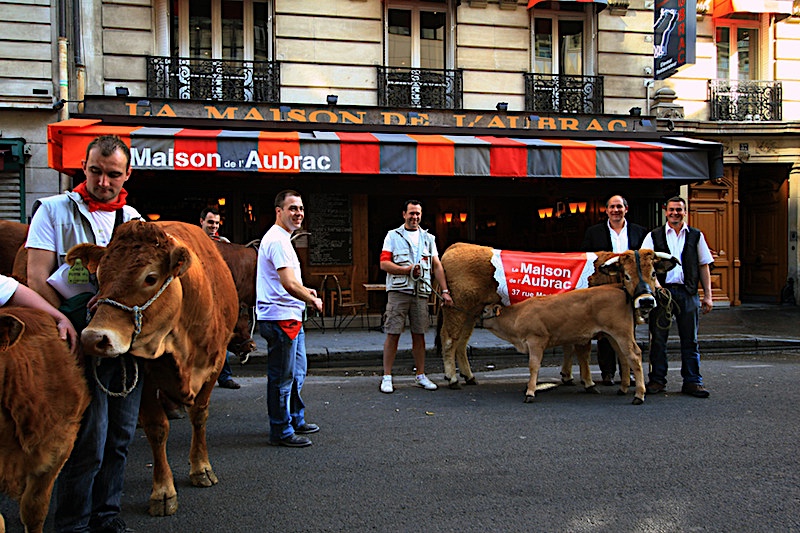 La Maison L’Aubrac was not
far from the Americans’ hotel, and David was
delighted to show off his new jacket, more than
once asking, “I look okay, right?”
La Maison L’Aubrac was not
far from the Americans’ hotel, and David was
delighted to show off his new jacket, more than
once asking, “I look okay, right?”
The restaurant
had seating outside and against the window,
pleasantly lighted and with décor that must have
looked modern when the place opened in 1977. The
owners purported to have sketches by Picasso on
its walls.
Its claim to fame in Paris was its Aubrac
Lagouile beef, whose carcasses were hanging behind
glass, aging far longer than most French beef ever
does. There was a wide selection of charcuterie
and a good wine list.
Yannick turned out to be the manager and
greeted the Americans effusively, giving them a
fine table overlooking the street. There were many
tables occupied by Americans (it was very close to
the Four Seasons Georges V Hotel and Fouquet’s),
and Yannick asked to be allowed to choose their
meal for them, which was certainly all right with
Katie and David.
Moments later Yannick brought over a cold
bottle of Champagne made specially for the
restaurant. “This is a little 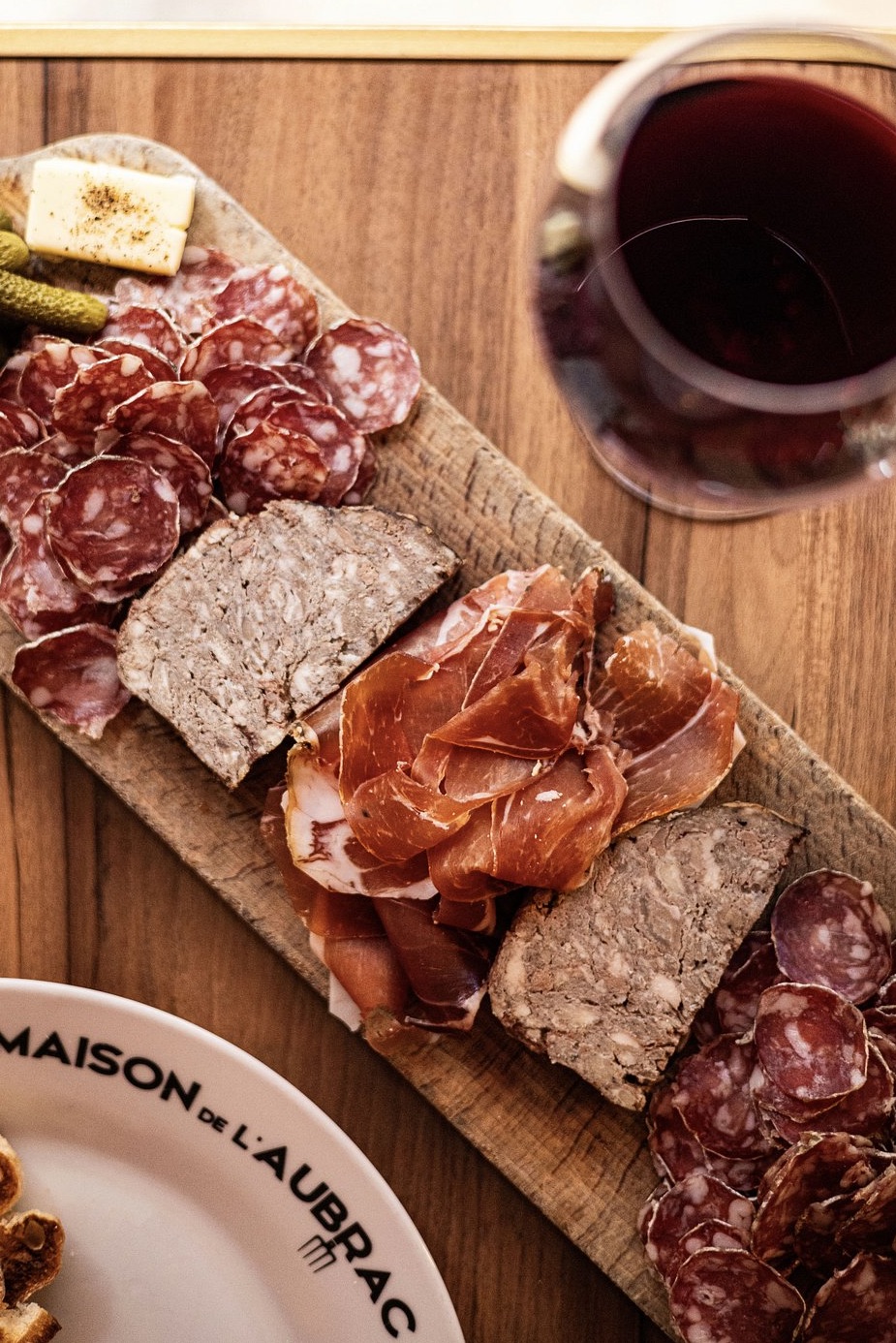 gift
from Yves for making him feel better, whatever
that means!” He popped the cork, poured the wine
and said, “I wish you a wonderful meal.”
gift
from Yves for making him feel better, whatever
that means!” He popped the cork, poured the wine
and said, “I wish you a wonderful meal.”
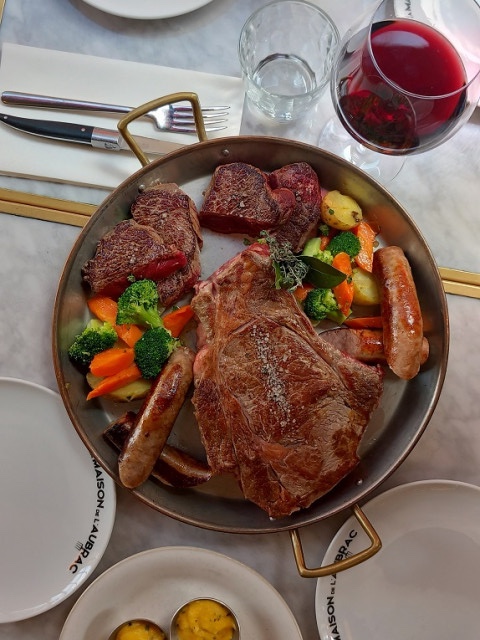 It
was far more than that, not only the Champagne and
the food—a platter of several sausages, ham, pâtés
and rillettes of rabbit and duck, two cuts of very
rare beef, perfectly crisp potatoes in a
casserole, and both a crème
brûlée and a soft-center chocolate torte—but
also because Katie and David were both elated and
relieved by the day’s events. Things were going in
the right direction, and Katie said she thought
her story had legs, with lots more to come. She
didn’t expect Alan to let her stay in Paris for
weeks, but with the prospect of the two men
arrested and the third, along with Bazarov, in the
offing, the story was going to be rich in
intrigue. The part in Marseille added some real
melodrama.
It
was far more than that, not only the Champagne and
the food—a platter of several sausages, ham, pâtés
and rillettes of rabbit and duck, two cuts of very
rare beef, perfectly crisp potatoes in a
casserole, and both a crème
brûlée and a soft-center chocolate torte—but
also because Katie and David were both elated and
relieved by the day’s events. Things were going in
the right direction, and Katie said she thought
her story had legs, with lots more to come. She
didn’t expect Alan to let her stay in Paris for
weeks, but with the prospect of the two men
arrested and the third, along with Bazarov, in the
offing, the story was going to be rich in
intrigue. The part in Marseille added some real
melodrama.
“What do you think the chances of nailing
Bazarov are?” asked
Katie.
“An ambassador from Russia? Probably not
very high. If he’s even still in Paris—which I
doubt—the Russians probably won’t release him to
the French. I don’t know what the rules about
habeas corpus are in France, but I do know they
operate under the assumption that an accused
person is guilty and needs to prove his innocence.
I doubt Bazarov will get anywhere near a French
court.”
“So, the T-Mobile guy takes the rap?”
“I have a feeling the T-Mobile guy will
sing his head off and nail Bazarov. Then the
Russians will deny it, the police will show them
the videos, the Russians will say that proves
nothing, and so it’ll go.”
police will show them
the videos, the Russians will say that proves
nothing, and so it’ll go.”
“But you do think the police will get the
three culprits to confess?”
“Yeah, I do.”
“So,
they use water boarding over here?” Katie asked,
half smiling.
David sighed and said, “You always love
asking me if police beat guys up in a back room,
don’t you?”
“Hey, David, it’s not unknown to happen, is
it?”
“No, it happens. Not as much now as it used
to, but it happens.”
“Because I remember the French soldiers
used a form of water boarding on a terrorist in
the movie The Battle of Algiers, about how
the French brutalized suspected terrorists, who
were actually Algerian revolutionaries. They even
banned the movie in France when it came out in the
mid-sixties.”
“I remember that movie. I guess it was
close to the truth back then. The French
counterinsurgency police could get very nasty with
anyone who rebelled against French authority when
Algeria was a colony. I suspect it’s a lot
different in the Paris Sûreté these days.”
Katie didn’t want to ruin the tenor of the
evening, so she held up her glass and said,
“Here’s to Liberty, Equality and Fraternity!”
“Sounds like something Superman would have
said in college.”
© John Mariani, 2024
❖❖❖
 DEPT. OF
SILLY WRITING
DEPT. OF
SILLY WRITING❖❖❖
Any of John Mariani's books below may be ordered from amazon.com.
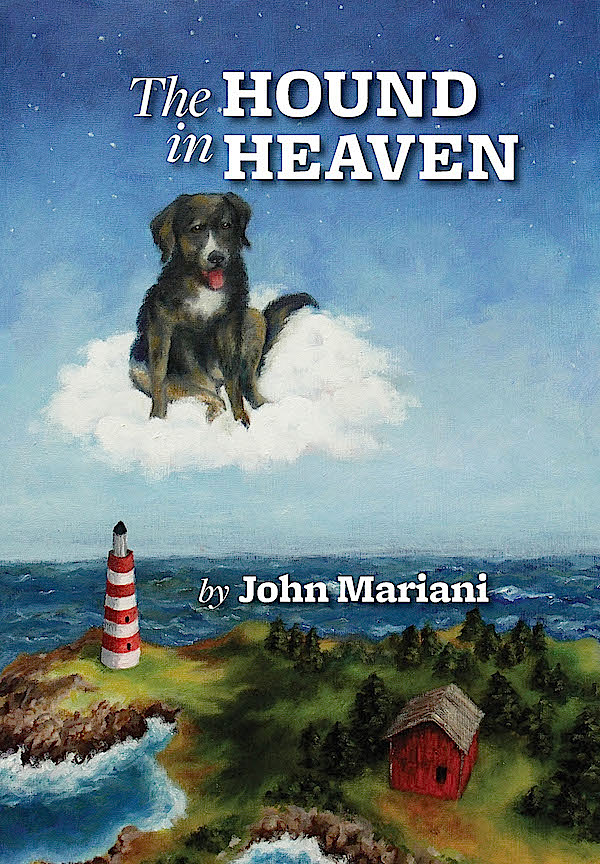 The Hound in Heaven
(21st Century Lion Books) is a novella, and
for anyone who loves dogs, Christmas, romance,
inspiration, even the supernatural, I hope you'll find
this to be a treasured favorite. The story
concerns how, after a New England teacher, his wife and
their two daughters adopt a stray puppy found in their
barn in northern Maine, their lives seem full of promise.
But when tragedy strikes, their wonderful dog Lazarus and
the spirit of Christmas are the only things that may bring
his master back from the edge of despair.
The Hound in Heaven
(21st Century Lion Books) is a novella, and
for anyone who loves dogs, Christmas, romance,
inspiration, even the supernatural, I hope you'll find
this to be a treasured favorite. The story
concerns how, after a New England teacher, his wife and
their two daughters adopt a stray puppy found in their
barn in northern Maine, their lives seem full of promise.
But when tragedy strikes, their wonderful dog Lazarus and
the spirit of Christmas are the only things that may bring
his master back from the edge of despair. WATCH THE VIDEO!
“What a huge surprise turn this story took! I was completely stunned! I truly enjoyed this book and its message.” – Actress Ali MacGraw
“He had me at Page One. The amount of heart, human insight, soul searching, and deft literary strength that John Mariani pours into this airtight novella is vertigo-inducing. Perhaps ‘wow’ would be the best comment.” – James Dalessandro, author of Bohemian Heart and 1906.
“John Mariani’s Hound in Heaven starts with a well-painted portrayal of an American family, along with the requisite dog. A surprise event flips the action of the novel and captures us for a voyage leading to a hopeful and heart-warming message. A page turning, one sitting read, it’s the perfect antidote for the winter and promotion of holiday celebration.” – Ann Pearlman, author of The Christmas Cookie Club and A Gift for my Sister.
“John Mariani’s concise, achingly beautiful novella pulls a literary rabbit out of a hat – a mash-up of the cosmic and the intimate, the tragic and the heart-warming – a Christmas tale for all ages, and all faiths. Read it to your children, read it to yourself… but read it. Early and often. Highly recommended.” – Jay Bonansinga, New York Times bestselling author of Pinkerton’s War, The Sinking of The Eastland, and The Walking Dead: The Road To Woodbury.
“Amazing things happen when you open your heart to an animal. The Hound in Heaven delivers a powerful story of healing that is forged in the spiritual relationship between a man and his best friend. The book brings a message of hope that can enrich our images of family, love, and loss.” – Dr. Barbara Royal, author of The Royal Treatment.
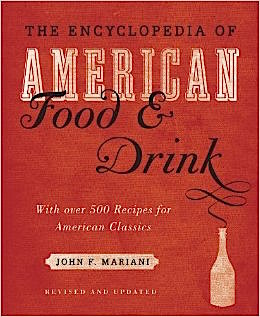 |
The Encyclopedia of American Food and Drink by John F. Mariani (Bloomsbury USA, $35) Modesty forbids me to praise my own new book, but let me proudly say that it is an extensive revision of the 4th edition that appeared more than a decade ago, before locavores, molecular cuisine, modernist cuisine, the Food Network and so much more, now included. Word origins have been completely updated, as have per capita consumption and production stats. Most important, for the first time since publication in the 1980s, the book includes more than 100 biographies of Americans who have changed the way we cook, eat and drink -- from Fannie Farmer and Julia Child to Robert Mondavi and Thomas Keller. "This book is amazing! It has entries for everything from `abalone' to `zwieback,' plus more than 500 recipes for classic American dishes and drinks."--Devra First, The Boston Globe. "Much needed in any kitchen library."--Bon Appetit. |
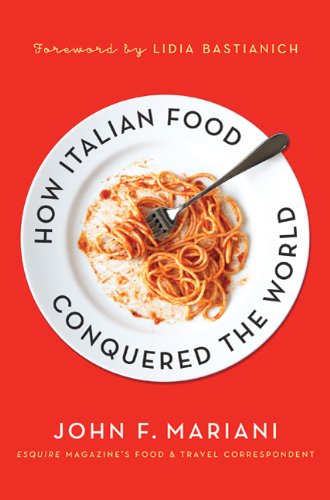
"Eating Italian will never be the same after reading John Mariani's entertaining and savory gastronomical history of the cuisine of Italy and how it won over appetites worldwide. . . . This book is such a tasteful narrative that it will literally make you hungry for Italian food and arouse your appetite for gastronomical history."--Don Oldenburg, USA Today. "Italian
restaurants--some good, some glitzy--far
outnumber their French rivals. Many of
these establishments are zestfully described
in How Italian Food Conquered the World, an
entertaining and fact-filled chronicle by
food-and-wine correspondent John F.
Mariani."--Aram Bakshian Jr., Wall Street
Journal.
"Equal parts
history, sociology, gastronomy, and just
plain fun, How Italian Food Conquered the
World tells the captivating and delicious
story of the (let's face it) everybody's
favorite cuisine with clarity, verve and
more than one surprise."--Colman Andrews,
editorial director of The Daily
Meal.com. "A fantastic and fascinating
read, covering everything from the influence
of Venice's spice trade to the impact of
Italian immigrants in America and the
evolution of alta cucina. This book will
serve as a terrific resource to anyone
interested in the real story of Italian
food."--Mary Ann Esposito, host of PBS-TV's
Ciao
Italia. "John Mariani has written the
definitive history of how Italians won their
way into our hearts, minds, and
stomachs. It's a story of pleasure over
pomp and taste over technique."--Danny Meyer,
owner of NYC restaurants Union Square
Cafe, The Modern, and Maialino.
|
 |
 |
 |
 |
 |
 |
MARIANI'S VIRTUAL GOURMET
NEWSLETTER is published weekly. Publisher: John Mariani. Editor: Walter Bagley. Contributing Writers: Christopher
Mariani, Misha Mariani, John A. Curtas, Gerry Dawes, Geoff Kalish.
Contributing
Photographer: Galina Dargery. Technical
Advisor: Gerry
McLoughlin.
If you wish to subscribe to this
newsletter, please click here: http://www.johnmariani.com/subscribe/index.html
© copyright John Mariani 2025