MARIANI’S
Virtual
Gourmet
September 7,
2025
NEWSLETTER
THIS WEEK
CASERTA:
AN IDEAL DAY TRIP FROM
ROME OR NAPLES
By John Mariani
NEW YORK CORNER
CHAMBERS
By John Mariani
HÔTEL ALLEMAGNE
CHAPTER TWENTY-SIX
By John Mariani
NOTES FROM THE SPIRITS LOCKER
CLOUDY SKIES FOR BOURBON
By John Mariani
CASERTA:
AN IDEAL DAY TRIP FROM
ROME OR NAPLES
By John
Mariani
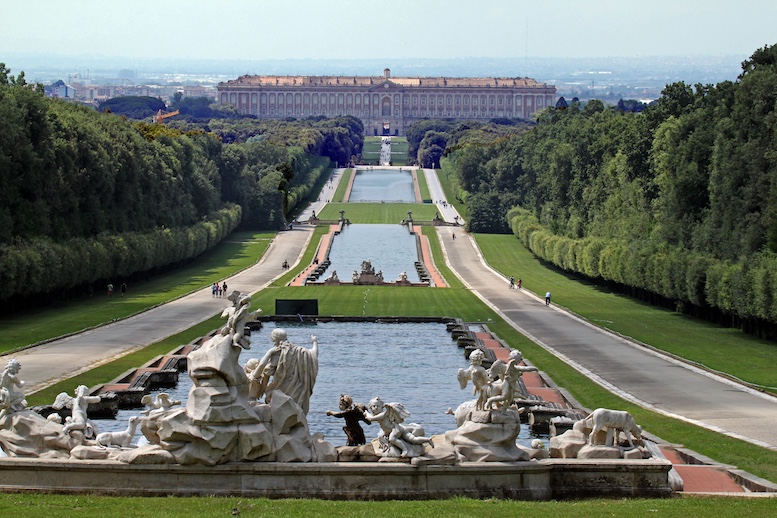
There is one spectacular reason to
visit Caserta in the Italian province of
Campania as an easy day trip from Rome (125
miles) or Naples (25 miles). You
can’t miss it: It is the Royal Palace,
and it’s the largest
complex erected during the 18th
century. Built for the kings of the House of
Bourbon, since 1997 it has been a UNESCO World
Heritage Site deemed “the swan song of the
spectacular art of the Baroque.” It has been
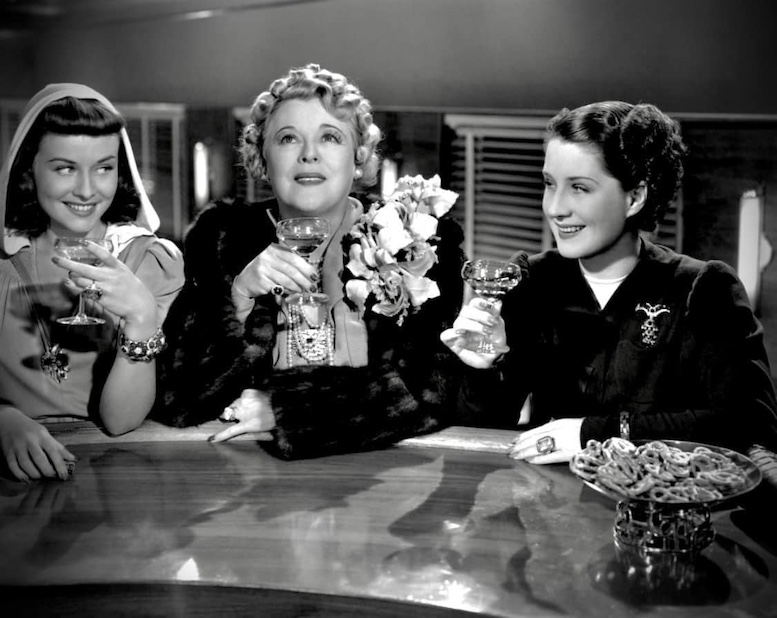
the site of several movies, including Star
Wars: Episodes I and II, Mission: Impossible
III, Angels & Demons and Conclave
(below).
 Charles
VII of Naples began its construction in 1752
with architect Luigi Vanvitelli, but seven years
later Charles left Italy to become King of
Spain, leaving his third son, Ferdinand IV, to
see the building’s finish.
Charles
VII of Naples began its construction in 1752
with architect Luigi Vanvitelli, but seven years
later Charles left Italy to become King of
Spain, leaving his third son, Ferdinand IV, to
see the building’s finish.
The Palace itself is astounding in its
size, with 1,200 rooms taking up 1,490,000
square feet, 1,742 windows, 34 staircases––one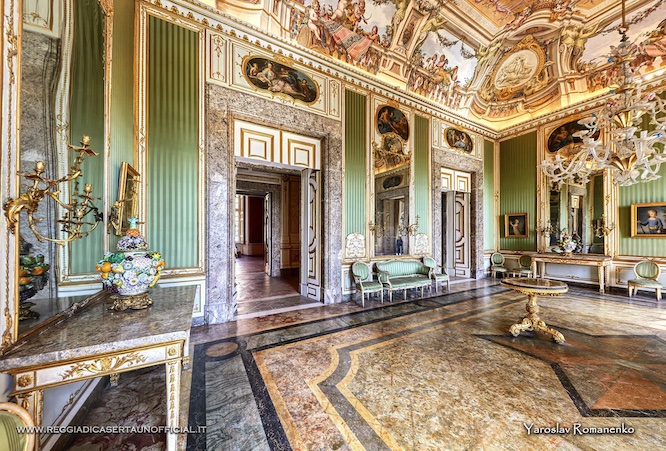 with 115 steps––and 1,026 fireplaces. It served
as living quarters, university, military
command, barracks and government offices whose
massive construction required moving pretty much
the whole population of Caserta Vecchia outside
the city to work on the project.
with 115 steps––and 1,026 fireplaces. It served
as living quarters, university, military
command, barracks and government offices whose
massive construction required moving pretty much
the whole population of Caserta Vecchia outside
the city to work on the project.
In the 20th century it was
used as headquarters for the Italian Air Force,
then in 1943 as Allied Force Headquarters, where
the final surrender of German and Italian forces
was signed in 1945.
Visiting the Palace is an
hours’ long trek through an astonishment of
grand salons, but the unique aspect of the whole
production is the park spread over 300 acres,
inspired by the gardens of Versailles. When you
exit the rear of the Palace you find 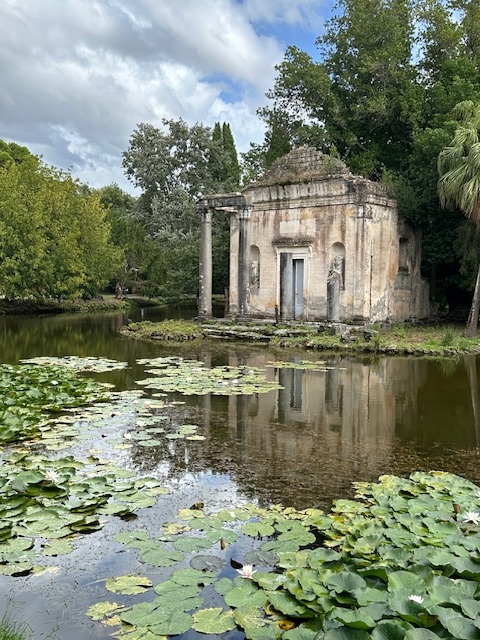 a
sloping, man-made hillside flanked by fountains
leading to the vast English Garden, a place of
remarkable peace and quiet, manifesting scores
of trees, plants and sculptured fountains––a
welcome respite after the overpowering grandeur
of the Palace itself.
a
sloping, man-made hillside flanked by fountains
leading to the vast English Garden, a place of
remarkable peace and quiet, manifesting scores
of trees, plants and sculptured fountains––a
welcome respite after the overpowering grandeur
of the Palace itself. 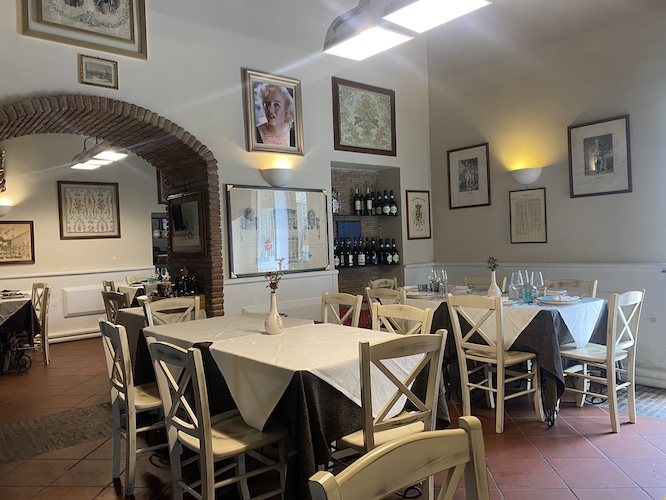
There really isn’t any reason to drive
into the city of Caserta itself, whose entry
roads are grim and industrial and whose center
holds nothing architectural or otherwise to draw
the eye or intellect. Nor are there any
outstanding restaurants in town. Outside of
town, however, I found a delightful, very good,
inexpensive seafood restaurant named 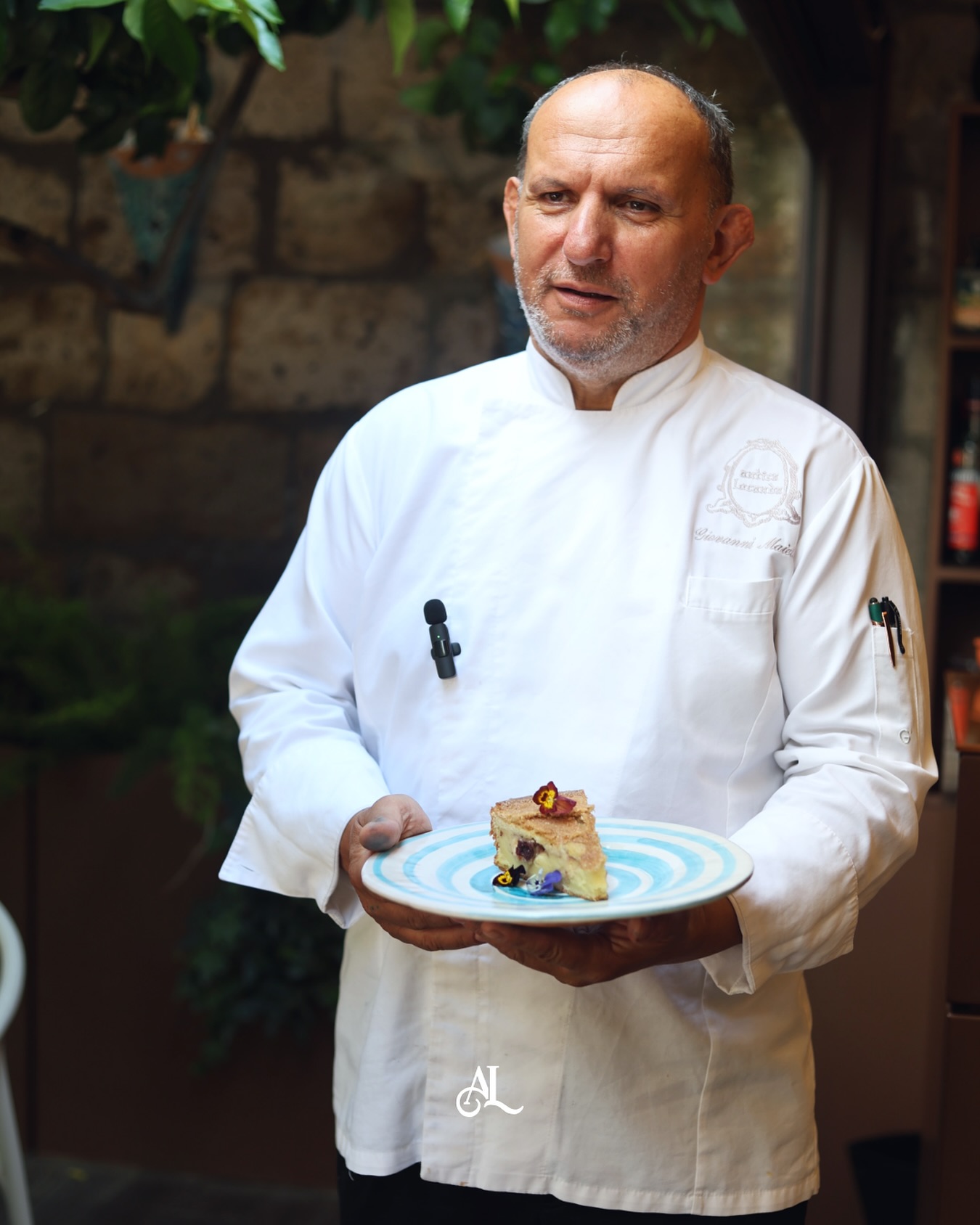 Antica
Locanda (Viella Barbera 7/9;
39-0823-305444), opened by Chef Giovanni
Maietta in 2010 on a nondescript piazza near San
Leucio. Inside it had a modest charm, only a few
tables in two rooms and outside, simple wood
chairs, tablecloths and an inscribed photo of
Marilyn Monroe.
Antica
Locanda (Viella Barbera 7/9;
39-0823-305444), opened by Chef Giovanni
Maietta in 2010 on a nondescript piazza near San
Leucio. Inside it had a modest charm, only a few
tables in two rooms and outside, simple wood
chairs, tablecloths and an inscribed photo of
Marilyn Monroe.
There is a good wine list of Campanian
bottlings as well as by 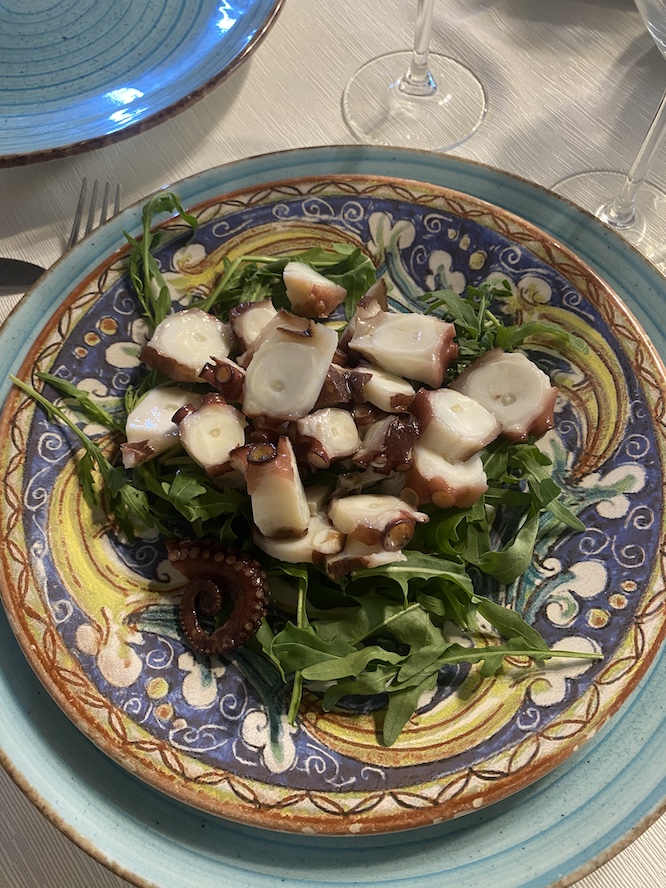 the
carafe.
the
carafe.
The menu is based on the local fishing,
with specials each day, and you can depend on
Chef Maietta to coax you to what’s best, of
which he boasts, “Every dish is a verse of
poetry.” Among
the antipasti is a strüdel of baccalà (€12),
three crudi of salmon, tuna and amberjack (€12)
and a mix of seafood that contained octopus,
calamari and arugula with olive oil
(€ 16).
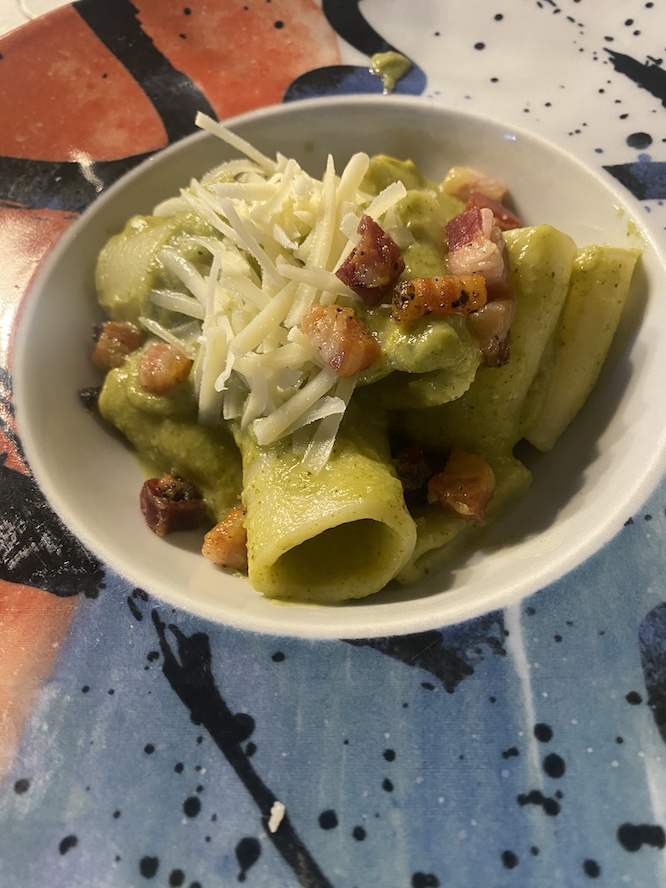 There
are seven pastas and four risottos, including paccheri
(left) with a peppery cream of broccoli
di rape, crispy black Caserta pig pancetta
(€12), and
the signature rigatoni Antica Locanda of sweet
San Marzano tomatoes, buffalo mozzarella and
basil (€10) that will make you remember what
makes this simple dish so perfect in its balance
of sweetness, minty, peppery, and creamy
flavors.
There
are seven pastas and four risottos, including paccheri
(left) with a peppery cream of broccoli
di rape, crispy black Caserta pig pancetta
(€12), and
the signature rigatoni Antica Locanda of sweet
San Marzano tomatoes, buffalo mozzarella and
basil (€10) that will make you remember what
makes this simple dish so perfect in its balance
of sweetness, minty, peppery, and creamy
flavors.
We followed with a fine fillet of the
day’s catch cooked with Sorrento lemon and
grilled spinach (€24) and finished with a baba
cake with sliced seasonal fruits (€6).
After
our exhausting morning touring the Royal Palace
and Gardens, up and down long staircases and in
and out of the shady gardens, a meal of such
fresh flavors at Antico Locanda was exactly what
we needed, with a lovely carafe of white wine,
before heading back to the rush of Rome.
NEW YORK CORNER
94 Chambers
Street
212-580-3572
Interiors photos by Kate Previte
Food and portrait photos by Alex Staniloff
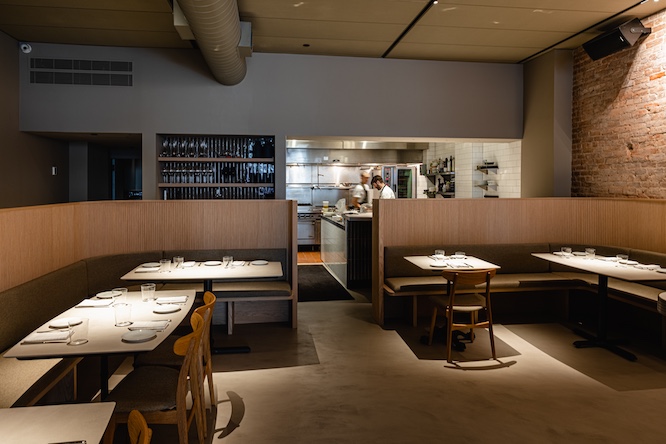
If Chambers in TriBeCa seems familiar
to you upon walking in, the feeling may well be
enhanced by seeing the faces of staff who were
here when the place was Racines, a charming
eno-centric French restaurant that had a good
seven-year run.
The dining room, too, hasn’t
been much modified, retaining the old brick wall,
the open kitchen and long bar, but now the seating
is more open, lighting is better and the sound
level remarkable in a downtown restaurant where a
din is so often considered a boon. Instead, the
owners have made every effort to use
sound-absorbing materials, and they work
splendidly.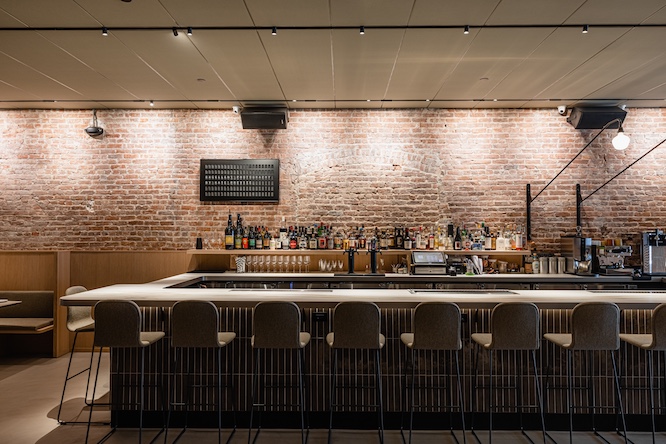
It
is just as comforting to find Pascaline Lepeltier
(below) as sommelier/partner, as effusive
but genteel an adviser as one could wish for, and
she’s raised the bar of a once excellent wine list
to a finer tone with more international breadth.
Her wide experience, including training at George
V in Paris, has put her in good stead with small
wine estates, and the current list has 2,500
labels (up from 800 at Racine’s).
%202.jpeg) “For
pricing,
we are trying to stay as affordable as possible,”
she told me, “with wines starting at $35 the
bottle on the list, and $10 by the
glass. In
every category the idea is to find great wines at
fair price, with the majority of our wines below
$100.”
“For
pricing,
we are trying to stay as affordable as possible,”
she told me, “with wines starting at $35 the
bottle on the list, and $10 by the
glass. In
every category the idea is to find great wines at
fair price, with the majority of our wines below
$100.”
It
was also good to see Racines’s general
manager/partner, Jared David, here in action, and
he’s always on the floor, never intrusive but
always informative. Still, although there can be good
reasons why food does not come out of the kitchen
in a timely manner, it was bewildering and
frustrating to be served only one course in two
hours, .jpeg) this
on a midweek night when Chambers did not appear to
be packed.
this
on a midweek night when Chambers did not appear to
be packed.
What is new here is Jonathan
Karis (right), who spent six years at Gramercy
Tavern as chef de cuisine, and there is the same
easy-going style to his cooking, if somewhat
lighter. His
purveyors are largely listed on the menu.
Whatever
else you do, you will devour the bread, called pizza
bianca, a crispy, ciabatta-like puff
with olive oil and sourdough slices.
.jpeg) As
part of a summer menu, we enjoyed a first course
of sweet mixed sungold,
datterini and oxheart tomatoes with ripe peaches
and plums dressed with a dashi vinaigrette,
purslane, kohlrabi and scallions. Plump agnolotti
pasta was a spin on Mexican street corn,
packed with white butter, corn, and mascarpone in a sauce
of corn stock, fragrant cilantro oil and chile oil
finished with cotija and pickled pearl
onions. An alternate pasta of tagliatelle needed
nothing more than shelling beans and romano cheese
to epitomize the season’s flavors.
As
part of a summer menu, we enjoyed a first course
of sweet mixed sungold,
datterini and oxheart tomatoes with ripe peaches
and plums dressed with a dashi vinaigrette,
purslane, kohlrabi and scallions. Plump agnolotti
pasta was a spin on Mexican street corn,
packed with white butter, corn, and mascarpone in a sauce
of corn stock, fragrant cilantro oil and chile oil
finished with cotija and pickled pearl
onions. An alternate pasta of tagliatelle needed
nothing more than shelling beans and romano cheese
to epitomize the season’s flavors. 111111.jpeg)
Tender
Rhode
Island squid rings (right) came with
sunchokes and Spanish gordal olives. Black bass was well and
simply accompanied by cucumber and shiso,
It
was so good to find a favorite of mine––well
prepared sweetbreads on this short menu, served
with Tokyo turnips and garlic chives.
Red
snapper
came with summer squash and yogurt spiked with hot
harissa.
.jpeg)
All these dishes manifested Karis’s light
touch with big flavors based very convincingly on
what’s freshest in the market at the moment.
An
indication
of heartier dishes to come this fall was a saddle
of lamb, its succulent meat composed as a roulade
in a heady reduction and served with Japanese
eggplant and shishito peppers. But it was rather
off-putting to find this showy dish cost
$90––especially in a portion not conducive to
sharing––which is $20 more than the three-course
summer menu then in effect. 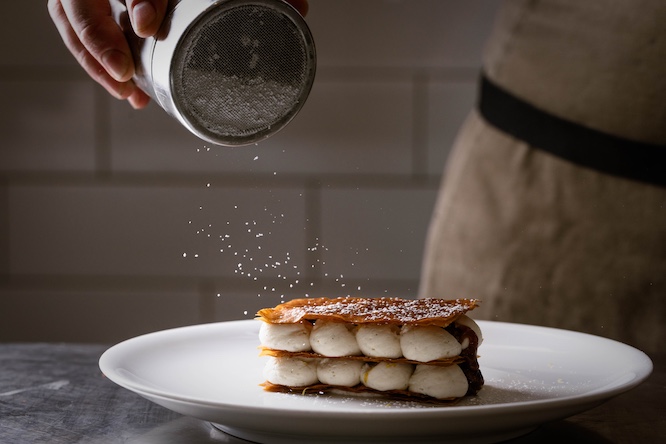
Desserts
carry
the same straightforward, honest goodness, as in
fragile phyllo dough encasing mascarpone (below)
with cinnamon caramel and lovely lemon pistachios.
A Nutella-like dark chocolate comes with hazelnuts
and coconut, while the simplest is the ginger ice
cream with a pour of yellow Chartreuse.
The food at
Chambers is an obvious expression of the chef’s
own preferences, and his commitment to the finest
ingredients he can source shows what a difference
they make in taste and texture. Add to that a
civilized ambience, well-priced wine list and you
have one of New York’s best new restaurants at a
time when so many chefs are straining to be flashy
rather than impressive by refinement.
Open Tues.-Sat. for
dinner.
HÔTEL ALLEMAGNE
By John Mariani
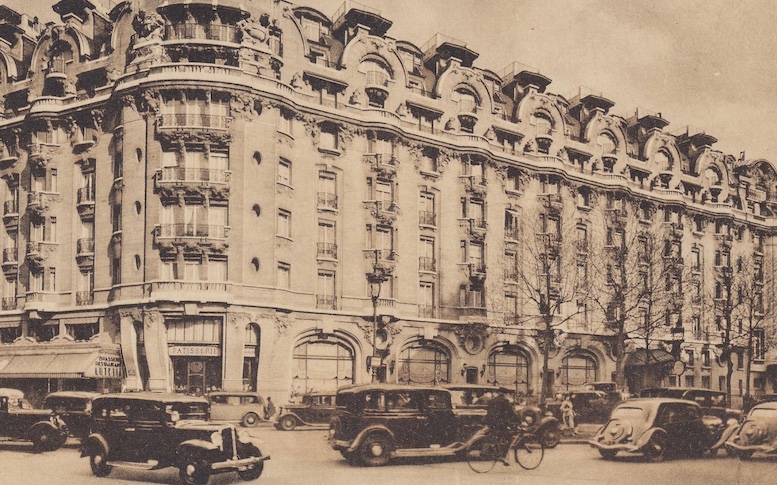
“Fashion Week c’est fini!” said Catherine on a phone call to Katie. “It got to be a real slog, and the Paris shows aren’t nearly as much fun as the ones in Milan.”
“I wouldn’t know,” said Katie. “Maybe I’ll do an exposé on them. Blow the lid off the mysterious fashion industry!”
“I’d love to help you with that one. It’s such a gossipy business. Everyone would tell stories about everyone else. So, what’s new with the hotel story?”
Katie filled her in on most of the details and said she and David were just waiting to see if anything else happens with Bazarov.
“Alan is not going to bankroll my being in Paris much longer unless something else breaks. I’m trying to speak with some of the emergency response people and the hotel staff members, if I can find them. They would add a lot of human interest and the real story of what it was like on that traumatic night.”
“Is there any way you can get to Bazarov?” asked Catherine.
“Short of bumping into him in an elevator and hitting the STOP button, probably not. Borel thinks he’s still in Paris because he has no reason to believe he’s a suspect. Yet. But I’m sure he will as soon as he reads the paper about the arrest of three suspects.”
“Yeah, I’m going to try to do a spot on that. I’ll call Borel and try to get an interview with Yves. Make him look like a big hero.”
“Yeah, he’s feeling much better about his performance that night now that he got a thumbs up from Borel.”
 Once
the
news of the arrest of Massot broke, Katie and David
felt sure that Bazarov would bolt back to Russia on
the first Aeroflot flight. Borel agreed with David
that Bazarov would claim diplomatic immunity and
insist on flying out of France as soon as possible.
There would be security police at Charles DeGaulle
to try to stop him, but asking Russian authorities
for him to be extradited would take a long while and
probably prove fruitless. But Borel had every
intention of linking Bazarov to Charles Massot in as
public a way as possible to cause embarrassment for
the Russians. Just how deeply involved the
ambassador was would have to be extracted from
Massot first.
Once
the
news of the arrest of Massot broke, Katie and David
felt sure that Bazarov would bolt back to Russia on
the first Aeroflot flight. Borel agreed with David
that Bazarov would claim diplomatic immunity and
insist on flying out of France as soon as possible.
There would be security police at Charles DeGaulle
to try to stop him, but asking Russian authorities
for him to be extradited would take a long while and
probably prove fruitless. But Borel had every
intention of linking Bazarov to Charles Massot in as
public a way as possible to cause embarrassment for
the Russians. Just how deeply involved the
ambassador was would have to be extracted from
Massot first. David was feeling useless but content to pay his own way in Paris just following Katie around for her human interest interviews. He knew that Katie only had a couple days left on Dobell’s dime, but if that happened, they could get back to what was left of their vacation. They still hadn’t even gotten to the Louvre or Versailles, and David was truly enjoying the meals in Paris.
He knew that Borel’s hands were tied vis-à-vis Bazarov and that the Sûreté in Marseille, working for Interpol, was handling Marciano’s case. That left Saad Salah for Borel to work with, but the police kept all news about the young Syrian very quiet for the time being, giving only his name and nationality to the press.

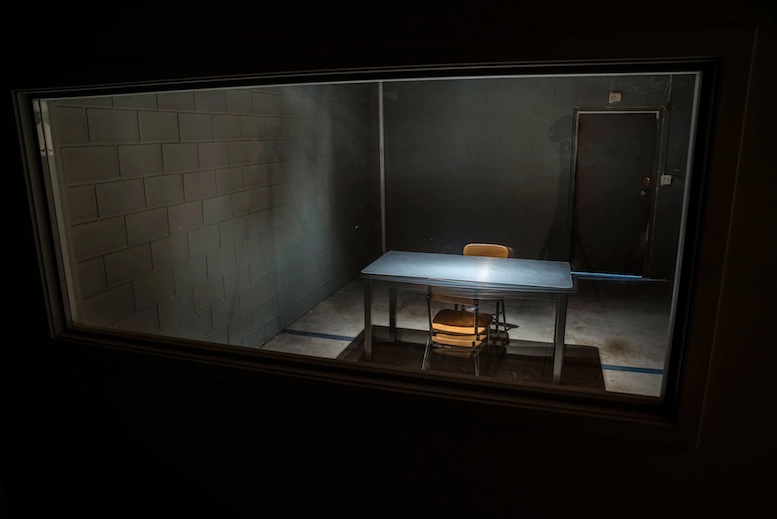
During the initial interrogation Salah had remained silent and was offered legal advice, but he delayed responding. Then, during the third interrogation—different interrogators were used in each session to keep him off guard, with Borel and David behind the one-way mirror wall—Salah was told he was looking at a lifetime behind bars if convicted of the crime, and the possession of a gun and his reaching for it when the police broke into his apartment were added factors; if he co-operated, that might be cut to as few as ten years, unless someone died. It then occurred to the Syrian that if he could make a deal right away, before anyone might die, he would be spared a life sentence; if someone did die, that chance was dashed. Salah then asked to see a lawyer, to be supplied by the court.
With a lawyer involved, a deal was quickly worked out: If Salah admitted complicity and told the police everything he knew about those who engaged him in the crime, a deal might be offered. The lawyer had already spoken to the prosecutor as to what that might be. The charges of gun possession and usage would be dropped.
In broken French, Salah told his story: He had once been part of the Syrian underground as a rebel against the Assad regime and had been arrested and tortured by its secret service, called the Mukhabarat. He showed the district attorney—called a procureur de la République—where his fingers had been broken by a hammer. After some discussion Salah was offered a simple deal: either Salah becomes an agent of the Mukhabarat or be beheaded. It wasn’t a difficult choice.
Salah tried to give up as little information about his colleagues as possible—and there was a great deal he did not know—but it was enough to begin negotiations for a for a plea bargain.
After training Salah had been given small assignments with little danger in them, and when he was posted to Paris they told him nothing at all of an assignment, just to wait until he heard something. That something would be the hotel event. He would be met by someone who would give him the stolen virus, the HAZMAT suit and instructions on how to introduce the virus into the air duct. He was also to be made to look presentable enough to check into a luxury hotel like the Prince de Carignan, a haircut, a tidier beard, good clothes and shoes. (Hotel staff always looked at guests’ shoes.) He would arrive at the hotel in a hired town car, check in around six, plant the virus around nine and leave the hotel to return to his apartment in Montreuil. No arrangements had been made to extract him from France.
Borel, from behind the glass, relayed questions to the a procureur to ask Salah. Those questions were overseen by his lawyer.
“So, Monsieur Salah,” the procureur began, “you were given this virus container by someone here in Paris?”
Salah nodded.
“And was he Syrian or was he French?”
“He was neither,” said Salah, looking at the tabletop.
“Then what was he?”
Salah looked up and said, “He was Russian, but he spoke French.”
Borel and David looked at each other. Borel told the procureur to have Salah describe the man. Salah said he was ar ound fifty, a little stout, half bald, brown eyes and a double chin. He was describing Ilya Bazarov.
“And did this Russian give you any money?”
“No,” said Salah. “It was a job I was performing for the Mukhabarat and Saddad Hussein (below). I did not even know what the goal was. They were my orders and I followed them.”
“Orders from the Mukhabarat?”
“Yes, but I assumed it was a Russian operation, because of the man who gave me the virus.”

“Do you know why?”
Salah shook his head.
“And the Mukhabarat never told you the reason you were ordered to do what they asked of you?”
“Only that it would have an impact on the Saudis, whom Assad hates.”
“And the Russians support Assad?”
“Yes, absolutely.”
The interrogation went on about details, and a discussion of a plea bargain would begin. Borel had told David the procureur would drop the gun charges and sentence him to ten years in prison, assuming further cooperation with the police.
David and Katie had now heard what they needed to connect Bazarov to at least two of the hotel events. The next thing to do was to connect him to Marciano in Marseille.
© John Mariani, 2024
❖❖❖
SUNNY SKIES
FOR BOURBON SHOW
CLOUDY SKIES ON THE HORIZON
By John Mariani
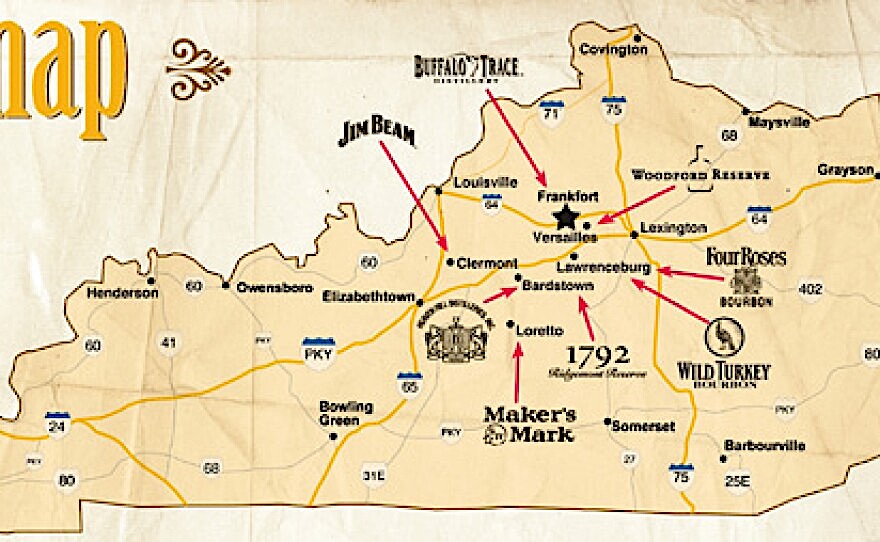
Bourbon Trail
For the last two
decades the soaring interest in American
bourbon––is there any other kind?––began when the
corn-based liquor was relatively cheap compared to
Scotch and rum. And after Kentucky passed a 2013
law to make it easier for companies to purchase
and resell vintage bottles, even if they were the
same old booze in brand new bottles, new
companies, many without actually owning a
distillery, marketed
the rarity factor into a niche market.
Bourbon sales from 2011 to 2020 outpaced all
other spirits, with a seven percent increase. But
there are some clouds on the horizon for bourbon
makers, not least because the market’s been
saturated with new labels claiming special aging in
all sorts of used oak barrels––Sherry, Scotch, Port,
Cognac––that makes their product worth $100 and
more. (Ironically, I received a press release
recently from an historic Cognac house promoting its
new idea of aging its brandy in old bourbon barrels!)
Cult brands emerged, and suddenly there were bourbon
collectors of small batch issues from producers like
Michter’s and Pappy’ van Winkle, selling for
thousands at auction.
But since it is
now the case that the current generation is drinking
less, all liquor producers are feeling a chill.
Already bourbon sales have slowed to 2% between
2021-2024. Factor
in President Trump's global tariffs and
subsequent EU retaliation (though currently delayed)
and Canada’s refusal to import US whiskies, and
you’ve got a perfect storm building.
But just to keep you cognizant of what’s new
and interesting in Bourbon World, here are a number
of bottlings issued just this year alone.
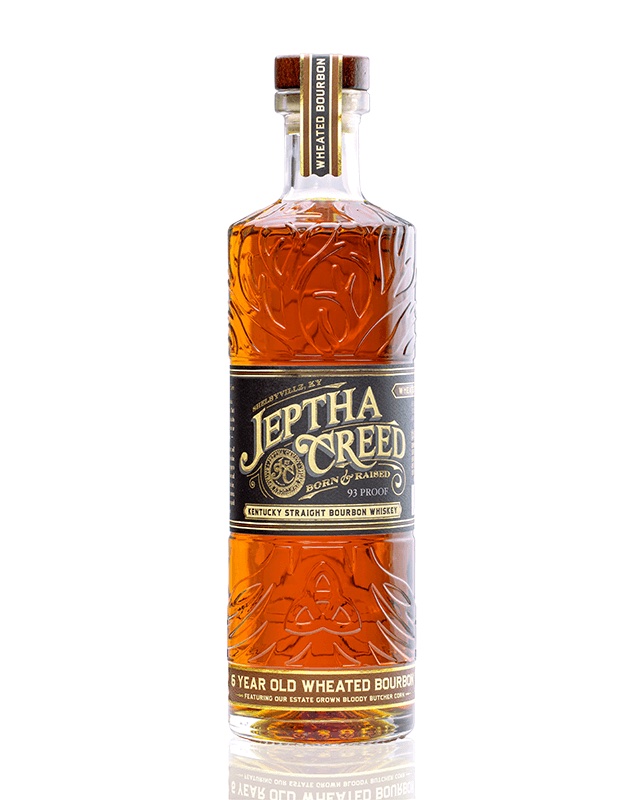
Jeptha
Creed Red, White & Blue Kentucky Straight
Bourbon Whiskey ($75). Made from a blend
of red, white, and blue heirloom
corn grown on Jeptha Creed’s Kentucky farm,
aged for at least four years. A portion of
proceeds goes to support veteran organizations like CreatiVets. Jeptha Creed also offers 6-Year
Wheated Bourbon ($60), aged six years as a
wheated bourbon with a mash bill of 75%
estate-grown Bloody Butcher Corn, 20% Malted
Wheat, and 5% Malted Barley. Its original Straight
Four-Grain Bourbon ($50) blends
Bloody Butcher Corn, Malted Rye, Malted Wheat, and
Malted Barley.
Chicken
Cock Kentucky Straight Bourbon Whiskey ($60)
The
coy name of this bourbon actually dates back to
1856. Its St aright Bourbon weighs in at 90 proof,
while its 100 Proof Chicken
Cock
Small Batch Whiskey ($70)
comes from a blend of a smaller number of casks.
Old Elk
Slow Cut Blended Straight Bourbon ($40).
Old Elk claims its Slow
Cut™ proofing process takes up to
10 times longer than standard techniques, ending up
at 88-proof. Its Infinity Blend ($150) is part of
the company’s Master Blend Series based on Master
Distiller Greg Metze’s 40+ year experience. He
selects aged whiskeys from 61% Old Elk Wheated
Bourbon, aged 9 years; 15% 2023 Old Elk Infinity
Blend of Straight Bourbon Whiskies; 12% Old Elk
Straight Rye 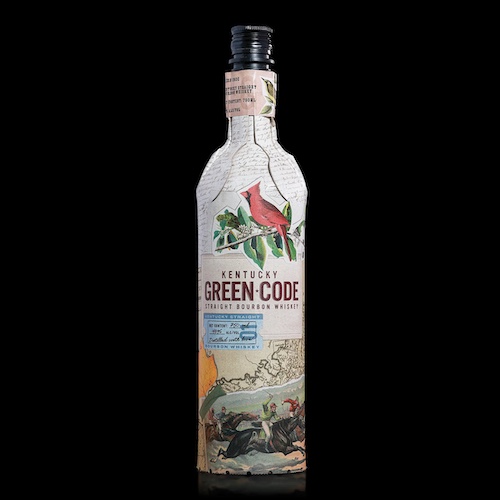 Whiskey, 7 years; and 12% Straight
Wheat Whiskey, 10 years. Bottled at 115.15 Proof. Old
Elk Cigar Cut™ Island Blend ($130)
is a mix of island malts and Old Elk’s Signature
High-Malt Bourbon, for a light smokiness meant
to go with smoking cigars.
Whiskey, 7 years; and 12% Straight
Wheat Whiskey, 10 years. Bottled at 115.15 Proof. Old
Elk Cigar Cut™ Island Blend ($130)
is a mix of island malts and Old Elk’s Signature
High-Malt Bourbon, for a light smokiness meant
to go with smoking cigars.
Green Code Straight Bourbon Whiskey ($50). This
Kentucky straight bourbon comes in a recyclable
paperboard bottle, not a bad idea for drinking
outdoors.
World Whiskey Society scouts the
globe to create their whiskeys, and, if you
believe whiskey can be more eco-friendly, its latest
release is Green Code Kentucky Straight Bourbon
Whiskey ($50) in a pretty fully recyclable
bottle (5% lighter than glass), boasting an 84%
lower carbon footprint than traditional glass and
five times lighter. 96 Proof.
Old Fitzgerald Bourbon is
a long-time producer––since 1870––  now owned by Heaven
Hill (which also owns Elijah Craig
Bourbon, Larceny Bourbon, Evan Williams Bourbon and
others). Old
Fitzgerald is known for its wheated mashbill and
diamond decanters, and its new Bottled in Bond,
which by law must be the product of one season,
either January-June or July-December; stored at
least four years in government bonded warehouse, be
reduced in proof to exactly 100 using only pure
water.
now owned by Heaven
Hill (which also owns Elijah Craig
Bourbon, Larceny Bourbon, Evan Williams Bourbon and
others). Old
Fitzgerald is known for its wheated mashbill and
diamond decanters, and its new Bottled in Bond,
which by law must be the product of one season,
either January-June or July-December; stored at
least four years in government bonded warehouse, be
reduced in proof to exactly 100 using only pure
water. 
Papaw’s
Kentucky Straight Bourbon Whiskey ($40). Founded by the
Nethery family, the brand honors their patriarch,
Roy "PaPaw" Nethery, “a Shelby County native,
hardworking farmer, and lover of life's simple
pleasures.” It’s
just been released (currently only in Florida) with
a handsome new label, and it purports to be an
honest, straightforward bourbon, aged four years, at 86 proof.
❖❖❖
 MAMMA MIA!
Frida, a parent company, and OddFellows ice cream
company in New York, have released a breast
milk-flavored ice cream pints nationwide.
❖❖❖
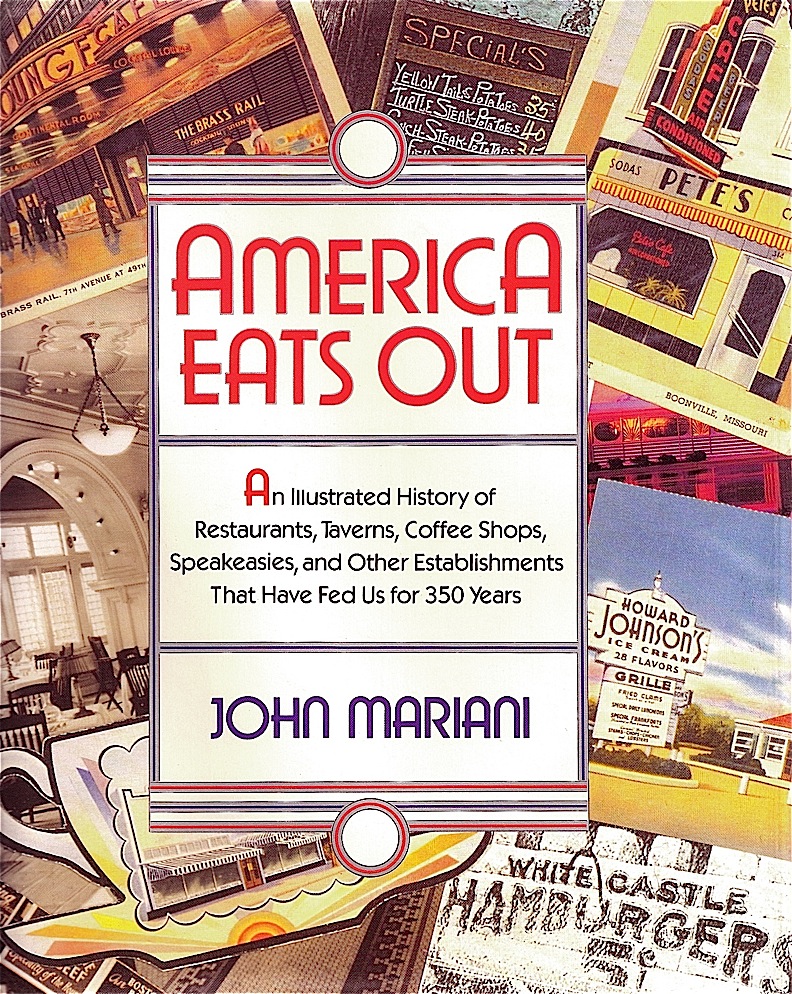
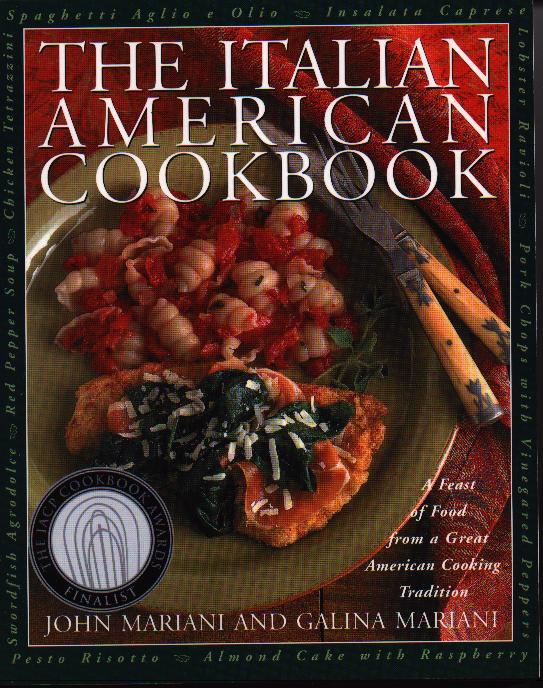
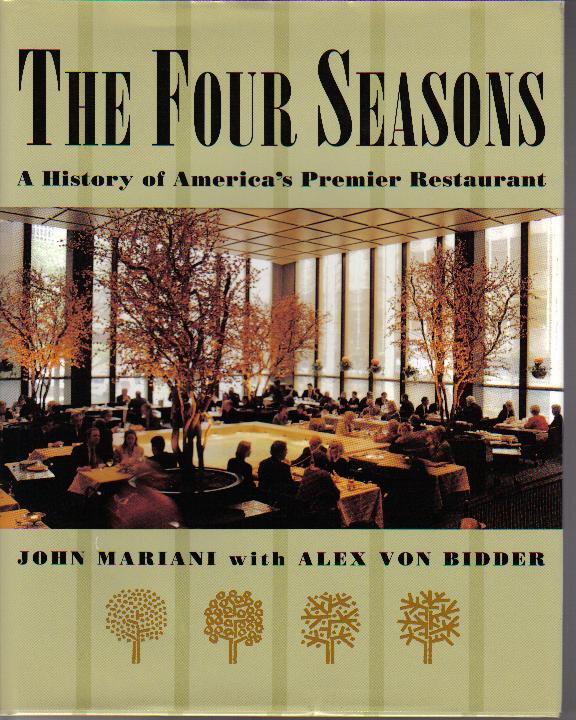
Any of John Mariani's books below may be ordered from amazon.com.
 The Hound in Heaven
(21st Century Lion Books) is a novella, and
for anyone who loves dogs, Christmas, romance,
inspiration, even the supernatural, I hope you'll find
this to be a treasured favorite. The story
concerns how, after a New England teacher, his wife and
their two daughters adopt a stray puppy found in their
barn in northern Maine, their lives seem full of promise.
But when tragedy strikes, their wonderful dog Lazarus and
the spirit of Christmas are the only things that may bring
his master back from the edge of despair.
The Hound in Heaven
(21st Century Lion Books) is a novella, and
for anyone who loves dogs, Christmas, romance,
inspiration, even the supernatural, I hope you'll find
this to be a treasured favorite. The story
concerns how, after a New England teacher, his wife and
their two daughters adopt a stray puppy found in their
barn in northern Maine, their lives seem full of promise.
But when tragedy strikes, their wonderful dog Lazarus and
the spirit of Christmas are the only things that may bring
his master back from the edge of despair. WATCH THE VIDEO!
“What a huge surprise turn this story took! I was completely stunned! I truly enjoyed this book and its message.” – Actress Ali MacGraw
“He had me at Page One. The amount of heart, human insight, soul searching, and deft literary strength that John Mariani pours into this airtight novella is vertigo-inducing. Perhaps ‘wow’ would be the best comment.” – James Dalessandro, author of Bohemian Heart and 1906.
“John Mariani’s Hound in Heaven starts with a well-painted portrayal of an American family, along with the requisite dog. A surprise event flips the action of the novel and captures us for a voyage leading to a hopeful and heart-warming message. A page turning, one sitting read, it’s the perfect antidote for the winter and promotion of holiday celebration.” – Ann Pearlman, author of The Christmas Cookie Club and A Gift for my Sister.
“John Mariani’s concise, achingly beautiful novella pulls a literary rabbit out of a hat – a mash-up of the cosmic and the intimate, the tragic and the heart-warming – a Christmas tale for all ages, and all faiths. Read it to your children, read it to yourself… but read it. Early and often. Highly recommended.” – Jay Bonansinga, New York Times bestselling author of Pinkerton’s War, The Sinking of The Eastland, and The Walking Dead: The Road To Woodbury.
“Amazing things happen when you open your heart to an animal. The Hound in Heaven delivers a powerful story of healing that is forged in the spiritual relationship between a man and his best friend. The book brings a message of hope that can enrich our images of family, love, and loss.” – Dr. Barbara Royal, author of The Royal Treatment.
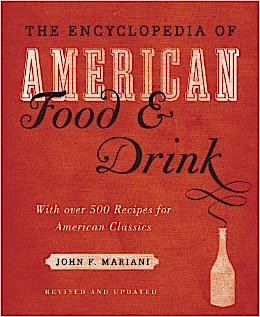 |
The Encyclopedia of American Food and Drink by John F. Mariani (Bloomsbury USA, $35) Modesty forbids me to praise my own new book, but let me proudly say that it is an extensive revision of the 4th edition that appeared more than a decade ago, before locavores, molecular cuisine, modernist cuisine, the Food Network and so much more, now included. Word origins have been completely updated, as have per capita consumption and production stats. Most important, for the first time since publication in the 1980s, the book includes more than 100 biographies of Americans who have changed the way we cook, eat and drink -- from Fannie Farmer and Julia Child to Robert Mondavi and Thomas Keller. "This book is amazing! It has entries for everything from `abalone' to `zwieback,' plus more than 500 recipes for classic American dishes and drinks."--Devra First, The Boston Globe. "Much needed in any kitchen library."--Bon Appetit. |
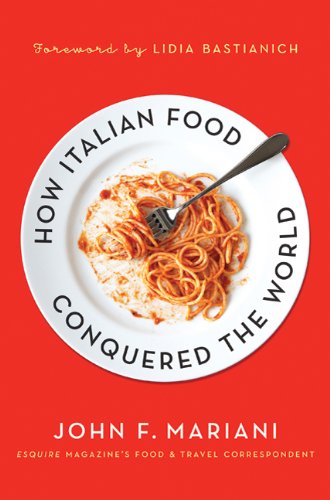
"Eating Italian will never be the same after reading John Mariani's entertaining and savory gastronomical history of the cuisine of Italy and how it won over appetites worldwide. . . . This book is such a tasteful narrative that it will literally make you hungry for Italian food and arouse your appetite for gastronomical history."--Don Oldenburg, USA Today. "Italian
restaurants--some good, some glitzy--far
outnumber their French rivals. Many of
these establishments are zestfully described
in How Italian Food Conquered the World, an
entertaining and fact-filled chronicle by
food-and-wine correspondent John F.
Mariani."--Aram Bakshian Jr., Wall Street
Journal.
"Equal parts
history, sociology, gastronomy, and just
plain fun, How Italian Food Conquered the
World tells the captivating and delicious
story of the (let's face it) everybody's
favorite cuisine with clarity, verve and
more than one surprise."--Colman Andrews,
editorial director of The Daily
Meal.com. "A fantastic and fascinating
read, covering everything from the influence
of Venice's spice trade to the impact of
Italian immigrants in America and the
evolution of alta cucina. This book will
serve as a terrific resource to anyone
interested in the real story of Italian
food."--Mary Ann Esposito, host of PBS-TV's
Ciao
Italia. "John Mariani has written the
definitive history of how Italians won their
way into our hearts, minds, and
stomachs. It's a story of pleasure over
pomp and taste over technique."--Danny Meyer,
owner of NYC restaurants Union Square
Cafe, The Modern, and Maialino.
|
 |
 |
 |
 |
 |
 |
MARIANI'S VIRTUAL GOURMET
NEWSLETTER is published weekly. Publisher: John Mariani. Editor: Walter Bagley. Contributing Writers: Christopher
Mariani, Misha Mariani, John A. Curtas, Gerry Dawes, Geoff Kalish.
Contributing
Photographer: Galina Dargery. Technical
Advisor: Gerry
McLoughlin.
If you wish to subscribe to this
newsletter, please click here: http://www.johnmariani.com/subscribe/index.html
© copyright John Mariani 2025