MARIANI’S
Virtual
Gourmet
SEPTEMBER 28,
2025
NEWSLETTER
Founded in 1996
ARCHIVE
1938-2025
THIS WEEK
AMERICAN VS FRENCH WAITERS
By John Mariani
NEW YORK CORNER
PARIS CAFÉ
By John Mariani
HÔTEL ALLEMAGNE
CHAPTER TWENTY-NINE
By John Mariani
NOTES FROM THE WINE CELLAR
FAMIGLIA DE CERCHIO IS WORKING TO BRING
THE WINES OF ABRUZZO TO GLOBAL ATTENTION
PART TWO
By John Mariani
AMERICAN VS FRENCH WAITERS
THE GOOD, THE BAD AND THE HOPELESS
By John Mariani
For better
or worse, stereotypes often do have a basis
in real life, like the bewilderment as to
why you can’t get a decent bagel outside of
New York or a good gumbo outside of
Louisiana.
When it comes to people and national
stereotypes, the slope becomes slippery,
unless the stereotype happens to be one
enjoyed by a particular segment of society,
like rocket scientists and brain surgeons.
There are, however, such
things as national traits, even if they vary
by region––Texas leaps to mind––so when making
comparisons between American and French
restaurant waiters I admit that there are some
on both continents who epitomize the highest
standards and others who are totally inept at
their jobs.
 Let’s
start there, with jobs: In the U.S. a waiter
is more often than not just doing a job––the
stereotype of the aspiring actor who waits
tables, which includes Jennifer Aniston,
Sandra Bullock, Lady Gaga and Madonna, is
absolutely true. (It’ s interesting that a
Google search for French actors who were
waiters turns up just one name: Alain Délon.)
In France (and most of Europe) being a waiter
is considered a profession, and it is one that
is based not on tips, which are minimal, but
on a good salary with benefits. France does
have a 35-hour work week (known as the Loi
Aubry) but waiters may choose to work
overtime. Minimum wage is between €8.43 and
€11 per hour, or €1,300 to €1,750 per
month––the average French person makes
€1,000––but that includes health insurance,
retirement and other benefits, which would be
a rarity in a U.S. restaurant, where the
federal minimum wage is $2.13 and the average
income for a waiter is about $35,000 a year,
based on an hourly $17.70, including tips.
Let’s
start there, with jobs: In the U.S. a waiter
is more often than not just doing a job––the
stereotype of the aspiring actor who waits
tables, which includes Jennifer Aniston,
Sandra Bullock, Lady Gaga and Madonna, is
absolutely true. (It’ s interesting that a
Google search for French actors who were
waiters turns up just one name: Alain Délon.)
In France (and most of Europe) being a waiter
is considered a profession, and it is one that
is based not on tips, which are minimal, but
on a good salary with benefits. France does
have a 35-hour work week (known as the Loi
Aubry) but waiters may choose to work
overtime. Minimum wage is between €8.43 and
€11 per hour, or €1,300 to €1,750 per
month––the average French person makes
€1,000––but that includes health insurance,
retirement and other benefits, which would be
a rarity in a U.S. restaurant, where the
federal minimum wage is $2.13 and the average
income for a waiter is about $35,000 a year,
based on an hourly $17.70, including tips.
 In large cities like New
York, DC, Houston and Chicago, however, a
waiter at a higher-end restaurant where the
cost of a meal can run over $100 per person
can easily make $70,000 to $100,000 a year,
which would be highly unlikely in France.
Nevertheless, except for long-time waiters who
have committed to the job as a profession,
waitering is for most Americans a first job or
a way-stop until something better comes along.
For that reason, many who take the job are not
well trained or even all that interested in
the rules, niceties and nuances of a job that
takes skill, stamina, psychology and a sure
degree of stifling anger. Rudeness and insults
by customers are frequent, sexual harassment
always lurking, and the threat of losing a
good tip can deflate even the bubbliest of
personalities.
In large cities like New
York, DC, Houston and Chicago, however, a
waiter at a higher-end restaurant where the
cost of a meal can run over $100 per person
can easily make $70,000 to $100,000 a year,
which would be highly unlikely in France.
Nevertheless, except for long-time waiters who
have committed to the job as a profession,
waitering is for most Americans a first job or
a way-stop until something better comes along.
For that reason, many who take the job are not
well trained or even all that interested in
the rules, niceties and nuances of a job that
takes skill, stamina, psychology and a sure
degree of stifling anger. Rudeness and insults
by customers are frequent, sexual harassment
always lurking, and the threat of losing a
good tip can deflate even the bubbliest of
personalities.
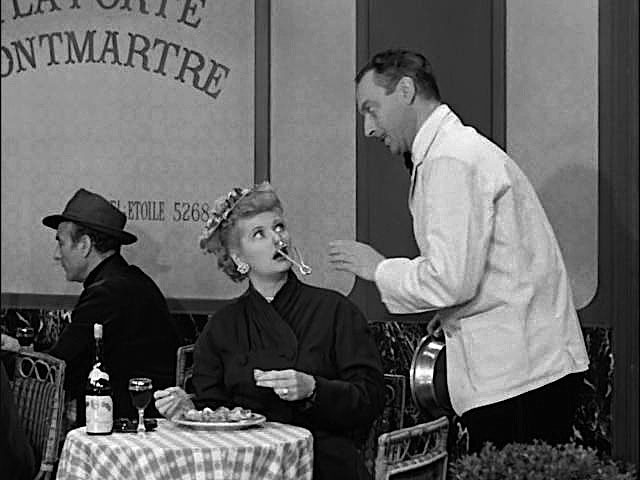
These abuses happen in France, too, but to a
lesser extent because European customers have
more of a rapport with their waiters and a
respect for their profession. The stereotype
of the snooty mustachioed French waiter owes
more to Hollywood comedies than reality, but
many Americans abroad bristle if a waiter
doesn’t speak or understand English or bridle
at one who seems icy, rather than an American
waiter who pretends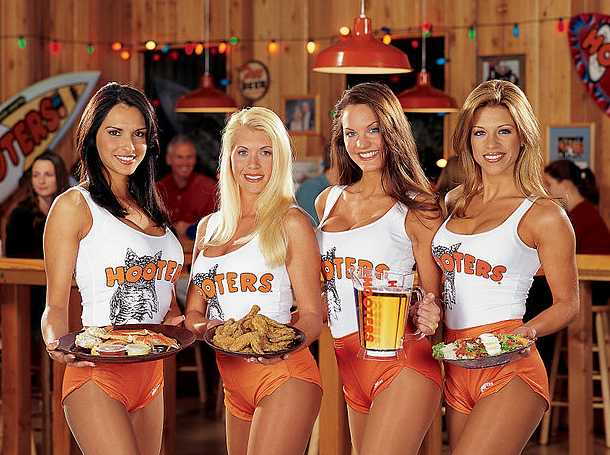 to be your pal. You never hear French waiters
announcing their names or saying, “That
dish is one of my favorites!” or “You guys
still working on that?”
to be your pal. You never hear French waiters
announcing their names or saying, “That
dish is one of my favorites!” or “You guys
still working on that?”
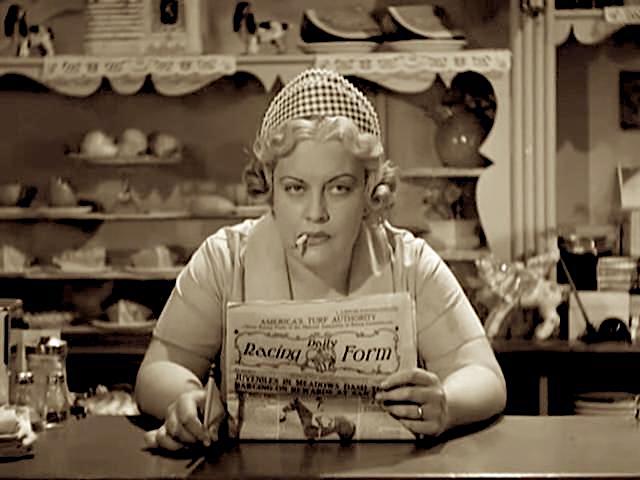
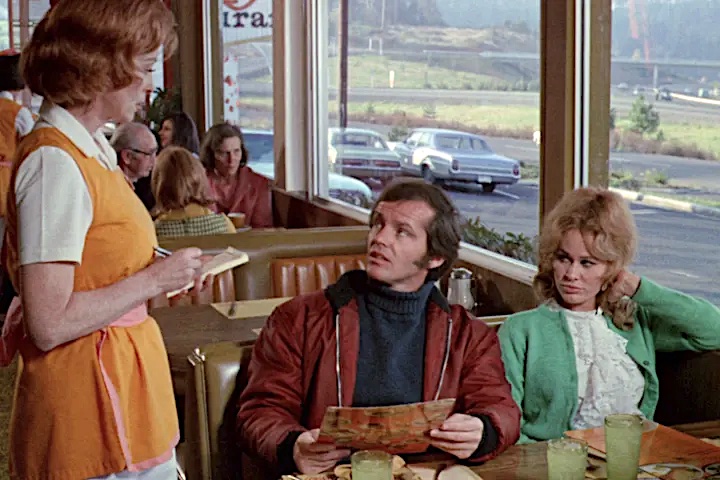
The stereotype of the “sassy” American
waitress is just as much a stage character as
a reality, and some restaurants even have a
winking pride having staff who can playfully
insult a customer aware of the game. Remember
the waitress Flo “Kiss my grits” Castleberry
in the 1970s sitcom Alice and Max
Black on 2 Broke Girls?
French waiters are well trained to perform
many tableside tasks that would stymie
American counterparts, such as deboning a
whole fish, cutting a roast chicken or flaming
a dessert. They also don’t wear silly outfits.
Then there is the
question of the hours worked: in France it is
rare that guests arrive before one PM for
lunch (two PM in Spain) and eight for dinner.
But they may also arrive as late as ten or
ten-thirty (in Greece that would be early). So
the work hours extend from seven (for prep) to
eleven or midnight in France. In the U.S.,
lunch might begin at 11 AM and dinner at 5
PM––Early Bird Dinners are appalling to the
French––and trail off by 9:15. Nevertheless,
I’ve found it all too often the case that
around nine o’clock American waiters simply
disappear like frightened birds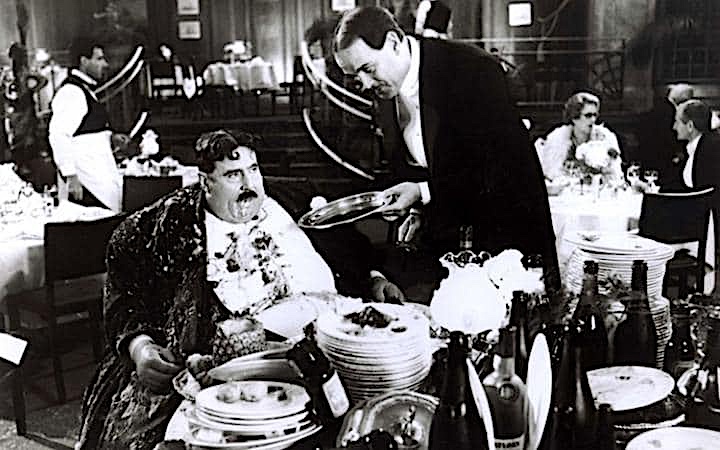 from the dining room, seemingly to take a
break or to make phone calls, whatever. In
France I have never found that to be the case,
because by nine o’clock service is in full
swing and keeps going full tilt past eleven.
from the dining room, seemingly to take a
break or to make phone calls, whatever. In
France I have never found that to be the case,
because by nine o’clock service is in full
swing and keeps going full tilt past eleven.
I have always believed that if I owned a
restaurant I’d post a sign in the kitchen
saying, “If you’re not ordering or picking
up food, get out of this kitchen!”
Being a waiter is hard
work––and I’ve done it––but in the U.S. it
slows down after nine o’clock, when the
busboys kick into high gear to clear plates.
By then waiters have finished taking orders
for the night. Outside of big cities, many
restaurants empty out by nine. In Los Angeles
movie people are famous for heading home by
nine to be on the movie set by six the
following morning. In fact, most American
cities are not late-night towns.
All things considered,
I’d rather have a knowledgeable, attentive
waiter with a professional demeanor than one
who is overly chummy, interruptive and often
gone from the dining room. I’ve had many of
both and
all kinds in between, which is the best of
both world. I wish everyone should have the
same.
NEW YORK CORNER
THE PARIS CAFÉ
119 South Street
646-386-7038
By John Mariani
Back in the 1870s, had you booked a
room at Henry Meyer’s Hotel near New York’s
South Street Seaport, you might have run into
Teddy Roosevelt, Thomas Edison, Wild Bill
Cody, Annie Oakley and Butch Cassidy and the
Sundance Kid at the tavern he named The Paris
Café. And while sipping on a Manhattan
cocktail you could have watched the
construction of the Brooklyn Bridge spanning
the East River.
 Restaurants
that
have survived through two centuries would be a
rarity anywhere, especially in New York, where
everything seems torn down and replaced every ten
years. Delmonico’s still thrives on Beaver Street;
Fraunces Tavern (though a reconstruction) is on
Pearl Street; McSorley’s Ale House, Pete’s Tavern,
the White Horse and the Landmark Tavern still pack
them in, and Brooklyn’s Peter Luger and Gage &
Tollner are always busy. Not a bad record.
Restaurants
that
have survived through two centuries would be a
rarity anywhere, especially in New York, where
everything seems torn down and replaced every ten
years. Delmonico’s still thrives on Beaver Street;
Fraunces Tavern (though a reconstruction) is on
Pearl Street; McSorley’s Ale House, Pete’s Tavern,
the White Horse and the Landmark Tavern still pack
them in, and Brooklyn’s Peter Luger and Gage &
Tollner are always busy. Not a bad record.
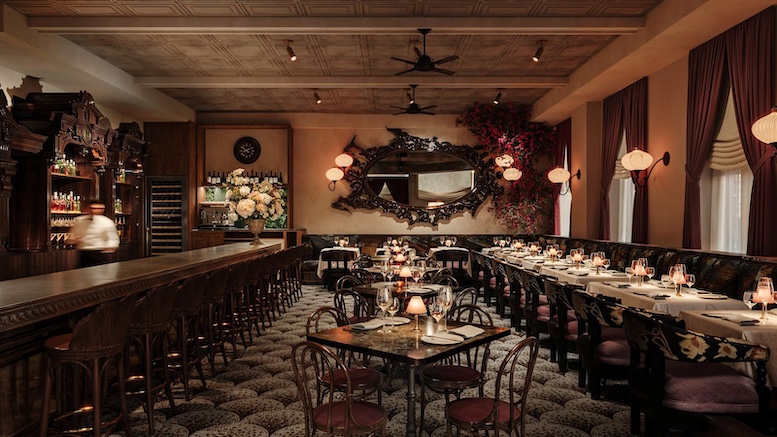
It is, therefore, wonderful to find that
new owners have taken over The Paris Café and
restored it with respectful finesse to look like
it’s just opened its doors.
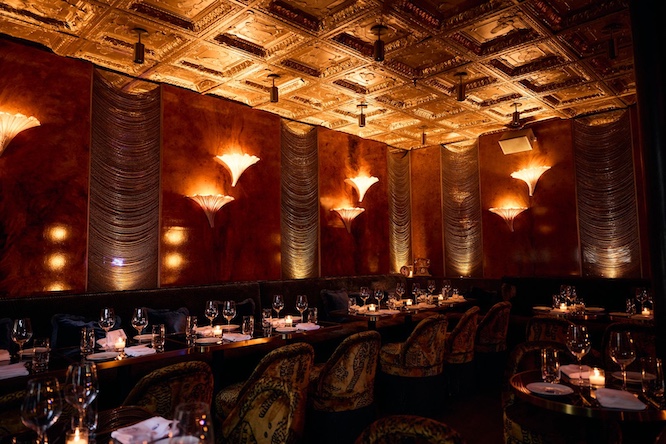
Thanks to
Legeard Studio and OPUS Hospitality, the dining
room retains its tin ceiling and pewter-topped
bar, mosaic tile floors and brass appointments,
while adding the welcome modernity of good
lighting. On the slow night I visited, the noise
level was quite pleasant, with music well in the
background.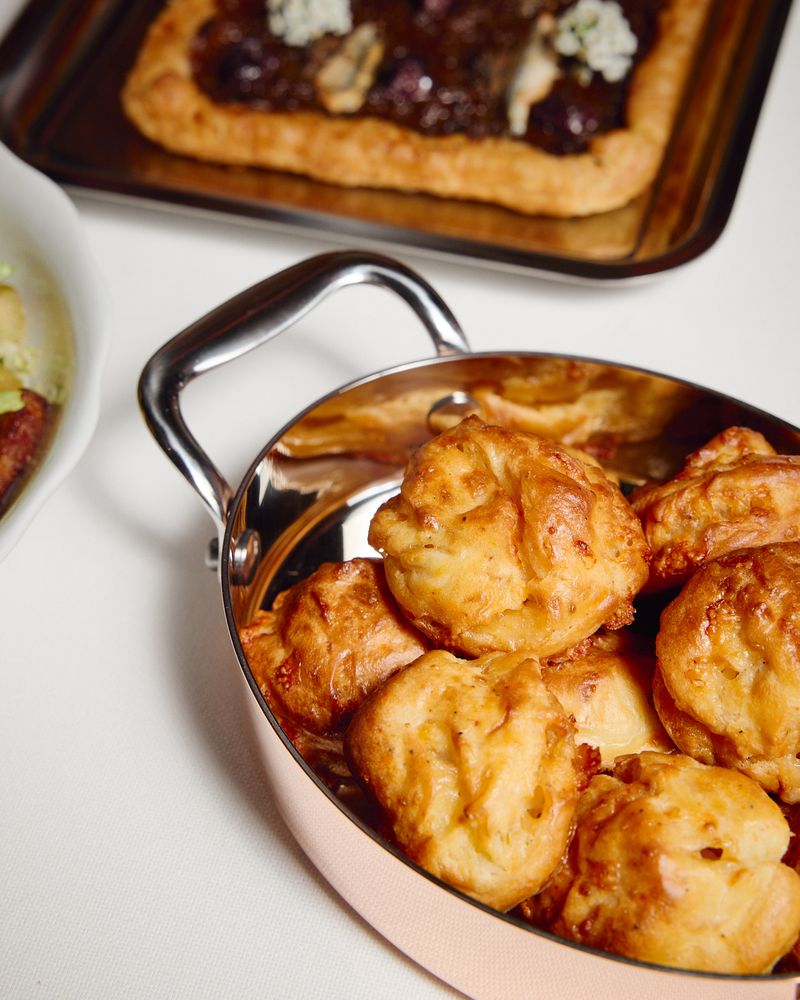 The rear
dining room (left) has live music on
weekends.
The rear
dining room (left) has live music on
weekends.
The menu is largely Parisian bistro
inspired, overseen by chef Benjamin Wolff, a
Jersey boy who’s worked in New Orleans and in New
York at
Racines
and put in time as a fishmonger at Greenpoint Fish
& Lobster Co., as well as running a bread
business for two years out of his apartment. He
told me that seafood is his favored kind of
cookery and that French cuisine without
too much fuss is what he is now committed to. He
is not, as yet, taking any flights of fancy,
instead honing his skills with the classics like
puffy cheese gougeres (right).
You
may well start off with raw oysters with a
mignonette sauce or a plateau de la mer
for two or four. There
is a creamy foie gras terrine with buttered
housemade brioche for a starter, or perhaps snails
done in the Burgundian style with viscous, piping
hot green garlic butter. As you’d find in any café
bistro in Marseille, briny mussels are sloshed
with Pernod, tarragon and espelette pepper and
sided with very good French fries.
 There
must always be onion soup buoyed by sweet
caramelized onions and layered over with browned
Gruyère and baguette toast––a dish that hints that
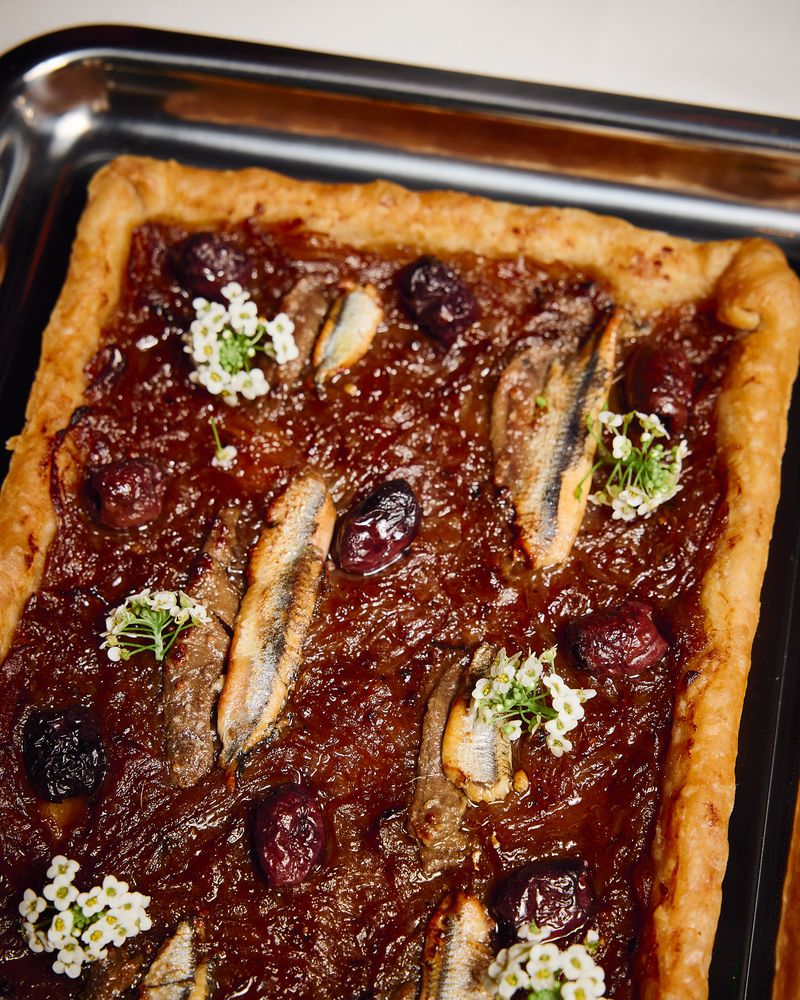
autumn is well on its way. Niçoise
pissaladière (left) comes as a
flatbread of savory caramelized onions and saline
anchovies on puff pastry. But bland steak tartare
would have been better with more assertive
seasonings.
There
must always be onion soup buoyed by sweet
caramelized onions and layered over with browned
Gruyère and baguette toast––a dish that hints that
autumn is well on its way. Niçoise
pissaladière (left) comes as a
flatbread of savory caramelized onions and saline
anchovies on puff pastry. But bland steak tartare
would have been better with more assertive
seasonings.
There are only four plats principaux on
the menu, which seems a tad skimpy, but you’ll be
quite happy with the filet mignon (below)
lashed with an assertive black pepper sauce, with
more of those French fries. Loup de mer (branzino)
is steamed within parchment paper with Provençal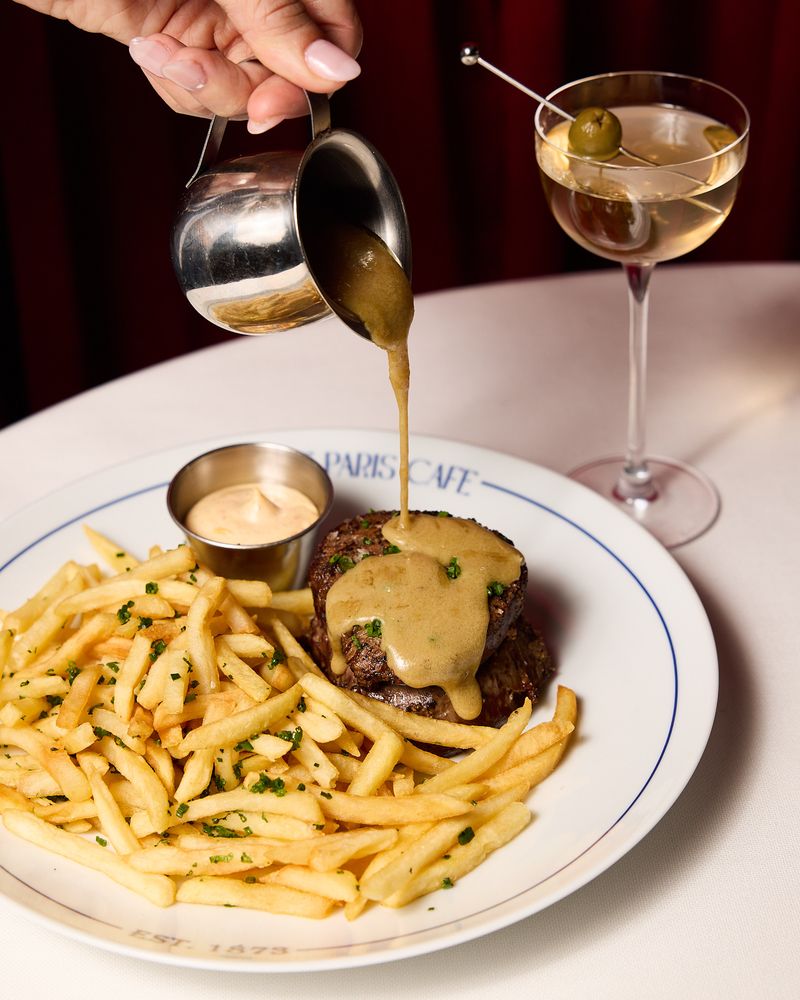 tomatoes,
lemon, fennel, olives and Pernod, emerging with
all those flavors suffused throughout the fish.
tomatoes,
lemon, fennel, olives and Pernod, emerging with
all those flavors suffused throughout the fish.
At a time
when whole roast chickens are costing $100 and
more at uptown restaurants, it is applause-worthy
that Wolff’s is only $75, and it will feed four
people. You also get creamy, rich mashed potatoes.
A hamburgers has long become a staple of bistro
menus, and at Paris Café it comes with grass-fed
beef (as it would in France), with caramelized
onions, pickles and Wisconsin Red Rock cheddar,
which was fine, but the seeded bun tasted
like it came from a supermarket.
Pastry Chef Emma Scanlon toes the bistro line with
rich dark chocolate mousse, crème brûleé and a
most welcome clafoutis of nectarines with
Cognac-laced crème anglaise.
At the bottom of the dessert list is a tower of
pastries, cookies and meringue called, for some
reason, “La Revolution,” which were quite good but
not for a whopping
$60. In some restaurants these mignardises
and sweet bites––albeit just a few––are given
gratis at the end of a meal.
The wine list at The Paris Café is carefully built
for depth and breadth, with a decent number of
bottlings $100 and under.
You cannot help come through
the doors of Paris Café without smiling,
especially if you recall the prior days when it
had little culinary appeal. Now it’s bright and
shiny and beautiful once again, the food is on the
mark and the location could hardly be more
evocative of what was once called Little Olde New
York.
Open
Tues.-Sun.; Sat. & Sun. for brunch.
HÔTEL ALLEMAGNE
By John Mariani
Catherine
went back to the office to edit the footage
with her producer—she was very relieved
Bazarov had spoken English—and by the late
afternoon the spot was on the air. The fact
that hers was the only interview any
journalist had garnered from the Russian
gave her an enormous boost among her
colleagues, both in and out of CNN.
Katie called to congratulate her and
offered to take her out to dinner, wherever
Catherine wanted to go. Not surprisingly she
chose her friend Jacques’s restaurant, so,
with David along, they made a date for
eight-thirty.
“Bazarov looked like he was trying real
hard to charm you off camera,” said Katie.
“Oh, God, yes. ‘How about dinner when
this is all over, Madame? Let’s fly off to
Russia to see them scoop caviar out of the
fish, Madame.’ It’s not the first time one of
these ambassadors—who have very high opinions
of themselves—has tried to put the moves on
me. They do it with all the women journalists.
But then, so do all the French dignitaries.
The Italians are the worst.”
Jacques brought out some canapés and a
bottle of Champagne. He and David started
chatting.
“What I did find really weird,” said
Catherine, “was all this inquiry about poutine.
Y’know, those gloppy Canadian French fries? He
said he’d had them in Montreal and asked where
he might find them in Paris and that he and I
should really go eat them sometime.”
“He said all that off-camera?” asked
Katie.
“Yeah, all he wanted to talk about was
poutine poutine!”
David turned his head to Catherine and
said, “Sorry, what about Putin?”
Catherine laughed, “Not Putin, poutine.”
And then it dawned on the three
Americans.
“Bazarov was trying to send you a
message,” said Katie.
“Oh my God,” said Catherine. “Of course
that’s why he kept talking about poutine!”
“He’s trying to signal you that his
glorious President, Vladimir Putin, is
involved in the crime, and that he was just
the fall guy and wants out.”
“And if he is able to get out of the
Embassy and have dinner with me at some
Canadian bistro, he’ll tell me more.”
“If he gets out of the Embassy and
meets you at a bistro, he’s going to bolt,”
said David. “He’s going to want asylum because
he knows that Putin will hold him responsible
for botching the crime, or at least for
allowing the finger to point back to Moscow.”
Katie chimed in, saying, “And you think
that he thinks the French will let him off the
hook for the crime?”
“He’ll still be protected by diplomatic
immunity,” said David, “although I don’t know
exactly how that would work if he defects.
Sure as shit he’s going to offer the French a
goldmine of information about Putin and how
the hotel jobs were arranged. The trick now is
how to get him out of the Embassy.”
“Send in Inspector Clouseau!” said
Catherine. “Somehow he always gets his man.”
David smiled broadly. “That is not
a bad idea.”
“What?” said Katie, “hire Peter Sellers
to come back from the dead and break into the
Russian Embassy?”
“No, no,
no, but what this game needs is someone who’s
a bumbler, someone who can disrupt the
Russians’ plans while Bazarov gets away.”
“And how do you propose we do that?”
asked Catherine.
“First, you entice him out of the
Embassy for dinner.”
“And why would the Russians let him do
that?”
“Because your interview got him on the
record explaining and denying his role in the
crime. If you were to say you would like to do
a follow-up because you had new information
but that you did not want to do it in the
Embassy because it’s too restrictive, they
might let him dine with you, albeit with
Russian security men in tow.”
“So, I do my interview without cameras
and sound crew?”
“Yes, just you and him in a bistro
eating those stupid potatoes with gravy or
whatever. They’ll probably have him bugged so
that he doesn’t say anything compromising.”
“And if he knows that he can’t tell me
anything we don’t already know, what’s the
point?”
“The point is,” said David, “that the
interview is not the point. Allowing
him a way of getting out of the bistro without
having the security guys on top of him is the
point.”
“And what if the security guys are
really good at their jobs?” asked Katie.
“Just have Borel’s men waiting outside
with an unmarked van. Leave the rest to me.”
Catherine wasted no time
the next day trying to reach Bazarov, who, as
she expected, returned her call within an
hour. Without indicating in any way that he
was being held against his will at the
embassy, he suggested meeting the following
evening and asked if they might go to that
Canadian restaurant she mentioned. The time
was set for eight o’clock.
That done, David called Borel to tell
him Bazarov might be trying to defect and that
the dinner with Catherine was a pretext for
surrendering to the police.
“We can’t just dash into the restaurant
and arrest a foreign diplomat,” said the
detective. “He’s going to have his security
men there to make sure that wouldn’t happen.”
David then told Borel of his plan,
which he believed would give Bazarov an
opportunity to exit the restaurant and
willingly give himself over to Borel’s
custody. The detective said it sounded like a
very dubious and quite risky plan that assumed
a lot on Bazarov’s part.
“Just have a van outside the restaurant
ready to go. What have you got to lose?”
Borel agreed to the plan, believing
that Bazarov had every reason to want to
defect, and, if he did, he would probably not
face criminal charges for the hotel attacks.
Catherine had already asked Bazarov if
Katie could join them at dinner, describing
her as “a very attractive American journalist
who had won many awards for her writing.” All
Bazarov said was, “How could I resist?”
David still had not filled in Katie and
Catherine on the details of his plan to allow
Bazarov to escape, because he said it needed
an element of surprise. He said only that
Catherine should give clues to Bazarov in
conversation, then, at the right moment, tell
him to leave the restaurant.
 The three Americans got
to the restaurant an hour early to assess the
exits and to watch for the possible early
arrival of Russian security, whom David said
he could spot with his eyes closed.
The three Americans got
to the restaurant an hour early to assess the
exits and to watch for the possible early
arrival of Russian security, whom David said
he could spot with his eyes closed.
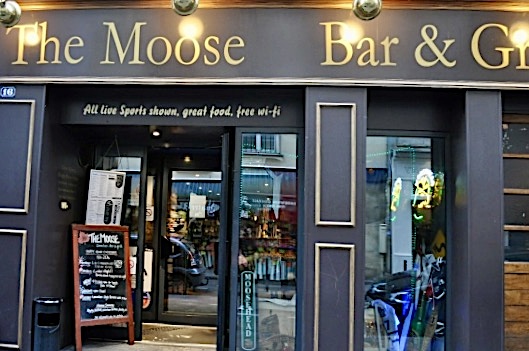
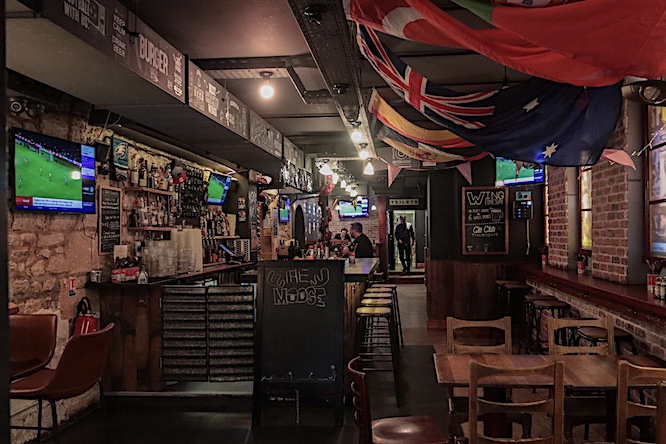
The
Moose Bar & Grill was in the Sixth
Arrondissement near the Sorbonne, the better
to draw a clientele of students. Its décor
would have fit quite easily into any corner of
Montréal or Québec, with a wall of rough,
rustic stones, another of red brick, with a
long bar, tall tables with stools and regular
dining tables with chairs. The menu was pub
food and included eighteen variations of poutine.
It also featured several Canadian beers and
whiskeys.
Katie and Catherine were well received by the
staff, while David went to the bar, ordered a
bottle of Molson and watched one of the
large-screen TVs. The women chatted with one
of the owners, who was Canadian, about America
and Canada, then, around 7:30, took a table
close to the exit and pretended to nurse a
round of beers, saying they were expecting a
guest within the hour. Katie told Catherine it
might be better if they took an outdoor table,
and Catherine said they’d better let Bazarov
decide. 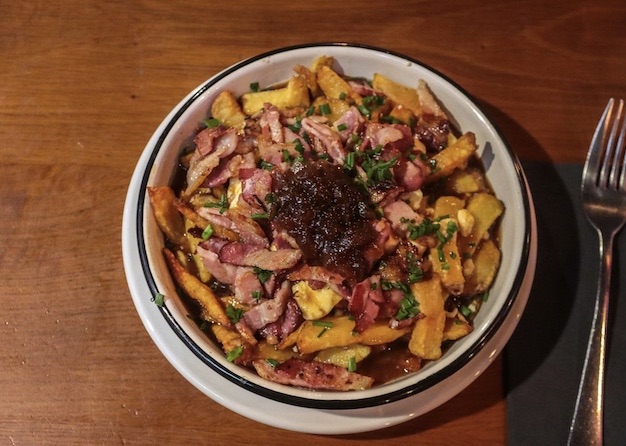 Both
noticed a black van parked at the curb.
Both
noticed a black van parked at the curb.
A few
minutes later a tall, brawny man who looked
Eastern European entered the restaurant and
looked around—David spotted him
immediately—taking in every corner, doors to
the rest rooms and the proximity of tables.
Right at eight o’clock Bazarov entered,
followed by another tall man who joined the
first at the bar.
Catherine greeted the
Russian ambassador cordially, saying, “It’s
such a beautiful night, Mr. Ambassador, should
we eat outside? It could get very busy in
here. There’s an important soccer match
playing tonight, and the place will get
jammed.”
Bazarov glanced at the two
security men and said, “A good idea. I have no
interest in soccer, especially when I have two
such lovely American ladies like yourselves to
dine with.”
The conversation began with
small talk, Bazarov asking questions about
Katie’s background and how Catherine thought
their last interview had gone over. Catherine
flattered him, saying it had very high ratings
throughout Europe and had played on CNN in the
U.S. They
then looked at the menu, and Bazarov was
amazed at the number of poutines
listed. They ordered three of them, some other
pub fare and beers. David was nibbling on a
plate of poutine at the bar, while the
security men pretended to be drinking beers
they ordered but barely touched.
“Have you ever thought of
asking for an assignment in America or maybe
Canada?” asked Katie. “There are many places
that are very similar in landscape to Russia.”
Bazarov laughed and said,
“You are talking to one Russian who hates the
cold. I have never been to Siberia and”—he
leaned in slightly—“I have no interest in
going there.”
 Katie thought that was a subtle sign of
Bazarov’s desire to defect.
Katie thought that was a subtle sign of
Bazarov’s desire to defect.
“Of course, I know all the
American and Canadian diplomats, and we get
along very well.” He then reeled off several
names, as if to suggest the Americans might
contact the embassy’s offices about the
prospects of being re-assigned by Russia to
one of those postings.
“Are there any openings?”
asked Catherine.
“I am very hopeful,” said
Bazarov, “that there will be an opening and I
hope it may be very soon.”
“I’ll snoop around and see
what I can find out from people I know.”
“That would be very good of
you. . . may I call you Catherine? And you,
Katie?” The women said of
course he could if they could call him Ilya.
The security men kept their eyes on the table
from the bar, even though their view was often
blocked by an increasing flow of people coming
into The Moose. Bazarov was seated with his
face visible to them, the women with their
backs to them.
As the conversation
continued along friendly lines, Catherine
removed a small piece of paper from her inner
pocket and placed it in front of her. Then,
she slowly turned it over. On it was written,
“THE BLACK VAN.” Bazarov looked at the two
women, his eyes slightly widened, then to the
side, where he did indeed see a black van with
its rear door ajar. He knew what he was being
offered. He then looked at the bar where the
Russians were straining to see above the
crowd. Katie caught David’s eye, smiled and
simply nodded, twice. With that David got up
from his stool at the bar and started to speak
loudly in English, shouting curses at the
soccer players on the television. He nudged
against a couple next to him, and the man
said, “Watch yourself, eh?” David flicked his
hand at the man and said, “I’m not going to
stand here and watch this crap,” then, visibly
stumbling, walked towards the door and seemed
to lose his footing, crashing against the two
Russians.
The two men picked him up
and shouted something in Russian and David
shouted back at them, grabbing one by the arm.
From the outside table Bazarov could see what
was happening and looked at Catherine.
“Go!” she said quietly. “Get to the
van.”
Bazarov’s mind was
flooded with bewilderment but realized that
with the Russian guards momentarily detained
by David that he could bolt for the van, whose
rear door was now fully open. Bazarov had only
three long steps to get to it and he was
helped up by two men who followed him in and
slammed the door. The van took off and sped
down the street.
© John Mariani, 2024
❖❖❖
FAMIGLIA DE CERCHIO IS WORKING TO BRING
THE WINES OF ABRUZZO TO GLOBAL ATTENTION
Part Two
By John Mariani
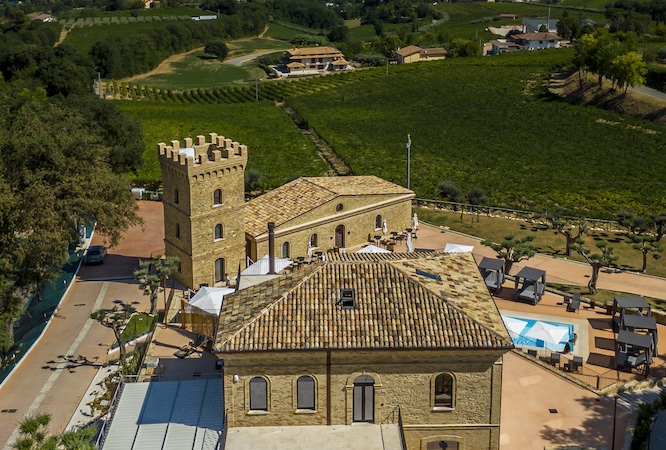
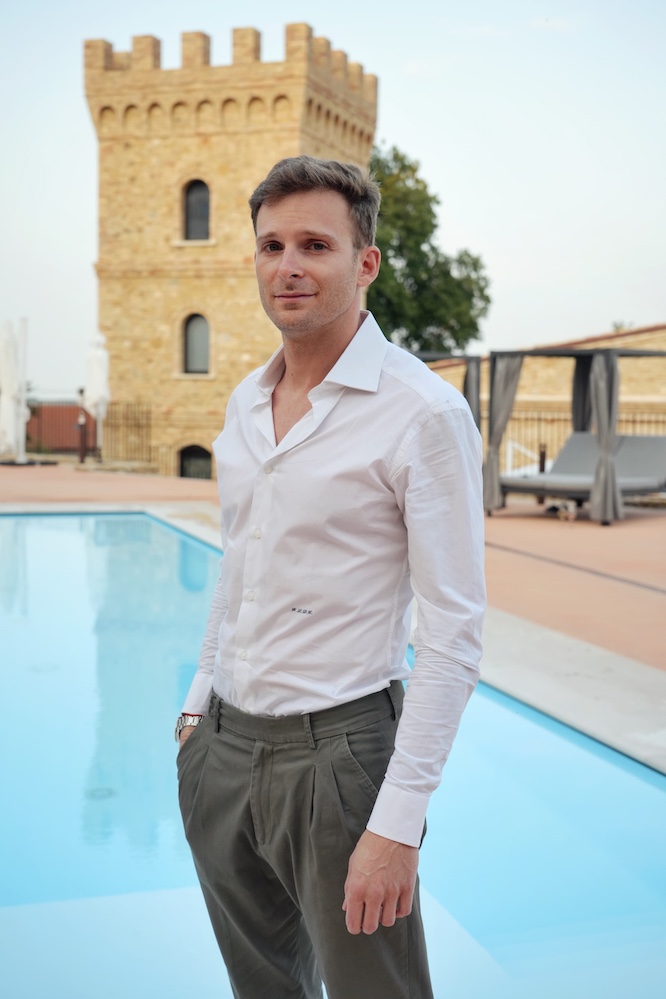
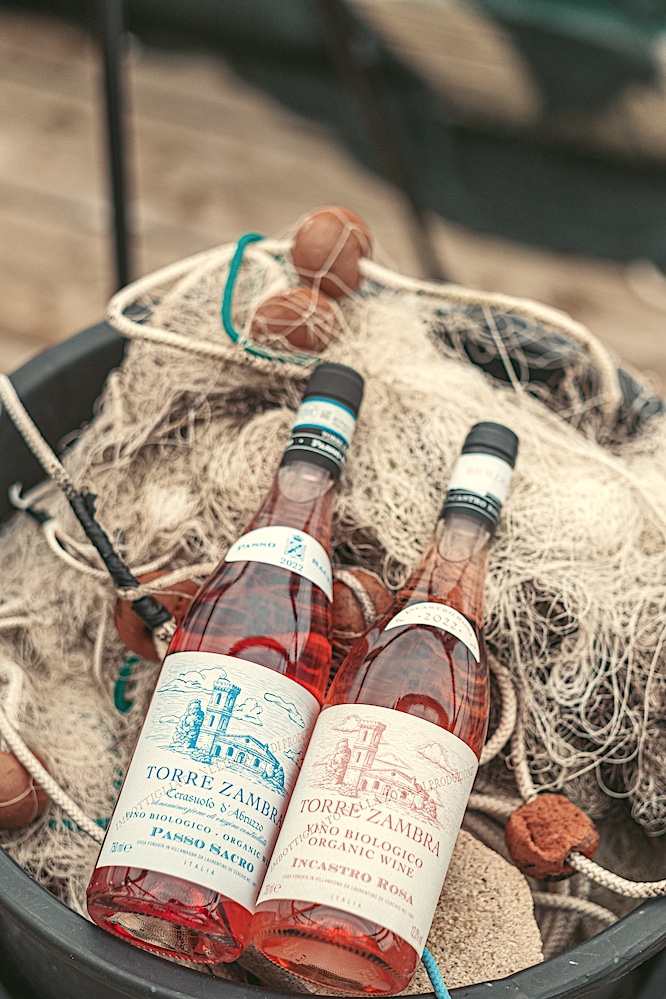
Federico De Cerchio, the fourth generation scion of a wine estate in Abruzzo estate that dates back to 1910, has invested heavily to improve the reputation of the region’s Trebbiano d’Abruzzo and Montepulciano d’Abruzzo. In Part two of my interview he speaks of factors he must contend with to sell his prestigious Torre Zambra wines.
What
is the importance of Villamagna, which has had a
DOC since 2011?
It’s not just our home, the
place where I was born and raised but also a unique
terroir shaped by both human skill and geographical
location. Our community has been cultivating
Montepulciano d’Abruzzo grapes since the 1950s. We are
only eight miles from the seaside and ten miles from
the Majella mountain—the second highest peak in
central Italy and one of the tallest in southern
Europe. This proximity creates a special microclimate,
with sudden temperature shifts between day and night
as well as between seasons, allowing us to produce
wines that are complex, elegant, and suitable for long
aging.
 In
2011, the Ministry of Agriculture recognized this
excellence by awarding our area its own appellation:
the Villamagna DOC. Today, it is considered the most
prestigious micro-area for the production of
high-quality wines in Abruzzo. With just about 150
acres of total vineyard surface, it is also the
smallest DOC in Italy.
In
2011, the Ministry of Agriculture recognized this
excellence by awarding our area its own appellation:
the Villamagna DOC. Today, it is considered the most
prestigious micro-area for the production of
high-quality wines in Abruzzo. With just about 150
acres of total vineyard surface, it is also the
smallest DOC in Italy.
Without going too much into
technical details, the Villamagna DOC regulations are
very strict in terms of yield per hectare, vineyard
altitude, and exposure. Only hillside vineyards facing
south, southeast, or southwest are included—ensuring
maximum sunlight throughout the year and the best
possible growing conditions.
How
many producers are there in Villamagna?
There
are nine wine producers in our area, and seven of them
make Villamagna DOC wines.
Has
global warming been a factor yet in the
propagation of your vineyards? Has it affected
alcohol levels?
Of course, and we could
clearly see it especially after 2020. Vintages like
2023 and 2024 have been particularly difficult to
manage. Exceptionally, this has pushed vintners to
return to our traditional growing system, called the Abruzzo
Pergola.
In this system, the leaves form a kind of protective
canopy over the grapes, like a green mantle, shielding
them from hail and extreme heat. It’s incredible how a
growing method invented in the 1960s has become even
more relevant today than it was in the past.
As for alcohol levels, I
haven’t noticed much of a difference. A good
Montepulciano d’Abruzzo has always ranged between
14.0% and 15.0% alcohol for as long as I can remember.
The
number of young people in the current generation
are showing less interest than did Gen X and Gen
Yon drinking wine. Why is this happening and how
can you re-kindle interest?
Nobody wakes up in the
morning saying, “I want a gin & tonic,” “I want a
beer,” or “I want a non-alcoholic drink.” We are all
influenced by the power of marketing. Companies in
other beverage sectors have been much better at
marketing their products and engaging younger
audiences than wineries and wine producers have been.
The wine world has taken for
granted that people will always drink wine—and in the
same quantities—because they always have. I think 2025
is a wake-up call for the wine community. We need to
listen to new consumers, understand their preferences,
and learn how to communicate with them effectively.
Is
it more important to get your wines covered in the
wine media or in restaurants?
They
are both important. I would say that media comes
first, chronologically speaking, because it gives
restaurateurs the chance to learn about a wine, a
winery, or a region.
How
much do you export? How much to the U.S. and
Canada?
We export over
95% of our production, but in 2025 we have seen strong
growth in the local market. By the end of the year,
our export share might decrease slightly to around
92–93%. In 2025, Canada overtook the US, accounting
for over 30% of our exports compared to 25% for the
US. This shift is mainly due to tariffs, which slowed
down the American market this year. However, I believe
that in the coming years, the USA will continue to be
our primary export market, as it has always been.
 It
is currently illegal to sell wine in Russia, yet
you say you have been able to get around the
restrictions? How so?
It
is currently illegal to sell wine in Russia, yet
you say you have been able to get around the
restrictions? How so?
According
to EU Regulation 2022/428, Article 3, the only wines
prohibited from being sold to Russia are those priced
over €300 ex-cellar and classified as “luxury
products.” Therefore, it is not illegal to sell wine
to Russia, even though exports have fallen by 90%
compared to pre-war levels.
Do
you feel conflicted about selling wine to Russia
when it is involved in a brutal war against
Ukraine?
Of course I do, but on the
other hand, I have customers in Russia who are friends
and with whom my family has been working for over 30
years, since the fall of the Soviet Union. I grew up
with their children; we went on vacations together.
They are good people—one of them isn’t even
Russian—who have nothing to do with politics, yet have
seen their businesses devastated by the current
situation.
Beyond conflicts between
countries, there are personal relationships, which I
believe come first. This is a very, very difficult
time for my friends, and I will never turn my back on
them when they need me most. That said, this situation
is terrible, and here in Europe, we all hope it will
end very soon.
You
now own five estates, with three in Abruzzo. What
do you see in terms of expansion for Famiglia De
Cerchio wine group in the next five years?
We will continue to focus on
our jewel, the Torre Zambra estate, and keep investing
in wine tourism in the town of Villamagna, as well as
in promoting our own appellation, the Villamagna DOC.
We plan to increase the number of guestrooms and
enhance the services we offer our visitors.
Additionally, we are opening a new restaurant in the
heart of the town—a beautiful location with just 40
seats—where we will serve traditional Abruzzo cuisine.
❖❖❖
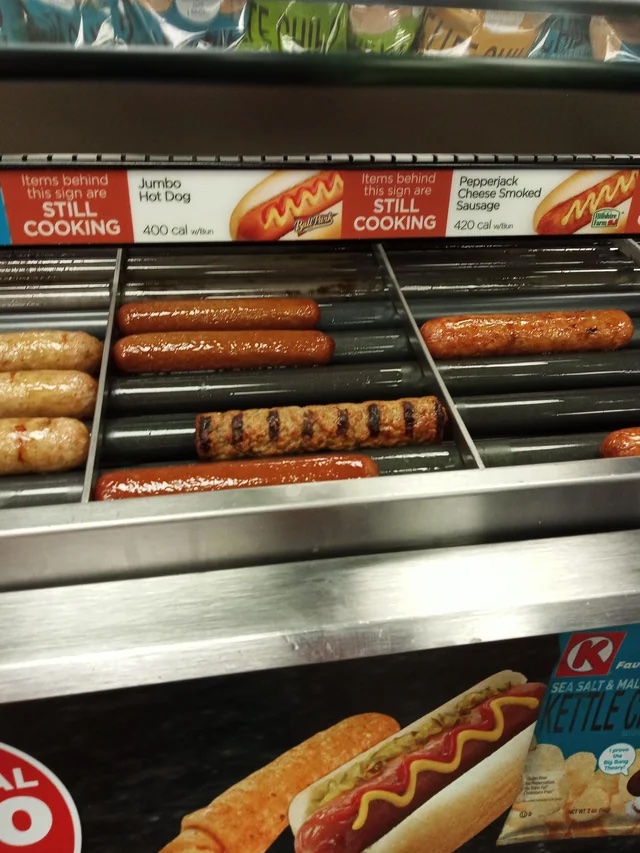
MUST HAVE SOMETHING
TO DO WITH THE FUMES
"Why Are Gas Station Hot Dogs So Delicious?" By Cara
J. Suppa, Food Republic (7/27/25)
❖❖❖
Any of John Mariani's books below may be ordered from amazon.com.
 The Hound in Heaven
(21st Century Lion Books) is a novella, and
for anyone who loves dogs, Christmas, romance,
inspiration, even the supernatural, I hope you'll find
this to be a treasured favorite. The story
concerns how, after a New England teacher, his wife and
their two daughters adopt a stray puppy found in their
barn in northern Maine, their lives seem full of promise.
But when tragedy strikes, their wonderful dog Lazarus and
the spirit of Christmas are the only things that may bring
his master back from the edge of despair.
The Hound in Heaven
(21st Century Lion Books) is a novella, and
for anyone who loves dogs, Christmas, romance,
inspiration, even the supernatural, I hope you'll find
this to be a treasured favorite. The story
concerns how, after a New England teacher, his wife and
their two daughters adopt a stray puppy found in their
barn in northern Maine, their lives seem full of promise.
But when tragedy strikes, their wonderful dog Lazarus and
the spirit of Christmas are the only things that may bring
his master back from the edge of despair. WATCH THE VIDEO!
“What a huge surprise turn this story took! I was completely stunned! I truly enjoyed this book and its message.” – Actress Ali MacGraw
“He had me at Page One. The amount of heart, human insight, soul searching, and deft literary strength that John Mariani pours into this airtight novella is vertigo-inducing. Perhaps ‘wow’ would be the best comment.” – James Dalessandro, author of Bohemian Heart and 1906.
“John Mariani’s Hound in Heaven starts with a well-painted portrayal of an American family, along with the requisite dog. A surprise event flips the action of the novel and captures us for a voyage leading to a hopeful and heart-warming message. A page turning, one sitting read, it’s the perfect antidote for the winter and promotion of holiday celebration.” – Ann Pearlman, author of The Christmas Cookie Club and A Gift for my Sister.
“John Mariani’s concise, achingly beautiful novella pulls a literary rabbit out of a hat – a mash-up of the cosmic and the intimate, the tragic and the heart-warming – a Christmas tale for all ages, and all faiths. Read it to your children, read it to yourself… but read it. Early and often. Highly recommended.” – Jay Bonansinga, New York Times bestselling author of Pinkerton’s War, The Sinking of The Eastland, and The Walking Dead: The Road To Woodbury.
“Amazing things happen when you open your heart to an animal. The Hound in Heaven delivers a powerful story of healing that is forged in the spiritual relationship between a man and his best friend. The book brings a message of hope that can enrich our images of family, love, and loss.” – Dr. Barbara Royal, author of The Royal Treatment.
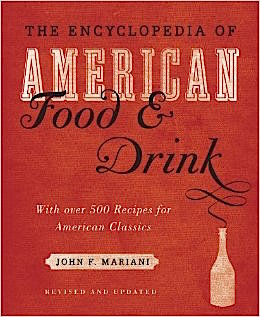 |
The Encyclopedia of American Food and Drink by John F. Mariani (Bloomsbury USA, $35) Modesty forbids me to praise my own new book, but let me proudly say that it is an extensive revision of the 4th edition that appeared more than a decade ago, before locavores, molecular cuisine, modernist cuisine, the Food Network and so much more, now included. Word origins have been completely updated, as have per capita consumption and production stats. Most important, for the first time since publication in the 1980s, the book includes more than 100 biographies of Americans who have changed the way we cook, eat and drink -- from Fannie Farmer and Julia Child to Robert Mondavi and Thomas Keller. "This book is amazing! It has entries for everything from `abalone' to `zwieback,' plus more than 500 recipes for classic American dishes and drinks."--Devra First, The Boston Globe. "Much needed in any kitchen library."--Bon Appetit. |
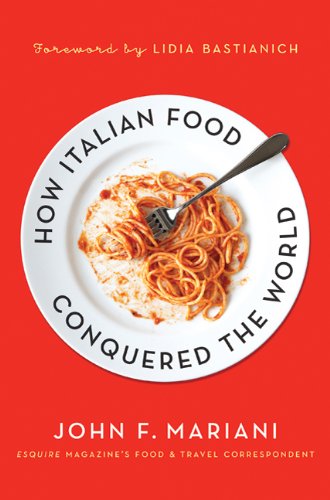
"Eating Italian will never be the same after reading John Mariani's entertaining and savory gastronomical history of the cuisine of Italy and how it won over appetites worldwide. . . . This book is such a tasteful narrative that it will literally make you hungry for Italian food and arouse your appetite for gastronomical history."--Don Oldenburg, USA Today. "Italian
restaurants--some good, some glitzy--far
outnumber their French rivals. Many of
these establishments are zestfully described
in How Italian Food Conquered the World, an
entertaining and fact-filled chronicle by
food-and-wine correspondent John F.
Mariani."--Aram Bakshian Jr., Wall Street
Journal.
"Equal parts
history, sociology, gastronomy, and just
plain fun, How Italian Food Conquered the
World tells the captivating and delicious
story of the (let's face it) everybody's
favorite cuisine with clarity, verve and
more than one surprise."--Colman Andrews,
editorial director of The Daily
Meal.com. "A fantastic and fascinating
read, covering everything from the influence
of Venice's spice trade to the impact of
Italian immigrants in America and the
evolution of alta cucina. This book will
serve as a terrific resource to anyone
interested in the real story of Italian
food."--Mary Ann Esposito, host of PBS-TV's
Ciao
Italia. "John Mariani has written the
definitive history of how Italians won their
way into our hearts, minds, and
stomachs. It's a story of pleasure over
pomp and taste over technique."--Danny Meyer,
owner of NYC restaurants Union Square
Cafe, The Modern, and Maialino.
|
 |
 |
 |
 |
 |
 |
MARIANI'S VIRTUAL GOURMET
NEWSLETTER is published weekly. Publisher: John Mariani. Editor: Walter Bagley. Contributing Writers: Christopher
Mariani, Misha Mariani, John A. Curtas, Gerry Dawes, Geoff Kalish.
Contributing
Photographer: Galina Dargery. Technical
Advisor: Gerry
McLoughlin.
If you wish to subscribe to this
newsletter, please click here: http://www.johnmariani.com/subscribe/index.html
© copyright John Mariani 2025