MARIANI’S
Virtual
Gourmet
October
12, 2025
NEWSLETTER
ARCHIVE

Mickey Mantle's Restaurant Menu Cover
THIS WEEK
HISPANIC/LATINO FOOD IN THE U.S.
By John Mariani
NEW YORK CORNER
BONNEFONT RESTAURANT
By John Mariani
HÔTEL ALLEMAGNE
CHAPTER THIRTY-ONE
By John Mariani
NOTES FROM THE WINE CELLAR
by Geoff Kalish
By John Mariani
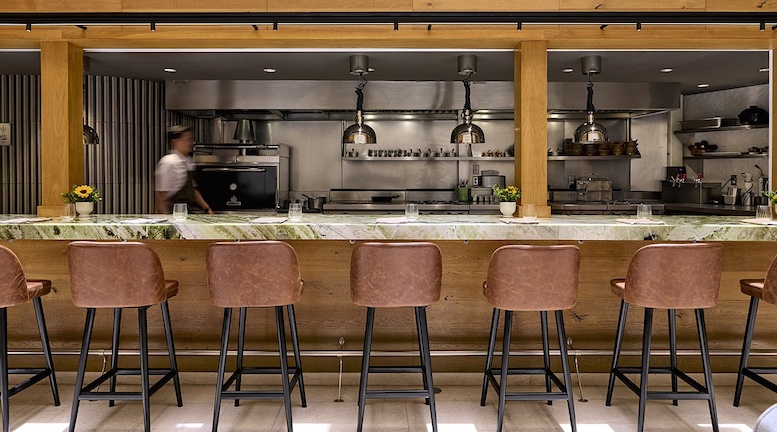
Quintonil in Mexico City
October
is Hispanic Heritage Month, and Latino food
has become one of the driving forces of
American gastro-culture, with about 11% of all U.S.
restaurants serving Mexican food, making it
the second most popular cuisine after
American food, along with soaring interest
in the food of Peru, Argentina, Brazil and
the Caribbean islands. I
interviewed some of the best-known
Hispanic-American chefs as to what is
driving a remarkably diverse interest in
Latino food in the U.S. that departs from
the clichés of the past.
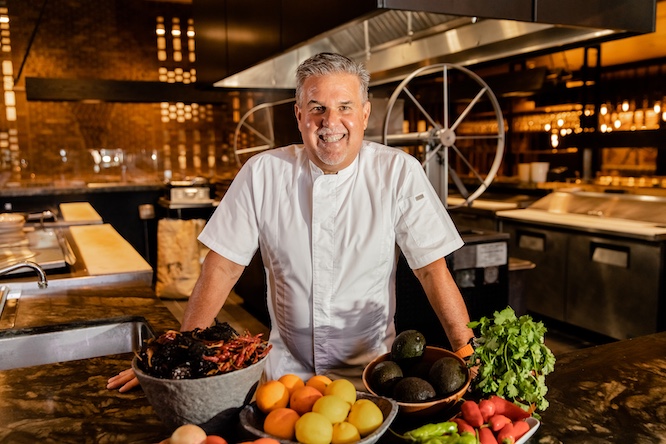 Richard Sandoval,
founder of Richard Sandoval Hospitality, operates
more
than 60
restaurants in North
America, South America, Europe, and Asia
and is best known
for his fusion of Latin flavors with modern
techniques. He has
received Mexico's “National Toque
d'Oro,” Bon Appetit’s
“Restaurateur of the Year,” and an
honorary doctorate in Culinary Arts from
Johnson & Wales University.
Richard Sandoval,
founder of Richard Sandoval Hospitality, operates
more
than 60
restaurants in North
America, South America, Europe, and Asia
and is best known
for his fusion of Latin flavors with modern
techniques. He has
received Mexico's “National Toque
d'Oro,” Bon Appetit’s
“Restaurateur of the Year,” and an
honorary doctorate in Culinary Arts from
Johnson & Wales University.
What have been
the most significant changes and advances in
Mexican cuisine in Mexico in the last ten
years?
I see three
interlocking developments that are really
shaping things: First, the
elevation of indigenous, native ingredients
and techniques. Restaurants like Quintonil in
Mexico City are sourcing heirloom vegetables,
native herbs, even insects, from Milpa Alta,
Xochimilco, and other regions, and weaving
them into tasting menus.
Second, global recognition by media such as Michelin
and World’s 50 Best are pushing both fine
dining and street food.
Third, new formats and sustainability with a
growing attention to zero waste kitchens and
ancestral agriculture. A recent example is
Baldio in Mexico City, for its commitment to
zero waste, fermenting, using whole animals,
sourcing locally and reviving ancient farming
practices such as chinampas. So the
change is not just more refined places but
deeper, by reconnecting with native and
multi-regional roots, honoring tradition while
innovating, being judged internationally and
prioritizing sustainability and social
responsibility.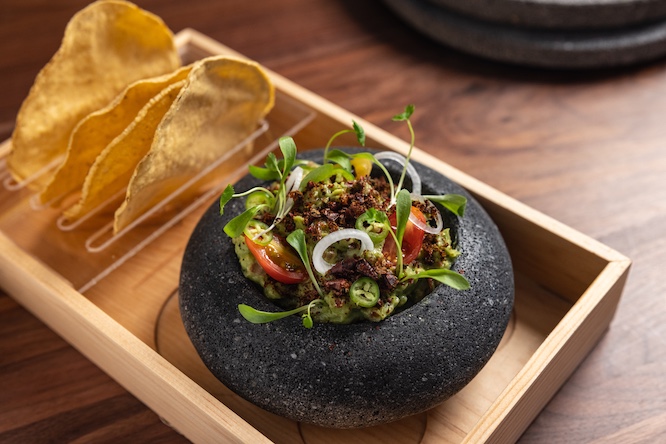
What have been
the most significant changes and advances in
Mexican cuisine in the USA in the last five
years?
Consumer demand
and market expansion. There are now more than
80,000 Mexican restaurants in the U.S., making
it the second most popular cuisine in the
country. Growth has been especially strong
among younger adults and people are
increasingly exploring beyond Tex-Mex and
standard Mexican to authentic regional styles
such as Oaxacan moles, Yucatecan recados
and Baja seafood. It is not just about taste
but about how food is sourced and the story it
carries.
You now have 60
locations. How does the cooking and style
differ from one to another?
Each of my
restaurants reflects both its location and the
regionality of Mexican food or the culture
behind the menu. No two are the same. For
example, tán in New York (above)
celebrates the flavors of the Yucatán with cochinita
pibil and recado negro. Cayao in
Los Cabos blends Nikkei traditions, marrying
Peruvian and Japanese techniques with a
coastal Mexican perspective. Toro Toro brings
a broader Latin steakhouse concept to cities
around the world, while Maya focuses on
traditional Mexican with a modern touch.
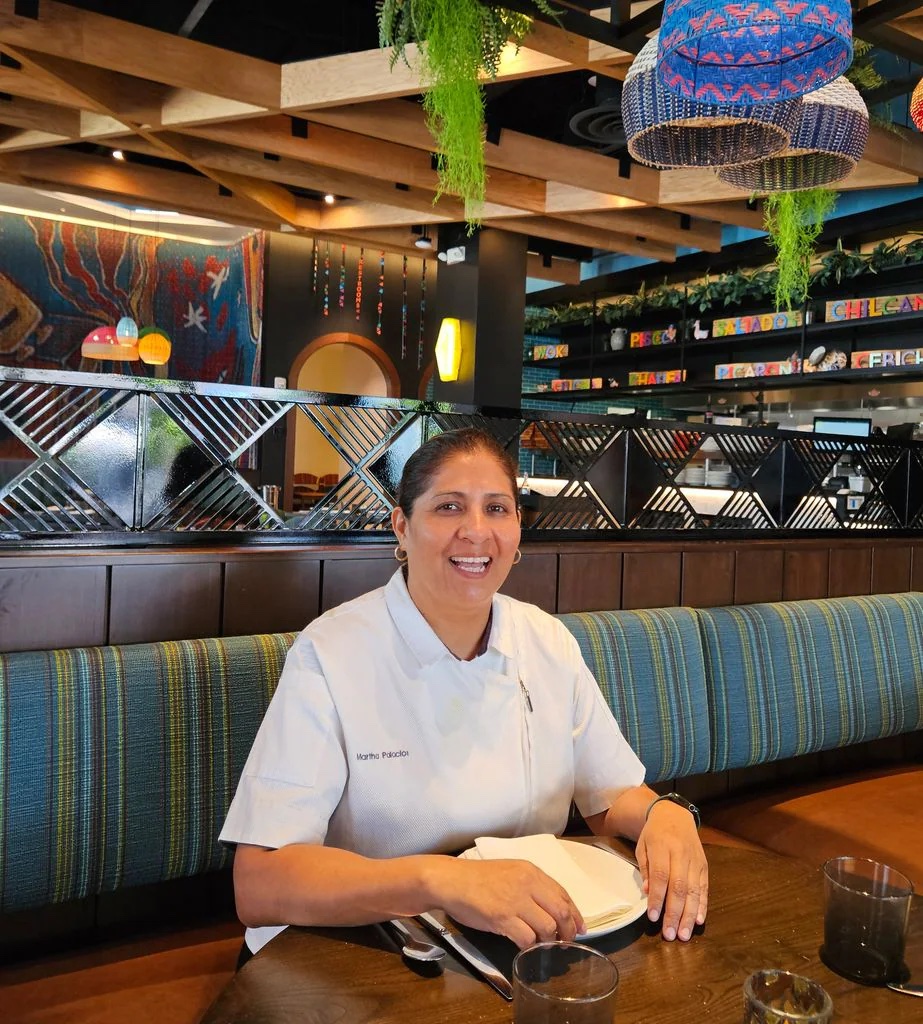 Martha Palacios is
Executive Chef of the restaurant Jarana
Aventura, Florida, owned by Acurio
International. Born in Lima, Peru, she
credits her parents and her grandmothers
from Cuzco and Lima as inspiration. She
spent a decade in Japan learning to fuse
cuisine, which she showcases at Jarana (below). She
was named “Best Female Chef” in 2022 by El
Comercio, one of the leading Peruvian
newspapers, as well as the prestigious El
Comercio’s “Light of Commerce Award” in
2018.
Martha Palacios is
Executive Chef of the restaurant Jarana
Aventura, Florida, owned by Acurio
International. Born in Lima, Peru, she
credits her parents and her grandmothers
from Cuzco and Lima as inspiration. She
spent a decade in Japan learning to fuse
cuisine, which she showcases at Jarana (below). She
was named “Best Female Chef” in 2022 by El
Comercio, one of the leading Peruvian
newspapers, as well as the prestigious El
Comercio’s “Light of Commerce Award” in
2018.
What is
the connection between Peruvian food and
sushi? The
connection goes beyond gastronomy. Peru not
only embraced Japanese technique and
discipline but also enriched it with its
extraordinary biodiversity of ingredients and
flavors unique to the world. By respecting the
precision of the cut, the freshness of the
product, and the Japanese philosophy of
highlighting the essence of each ingredient,
Peruvians incorporated local chiles, citrus
fruits, herbs, and seafood. From this union
emerged Nikkei cuisine, a style that honors
Japanese tradition while celebrating Peru’s
sensory richness. We thus express our
gratitude to Japanese culture and its
immigrants for the invaluable legacy they left
in our country, a legacy that today shines
through every Nikkei dish recognized around
the world.
How has
Peruvian food progressed in Peru itself and
outside?
In Peru,
food has always begun at home, not only to
nourish, but also to share love through
flavor. Today, our country has become a
world-class culinary destination, with iconic
dishes such as ceviche, proclaimed by UNESCO
as Intangible Cultural Heritage, and living
traditions like our Arequipa picanterías
[a traditional eatery serving Peruvian soup
and main course]. 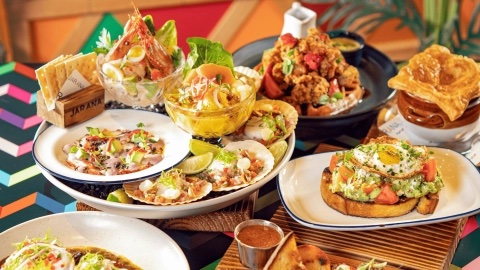
This
journey would not be possible without the
fundamental pillars that sustain and guide the
progress of Peruvian gastronomy:
1.
Defense of native biodiversity that preserves
and values the unique ingredients offered by
our oceans, mountains, and jungles.
2.
Cultural diversity – Embracing the wealth of
our ancestral roots and the fusion with
external influences, making our cuisine a
unique mosaic.
3.
Sustainability – Promoting
responsible
practices that respect the environment and
ensure the continuity of our resources for
future generations.
What
are the essential ingredients that make up
Peruvian food culture?
We are
proud to have three major ecosystems: coast,
highlands, and jungle. Each region offers us a
different pantry: The coast, with its generous
and fertile ocean; The
highlands, with ancestral grains, tubers, and
herbs; The
jungle, with exotic fruits, roots, and flavors
that amaze the world. From this diversity
emerges a cuisine that changes from place to
place, making Peruvian gastronomy a true
reflection of our geography and culture.
 Michelle Bernstein of
Miami is founder of Michelle
Bernstein Catering, Café La Trova, Sra.
Martinez, La Cañita and Sweet Liberty. She
is the daughter
of an Argentine-Jewish mother and a father
with Russian-Jewish heritage She opened her
first restaurant, Azul, in Miami, then Michy's
in Miami. In 2006, Bernstein won the James Beard Foundation
Award for
best chef in the South in 2008.
Michelle Bernstein of
Miami is founder of Michelle
Bernstein Catering, Café La Trova, Sra.
Martinez, La Cañita and Sweet Liberty. She
is the daughter
of an Argentine-Jewish mother and a father
with Russian-Jewish heritage She opened her
first restaurant, Azul, in Miami, then Michy's
in Miami. In 2006, Bernstein won the James Beard Foundation
Award for
best chef in the South in 2008.
I don't consider myself to be an innovator of Floribbean Cuisine. Even though I was born and raised and thoroughly embedded and woven into Miami/Florida and its colorful Latin/Haitian/Caribbean flavor, those who came before me are the architects of what really began as "New World" and "Floribbean Cuisine." I am a student of those mentors, like Mark Militello, Norman Van Aken, Allen Susser and Robin Haas; and one cannot forget the incredible Nuevo Latino flavors of Douglas Rodriguez, whom I have always been a huge fan of.
What
changes in Latino restaurants have you seen
in Miami in the last couple of years? 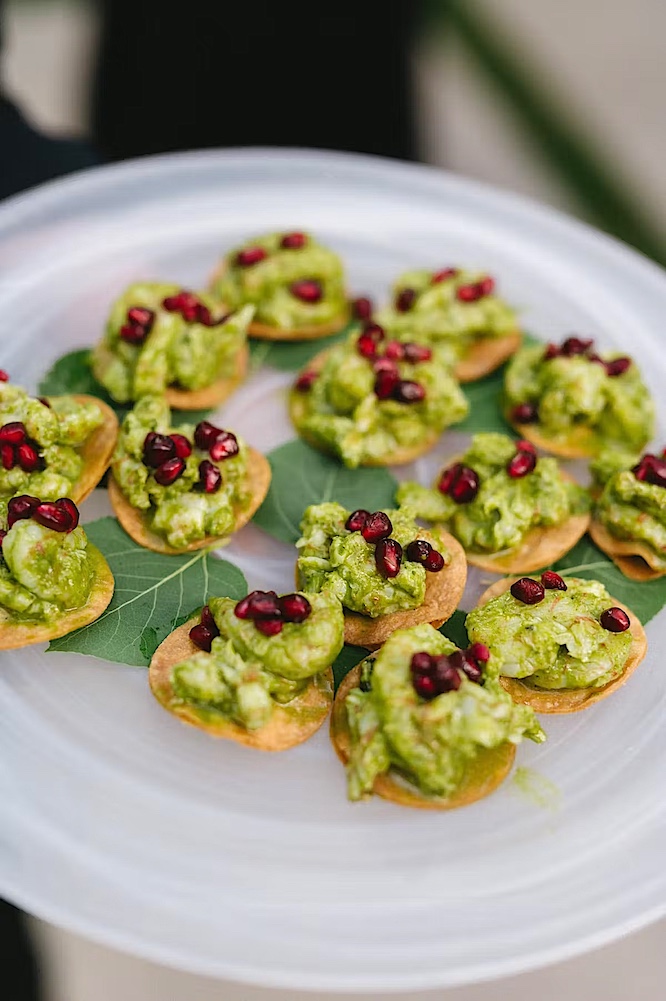
A lot of Latin restaurants in Miami are
experiential, where before it was all about
the walk-up cafecito window, nibbling
on croquetas, a Cuban sandwich or
creamy flan. Nowadays, the bars are essential,
preparing fresh squeezed lime for hundreds of
orders of Daiquiris and Mojitos every night.
Creativity rules the day with inventive
fillings for croquetas and empanadas.
Traditional staples are always available
including roast lechon or ropa
vieja, however everything is now a bit
more upscale, more "dressed up" and has a
background of beautiful Latin music either
playing from speakers or live in front of the
crowds. The energy is usually high and you
need to be prepared to dance. Don't get me
wrong, we still have the old classic Cuban
restaurants, however not many are left that
don't provide a little extra.
How
would you assess the way Latino restaurants
have pervaded major US cities in the past
five years?
I think everyone wants to experience the
energy, creativity, and sazon [spice]
of Latin restaurants these days. It's also one
of the fastest growing populations in the
U.S., and you can feel it everywhere. People
want more flavor, more rhythm and more culture
and we intend to serve them what they
want.
NEW YORK CORNER
1
Margaret Corbin Drive
212-740-2939
By John
Mariani
The last time I ate chef Nicole
O’Brien’s cooking was on the northern boundary
of Manhattan at her restaurant The Pandering
Pig, with just 28 seats, a minuscule kitchen and
a small menu (now closed). Now, six years later,
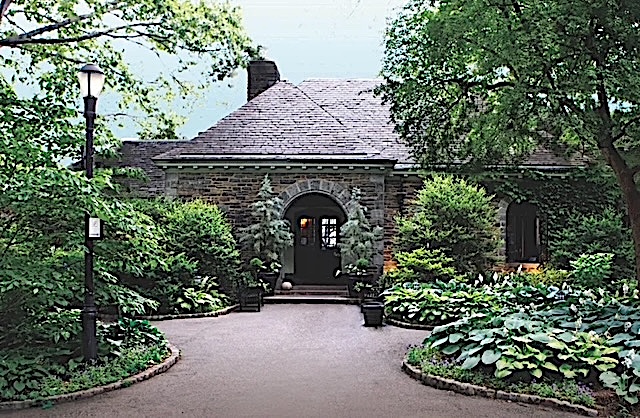
she is in far more impressive quarters, the Bonnefont fieldstone cottage built
in the 1930's for John D. Rockefeller and
designed by the Olmsted Brothers.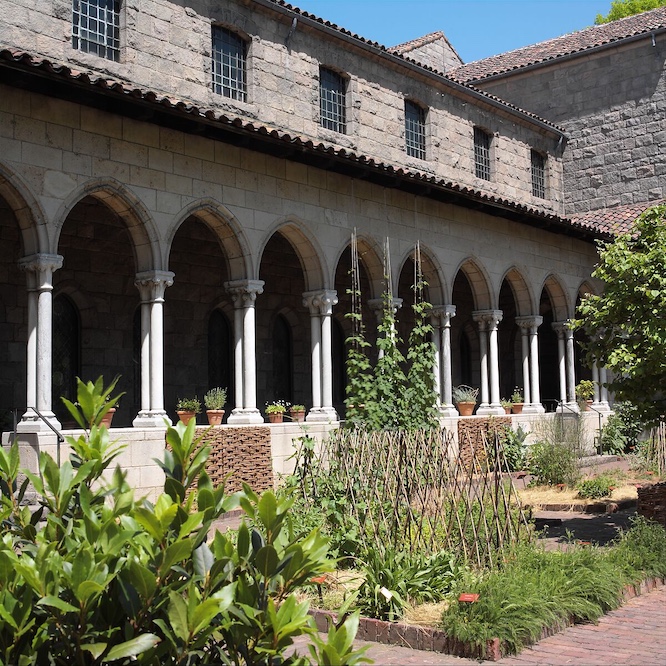
The structure is set within the landscaped
greenery of Fort Tryon Park and the Cloisters
Museum that looks out upon the broad expanse of
the Hudson River. The restaurant’s name is taken
from the exquisite Bonnefont Cloister and herb
garden (right) at magnificent Cloisters up
the hill. The structure features a cobblestone
exterior, granite archways, and a slate roof held
up by
the oak trusses of the interior's 14-foot
ceilings––all landmarked, allowing O’Brien only to
alter the dining room, which she has done with
applaudable restraint. Tables are widely set
apart, there is little artwork and there is a
lovely shaded garden area where you may dine for
the time being. The tables themselves have flowers
and a lighted crystal globe. Only the meeting
room-like black chairs seem out of place.
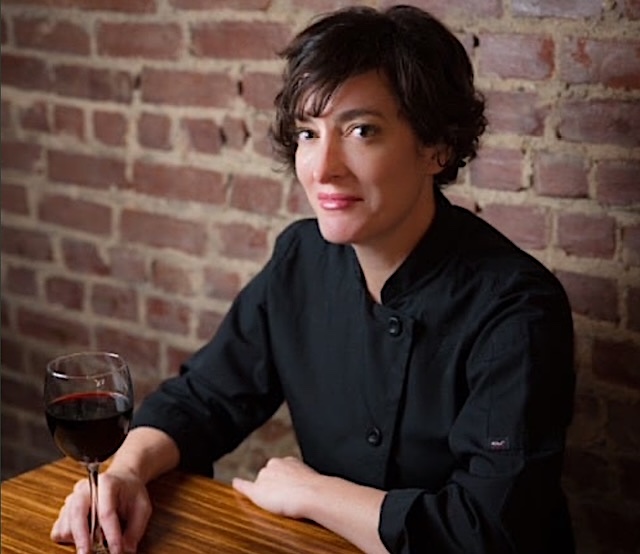 I was luckily there for “Vinyl Wednesday” when the
bartender, Logan Burns, plays his own stack of
1960s wax, which was the first restaurant playlist
I’ve enjoyed in twenty years.
I was luckily there for “Vinyl Wednesday” when the
bartender, Logan Burns, plays his own stack of
1960s wax, which was the first restaurant playlist
I’ve enjoyed in twenty years.
O’Brien,
who
grew up in Marin County, has always called her
cooking "FreNoCal,"
which sounds like a soft drink but is an amalgam
of “French Northern California.” She
had once pursued a
successful career in the arts and film, then
became a private chef for celebrity clientele
whose tastes, she says, could be “eccentric.” At
Bonnefont she has full freedom to cook as she
wishes, and many of her best dishes have made the
leap from her former restaurant’s menu. Prices are
very reasonable, with main courses ranging from
$18 to $38.
My family and I began with a very fine warm
vichyssoise with additional shallots. Roasted
Roman dates are stuffed 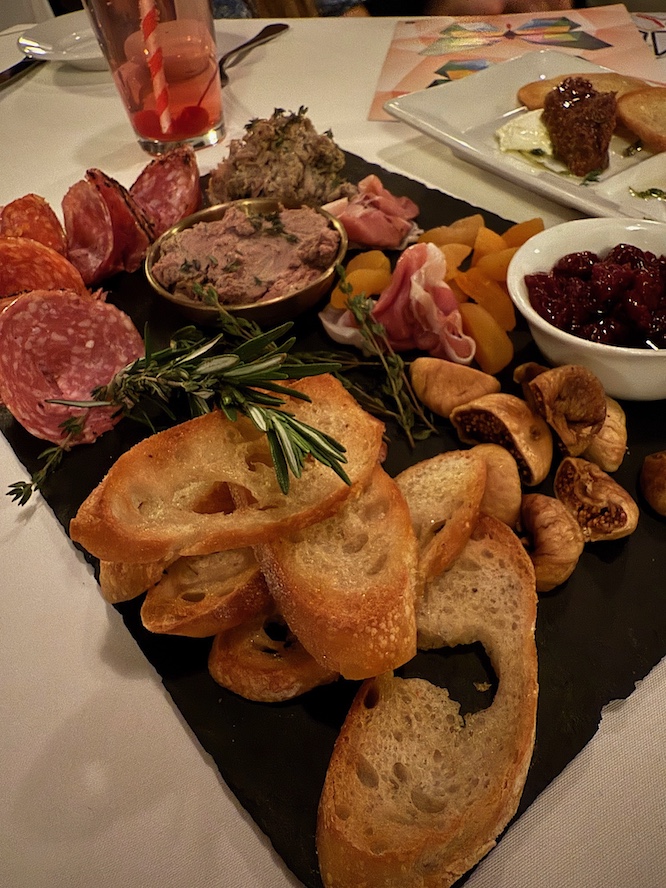 with toasted
pine, nuts, garlic, thyme, drizzled with honey. A
liberal sampling of cheeses and sausages and
salami (right) came on a platter with
slices of very good, crusty bread and butter.
with toasted
pine, nuts, garlic, thyme, drizzled with honey. A
liberal sampling of cheeses and sausages and
salami (right) came on a platter with
slices of very good, crusty bread and butter.
The Bonnefont herbal salad is made with
dill-strewn radishes
and toasted sunflower and pumpkin seeds in a
Sherry dressing.
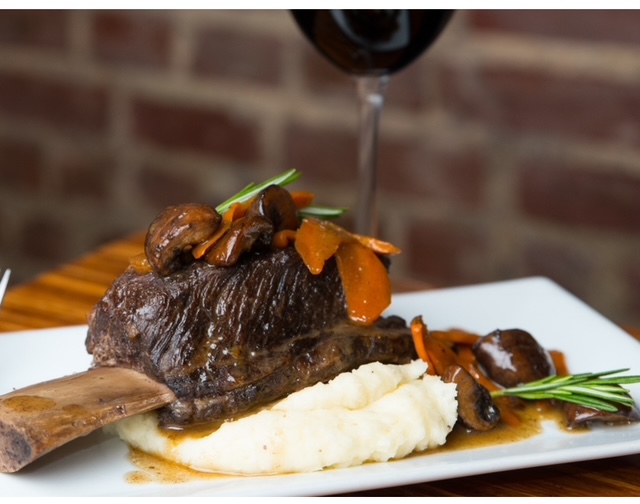 One of the prized dishes
from The Pampered Pig is her coq au vin, which
O’Brien marinates for hours in red wine, slowly
cooked to ideal tenderness and served
over polenta with melted blue cheese. Another is
her very winey boeuf à la bourguignon (left)
abundant with early autumn vegetables and brought
steaming to the table.
One of the prized dishes
from The Pampered Pig is her coq au vin, which
O’Brien marinates for hours in red wine, slowly
cooked to ideal tenderness and served
over polenta with melted blue cheese. Another is
her very winey boeuf à la bourguignon (left)
abundant with early autumn vegetables and brought
steaming to the table.
Unexpected was an abundant Asian-style bowl of
noodles cooked in
coconut butter with tangled carrots,
zucchini, bell pepper, scallions and garlic and
laced with peanut butter, soy, butter and coconut.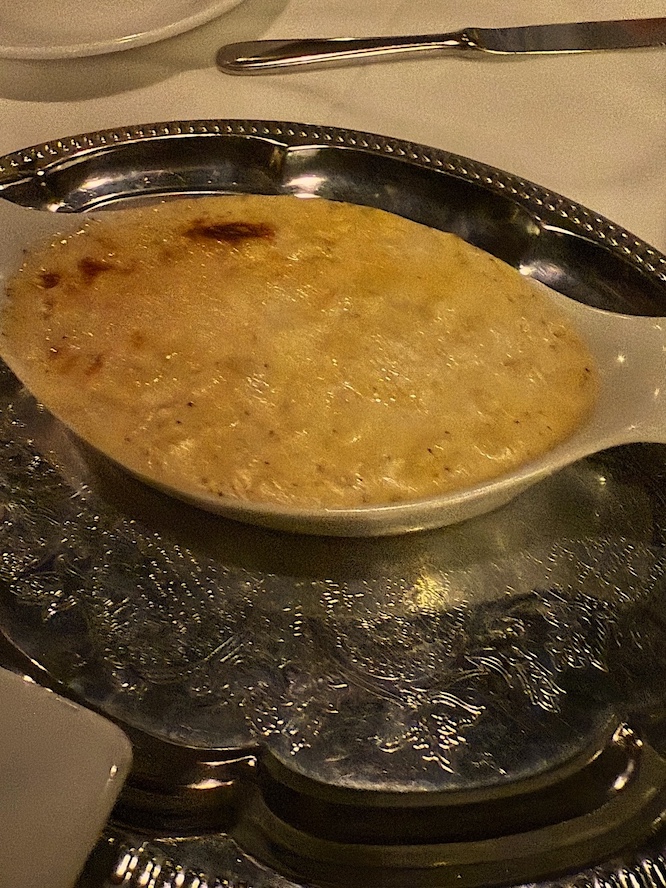
The only disappointment was a night’s special of
grilled Montauk striped bass whose flesh tasted
somewhat muddy. It came atop a potato-leek puree.
The men also has a “Menu pour Les Enfants” that
include a deliciously rich mac-and-cheese my
grandchildren had to battle us adults for (right).
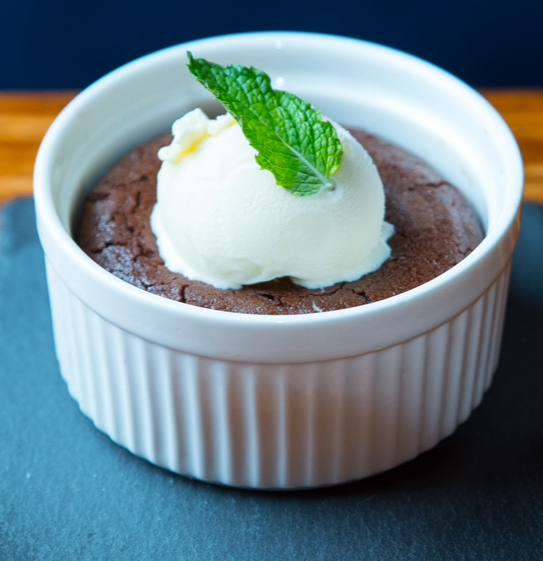 Desserts
are wholly apt for the restaurant, like a dreamy
chocolate nuage and a moist brownie with
the ice cream scooped from the weekend ice cream
shop below.
Desserts
are wholly apt for the restaurant, like a dreamy
chocolate nuage and a moist brownie with
the ice cream scooped from the weekend ice cream
shop below.
Bonnefont wine
list is neither long nor very interesting, but
prices are almost all under $100 per bottle and
most labels available as half-bottles. But the
selection
of unusual liquors and small craft beers
anchors the charming bar up front.
Bonnefont
is truly a retreat, just as the Cloisters were
once for French nuns, only the food and wine are
of a more liberal and savory style. To visit the
Cloisters, which close at five PM, then dine
here amidst the ever growing greenery in view of
what Henry James called “America’s great
romantic stream” is a unique experience in
Manhattan, as far away from its hip-hooray and
ballyhoo as it is possible to get.
Open for dinner
Wed.-Sun.; lunch Wed.-Fri.; Brunch Sat. &
Sun.
HÔTEL ALLEMAGNE
By John Mariani
After the interview, which lasted
until the late afternoon and was schedule to
resume the following morning, Borel called
David and shared all the news; David, in turn,
shared it with Katie and Catherine.
Bazarov said that the orders to attack
the hotels came directly from the Kremlin, and
that the virus would be made available for him
to pick up in Ankara. The Russians said they had
made all the arrangement in Marseilles and with
the Syrians; Bazarov would be in charge of
hiring Massot in Paris. In Marseilles contacts
were made with the Unione, which for an
exorbitant fee—Bazarov did not know the
amount—they assigned the job to Marciano, who
was deeply in debt to the mob. The Unione
told the Russians they did not wish to know any
of the details of the operation, only
guaranteeing Marciano’s strict adherence to the
plan.
The Syrian government was only too happy
to assist the Russians in the operation in an
effort to embarrass the Saudis, assigning Salah
to the job. He met with Bazarov in Paris, also
without knowing more than the operational
details of the attack. Massot had, apparently,
been used by the Russians for delivery jobs,
nothing bigger than dropping off passports and
various documents.
The Sûreté had asked Bazarov what the
Putin connection was and why he would want to
poison three Paris hotels. Bazarov said he’d
never spoken directly to Putin but that the
President’s people made it very clear the orders
were from the top. The reason, Bazarov
speculated, was that Putin wanted a Russian
presence in the Paris hotel scene, both for
prestige and for the enormous profits they could
provide. Embarrassing the Saudis was of only
secondary importance, but Putin knew that would
further cement relations with both Syria and
Iran in the Middle East, whose own officials
would receive the V.I.P. treatment in the hotels
they could never have hoped to get from Saudi
hoteliers.
Putin was willing to wait for
however long it took to completely clean the
hotels, watch how long the taint of the virus
lingered in the public’s eye, then, knowing that
the Saudis had no patience in such matters and
sought profitability from a property as soon as
possible, make a rock-bottom offer through a shell
company to buy the three of them for one price.
Putin’s name would be nowhere on the sale
documents, but, in fact, he would be taking in
profits when the hotels regained their reputation.
The wonderful aspect of such a deal was that so
much Saudi money had been poured into the hotels
when they were being renovated that not a single
ruble would have to spent on new furnishings.
It was a very neat
scheme, though wholly dependent on the French and
Saudis never finding the culprits in the crime. In
fact, Bazarov was informed that Sallah was
expected to return to Damascus days after the
attack, and Marciano was already back in
Marseilles. The
fact that the three perpetrators plus Bazarov had
been exposed now meant that there was no hope the
Saudis would ever sell the hotels to the Russians.
There would always be a buyer for such deluxe
properties, even if the Saudis had to wait for one
months in the future.
Catherine held onto the news Borel had
asked her to embargo till the end of the week,
when the Sûreté and DGSI had readied a public
report. Katie and David, who had pretty much come
to the end of their vacation time in Paris, called
Alan Dobell to tell him all that had occurred and
agreed that it was time to return to the States,
where Katie could keep track of how the story
would develop from there. At some point, after
arraignments and charges against the three
perpetrators were formalized, Bazarov’s
involvement would be announced, then the tricky
part of granting him asylum and diplomatic
immunity in the face of public outrage would be
hammered out.
The assertions made by Bazarov about Putin
would, of course, be peppered with the phrase
“alleged participation,” knowing that it would be
denied by the Kremlin and that Putin had little
fear of reprisals against him in Russia, though it
would not be well received in the Kremlin.
The three Americans
had one last meal together at Jacques’s
restaurant, congratulating themselves on their
participation in solving the crimes, which was
certainly going to put Catherine in a new light at
CNN. Katie
would try to turn their story—attempted kidnapping
and all—into a McClure’s article in the
months to come.
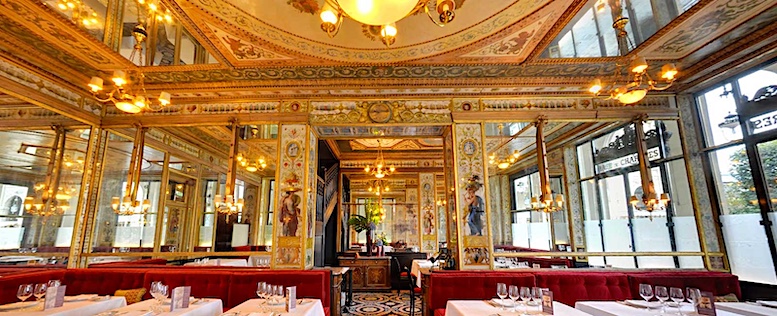
Katie and David would be leaving the next
day, but, with the help of Jacques, managed to
obtain a reservation at Le Grand Véfour (above),
as they’d promised themselves. Katie had bought a
new dress for the occasion—going the safe route
with a slender black dress cut out in the back and
a thin sash around the waist. David, feeling
resplendent in his
new jacket, even bought a new white shirt
and a knock-off of a silver-blue Hermès tie with a
very small, very discreet horseshoe print.
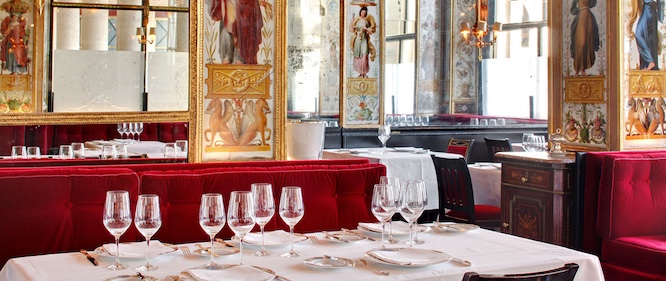 Le Grand Véfour was everything they hoped
it would be and more—especially the final bill,
which came out to more than $600. The restaurant
was the most historic in Paris: The space had once
served as headquarters for the revolutionaries and
meeting place for the organizers of the Reign of
Terror.
Le Grand Véfour was everything they hoped
it would be and more—especially the final bill,
which came out to more than $600. The restaurant
was the most historic in Paris: The space had once
served as headquarters for the revolutionaries and
meeting place for the organizers of the Reign of
Terror.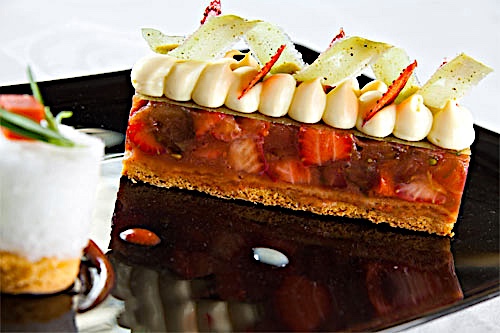 Napoleon ate there with Josephine—the table is
still there for all to see—and by the end of the
19th century it had acquired a
mirrored, neo-Pompeian décor of stunning opulence
impeccably maintained into the 21st
century.
Napoleon ate there with Josephine—the table is
still there for all to see—and by the end of the
19th century it had acquired a
mirrored, neo-Pompeian décor of stunning opulence
impeccably maintained into the 21st
century.
Katie and
David went with the restaurant’s “classics,” like
foie-and-duck gras-stuffed ravioli in a foamy
cream sauce; a cauliflower soup with haddock; and
squab “Prince Rainier III,” with a bitter
chocolate mousse for dessert. It was a long,
enchanted evening, and, with Katie so beautifully
dressed and speaking French, the service could not
have been more cordial and attentive.
“So, au
revoir to Paris for a while,” said Katie,
lifting her glass of Champagne.
"And back to the Bronx
and the Hudson River," replied David. "Y'know,
I've gotten to really love this city, but I miss
my little house on the river, which by now must be
overgrown with giant hogweed."
"I'm a little homesick,
too," said Katie, "but if I could stay here
another two weeks, I would not hate it. Maybe I'll
have to come back to finish the story."
David didn't say what
he'd like to have said, that he love coming back
to Paris with Her. Instead, he just said you never
know.
© John Mariani, 2024
❖❖❖
Some Interesting
Wines to Match With Fall Fare
by Geoff Kalish
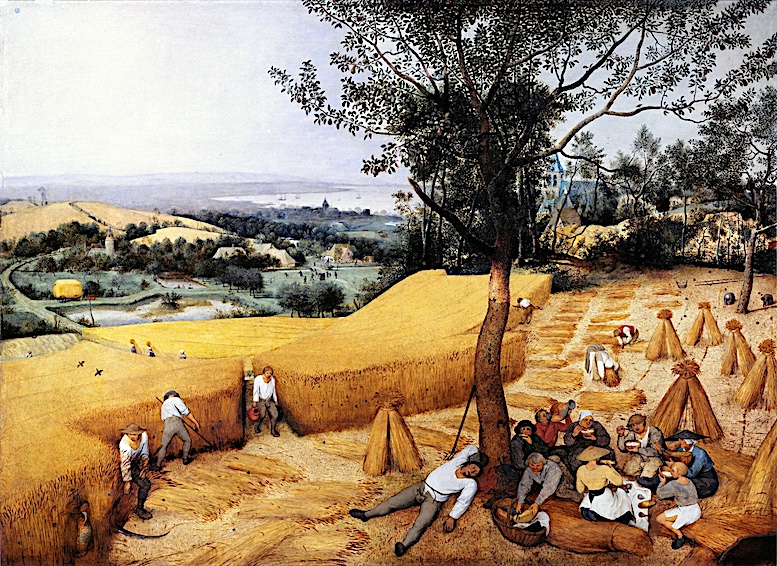
PIETER BRUEGEL, "THE HARVESTERS"
As
we slowly transition through the warmth of early
fall to the chill of winter, seasonal fare
progresses from favorites like hamburgers and
pasta primavera that mate well with
easy-drinking wines emanating fruity, flowery
bouquets and low-tannin taste to
classics like grilled game birds and pasta with
eggplant that match best with reds and whites
showing more muted fruity flavors and often hints
of spice and herbs in their finish. While many
wines are available to adequately accompany the
fare of fall, at some recent tastings I’ve found a
number of reasonably-priced reds and
whites from “off the beaten track that more than
fill the bill and offer some interesting wine-food
flavor combinations.
WHITES
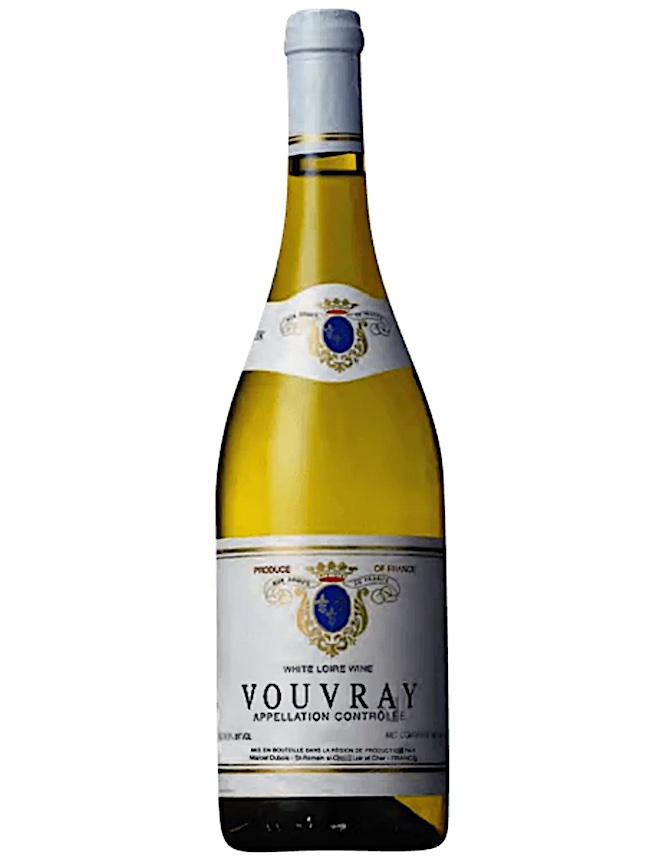 2024 Marcel Bubois Vouvray ($15). Made from Chenin Blanc
grapes grown in France’s Loire Valley, this wine
shows a fragrant bouquet and slightly sweet taste of
peaches and pineapple, with a crisp finish of pears
and lemon zest. It mates well with shrimp scampi and
grilled octopus as well as baked acorn and Delicato
squash.
2024 Marcel Bubois Vouvray ($15). Made from Chenin Blanc
grapes grown in France’s Loire Valley, this wine
shows a fragrant bouquet and slightly sweet taste of
peaches and pineapple, with a crisp finish of pears
and lemon zest. It mates well with shrimp scampi and
grilled octopus as well as baked acorn and Delicato
squash.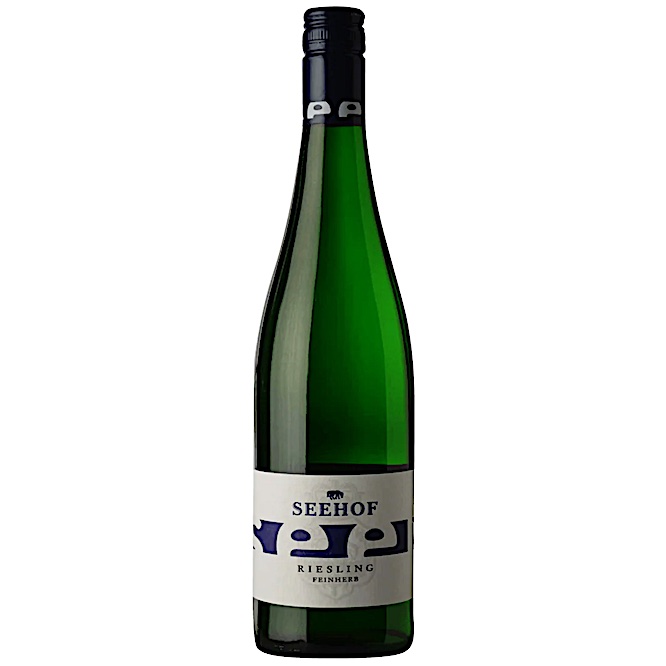
2024
Seehof
Feinherb Riesling ($21).
This import from the Westhoffen area of the
Rheinhessen has a fragrant bouquet and slightly
sweet taste of honeysuckle and peaches with notes of
grapefruit in its finish. It makes a zesty mate for
sushi, tuna tartar and grilled salmon as well as
Caesar salad and Thai classics like pad Thai and
shrimp in green curry sauce.
2024
Pine
Ridge Chenin Blanc/Viognier ($16).
Showing a mix of tropical fruit and a distinct taste
of ripe pears, this unusual blend of 80% Chenin
Blanc and 20% Viognier, from well-known and remote
areas of Napa Valley, has a crisp finish that is
ideal to mate with spicy fare like Buffalo chicken
wings, Korean kimchi and Indian Vindaloo.
REDS
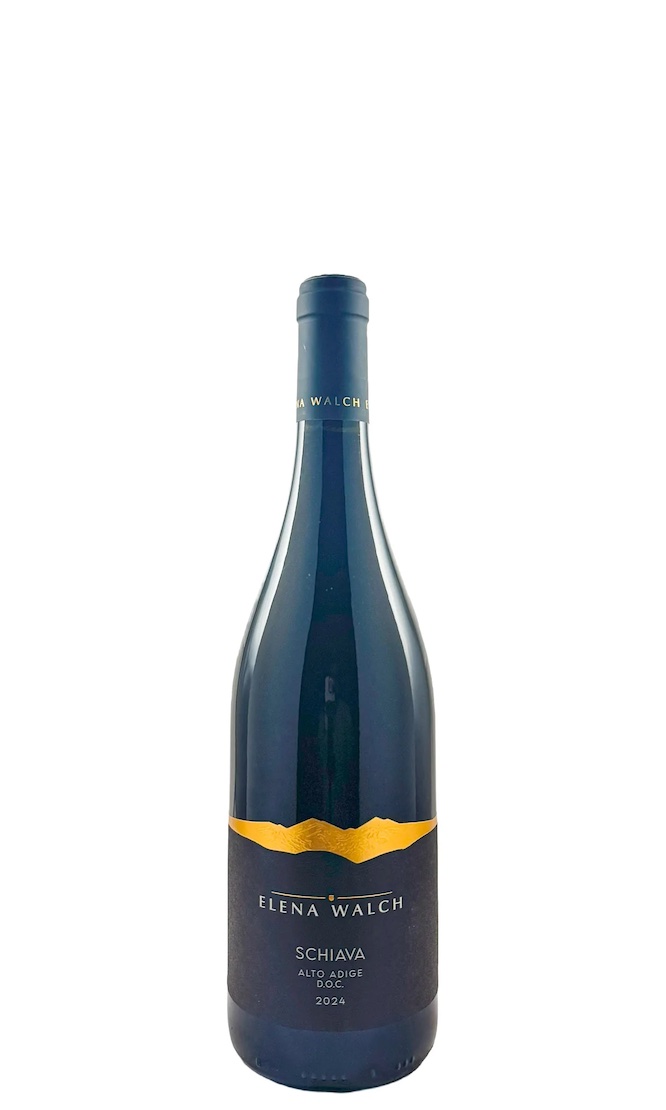
2023 Elena Walch Schiwa
($22). Hailing from vineyards on the steep slopes
Alto Adige, in northeastern Italy, this lively red
shows a bouquet and taste of ripe cherries and
strawberries with notes of almond in its smooth
finish. It mates well with brisket of beef,
spaghetti with meatballs and veal Marsala. 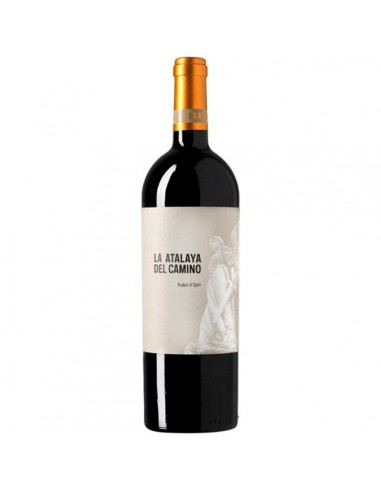
2022
La Atalaya Del Comino ($17). This wine was fashioned
from a blend of Garnacha Tintorera (85%) and
Monastrell (15%) grown in western Spain. Following
harvest the two varietals were fermented separately
in stainless-steel tanks and aged in French oak (for
12 months), then blended. The result is a wine that
has a fruity bouquet and taste of plums and black
cherries with notes of green herbs and a hint of
licorice in its long finish. It provides excellent
accompaniment to baked chicken, salmon with
chimichurri sauce and grilled or broiled swordfish.
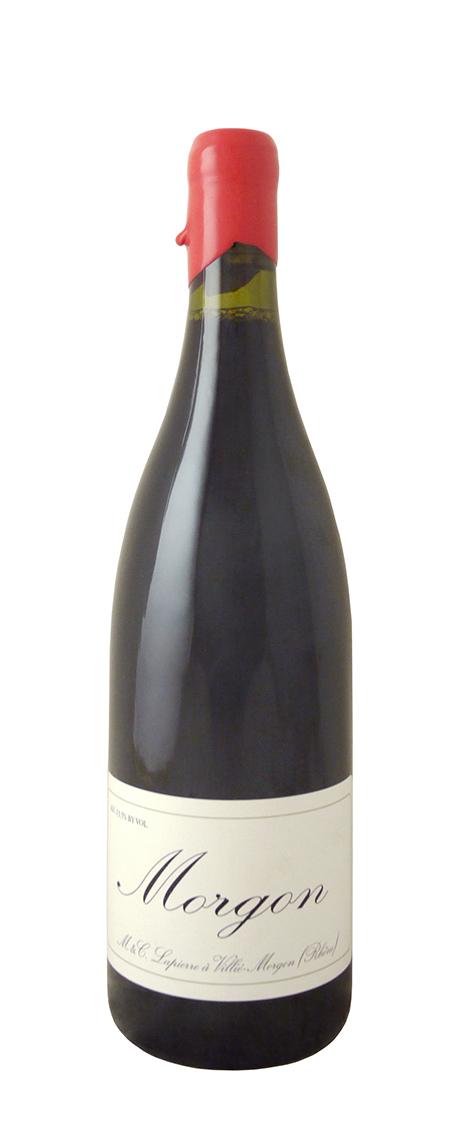 2023 G. Descombes Morgon ($25). This Cru Beaujolais was
made from premium Gamay grapes from around the
eastern French village of Morgon that were fermented
partially by carbonic maceration (addition of carbon
dioxide to a closed tank containing the grapes) and
then aged in concrete tanks. The result is a red
with a vibrant bouquet and taste of ripe cherries
and raspberries with hints of orange and thyme in
its finish ideal to marry with baked chicken, turkey
and veal dishes.
2023 G. Descombes Morgon ($25). This Cru Beaujolais was
made from premium Gamay grapes from around the
eastern French village of Morgon that were fermented
partially by carbonic maceration (addition of carbon
dioxide to a closed tank containing the grapes) and
then aged in concrete tanks. The result is a red
with a vibrant bouquet and taste of ripe cherries
and raspberries with hints of orange and thyme in
its finish ideal to marry with baked chicken, turkey
and veal dishes.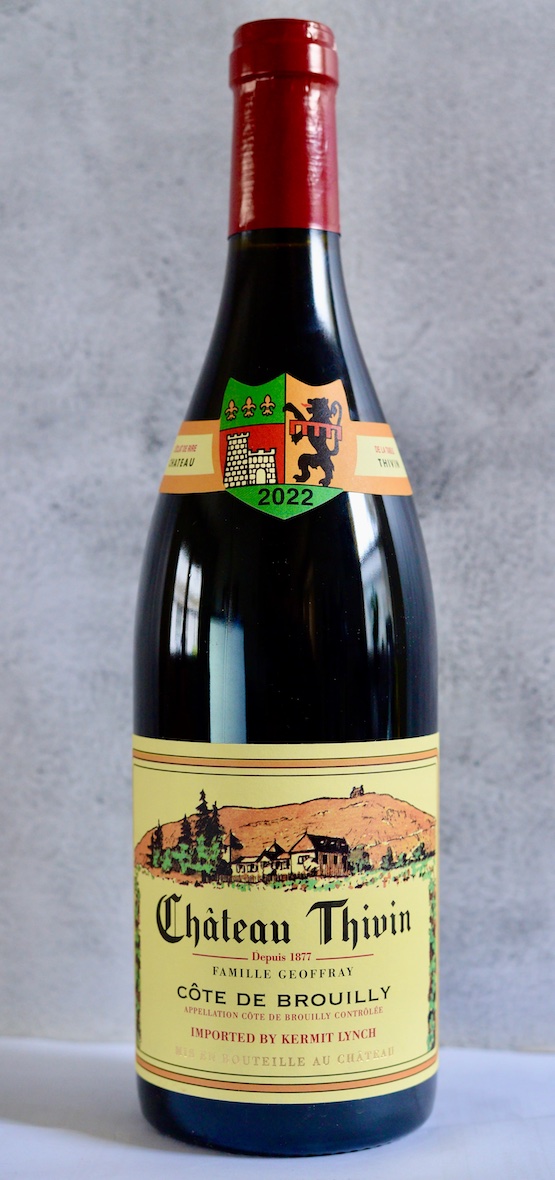
2023
Château Thivin Côte de Brouilly ($35).
Made from organically-grown grapes on Mount
Brouilly, in eastern France, this elegant red shows
a bouquet and taste of ripe strawberries and plums
with notes of cranberry. It pairs well with duck
paté and baked brie as well as roasted turkey and
braised brisket of beef.
2021
Kris
Pinot Noir ($12). Don’t be put off by the
screw top or that this Pinot Noir comes from
Italy––not renowned for wines from the Pinot Noir
(pinot nero) grape––made from grapes grown on
hillside vineyards, this red shows an elegant
bouquet and taste of ripe plums and blackberries,
with notes of cherry and hints of thyme in its
finish. Marry it with pasta with eggplant, veal
Parmigiana and grilled duck breasts as well as
“hard” aged cheeses like cheddar and Gouda.
❖❖❖
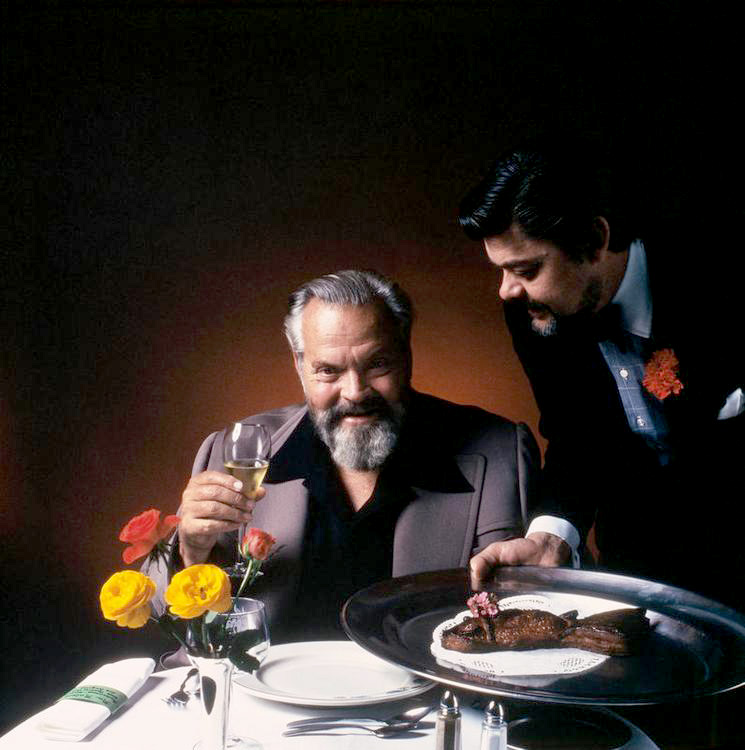
SAVE THE BONES FOR HENRY JONES!
"I was delighted to read that men still order steak to impress women on a date. I had worried that this sort of harmless (unless you’re a cow), loveable food machismo was dying out among younger chaps. But no, apparently not."–Robert Crampton London Times (Oct 7).
❖❖❖
Any of John Mariani's books below may be ordered from amazon.com.
 The Hound in Heaven
(21st Century Lion Books) is a novella, and
for anyone who loves dogs, Christmas, romance,
inspiration, even the supernatural, I hope you'll find
this to be a treasured favorite. The story
concerns how, after a New England teacher, his wife and
their two daughters adopt a stray puppy found in their
barn in northern Maine, their lives seem full of promise.
But when tragedy strikes, their wonderful dog Lazarus and
the spirit of Christmas are the only things that may bring
his master back from the edge of despair.
The Hound in Heaven
(21st Century Lion Books) is a novella, and
for anyone who loves dogs, Christmas, romance,
inspiration, even the supernatural, I hope you'll find
this to be a treasured favorite. The story
concerns how, after a New England teacher, his wife and
their two daughters adopt a stray puppy found in their
barn in northern Maine, their lives seem full of promise.
But when tragedy strikes, their wonderful dog Lazarus and
the spirit of Christmas are the only things that may bring
his master back from the edge of despair. WATCH THE VIDEO!
“What a huge surprise turn this story took! I was completely stunned! I truly enjoyed this book and its message.” – Actress Ali MacGraw
“He had me at Page One. The amount of heart, human insight, soul searching, and deft literary strength that John Mariani pours into this airtight novella is vertigo-inducing. Perhaps ‘wow’ would be the best comment.” – James Dalessandro, author of Bohemian Heart and 1906.
“John Mariani’s Hound in Heaven starts with a well-painted portrayal of an American family, along with the requisite dog. A surprise event flips the action of the novel and captures us for a voyage leading to a hopeful and heart-warming message. A page turning, one sitting read, it’s the perfect antidote for the winter and promotion of holiday celebration.” – Ann Pearlman, author of The Christmas Cookie Club and A Gift for my Sister.
“John Mariani’s concise, achingly beautiful novella pulls a literary rabbit out of a hat – a mash-up of the cosmic and the intimate, the tragic and the heart-warming – a Christmas tale for all ages, and all faiths. Read it to your children, read it to yourself… but read it. Early and often. Highly recommended.” – Jay Bonansinga, New York Times bestselling author of Pinkerton’s War, The Sinking of The Eastland, and The Walking Dead: The Road To Woodbury.
“Amazing things happen when you open your heart to an animal. The Hound in Heaven delivers a powerful story of healing that is forged in the spiritual relationship between a man and his best friend. The book brings a message of hope that can enrich our images of family, love, and loss.” – Dr. Barbara Royal, author of The Royal Treatment.
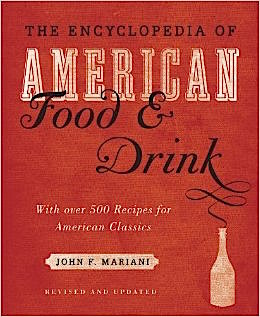 |
The Encyclopedia of American Food and Drink by John F. Mariani (Bloomsbury USA, $35) Modesty forbids me to praise my own new book, but let me proudly say that it is an extensive revision of the 4th edition that appeared more than a decade ago, before locavores, molecular cuisine, modernist cuisine, the Food Network and so much more, now included. Word origins have been completely updated, as have per capita consumption and production stats. Most important, for the first time since publication in the 1980s, the book includes more than 100 biographies of Americans who have changed the way we cook, eat and drink -- from Fannie Farmer and Julia Child to Robert Mondavi and Thomas Keller. "This book is amazing! It has entries for everything from `abalone' to `zwieback,' plus more than 500 recipes for classic American dishes and drinks."--Devra First, The Boston Globe. "Much needed in any kitchen library."--Bon Appetit. |
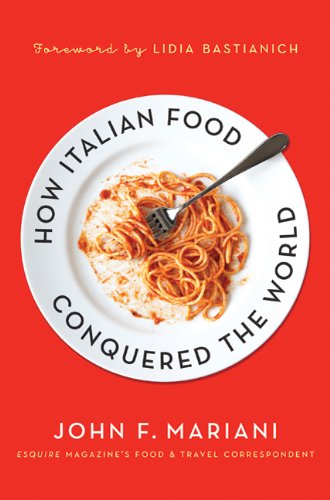
"Eating Italian will never be the same after reading John Mariani's entertaining and savory gastronomical history of the cuisine of Italy and how it won over appetites worldwide. . . . This book is such a tasteful narrative that it will literally make you hungry for Italian food and arouse your appetite for gastronomical history."--Don Oldenburg, USA Today. "Italian
restaurants--some good, some glitzy--far
outnumber their French rivals. Many of
these establishments are zestfully described
in How Italian Food Conquered the World, an
entertaining and fact-filled chronicle by
food-and-wine correspondent John F.
Mariani."--Aram Bakshian Jr., Wall Street
Journal.
"Equal parts
history, sociology, gastronomy, and just
plain fun, How Italian Food Conquered the
World tells the captivating and delicious
story of the (let's face it) everybody's
favorite cuisine with clarity, verve and
more than one surprise."--Colman Andrews,
editorial director of The Daily
Meal.com. "A fantastic and fascinating
read, covering everything from the influence
of Venice's spice trade to the impact of
Italian immigrants in America and the
evolution of alta cucina. This book will
serve as a terrific resource to anyone
interested in the real story of Italian
food."--Mary Ann Esposito, host of PBS-TV's
Ciao
Italia. "John Mariani has written the
definitive history of how Italians won their
way into our hearts, minds, and
stomachs. It's a story of pleasure over
pomp and taste over technique."--Danny Meyer,
owner of NYC restaurants Union Square
Cafe, The Modern, and Maialino.
|
 |
 |
 |
 |
 |
 |
MARIANI'S VIRTUAL GOURMET
NEWSLETTER is published weekly. Publisher: John Mariani. Editor: Walter Bagley. Contributing Writers: Christopher
Mariani, Misha Mariani, John A. Curtas, Gerry Dawes, Geoff Kalish.
Contributing
Photographer: Galina Dargery. Technical
Advisor: Gerry
McLoughlin.
If you wish to subscribe to this
newsletter, please click here: http://www.johnmariani.com/subscribe/index.html
© copyright John Mariani 2025