MARIANI’S
Virtual Gourmet
October
26,
2025
NEWSLETTER
THIS WEEK
LAS VEGAS
Part One
By John A. Curtas
NEW YORK CORNER
LE BILBOQUET
By John Mariani
HÔTEL ALLEMAGNE
CHAPTER THIRTY-TWO
By John Mariani
NOTES FROM THE WINE CELLAR
KOPKE PORTS
By John Mariani
Part One
By John A. Curtas
Joël Robuchon
Reports of Las Vegas's
demise have been greatly exaggerated. True,
tourism is down around 10%, and prices are up
(more on this below), but the conventions have
returned, and on most weekends, reservations
in the better restaurants are harder to find
than single-deck blackjack. Chinatown
continues to boom, and the Arts District
(downtown) has so many bars, brewpubs and
watering holes that you'll never be thirsty
for more than half a block. On the Strip, a
famous face has relocated himself into
sparkling new digs, upscale Asian shows no
signs of abating, upscale Indian is the new
rage, and the best restaurant in town just
celebrated its twentieth anniversary.
 JOĒL
ROBUCHON TURNS 20
JOĒL
ROBUCHON TURNS 20
When Joël
Robuchon first
planted his flag on American soil in 2005, it
was not in New York, California or Chicago,
but with two restaurants––Joël Robuchon and L'Atelier
de
Joël Robuchon––side-by-side at the MGM
Grand in Las Vegas. Their arrival was heralded
by Ruth Reichl at Gourmet magazine as
a seminal moment in American gastronomy.
Robuchon had been fêted ten years
earlier as the "Chef of the Century" by the Gault-Millau
restaurant guide, and his sushi bar inspired
L'Atelier, and more formal namesake room were
giant 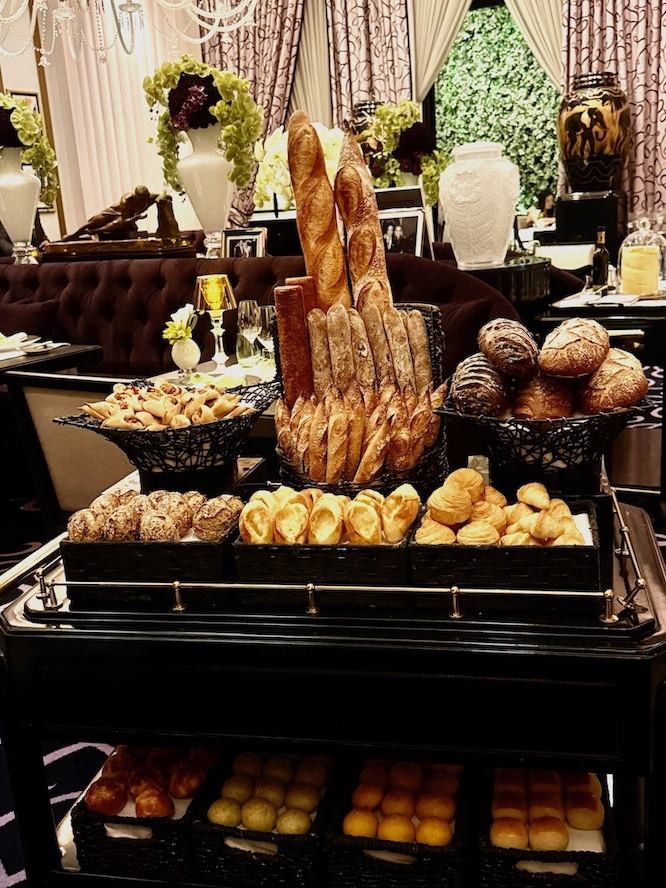 leaps
forward for French food both haute and
bourgeois, in Vegas and elsewhere. In 2011,
original chef Claude Le Tohic won a
James Beard award for Best Chef Southwest, and
in the ensuing years, both restaurants have
remained true to the master's reputation for
maximum flavor extracted with precision and
presented with elegant simplicity.
leaps
forward for French food both haute and
bourgeois, in Vegas and elsewhere. In 2011,
original chef Claude Le Tohic won a
James Beard award for Best Chef Southwest, and
in the ensuing years, both restaurants have
remained true to the master's reputation for
maximum flavor extracted with precision and
presented with elegant simplicity.
We've sung
this restaurant's praises so often we almost
feel like a broken record, but so many things
about it are sui generis. A
formidable mignardise trolley
still beckons as you enter the dining room,
foretelling your willpower's inevitable
demise––diet death by a thousand cakes. The
bread cart alone (presented with 16 varieties,
all baked in house), has to be the most
impressive in America. The Bordier butter
precedes it, wheeled to your table under a
glass dome lovingly encasing a cylinder of
Brittany churned cream the size of an
artillery shell. Whatever amuse bouche appears
(such as lemon gelée topped
with anise cream) will have you scratching
your head as to how much flavor punch can be
compressed into such small bites.
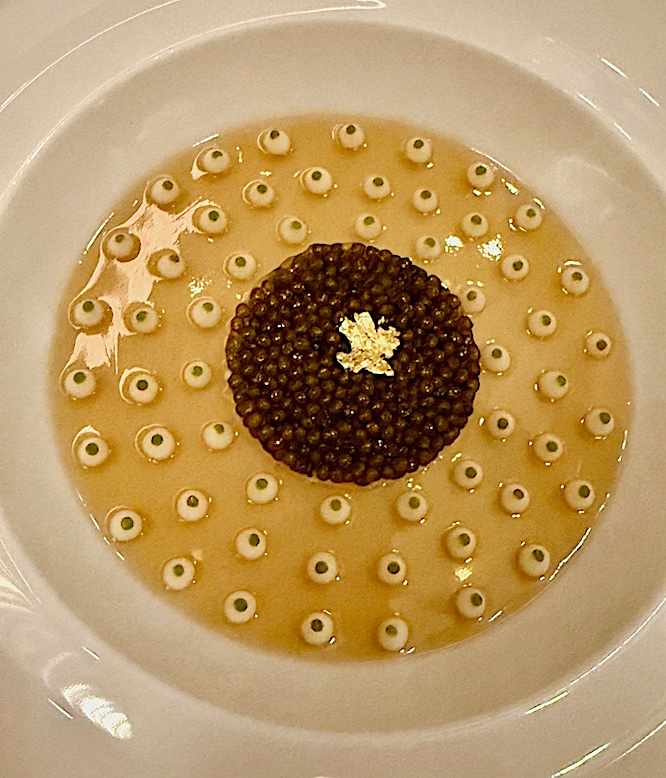 Robuchon (who died in 2018) drilled his troops
well, and you can taste his attention to
detail on every plate. In celebration of the
anniversary, we indulged in a re-creation of
one of the original tasting menus ($275 then,
$525 now, with less expensive á la carte
options available). Executive Chef Elezar
Villanueva still performs minor
miracles with a humble ingredients: cream of
lettuce soup, tuna tartare with Bell pepper
confit, and a single frog leg wrapped in kataifi
filo and punctuated with garlic and small
chanterelles.
Robuchon (who died in 2018) drilled his troops
well, and you can taste his attention to
detail on every plate. In celebration of the
anniversary, we indulged in a re-creation of
one of the original tasting menus ($275 then,
$525 now, with less expensive á la carte
options available). Executive Chef Elezar
Villanueva still performs minor
miracles with a humble ingredients: cream of
lettuce soup, tuna tartare with Bell pepper
confit, and a single frog leg wrapped in kataifi
filo and punctuated with garlic and small
chanterelles.
This is cooking at its most elevated but
without affectation. No sleight of hand is
invoked, nor guess work required. In keeping
with Éscoffier's philosophy, things
taste like themselves, only more so. So it is
with a 48-hour (sous vide poached)
leg of baby lamb, so tender and gently infused
with Moroccan spices you'll question ever
enjoying lamb any other way. Or his Brittany
lobster in a small pool of seafood
bouillon––the briny concentrated flavor of the homard moderated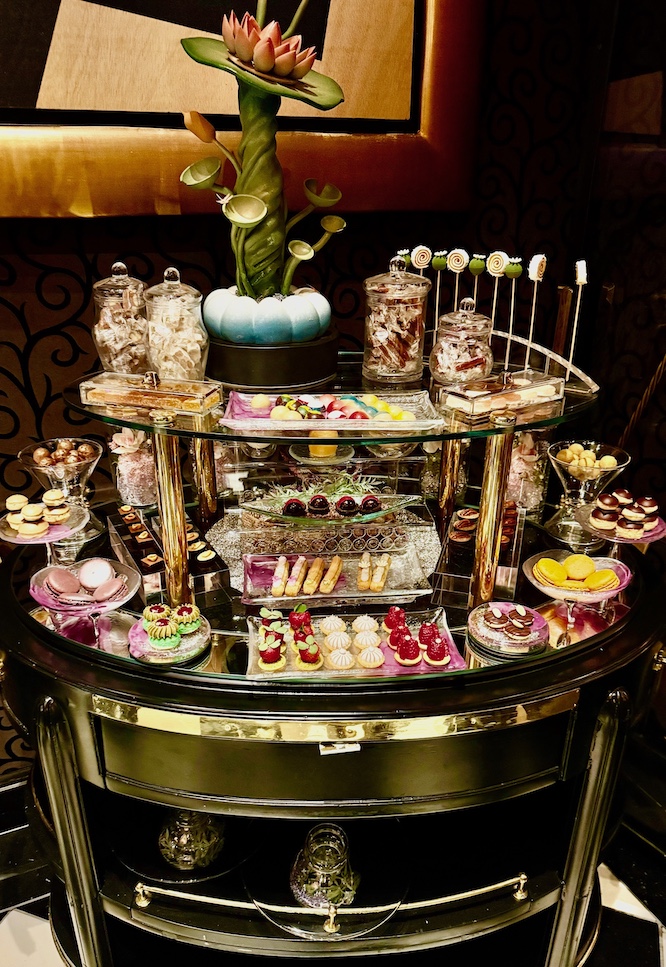 by
the slightly sweet broth. The usual haute cuisine
signifiers––caviar,
truffles and foie gras––are in use but
judiciously so. Nothing overwhelms; everything
has its place. The point being to make every
bite a revelation, on the palate, not on the
internet.
by
the slightly sweet broth. The usual haute cuisine
signifiers––caviar,
truffles and foie gras––are in use but
judiciously so. Nothing overwhelms; everything
has its place. The point being to make every
bite a revelation, on the palate, not on the
internet.
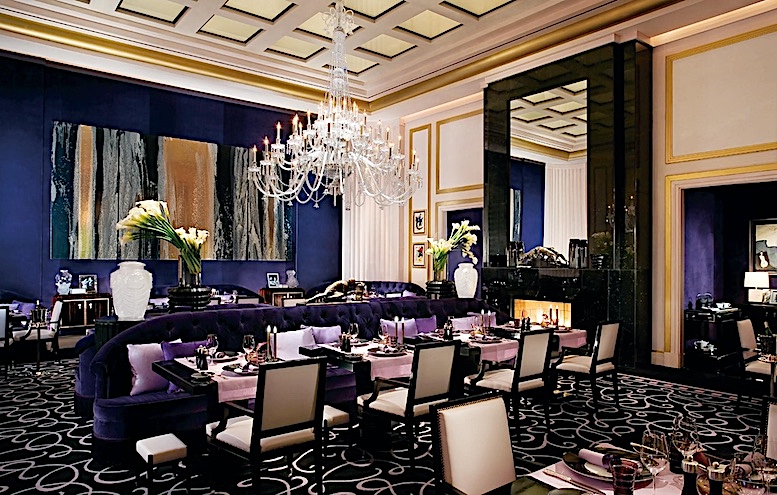
The deep
purple and cream décor, replete with the
obligatory flowers, soothing drapery and
massive chandelier, has held up well, invoking
late Twentieth Century Michelin-approved
plushness without stuffiness. Whatever
haughtiness you might expect from such a
formal dining room is quickly dispelled by a
staff that puts everyone at ease. Many of them
are multi-lingual, and all seem to have a
twinkle in their eye as they guide you through
some of the best cooking on the planet.
DOWNTOWN'S FRENCH REVOLUTION
 French
food in Las Vegas may have gone through a
resurgence in the early aughts with the
likes of Robuchon, Guy Savoy, Pierre Gagnaire
coming to the big hotels, but in the
neighborhoods, the pickings have always been
slimmer than a ficelle.
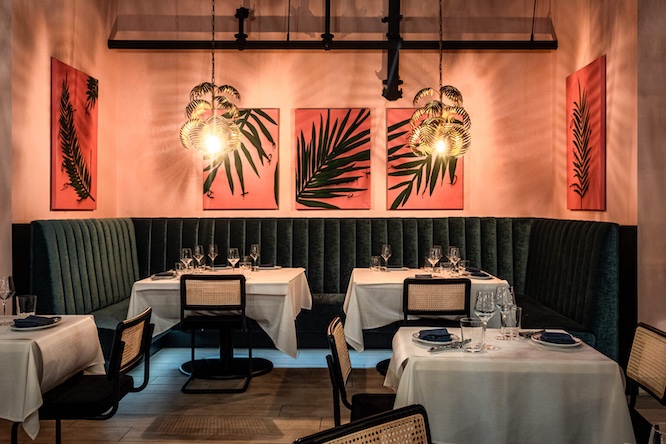
Whether James Trees' Bar Boheme
signals
a bistronomy renaissance remains to be seen,
but its opening in mid-year gave lovers of
Gallic cuisine a reason to rejoice. Finally, a
full-fledged, unapologetic frog pond, smack in
the middle of the Arts District, dishing up
toothsome
French
food in Las Vegas may have gone through a
resurgence in the early aughts with the
likes of Robuchon, Guy Savoy, Pierre Gagnaire
coming to the big hotels, but in the
neighborhoods, the pickings have always been
slimmer than a ficelle.
Whether James Trees' Bar Boheme
signals
a bistronomy renaissance remains to be seen,
but its opening in mid-year gave lovers of
Gallic cuisine a reason to rejoice. Finally, a
full-fledged, unapologetic frog pond, smack in
the middle of the Arts District, dishing up
toothsome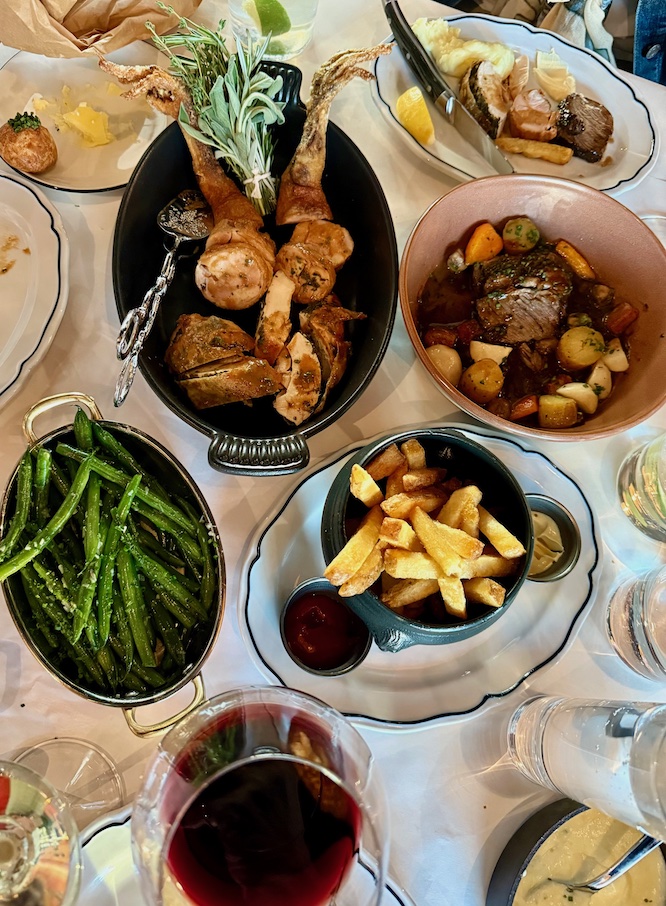 takes
on boeuf Bourguignon, sole
Veronique, escargot and soupe
à
l'oignon. Slide into a corner booth, and
dive into the all-French wine list with
your tarte flambée, steak
frites or crispy-skin poulet
roti, and you can almost convince
yourself you're on the Rive Gauche.
takes
on boeuf Bourguignon, sole
Veronique, escargot and soupe
à
l'oignon. Slide into a corner booth, and
dive into the all-French wine list with
your tarte flambée, steak
frites or crispy-skin poulet
roti, and you can almost convince
yourself you're on the Rive Gauche.
Even though Trees made his name with the
wildly popular and very Italian Esther's
Kitchen (just down the street), he was
classically-trained in the French catechism
(at the CIA, then stints with Eric
Ripert, Heston Blumenthal,
and Michael Mina, among others), and will
tell you his first love was cuisine
classique. Like the French, he takes his
culinary 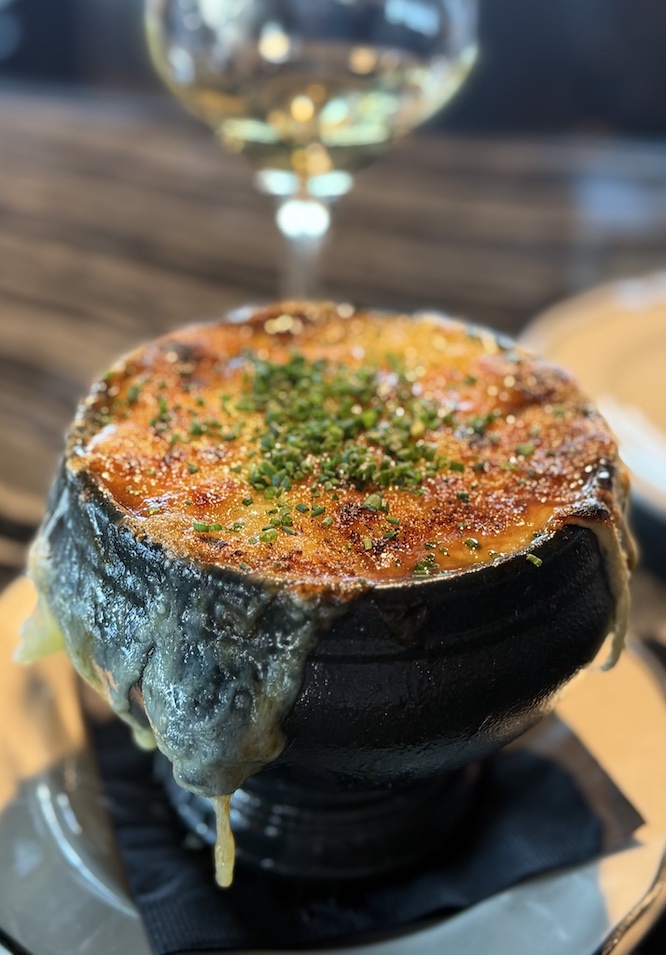 clichés
very seriously. His baguette is baked
in-house, and his chicken liver pâté, frisée
lardon salad, and that onion soup
are exemplars of the form. Burgundy snails get
their own puff pastry jackets, and the duck
fat fries are in a league of their own.
clichés
very seriously. His baguette is baked
in-house, and his chicken liver pâté, frisée
lardon salad, and that onion soup
are exemplars of the form. Burgundy snails get
their own puff pastry jackets, and the duck
fat fries are in a league of their own.
Trees
also sources good beef and knows how to sauce
it––with flawless renditions of au
poivre, Bordelaise, and Béarnaise
accenting the bavette, filet and rib eye.
Further good news comes from the pricing.
Those cuts cost substantially less than they
do two miles to the south. A 32-ounce,
dry-aged entrecôte here runs
$155. At some of our more famous steakhouses,
you'll pay twice that. With a sophisticated
cocktail program and top-notch management, Bar
Boheme has made a statement and is looking to
change the face of Main Street into something
besides a good place to do a pub crawl.
NEW YORK CORNER
20 East 60th
Street
646-869-8660
By John Mariani
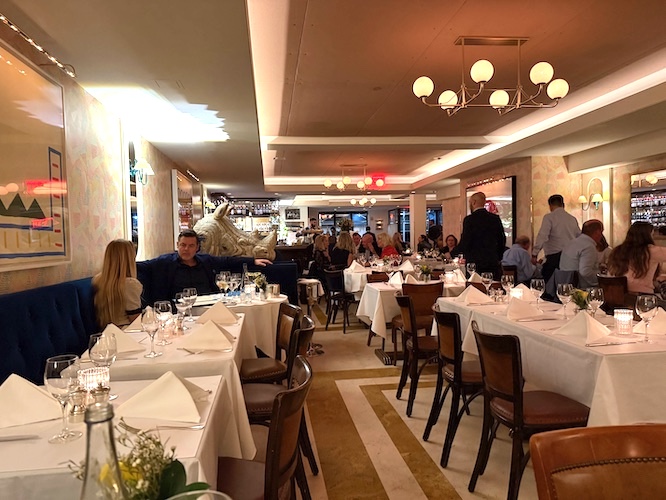
For obvious reasons, Le Bilboquet has
been the victim of its own success, not just at
its Manhattan flagship on East 60th
Street but at its offshoots in Sag Harbor,
Dallas, Palm Beach and Denver. The dining room
is a very beautiful and romantically lighted,
with a sophisticated ambience and very good
classic French fare. Having opened in 1986, it
is one of the enduring icons of New York’s
bistros––now being mimicked by newcomers like
Chez Nous, Le Veau d’Or and Chez Fifi.
 It
has a crowd as faithful and returning as any
restaurant’s in New York, and the clientele
dresses well (more on that later) and seems to
have, in Scott Fitzgerald’s words, “voices full of
money.” The faithful call it “Bilbo,” as they once
called ‘21’ Club “the Numbers” and Le Cirque “the
Circus.”
It
has a crowd as faithful and returning as any
restaurant’s in New York, and the clientele
dresses well (more on that later) and seems to
have, in Scott Fitzgerald’s words, “voices full of
money.” The faithful call it “Bilbo,” as they once
called ‘21’ Club “the Numbers” and Le Cirque “the
Circus.”
And that’s what sticks in New York’s food
media’s craw. Over all those years Le Bilboquet
has been sniffed at as being snooty, restrictive
and demanding of its guests. As a result––and
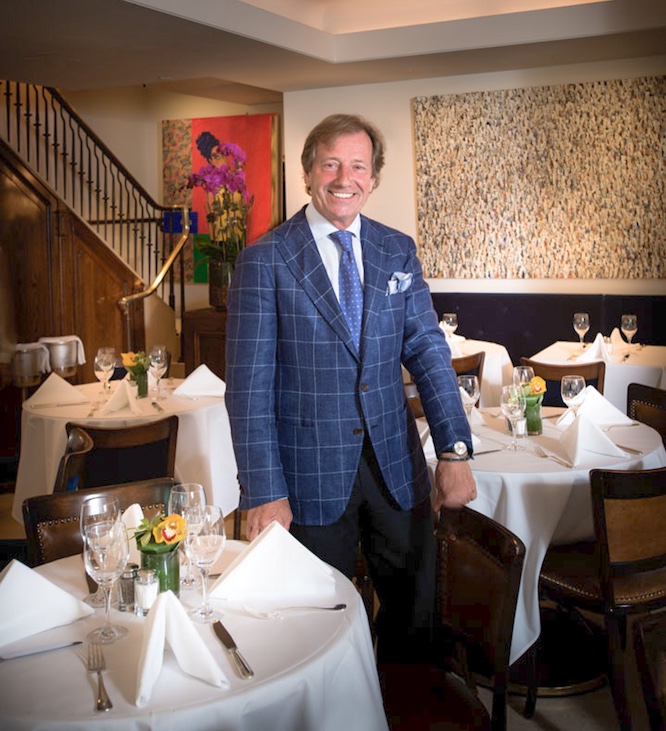
probably to owner Philippe Delgrange’s delight (left)––those
media have largely ignored the restaurant,
including the New York Times, which seems
never to have reviewed it. The cranky New York
Post deemed Il Bilboquet the “snobbiest
restaurant in New York” in 2017, and New York
Magazine warned readers, “a word to the
wise — if the thought of a menu printed entirely
in French, or even just the thought of a long wait
on the weekend, seems daunting rather than
exciting, this might not be your spot.” (The menu
now does provide English translations.)
The same food media, who shudder at the
thought of not being able to wearing their UNIQLO
cargo pants, Yankees baseball caps and gray
hoodies to restaurants, are clearly put off my Le
Bilboquet’s published “Golden Rule” guidelines: “Dress to
Impress! No beach attire, including––but not
limited to––flip-flops (or similar “beach” shoes),
shorts, cover-ups, swim trunks and bathing suits.
We don't have ball fields, courts, or courses
inside, so we'd appreciate it if you leave behind
the sports caps, sweatshirts, sweatpants, athletic
shorts, and team shirts/uniforms. (Unless you've
just won the Super Bowl!) We applaud free
expression but prefer that 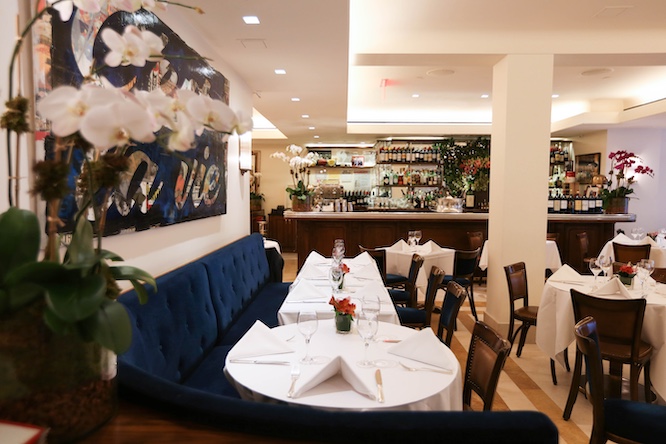 it
not be emblazoned on your t-shirt, your hat, or
another garment. Please refrain from clothing or
accessories that display divisive, political, or
otherwise offensive sayings or images.”
it
not be emblazoned on your t-shirt, your hat, or
another garment. Please refrain from clothing or
accessories that display divisive, political, or
otherwise offensive sayings or images.”
Yet being ignored by the popular press has
done nothing to hurt Le Bilboquet’s business. When
it opened it had a mere 35 seats; now, in a larger
space taken
in 2013, it seats just over 100. Delgrange admits,
“We never thought the party would continue this
long, but no one seems to want to go home. Or
maybe … they’re already home.” It’s a lovely
sentiment.
And that seems to define a place that is
more comforting than it is disdainful to anyone. I
am certainly no regular but on a recent Monday
night I was very cordially greeted by a manager
happy to give me and my guest, whom I was
interviewing, a quieter table in the rear corner.
Otherwise, it’s not as loud as a lot of other
restaurants this size.
 The
room itself glows, the white paper over
tablecloths reflects light from the globe
chandeliers, the votive candles an amiable touch,
the pointillist wallpaper is amiably pretty and a
mirrored wall opens the space out.
The
room itself glows, the white paper over
tablecloths reflects light from the globe
chandeliers, the votive candles an amiable touch,
the pointillist wallpaper is amiably pretty and a
mirrored wall opens the space out.
The menu is not long but should appeal to
anyone, from those who just want one of several
salads, including a big Cobb or a Caesar, to one of
the soups of the day. There is also a lobster-less
bouillabaisse and mussels marinières with
excellent frites.
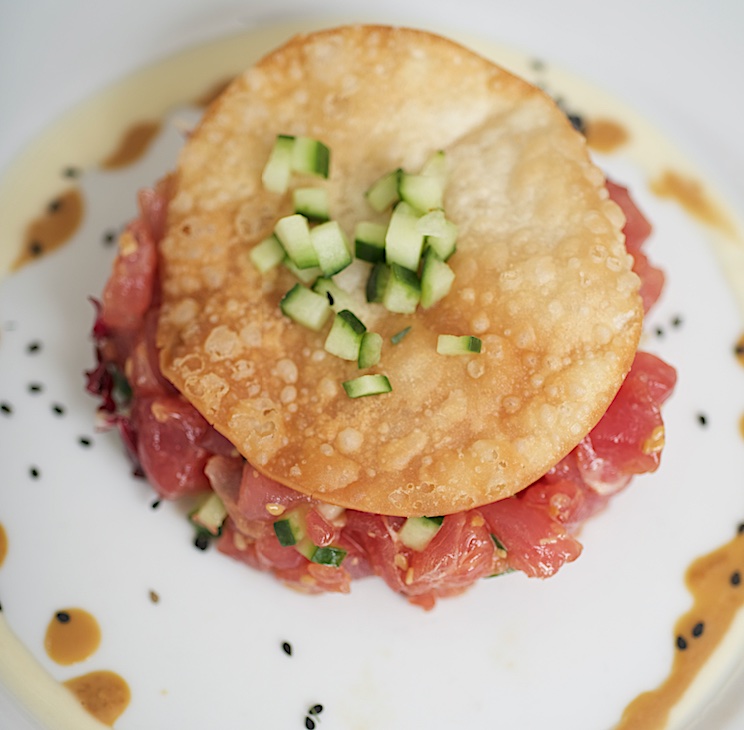
We ordered a
tuna tartare (left), silky and very fresh,
accompanied by slices of good crusty French bread,
though the butter in the ramekin was much too cold
to spread.
I was delighted to see an appetizer of
tender sweetbreads enclosed in delicate puff
pastry and light mushroom sauce––a good early
autumn dish (below). 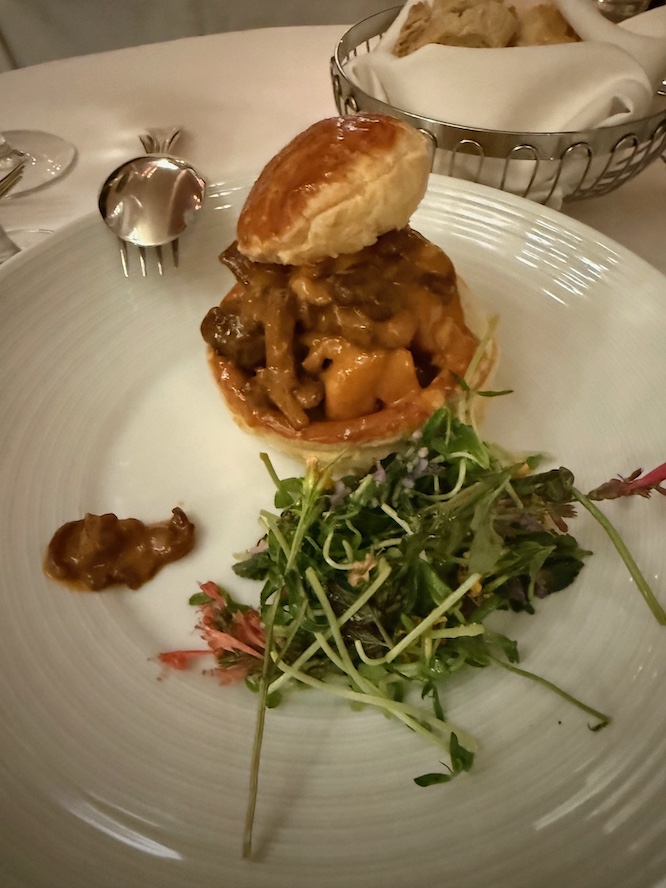
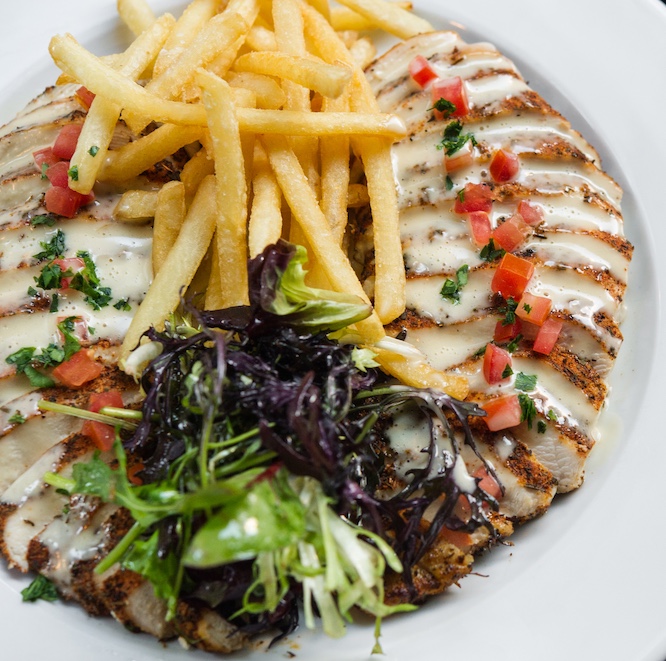
From the very beginning Le Bilboquet’s
signature dish has been Cajun chicken, which is
well seasoned,
mildly blackened and comes in a beurre
blanc and lavished with frites. Perhaps it
was added to the menu after chef Paul Prudhomme
popularized the dish in the 1980s and the rage for
Cajun took hold in America. In any
case, it’s a good if not exceptional rendering,
with more of those frites.
 Dover
sole was featured that night, which may well be
shared by two people for $100––not cheap but not
as high as Chez Fifi’s less impressive example at
$148 or some others around town. More important,
this was one of the finest, fattest, heftiest
Dover soles meunière I’ve ever had outside
of Paris, impeccably cooked and served with a
whole cup of clarified butter.
Dover
sole was featured that night, which may well be
shared by two people for $100––not cheap but not
as high as Chez Fifi’s less impressive example at
$148 or some others around town. More important,
this was one of the finest, fattest, heftiest
Dover soles meunière I’ve ever had outside
of Paris, impeccably cooked and served with a
whole cup of clarified butter. 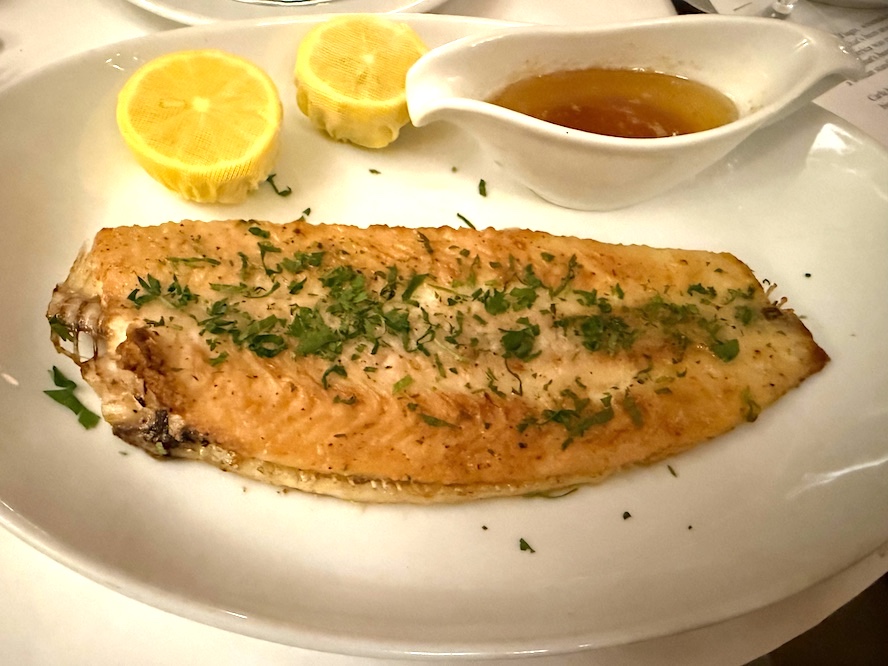 The meat
slipped easily from the bones to provide four
plump, juicy fillets, as hearty a main course as
if we’d ordered a skirt steak. Also
perfectly rendered was piping hot gnocchi à la
Parisienne, which so often comes as a gluey
mass, but here the choux pastry dumplings
emerged on their own under a very rich cream and
cheese gratin.
The meat
slipped easily from the bones to provide four
plump, juicy fillets, as hearty a main course as
if we’d ordered a skirt steak. Also
perfectly rendered was piping hot gnocchi à la
Parisienne, which so often comes as a gluey
mass, but here the choux pastry dumplings
emerged on their own under a very rich cream and
cheese gratin.
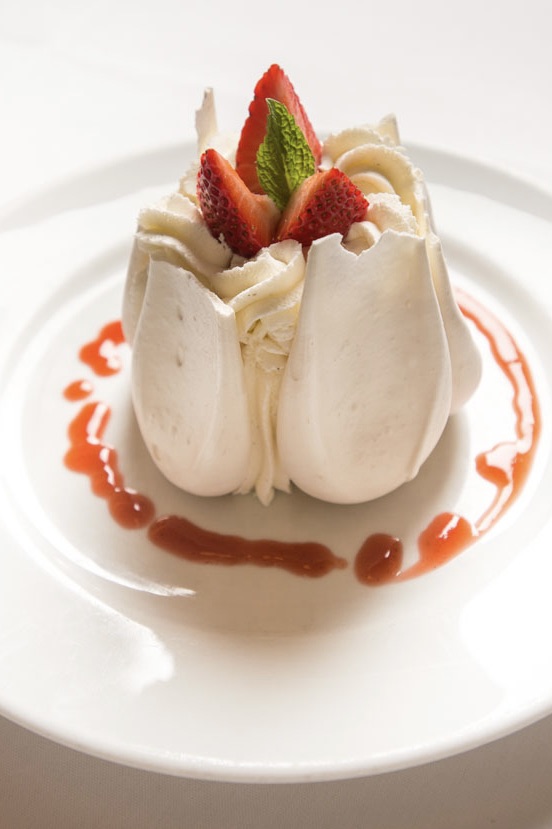
For dessert a crispy meringue vacherin
enclosing raspberry sorbet and a dense, dark
chocolate mousse with whipped cream made for fine
classics.
Menu prices are in line with most upscale
bistros in town but below some others, with the
priciest dish (aside from the Dover sole) at $55.
Le Bilboquet’s wine list has moderate depth
and breadth, but not only are prices high but
there are few bottles under $100, including a
pedestrian Chablis for considerably more.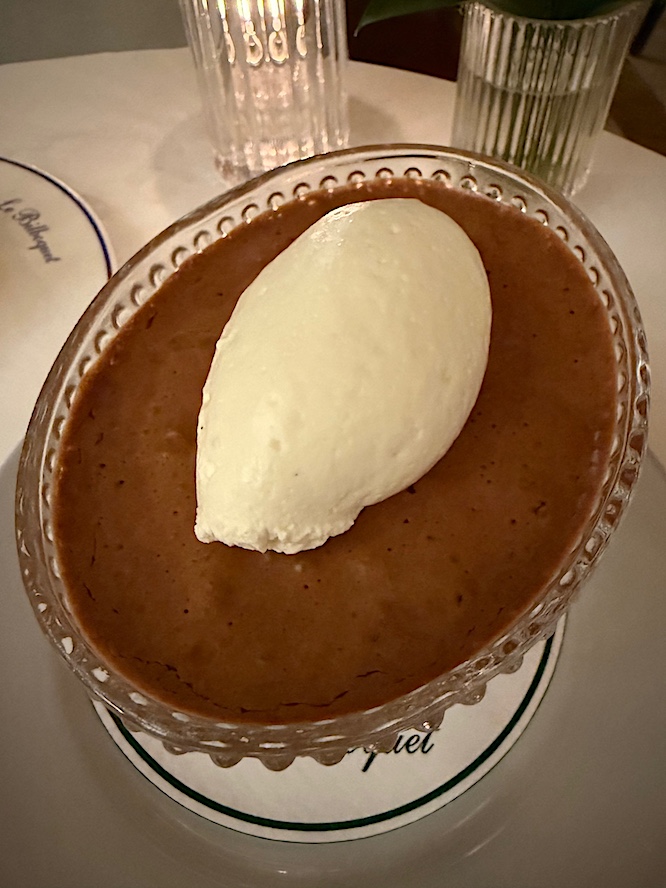
So,
then, Le Bilboquet may or may not be for you,
depending on your personal comfort within such an
environment and on your chosen wardrobe. Of
course, you could always pick up a little
something at nearby Bloomingdale’s or Oscar de la
Renta to wear before dining, which may do wonders
for your self-confidence. In any case, you will be
cordially greeted
and dine very well. And upon leaving, you
will be sincerely asked if everything was to your
liking.
Open for lunch and dinner
daily.
HÔTEL ALLEMAGNE
By John Mariani
 Catherine
followed up with the health official, who
said only that “at the present time, the
people exiting from the Victoire do not seem
as ill as those from the first three
hotels,” which is what Catherine reported
the next day. The Paris newspapers were
somewhat more alarmist, one or two
criticizing the government for not acting
soon enough on the news, another warning
that all of Paris might be shut down within
hours. If that happened, there would be
little Katie and David could do on their
own, while Catherine, as a working reporter,
would be allowed on the streets as she
needed to be.
Catherine
followed up with the health official, who
said only that “at the present time, the
people exiting from the Victoire do not seem
as ill as those from the first three
hotels,” which is what Catherine reported
the next day. The Paris newspapers were
somewhat more alarmist, one or two
criticizing the government for not acting
soon enough on the news, another warning
that all of Paris might be shut down within
hours. If that happened, there would be
little Katie and David could do on their
own, while Catherine, as a working reporter,
would be allowed on the streets as she
needed to be.
“If they shut down Paris,” said
Katie, “you and I are going to be in
quarantine, David, and not returning to New
York for two more weeks.”
“I wouldn’t mind so much,” he said,
“but we’re going to be stuck in our hotel
watching CNN all day, ordering room
service.”
“Better
here
than anywhere else.”
The couple had, in fact, moved to a
smaller, much less expensive hotel of
St.-Germain, 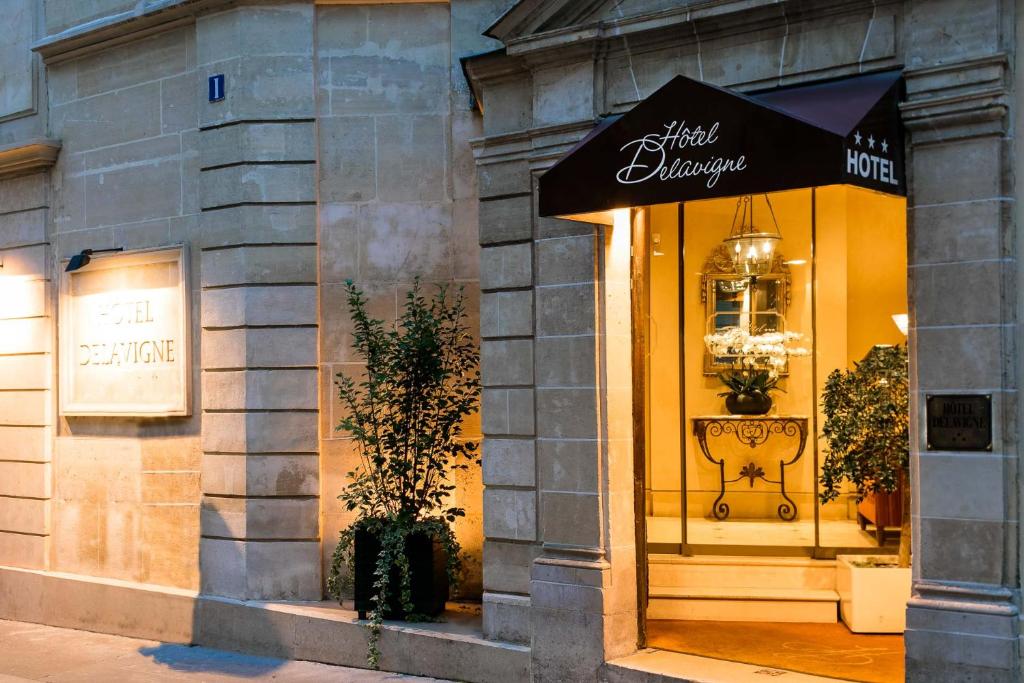 Hôtel Delavigne,
where, for the moment, business at the shops
and restaurants was already slowing down,
with foot traffic scarce. They kept in touch
with Borel and Catherine, and at least for
the day, the government had made no move
towards a shut-down, instead simply
cautioning people of the possibility of more
attacks and more virus on the street.
Everyone was advised to buy and wear masks
at all times on the street.
Hôtel Delavigne,
where, for the moment, business at the shops
and restaurants was already slowing down,
with foot traffic scarce. They kept in touch
with Borel and Catherine, and at least for
the day, the government had made no move
towards a shut-down, instead simply
cautioning people of the possibility of more
attacks and more virus on the street.
Everyone was advised to buy and wear masks
at all times on the street.
The next morning, nothing had changed
so Katie and David took advantage of their
freedom of movement and went to the Hôtel
Victoire, which was still blocked off and
guarded but completely quiet. Katie took the
opportunity to interview some of the local
people from the neighborhood about their
reactions to the attack. Little good copy
came from that, since everyone said more or
less the same thing, repeating the words “Quel
disgrâce!” and “Pas civilizé!”
 Borel
had obtained the guest roster from the
Victoire, hoping that the needle in the
haystack might somehow be in there. He sent
it by e-mail to Catherine’s laptop at her
apartment, where Katie and David met her at
eleven AM, after Borel had interviewed the
desk clerk and concierge from the Victoire,
after which he asked if Catherine would like
to interview them. As before, the hotel
employees were happy to help the CNN
newswoman, whom they’d seen on TV, not to
have their own moment in the limelight but
to help shine light on a story that
had such dire repercussions for their place of
employment.
Borel
had obtained the guest roster from the
Victoire, hoping that the needle in the
haystack might somehow be in there. He sent
it by e-mail to Catherine’s laptop at her
apartment, where Katie and David met her at
eleven AM, after Borel had interviewed the
desk clerk and concierge from the Victoire,
after which he asked if Catherine would like
to interview them. As before, the hotel
employees were happy to help the CNN
newswoman, whom they’d seen on TV, not to
have their own moment in the limelight but
to help shine light on a story that
had such dire repercussions for their place of
employment.
They met at Catherine’s
apartment. The clerk was young, in his
thirties, the concierge in his sixties and he
had been at the Victoire for more than
twenty-five years, working his way up to his
present position. They told the Americans that
the hotel had been only fifty percent full
that night—the desk clerk said the earlier
attacks had had an effect on bookings
throughout the city—and that most guests were
back in their rooms by eleven. As in the other
attacks, the virus had taken hold after
midnight, with guests pouring into the lobby
at six the next morning.
“Were there any guests who did not
return at all?” asked David.
The two men perused the list and said
that there were some who came in very late,
well after midnight, but only one did not
return after going out at around eight
o’clock. The desk man pointed to a name, and
David, remembering some vague connection of
the name to Marseille, said,
“Louis Jourdan? The actor, was staying here?”
“Ah, no, Monsieur,” said the concierge,
“This was a woman, Louise Jourdan. She checked
in at seven and went out an hour or so later,
then did not return to the hotel that
evening.”
“Do you know anything about this
woman?” asked Katie.
“No, I had never seen her before. She
was not young but very attractive for her
age—”
The concierge interrupted his young
colleague and said, “Louise Jourdan? That is a
little unusual.”
Catherine asked, “Pourquoi,
Monsieur?” The man raised his finger in the
air and said, “Louise Jourdan was a kind of
legend to the war generation in Paris,
especially women. Almost nothing is known
about her, but, apparently, she was a very
beautiful prostitute who everyone believed
collaborated with the Germans or at least
lived among them. But it turned out that she
was a very important conduit of information
for the Paris underground.”
“What happened to her?” asked Katie.
“She was eventually found out by the
Germans and sent to a concentration camp. No
one ever heard from her again, but she was
revered as a heroine.”
“So, if she’d survived the war, she
would be how old now?”
The man shrugged and said, “I would
say, perhaps, seventy or seventy five.”
“And this Louise Jourdan you checked
in, can you describe her?” asked Borel.
“She would be about the age of Louise
Jourdan. She was fairly tall, still slender
and quite attractive for her age. She had dark
hair, a little gray, which she had tied in a
chignon. Oh, yes, he also had a little—I do not
know what you call it in English—une tache
de naissance.”
“A birthmark,” said Catherine. “Where?”
“Just above her lip, here.”
Katie looked at David and
said, “Oh, my God!”
© John Mariani, 2024
❖❖❖
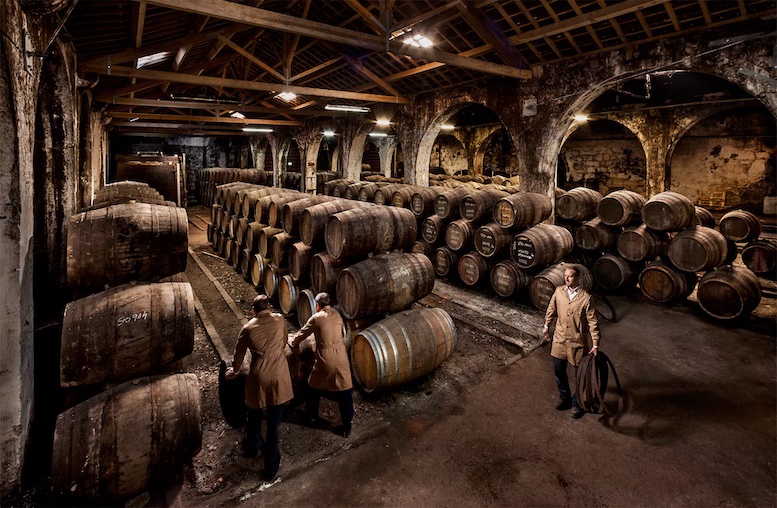
KOPKE PORTS
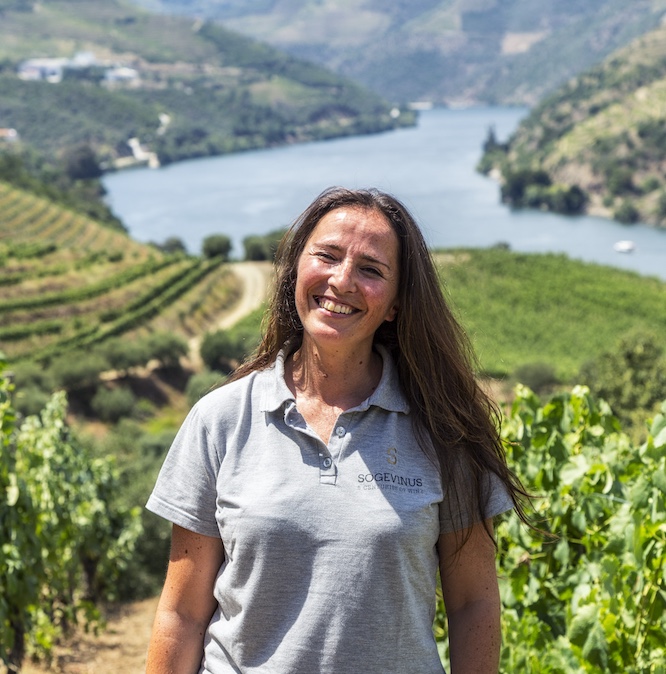
An Interview with Winemaker Carla Tiago
By John Mariani
 How
did you go from working in the vineyards to
becoming winemaker at Kopke?
How
did you go from working in the vineyards to
becoming winemaker at Kopke?
Let
me clarify. I did not start working in the vineyard.
In fact, I started working in the laboratory. My
background is in biochemistry, and I initially
worked at Quinta de S. Luiz, but in the field of
oenology. During the five years I worked there, I
was in close contact with the work being done
throughout the year in the vineyards, which gave me
a deeper understanding of the vine cycle. It was
undoubtedly an excellent experience that helped me
immensely in my future work.
Was there some
condescension about being a woman in the field?
Are there other women in Portugal viniculture?
I
never felt any condescension in any of the positions
I held at the company. I lived and worked for five
years in the Douro region, in a rural
area where most of the workers were men.
Perhaps because the company's policies are very
inclusive and fair and are well established, gender
was never an issue. In Portugal, there are more and
more women in viticulture and oenology, and even in
more conservative circles, gender is no longer an
issue at all.
You have put
unusual focus on white Port and make them in a
heftier, richer style. Why?
Kopke
is the oldest Port wine company, and, from our
oldest wine stocks, we can see that the style
has always been very diverse, honoring the different
productions of each year. In the case of white
wines, our oldest Colheita is from 1935, and even
today, we can see in this wine the result of
dedicated work over decades. Our job as curators of
these wines is to ensure their good performance and
to work towards producing excellent wines for future
generations of winemakers who will work here. To do
this, it is essential to understand the different
styles and to select and deliver the best wines each
year for aging. At Kopke , all wines, including
white wines, should reflect this rich, fresh, and
complex style. It will always be a work in progress,
with a focus on the brand's commitment.
You are also known
for your aged Tawny’s and Colheitas rather than
stress vintages. Why?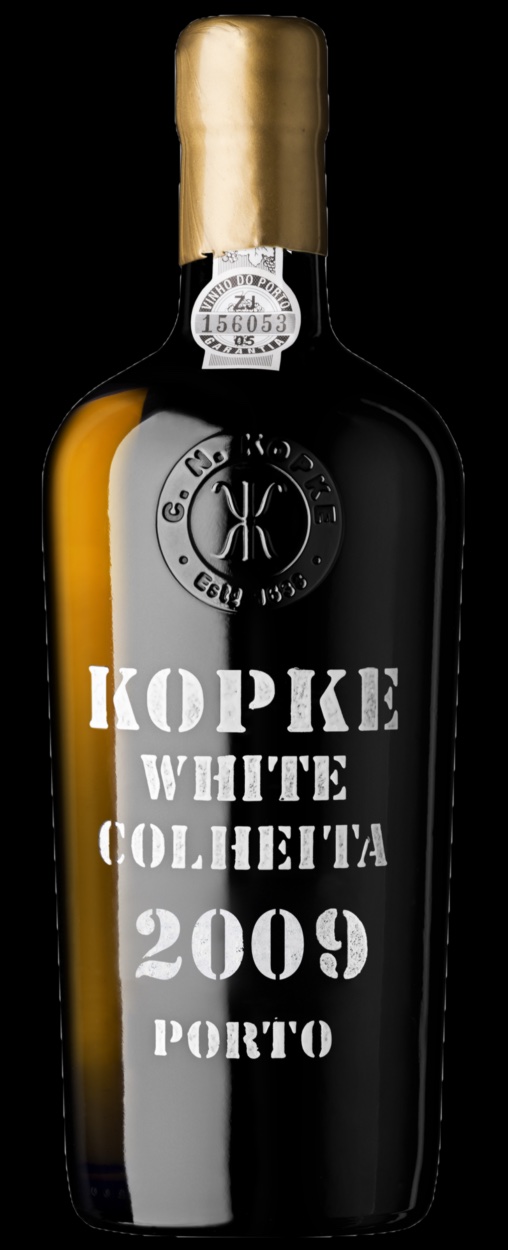
We
are currently better known for our aged Tawnies and
Colheitas than for our vintages. Still, I do not
doubt that this is due to a lack of quality in the
latter, but rather to the diversity and extreme
quality of our Colheitas. Few port wine houses
dedicate themselves to the Colheita style like
Kopke, and none with as many different harvest years
as Kopke, making it undoubtedly unique in this
segment and setting us apart from all the others.
However, I would like to emphasize that our vintages
and LBVs comply with the consistency and quality
standards of the Kopke house. They are unique wines
with a fresh and intense character and incredible
potential.
Why do some of your
Ports spend time in cement silos rather than
wooden barrels?
After
harvesting, some of our Port wines spend a short
time in cement vats, just long enough for the most
unstable compounds to precipitate naturally. After
this period, they are aged in different types of
containers, mostly wooden ones.
Do you think that
most consumers become confused by so many styles
of Port—Vintage, Late Bottled, Colheita, Crusted,
etc.
We
currently face a significant challenge: encouraging
people to try more Port wine, explore its different
styles, and find various occasions for drinking it.
Associating Port wine with a dessert wine is very
limiting. We must show, through masterclasses,
tastings, and dinners, that port wine can and should
be a wine for all occasions; you must find the right
style for each one. It may be a little confusing at
first, yes, there are many styles, but with a bit of
dedication, you can recognize each one and associate
them with your favorite moments.
What is your
biggest export market? Where is the US as an
export market?
The
brand is present in more than 60 countries. Export
represented more than 70% of sales in 2024. Kopke's
main markets are: the Netherlands, Portugal, the
USA, the United Kingdom, South Korea, and Denmark.
The main market is the Netherlands, which accounted
for 28% of Kopke's sales in 2024. The USA was the
fourth largest market in 2024.
Can you drink Port
throughout a meal, with seafood and meats?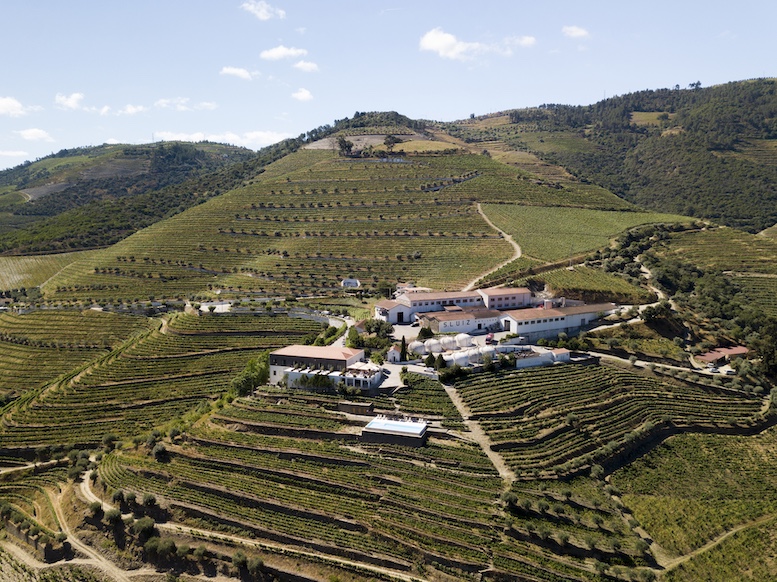
Of
course! A good steak pairs well with an LBV, spicy
food complements a 20-year-old Tawny, and grilled
fish or lobster tastes even better with a
10-year-old White. We must always consider the
temperature at which these wines should be served;
they should always be chilled to ensure the
experience is as rich as possible. The challenge is
to experiment. It may not be the wine to accompany
an everyday meal, but it is certainly the wine that
can highlight moments on any menu.
Has global warming
affected Port harvesting and production?
Global
warming has made us reflect and take action,
especially in viticulture. Márcio Nobrega is
responsible for this area, and both he and our
director of oenology and viticulture, Carlos Alves,
have been paying special attention to this issue.
Some of the taboos in the Douro have been the
subject of reflection. Irrigation, for example, has
always been a procedure with many restrictions in
the Douro. Still, today it is a much more normalized
issue, not in terms of increasing the quantity of
grapes produced, but rather concerning the quality
and survival of the vines. The soil and how it
is treated has been one of the most focused topics
over the last 10 years, with less tillage and the
sowing of multifunctional mixtures in order to
protect the soil from direct sunlight and erosion
from rain, increase water retention, fix nitrogen
and improve soil structure and microbial activity.
The use of precision agriculture technology, such as
NDVI images, allows for differentiated treatment of
plots and optimization of resources. But we have
also been very attentive in the winery. Grape
ripeness checks begin in early August to schedule
the harvest at the optimal time, always seeking a
good balance between sugars, acidity,
and phenolic ripeness. This desire for constant
improvement has led us to choose increasingly
resilient grape varieties for new plantations,
providing us with grapes of balanced ripeness.
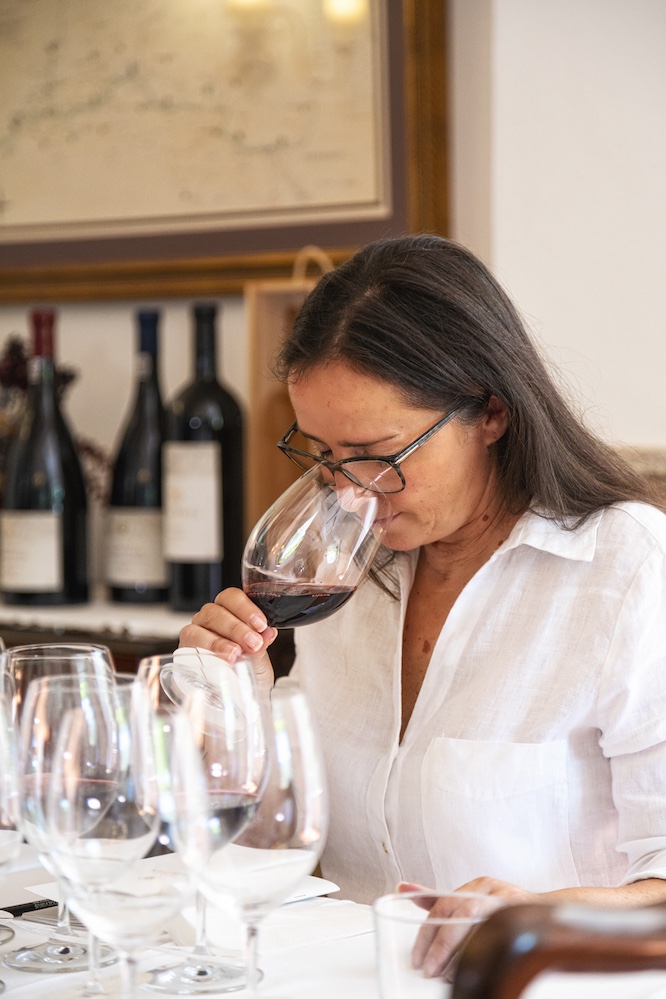 How can Port producers
make more impact on the current generation, which
is not showing as much interest in wine and
previous generation s?
How can Port producers
make more impact on the current generation, which
is not showing as much interest in wine and
previous generation s?
The reduction in Port wine consumption
is a trend that we have come across in recent years.
This trend has partly determined Kopke Group's
investment in still wines, thus providing a more
balanced portfolio from a business perspective.
However, the reduction in volume has been associated
with an increase in value, which demonstrates a
trend towards premium-ization and the discovery of
wines from superior categories. Kopke, for instance,
with its extensive library of old wines, including
some remarkably rare White and Tawny Ports, has long
established its reputation as the maker of some of
the very best Port wines and positioned itself as
one of connoisseurs’ favorite brands. On the other
hand, the strong focus on wine tourism that Kopke
Group has been making over the last few years has
become an important tool in Port wine
promotion, which already represents around 25%
of Kopke Group turnover. In general, Port producers
are finding new ways for consumers to drink Port,
namely though cocktails, by mixing Port with tonic water or other
refreshing beverages and by
launching
other formats, such as Ready-to-drinks. Overall, the
big challenge will undoubtedly be to get more people
to try the different types of Port wine, creating
new consumption habits among younger people, as
these are distinctive wines with incredible richness
and organoleptic diversity, capable of providing
unique moments.
How do Port producers keep their prices
so moderate compared to other still and fortified
wines like Cognac, whiskies, etc?
Historically, Portuguese wines have always
suffered from a lack of recognition, especially the
more premium wines. In addition, a significant
portion of consumption and recognition of Port wines
is concentrated on the more standard
wines. Even these entry-level wines are priced
very low compared to their production
costs. This includes a financial effort far
superior to other categories of alcoholic beverages
due to the characteristics of their production and
aging costs. The path for Port wine must clearly be
one of valuing its history, but also its production
methods. However, in recent years, there has
been greater awareness of more distinctive port
wines, such as old Tawnies, which are now in greater
demand and more highly valued. There is still a lot
of work to be done to consolidate the recognition of
the value and quality of these wines, but we are on
the right track.
How popular has
agro-tourism become in the Douro Valley?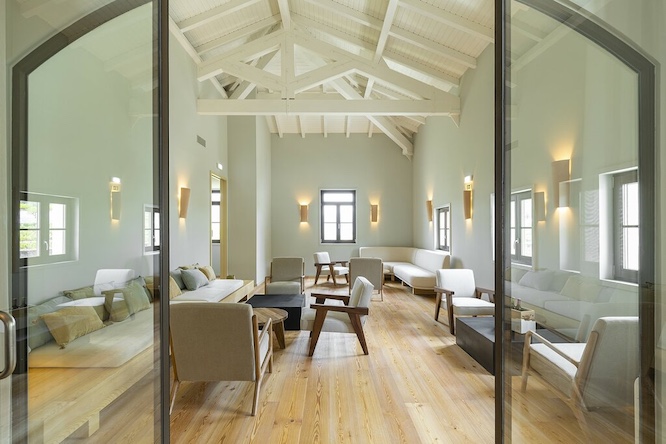
It
has become very popular due to the growing tourism
throughout the
country, and particularly in Porto. It is a way for
producers to find other ways to keep growing and
compensate for the fall in Port Wine consumption.
Kopke group has been diversifying its portfolio to keep
growing and remain competitive, as we have been
doing not only with still wines but also with wine
tourism. This enables us to take advantage of the
exceptional Kopke Group estates, promote the Douro
region, reach more consumers, and, in doing so,
create more value for the region, consumers,
and the company. Within wine tourism, in
Douro, we own The Vine House
(right),
located in the heart of the Cima Corgo sub-region,
close to Pinhão, and an integral part of Quinta de
São Luiz. The wine tourism project, which has 11
rooms, a signature restaurant and an infinity pool
overlooking the Douro, opened in 2022. In Vila Nova
de Gaia, we own Burmester and Cálem Cellars, the
most visited Port Wine Cellars, with an innovative
concept that combines tradition with technology.
This year, we launched Tivoli Kopke Porto Gaia
Hotel, a luxurious hotel situated on the south bank
of Porto’s Douro River. This exceptional property,
created in collaboration with Tivoli Hotels &
Resorts, delivers breathtaking panoramic views of
Porto, combining timeless elegance with the rich
legacy of Kopke. The Kopke cellars are a standout
feature, having been carefully restored and
integrated into the design of the hotel. Guests can
enjoy the opportunity to fully immerse themselves in
the world of Port wine during their stay,
celebrating Kopke’s centuries-old tradition of
producing exceptional ports.
❖❖❖

FOOD WRITING 101: Try
Not to Explore Your
Anal Fixations
"I didn’t have
huge expectations of Von Crumb. It’s squished
between a charity shop and some sort of moldy
printing outfit opposite a big Budgens on a
wide-pavemented dog of a main drag in Belsize
Park, which is the saggy arse of Hampstead,
endlessly upended for roadworks and dim-witted
'traffic improvement' schemes, where it squats
over the urban turd that is Camden Town."—Giles
Coren (left), “Von Crumb,” Times
.
❖❖❖
Any of John Mariani's books below may be ordered from amazon.com.
 The Hound in Heaven
(21st Century Lion Books) is a novella, and
for anyone who loves dogs, Christmas, romance,
inspiration, even the supernatural, I hope you'll find
this to be a treasured favorite. The story
concerns how, after a New England teacher, his wife and
their two daughters adopt a stray puppy found in their
barn in northern Maine, their lives seem full of promise.
But when tragedy strikes, their wonderful dog Lazarus and
the spirit of Christmas are the only things that may bring
his master back from the edge of despair.
The Hound in Heaven
(21st Century Lion Books) is a novella, and
for anyone who loves dogs, Christmas, romance,
inspiration, even the supernatural, I hope you'll find
this to be a treasured favorite. The story
concerns how, after a New England teacher, his wife and
their two daughters adopt a stray puppy found in their
barn in northern Maine, their lives seem full of promise.
But when tragedy strikes, their wonderful dog Lazarus and
the spirit of Christmas are the only things that may bring
his master back from the edge of despair. WATCH THE VIDEO!
“What a huge surprise turn this story took! I was completely stunned! I truly enjoyed this book and its message.” – Actress Ali MacGraw
“He had me at Page One. The amount of heart, human insight, soul searching, and deft literary strength that John Mariani pours into this airtight novella is vertigo-inducing. Perhaps ‘wow’ would be the best comment.” – James Dalessandro, author of Bohemian Heart and 1906.
“John Mariani’s Hound in Heaven starts with a well-painted portrayal of an American family, along with the requisite dog. A surprise event flips the action of the novel and captures us for a voyage leading to a hopeful and heart-warming message. A page turning, one sitting read, it’s the perfect antidote for the winter and promotion of holiday celebration.” – Ann Pearlman, author of The Christmas Cookie Club and A Gift for my Sister.
“John Mariani’s concise, achingly beautiful novella pulls a literary rabbit out of a hat – a mash-up of the cosmic and the intimate, the tragic and the heart-warming – a Christmas tale for all ages, and all faiths. Read it to your children, read it to yourself… but read it. Early and often. Highly recommended.” – Jay Bonansinga, New York Times bestselling author of Pinkerton’s War, The Sinking of The Eastland, and The Walking Dead: The Road To Woodbury.
“Amazing things happen when you open your heart to an animal. The Hound in Heaven delivers a powerful story of healing that is forged in the spiritual relationship between a man and his best friend. The book brings a message of hope that can enrich our images of family, love, and loss.” – Dr. Barbara Royal, author of The Royal Treatment.
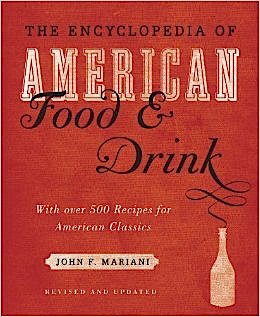 |
The Encyclopedia of American Food and Drink by John F. Mariani (Bloomsbury USA, $35) Modesty forbids me to praise my own new book, but let me proudly say that it is an extensive revision of the 4th edition that appeared more than a decade ago, before locavores, molecular cuisine, modernist cuisine, the Food Network and so much more, now included. Word origins have been completely updated, as have per capita consumption and production stats. Most important, for the first time since publication in the 1980s, the book includes more than 100 biographies of Americans who have changed the way we cook, eat and drink -- from Fannie Farmer and Julia Child to Robert Mondavi and Thomas Keller. "This book is amazing! It has entries for everything from `abalone' to `zwieback,' plus more than 500 recipes for classic American dishes and drinks."--Devra First, The Boston Globe. "Much needed in any kitchen library."--Bon Appetit. |
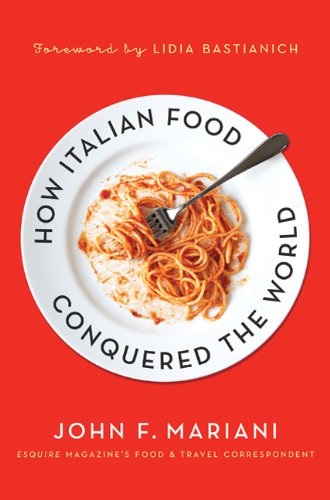
"Eating Italian will never be the same after reading John Mariani's entertaining and savory gastronomical history of the cuisine of Italy and how it won over appetites worldwide. . . . This book is such a tasteful narrative that it will literally make you hungry for Italian food and arouse your appetite for gastronomical history."--Don Oldenburg, USA Today. "Italian
restaurants--some good, some glitzy--far
outnumber their French rivals. Many of
these establishments are zestfully described
in How Italian Food Conquered the World, an
entertaining and fact-filled chronicle by
food-and-wine correspondent John F.
Mariani."--Aram Bakshian Jr., Wall Street
Journal.
"Equal parts
history, sociology, gastronomy, and just
plain fun, How Italian Food Conquered the
World tells the captivating and delicious
story of the (let's face it) everybody's
favorite cuisine with clarity, verve and
more than one surprise."--Colman Andrews,
editorial director of The Daily
Meal.com. "A fantastic and fascinating
read, covering everything from the influence
of Venice's spice trade to the impact of
Italian immigrants in America and the
evolution of alta cucina. This book will
serve as a terrific resource to anyone
interested in the real story of Italian
food."--Mary Ann Esposito, host of PBS-TV's
Ciao
Italia. "John Mariani has written the
definitive history of how Italians won their
way into our hearts, minds, and
stomachs. It's a story of pleasure over
pomp and taste over technique."--Danny Meyer,
owner of NYC restaurants Union Square
Cafe, The Modern, and Maialino.
|
 |
 |
 |
 |
 |
 |
MARIANI'S VIRTUAL GOURMET
NEWSLETTER is published weekly. Publisher: John Mariani. Editor: Walter Bagley. Contributing Writers: Christopher
Mariani, Misha Mariani, John A. Curtas, Gerry Dawes, Geoff Kalish.
Contributing
Photographer: Galina Dargery. Technical
Advisor: Gerry
McLoughlin.
If you wish to subscribe to this
newsletter, please click here: http://www.johnmariani.com/subscribe/index.html
© copyright John Mariani 2025