MARIANI’S
Virtual Gourmet
November 2, 2025
NEWSLETTER
Founded in 1996
ARCHIVE
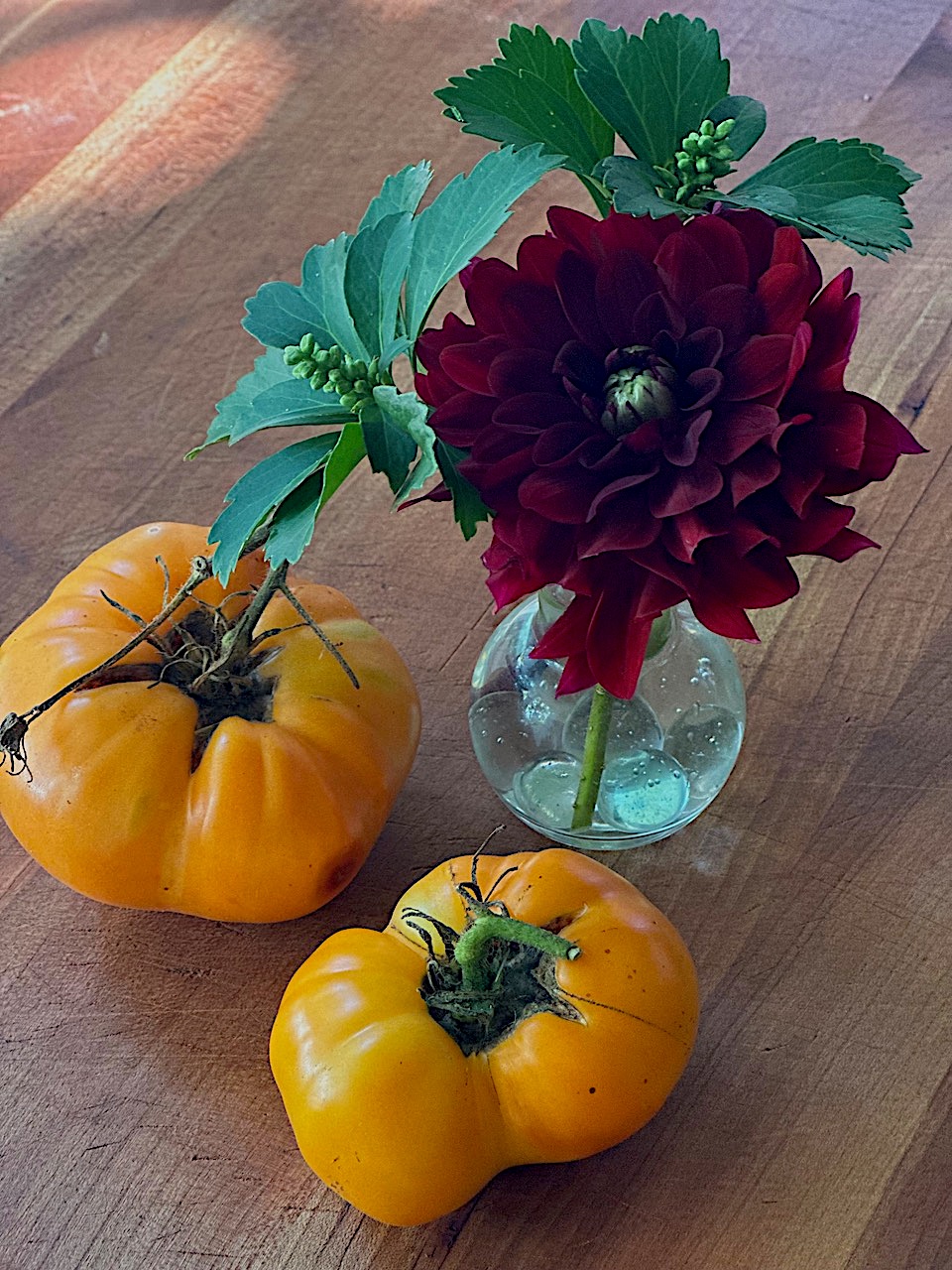
"Autumn Still Life" (2024) By Galina Dargery
THIS WEEK
LAS VEGAS
Part TWO
By John A. Curtas
NEW YORK CORNER
SANTI
By John Mariani
HÔTEL ALLEMAGNE
CHAPTER THIRTY-FOUR
By John Mariani
NOTES FROM THE WINE CELLAR
IPSUS
By John Mariani
THIS WEEK
LAS VEGAS
Part TWO
By John A. Curtas
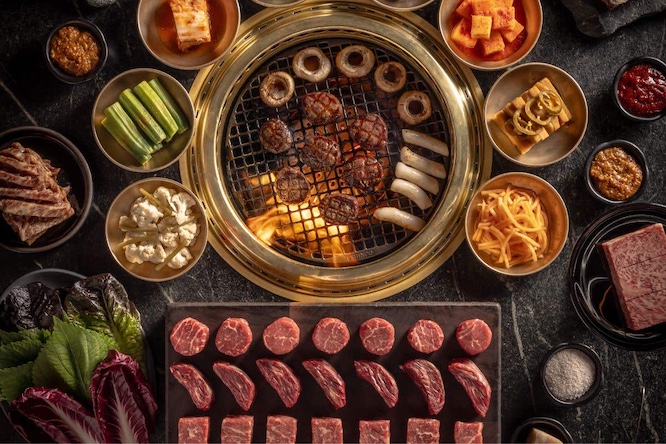
COTE Steakhouse
SO. MANY.
STEAKHOUSES.
Speaking
of beef, yours truly has maintained for thirty
years that every restaurant in Vegas would be
a steakhouse if it could be, and The
Venetian/Palazzo seems hellbent on proving me
right. In less than a month, three new ones
(Bazaar Meat by José Andrés, COTE, and Boa)
all opened within a two-minute walk from each
other, bringing the total number of carnivore
emporiums inside the complex to six. Bazaar
Meat brings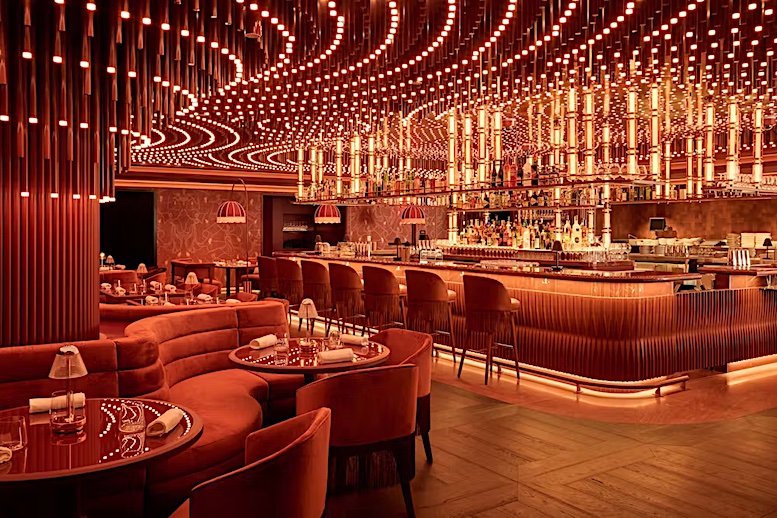 with it
the most intrigue since for the past ten
years, it's been a bastion of prime stuck in a
less than choice hotel (Sahara). With flashy
new digs on the ground floor of the Palazzo,
it boasts a similar menu, a huge front and
center bar, two large dining rooms and
an open kitchen in front in which
you can examine the premium/pricey cuts ready
to be Josper-grilled to your
cholesterol-enhancing satisfaction.
with it
the most intrigue since for the past ten
years, it's been a bastion of prime stuck in a
less than choice hotel (Sahara). With flashy
new digs on the ground floor of the Palazzo,
it boasts a similar menu, a huge front and
center bar, two large dining rooms and
an open kitchen in front in which
you can examine the premium/pricey cuts ready
to be Josper-grilled to your
cholesterol-enhancing satisfaction.
They tell me menu changes will be made, but
from where we sat, the pan con tomate, jamon
Iberico de Bellota de pata negra, steak
tartare, tomato tartare, air bread "Philly
cheese steak" sandwiches, and vaca
vieja (8-10 year old Black Angus,
aged on the hoof) steaks, are as fine as ever
(right). You can appreciate Bazaar Meat
as a steakhouse, a Spanish restaurant, or a
wine and tapas bodega (with corresponding
price points), and be assured of a fine time.
Our last meal here was comprised of only
"little snacks" and "little sandwiches" all of
which are priced well under twenty bucks. Be
advised though, those prime cuts get way north
of a hundred bucks in a hurry. Go with a group
and split the cost to get the most bang for
your buck.
 COTE is
a steakhouse of a different slice. Korean
barbecue to be precise, where the meat is
pre-cut and cooked in front of you. Right next
door to Delmonico and only a chip shot from
CUT, it aims to capture the "We're looking for
a vibe-y experience without steak" crowd––the
same folks who consider Papi Steak (with
sparklers in its steaks) and STK (with its
DJ-curated incessant din) the ne plus
ultra of a meal on the town.
COTE is
a steakhouse of a different slice. Korean
barbecue to be precise, where the meat is
pre-cut and cooked in front of you. Right next
door to Delmonico and only a chip shot from
CUT, it aims to capture the "We're looking for
a vibe-y experience without steak" crowd––the
same folks who consider Papi Steak (with
sparklers in its steaks) and STK (with its
DJ-curated incessant din) the ne plus
ultra of a meal on the town.
But COTE throws these party-goers a curve ball
by actually being food-focused, as opposed to
a glorified nightclub with obscenely-priced
meat. Its vibe was honed by Simon Kim in New
York City, where, in 2017, he captured
the zeitgeist of the time by combining a dark,
moody vibe with superior cuts of Korean
barbecue and a world-class wine list. Faster
than you can say bulgogi, the
world beat a path to his door. As concepts go,
this one is born to travel, and this fourth
incarnation (after NYC, Singapore and Miami)
is sure to hit with both gastronauts and food
fashionistas.
From a person-of-a-certain-age perspective,
the lighting isn't that dark, the music not
intrusive, and the booths as comfortable as
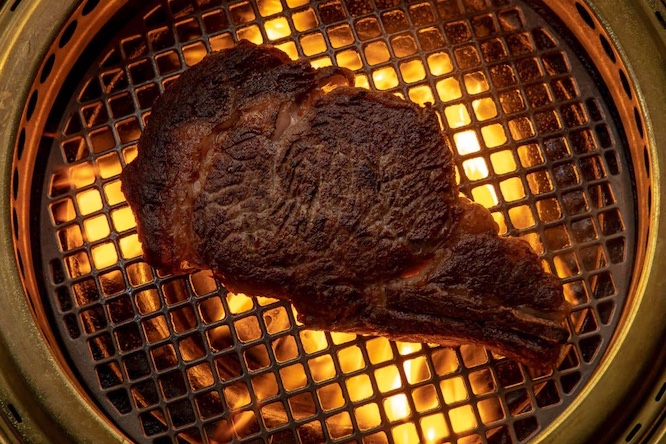
booths can be. They cook the meat for you here
over smokeless grills, and the choices are
geared to steer you to one of two tastings:
and $88.88/pp "Butcher's Feast" or the $225/pp
"Steak Omakase." Our group of famished flesh
eaters found the smaller menu more than
enough, with its four cuts of various
fattiness more than enough to overwhelm our
livers. The limited banchan still
earned
our Korean companions' seal of approval, as
did the shochu offerings.
Of the various sides and apps we tried,
some––Korean "bacon," Caesar salad––were fine
but unmemorable, and the kimchi wagyu "paella"
felt like nothing more than a misnamed plop of
spiced rice. The wine list is truly
impressive, with prices to match, natch.
PLANTING
A SEED
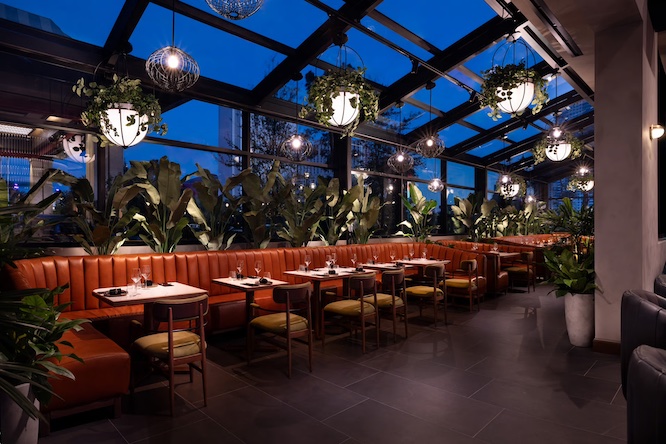 The
name––Stubborn
Seed––is, depending on your generosity of
spirit, either confusing or really stupid,
since it tells you nothing about what to
expect. Perhaps it makes more sense in Miami
Beach, where Chef Jeremy Ford made
it big, won a TV cooking competition then got
recruited to bring his concept to Resorts
World in hopes of enhancing his brand and the
foodie the cred of the hotel. Confused you may
be as you walk to your seat, but several bites
in, seated in full view of the large
brightly-lit window framing the kitchen, you
will realize you are in for something
special––a different sort of restaurant,
featuring high-wire, aggressive,
veggie-focused (but not strictly vegetarian)
cooking unlike any in town.
The
name––Stubborn
Seed––is, depending on your generosity of
spirit, either confusing or really stupid,
since it tells you nothing about what to
expect. Perhaps it makes more sense in Miami
Beach, where Chef Jeremy Ford made
it big, won a TV cooking competition then got
recruited to bring his concept to Resorts
World in hopes of enhancing his brand and the
foodie the cred of the hotel. Confused you may
be as you walk to your seat, but several bites
in, seated in full view of the large
brightly-lit window framing the kitchen, you
will realize you are in for something
special––a different sort of restaurant,
featuring high-wire, aggressive,
veggie-focused (but not strictly vegetarian)
cooking unlike any in town.
Ford's claim to fame is the intricate mixing
of food metaphors, playing with odd
combinations (and lots of leafy accents) that
always seem to work. Thus will you find
carrots charred with jerk seasonings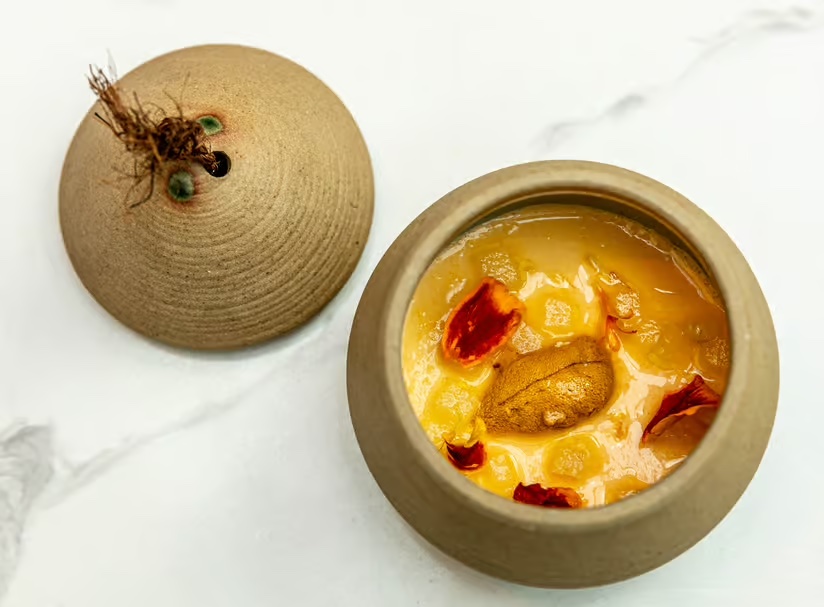 and spiced yogurt, and a whole cauliflower
roasted with a cashew puree, then garnished
with seemingly every herb in the garden.
House-cured olives come with a festoon of
fried jamon Iberico, yellowtail
crudo is cured by sake and citrus, and small
pasta pyramids of harissa lamb fagottelli get
gussied
up with a ginger tomato emulsion, sweet hot
peppers, pine nut dukkah and
crispy leeks. This is high-wire cooking
without a net and Ford and his crew clearly
have the chops for it.
and spiced yogurt, and a whole cauliflower
roasted with a cashew puree, then garnished
with seemingly every herb in the garden.
House-cured olives come with a festoon of
fried jamon Iberico, yellowtail
crudo is cured by sake and citrus, and small
pasta pyramids of harissa lamb fagottelli get
gussied
up with a ginger tomato emulsion, sweet hot
peppers, pine nut dukkah and
crispy leeks. This is high-wire cooking
without a net and Ford and his crew clearly
have the chops for it.
His proteins don’t miss many beats either: a
foie gras/truffle tart reminds you of a
glorified PB&J; branzino in
nutty brown butter and hazelnuts, is a worthy
upgrade of an often boring fish, and a
slow-cooked smoked beef rib (priced-to-sell at
$85) are as good as anything you’ll find in
most steakhouses. None of this is cheap (the
rib runs $80), but compared to most Strip
restaurants these days, $145 for a set tasting
menu feels like a bargain. You can also
downsize by going à la carte, which is how to
get the crispy, charred double-smash burger
with "crave" sauce ($28), which should not be
missed. Desserts––peanut butter/fudge brownie
candy bar, olive oil cake citrus Pavlova with
caramelized pistachios, warm snickerdoodle
cookie with toasted barley ice cream––pull out
all the stops and hit all their marks,
impressing even this jaded palate.
Stubborn Seed is definitely the most
compelling Strip restaurant to open this year,
full of interesting ideas and flavor
combinations which delightfully challenge your
taste buds without intimidating them. We are
rooting for it to find an audience.
SUBCONTINENT SUPERSTAR
 Calvin
Trillin once wrote that the average Italian
restaurant gets more customers in a night than
a good Indian joint sees in a month.
Indian food – one of the world’s great
cuisines – has been so underrepresented
in America as to be almost invisible. Urban
areas have their generic tandoori parlors and
AYCE buffets, but for decades that was about
it. But the tide may be turning. The elegant,
sophisticated Indian cuisine of the
sub-continent might be having a moment, here and elsewhere,
and in Las Vegas, Tamba is
leading the way.
Calvin
Trillin once wrote that the average Italian
restaurant gets more customers in a night than
a good Indian joint sees in a month.
Indian food – one of the world’s great
cuisines – has been so underrepresented
in America as to be almost invisible. Urban
areas have their generic tandoori parlors and
AYCE buffets, but for decades that was about
it. But the tide may be turning. The elegant,
sophisticated Indian cuisine of the
sub-continent might be having a moment, here and elsewhere,
and in Las Vegas, Tamba is
leading the way.
Located in the Town Square shopping mall south
of the Strip, Tamba has as much in common with
your standard, cookie cutter curry shop as a Bentley does
with a Dodge
Dart.
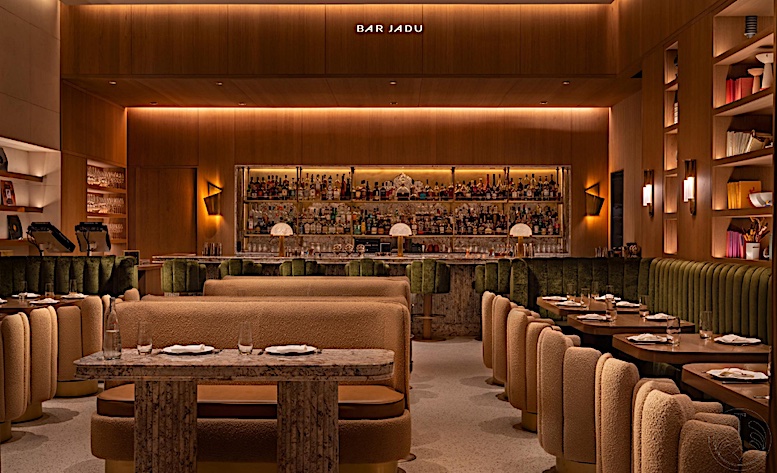
This is apparent from the moment you step
inside. Instead of cliché-ed decor and nonstop
Bollywood videos, what confronts you is a
subtle, subdued restaurant of overstuffed
chairs, refined tableware and an eye-popping
bar that would be right at home in the
Bellagio.
Once you are seated, Chef Anand
Singh flies you around the sub-continent
(and across the Pacific rim), dabbling in
everything from upscale tuna sushi with smoked
sea salt to artichoke sashimi to a Hakka
noodle stir-fry. Spicings are precise,
presentations polished, and the multi-layered
flavorings a revelation. 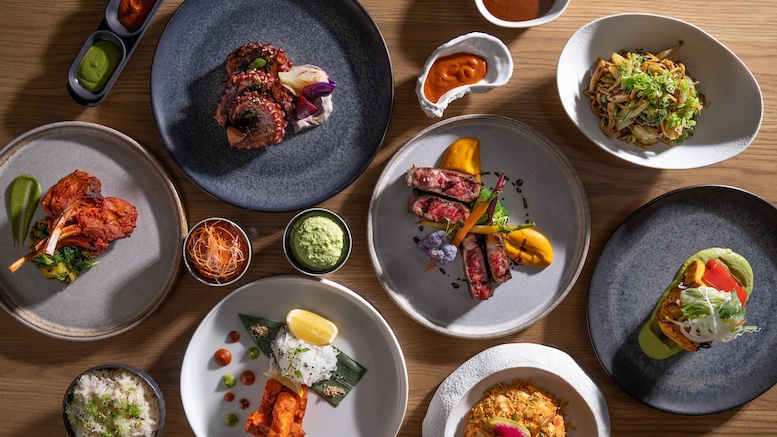 A
one-curry-fits-all stop this is not. You can
go traditional with an intriguing hand-folded
Samosa Chaat (stuffed with curried chickpeas,
masala-spiked potatoes and tangy
pomegranates), dry-spiced lamb chops, or
soothing butter chicken, or test the kitchen's
more modern chops with its takes on grilled
Afghani saffron paneer, banana
leaf-wrapped sea bass, or grilled octopus with
purple cauliflower. Either way you will be
wondering where all these spices have been
hiding. You can also be assured that whatever
hits your table will be like nothing Vegas has
ever tasted.
A
one-curry-fits-all stop this is not. You can
go traditional with an intriguing hand-folded
Samosa Chaat (stuffed with curried chickpeas,
masala-spiked potatoes and tangy
pomegranates), dry-spiced lamb chops, or
soothing butter chicken, or test the kitchen's
more modern chops with its takes on grilled
Afghani saffron paneer, banana
leaf-wrapped sea bass, or grilled octopus with
purple cauliflower. Either way you will be
wondering where all these spices have been
hiding. You can also be assured that whatever
hits your table will be like nothing Vegas has
ever tasted.
Upscale Indian restaurants like this have been
in England for a century, and updated takes on
this food have been the rage in London for
twenty years. Vegas may be late to the party,
but with Tamba and, later this year, the
arrival of Gymkanha to the Aria, Las
Vegas may be maturing into a deeper
appreciation of broad range of ingredients,
techniques, and flavor packed into these
dishes. Whatever magic spice Singh and manager
Olivier Morowati have concocted seems to be
working. (Grinding and mixing all of their
masalas and curries in house is part of the
secret.) Whatever the alchemy, local foodies
have taken to this place like naan to
a tandoor, portending, perhaps,
the long overdue celebration of one of the
world's most fascinating cuisines.
NEW YORK CORNER
SANTI
3
East 53rd Street
917-410-6449
By John Mariani
Interior photos by Seth
Caplan
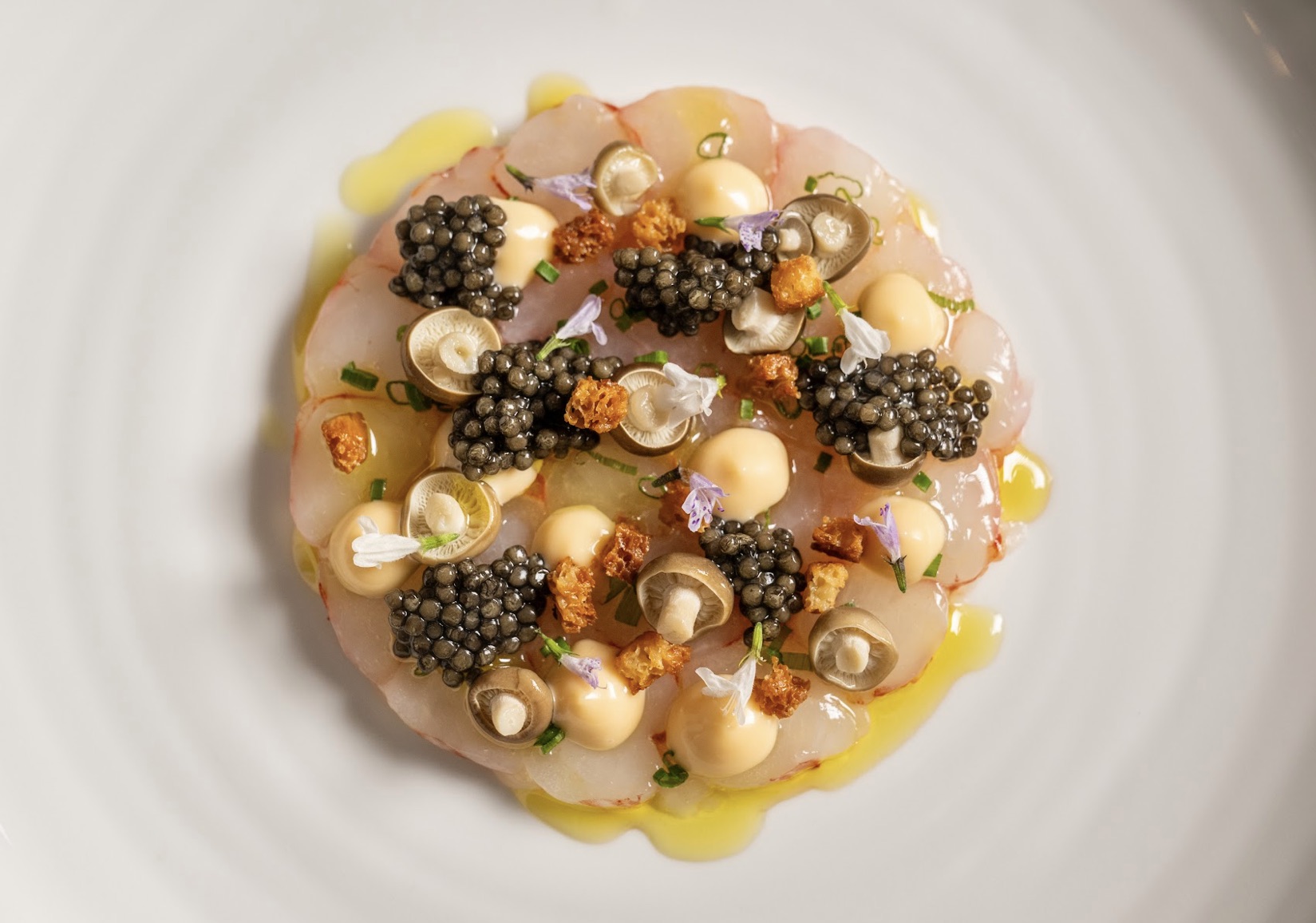
Amberjack crudi
The east side of Midtown
Manhattan has become a nexus of fine dining
Italian restaurants, with Fasano and Il
Monello on 49th Street, Il
Tinello East on 46th Street 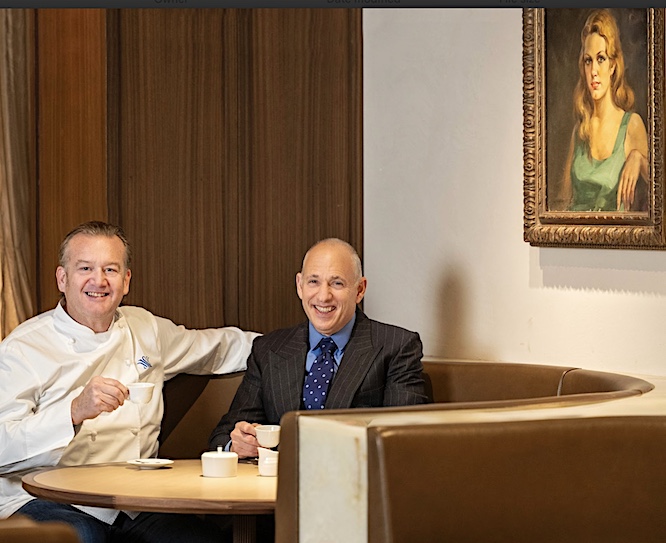 and Lever
House on 53rd, now joined by Santi,
a splendid ten-month old venture by Chef
Michael White and partner Bruce Bonster of the
BBianco Hospitality Group. Well above the
trattoria level of home-style cooking and
barebones décor, these restaurants are in line
with the best-known in Italy, like Enoteca
Pinchiorri in Florence, Dal Pescatore in and
Canneto sull’Oglio and San Domenico in Imola.
and Lever
House on 53rd, now joined by Santi,
a splendid ten-month old venture by Chef
Michael White and partner Bruce Bonster of the
BBianco Hospitality Group. Well above the
trattoria level of home-style cooking and
barebones décor, these restaurants are in line
with the best-known in Italy, like Enoteca
Pinchiorri in Florence, Dal Pescatore in and
Canneto sull’Oglio and San Domenico in Imola.
The name Santi (“saints”) pays tribute to
White’s mentor, Gianluigi Morini, and Chef
Valentino Marcatillii of San Domenico, where he
once trained, who used to say, “ “Le mani
degli chef sono come le mani dei santi”––“The
hands of chefs are like the hands of saints.” 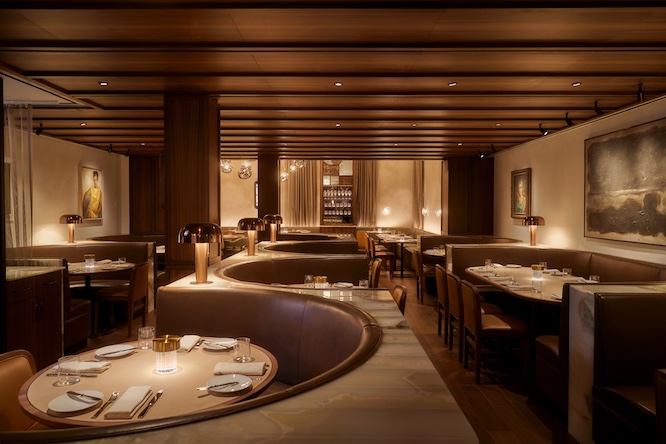
Wisconsin-born
White
also draws on his extensive experience in Emilia-Romagna, the
Amalfi coast and the South of France, which he
demonstrated as chef at Fiamma Osteria in the
West Village to great acclaim and afterwards at
the ground-breaking Italian seafood ristorante
Marea at Columbus Circle. After leaving that
enterprise he opened Morini on the upper east
side and took a swerve into French cuisine at
Vaucluse (both now closed).
Santi is, therefore, his
return to the high-end league of cucina
italiana, and designer Michaelis Boyd has
served him well with the daunting task of
decorating five interconnected dining areas,
including a horseshoe
bar
with yellow
onyx backsplash, an intimate “den” and atrium
with cloudy hand-painted walls, a spiral
staircase, roomy banquettes, sheer curtains,
handblown glass, wall portraits and an overall
posh provided by superb lighting. Though Santi’s
tables lack linens, the surface is finely
grained and quite beautiful, reflecting the
light. The sound level is as civilized as its
patrons.
 In
contrast to the pretensions of the defunct Del
Posto, Santi is devoted to true comfort and
attentive hospitality, although, as seems the
rule these days, the staff disappears from the
floor at nine o’clock. God forbid someone needs
the Heimlich Maneuver at 9:05.
In
contrast to the pretensions of the defunct Del
Posto, Santi is devoted to true comfort and
attentive hospitality, although, as seems the
rule these days, the staff disappears from the
floor at nine o’clock. God forbid someone needs
the Heimlich Maneuver at 9:05.
You first receive two excellent breads
along with butter and fine olive oil. The menu
has breadth and depth but is not so large as to
daunt guests who have difficulty deciding on a
meal. Given White’s reputation for crudi,
there is a section full of novel ideas like marinated sardines with ricotta
salata, orange,
pistachio and gremolata; amberjack
dressed in Ligurian olivada, finger lime
and crispy basil; and Long Island fluke in acqua
pazza with peaches, pickled Fresno chilies
and ricotta salata.
 Every
chef
in New York serves grilled octopus, but White
buoys its essential brininess with a sunchoke
romesco, salsa verde and hazelnuts for
crunch. Serving a seafood salad warm is always a
capital idea, here with calamari, scungilli,
Ligurian olives
Every
chef
in New York serves grilled octopus, but White
buoys its essential brininess with a sunchoke
romesco, salsa verde and hazelnuts for
crunch. Serving a seafood salad warm is always a
capital idea, here with calamari, scungilli,
Ligurian olives
tomato conserva and
shavings of mild bottarga. White’s
command of French technique shows in his terrine
of
pork, foie gras and
rabbit with
a fig mostarda, accompanied by
sourdough.
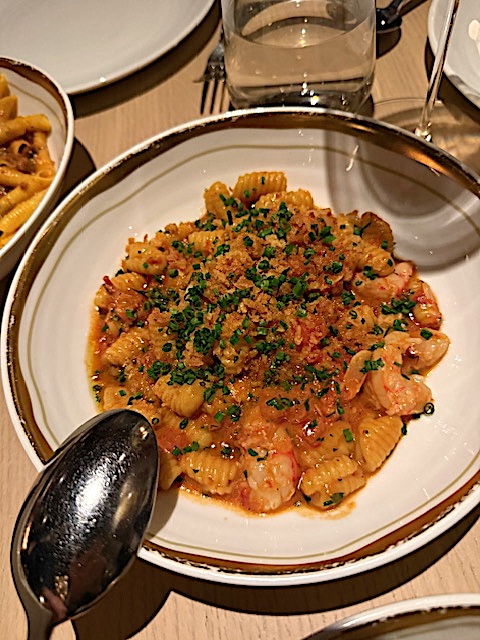
There
are nine housemade pastas––and except for tender
ricotta gnocchi with a simple salsa pomodoro
and basil, and garganelli in a perfect ragù
bolognese, none will you find elsewhere
in New York. Busiate
are twisted strands of pasta served with
autumn’s trumpet mushrooms, leeks and black
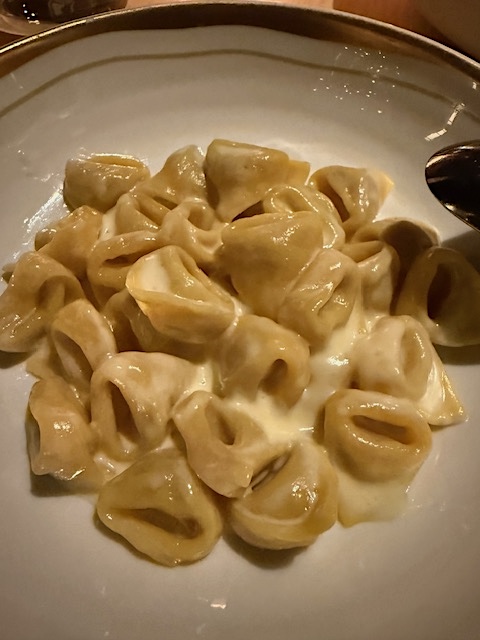
truffles, while fiocchetti pouches are
wonderfully rich and satisfying , stuffed with
robiola cheese, honeynut squash and crushed amaretti
cookies. Tagliatelle is tangled
with blue crab, bomba calabrese
condiment of sweet and hot peppers and bottarga.
 Like
every Italian chefs in New York, White knows
that many, if not most, diners do not order a
main course––hence the prices of the antipasti
and pastas––so there are only seven to choose
from, but all are clearly his special
renderings, like the lobster with asparagus,
chanterelles and lobster coral crocchettes.
Grilled black bass is treated to sweet heirloom
tomatoes, pickled mussels in a saffron broth,
while pan roasted monkfish––a species all too
rare on menus––comes with Manila clams
(Mediterranean vongole veraci would
have been better), turnip and a smoked ham
broth.
Like
every Italian chefs in New York, White knows
that many, if not most, diners do not order a
main course––hence the prices of the antipasti
and pastas––so there are only seven to choose
from, but all are clearly his special
renderings, like the lobster with asparagus,
chanterelles and lobster coral crocchettes.
Grilled black bass is treated to sweet heirloom
tomatoes, pickled mussels in a saffron broth,
while pan roasted monkfish––a species all too
rare on menus––comes with Manila clams
(Mediterranean vongole veraci would
have been better), turnip and a smoked ham
broth.
For
meats there is an impeccably cooked and juicy
roasted guinea hen (below, right) with
Nardello peppers, summer beans and stonefruit mostarda,
and for something simple but delicious, a
pan-roasted veal chop with Treviso radicchio and
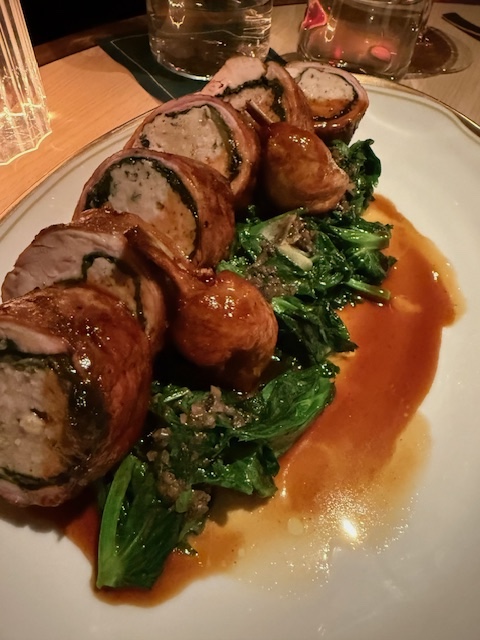
a lush pancetta cream. I most heartily
recommend the roasted rabbit saddle and confit
legs (for two people) that looks like a baked
cannoli but is a hefty rollatine of
succulent rabbit meat with cappellacci of
rabbit (above).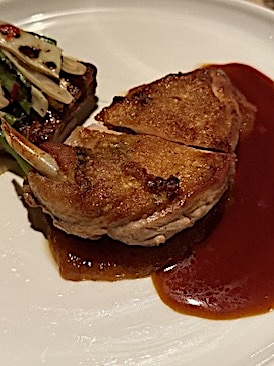
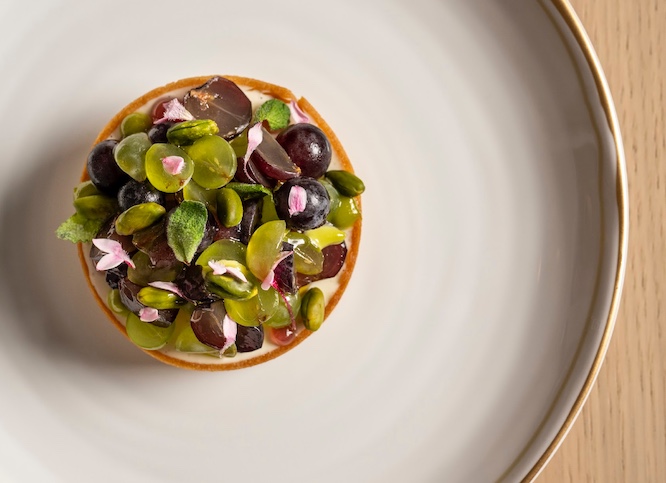
Apparently Santi’s guests do love dessert and
there are many to choose from, via pâtissier
Francis Joven, including
a delizia al limone with citrus
sponge,
limoncello and scent of basil; a baked meringue with black
Mission figs, Port and pine nuts; a
delightful dark chocolate soufflé buzzed with
Armagnac; and very fine gelato and sorbetto.
There is also a selection of Italian cheeses.
 The
wine list, developed by Hak Soo Kim and
Beverage Director Andreina Mayobre, is as
impressive (and expensive) as all else about
Santi, with more than twenty labels available by
the glass, though few are under $20. The
inclusion of many small producers’ wines is more
than welcome, like a surprisingly good white
wine from Umbria named Rigogoli that was
recommended.
The
wine list, developed by Hak Soo Kim and
Beverage Director Andreina Mayobre, is as
impressive (and expensive) as all else about
Santi, with more than twenty labels available by
the glass, though few are under $20. The
inclusion of many small producers’ wines is more
than welcome, like a surprisingly good white
wine from Umbria named Rigogoli that was
recommended.
As of seven o’clock Santi is pretty
packed on a weeknight, but come after 8:30 and
you should have no
So Santi adds to the
midtown collection of grand Italian restaurants
of elegance and gentility, and, while expensive,
one could order an antipasto, then a sumptuous
pasta with a glass of excellent wine and not
break $80, before tip, which is about what you’d
pay downtown at cramped, noisy trattorias like
Rezdôra, I Sodi and Carbone––none
of which have the beauty and style of Santi. Nor
do they have Michael White who is cooking better
than ever, if not like a saint, perhaps like an
angel.
Open
for lunch Mon.-Fri; for dinner Mon.-Sat.
HÔTEL ALLEMAGNE
By John Mariani
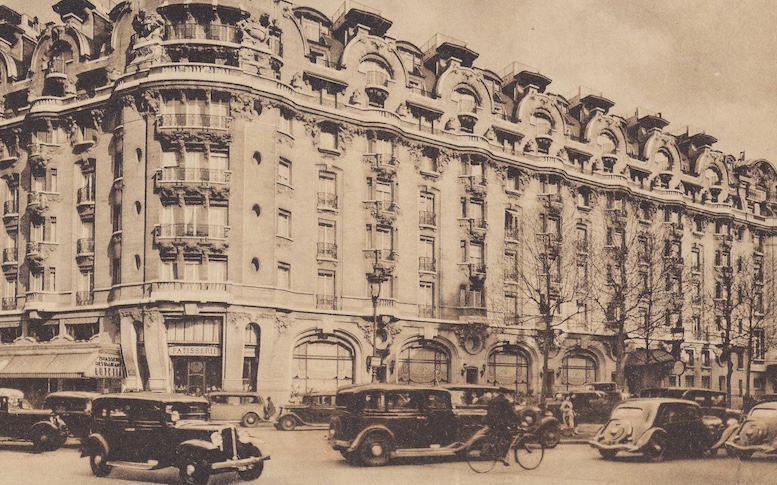
After a few moments of stunned
silence, Katie said, “Is it really possible
Louise Jourdan is Judith Baer?”
The hotel employees had no idea what
she was talking about, but Catherine explained
briefly that Judith Baer was a doctor at the
Pasteur Institute who had obtained samples of
the virus and studied it, linking it to a
Russian laboratory.
“You mean, this Dr. Baer is working
with the Russians?” asked the concierge.
The Americans didn’t want to say too
much to the hotel employees, so Catherine said
it just sounded like Louise Jourdan seemed to
look something like Dr. Baer, then,
thanking them profusely, showed them out.
“This seems incredible,” said Katie.
“Why would Baer have anything to do with
attacking the Victoire?”
“And pose under the name Louise
Jourdan?” asked Catherine.
David was thinking while the women
shared speculations, then said, “The fact that
the Victoire is not Saudi-owned or a
deluxe a hotel like the others makes me think
this attack had nothing to do with the
Russians or their stash of the virus. I think
that, for whatever reasons, Baer might
have used the virus from her own lab to attack
the hotel. I know it sounds crazy but it’s
putting two and two together.”
“Should we call Borel?” asked
Catherine.
“We should, but, Katie, I think we
should try to speak with Baer first, don’t
you?”
“You mean just out-and-out accuse her
of being Louise Jourdan and attacking a hotel
with a virus? It just doesn’t seem like
something an established scientist would do
within her own field.”
“Well, remember Gorgo Toth?” said
David, referring to a Hungarian pharmaceutical
magnate who had tried to poison David while he
and Katie were on an investigation two years
before.
“How could I forget!” said Katie. “But
what would Baer have to gain—or lose—from such
an act? If discovered, she’d be jailed and
ruin a lifelong reputation as a dedicated
scientist.”
“There’s only one way to find out, and
that’s by trying to go see her. Obviously,
she’s been contacted by the health officials
to be in on the case, as she was before. So,
if we can get to see her, we can begin by
asking her about this new attack and why the
virus seems to be weaker than the previous
one. She might very well want to make a show
to the press—us—that she’s on the case and
working to find out more about the virus. She
has no way of knowing what we’ve heard so far
about Louise Jourdan.”
Katie turned to Catherine and said,
“Catherine, I hope you don’t hate me if I ask
you not to come along with us to see Baer,
assuming we can see her. It’s just
that you haven’t seen her before and she might
be spooked.”
Catherine said, “I completely
understand, Katie, as long as you share what
you find as soon as you get out of the
interview, promise?”
Katie crossed her heart then
crossed David’s.
Katie dialed the direct
number Dr. Baer had given her and was relieved
when the physician picked up the phone.
Without mentioning the Louise Jourdan
connection, Katie asked if she and David could
interview her about the new virus. Thinking
that Baer could have easily given her the new
information over the phone, Katie was
surprised that Baer asked if they could come
right over.
Within fifteen minutes they were at the
Institut, and the lobby attendant said Dr.
Baer was expecting them and brought them
straight to her office. She was not wearing a
lab coat, dressed instead casually in black
slacks and a dark blue turtleneck sweater. She
was putting folders into an attaché case, and
Katie and David saw that her desk had been
cleared of all papers.
With her usual coolness, Baer said,
“Please sit down. As you can see I am leaving
soon.”
“On holiday?” asked Katie.
“No, I am moving to Israel and
semi-retiring to do some work for the Public
Health Ministry in Tel Aviv.”
Katie showed no other reaction than to
say, “Well, I suppose I should congratulate
you, Doctor.”
“Thank you, but you came to hear about
the new virus?”
“Yes, is there anything you can tell
us?”
“It appears to be a milder form than
the first Russian samples. It is only about as
dangerous as the seasonal flu, as far as I can
tell. No one has died from the first
incidents, so I don’t expect any to do so this
time.”
“So,” asked David, “ is it likely this
new one also
came from the Russians?”
“That I could not tell you without
further study. I’m sure my colleagues here at
the Institute will find out soon enough. And
that is really all I can tell you.”
Katie and David sensed that what Baer
had just told them could have been relayed in
under a minute on the phone. Why would Baer
want them to come to the Institut to receive
such basic information? Katie
began to think that there was more Baer wanted
her to know and that she and David only had to
pry a little further.
“Well, I don’t want to keep you,
Doctor, but can you think of any reason an
individual—if it was not the
Russians—would plant such a virus in a
non-Saudi hotel?”
Judith Baer raised her chin and closed
her eyes for a moment, looking somehow
relieved of a burden, but she said nothing.
David leaned in and asked, “Dr. Baer,
are you familiar with the name Louise
Jourdan?”
The woman put her fingers together and
said, “Yes, people of my age know who Louise
Jourdan is. She was a hero of the French
Resistance.”
Baer took a handkerchief from her bag
and kept it in her closed hands.
“I knew her quite well,” she said. “We
grew up together in the 1930s. We lived in the
same Jewish neighborhood. Later, quite late in
the war, she was taken away by the Nazis and
sent to a concentration camp, and I lost track
of her. But before that, she had a very
difficult, very complicated life.”
“Can you tell us more about her life?”
asked Katie.
Twisting the handkerchief in her
fingers, Judith Baer began to tell the story
of Louise Jourdan.
© John Mariani, 2024
❖❖❖
ITS SIGNATURE WINE IPSUS
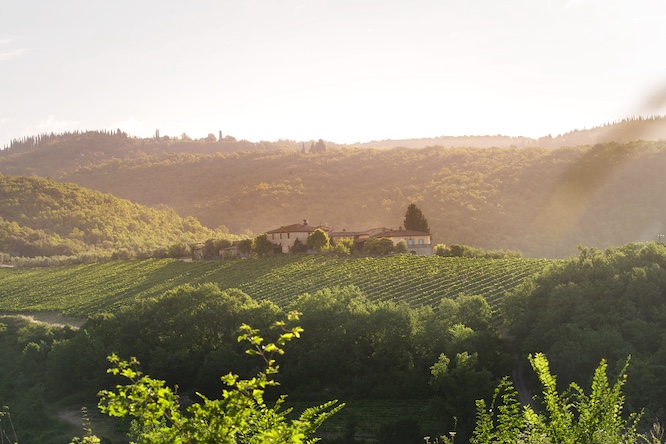
Castello
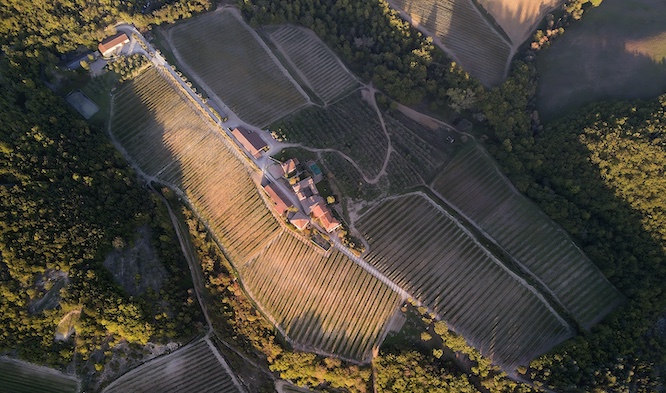
Fonterutoli is both one of the
oldest Tuscan wineries in the Chianti region and
also one of the most modern, whose current
three-level winery uses gravity to press down the
grapes that drop 15 meters into the vast
cellar of more than 3000 oak
barrels where the temperature and
the right degree of humidity is
guaranteed by five completely natural water
streams flowing through the naked rock walls.
The estate covers 650
hectares, with 110 saved for special
vineyards organized into seven zones ranging
and divided into 114 single parcels. Their
latest project is IPSUS, which I discussed
while owner Giovanni Mazzei over dinner in New
York last month.
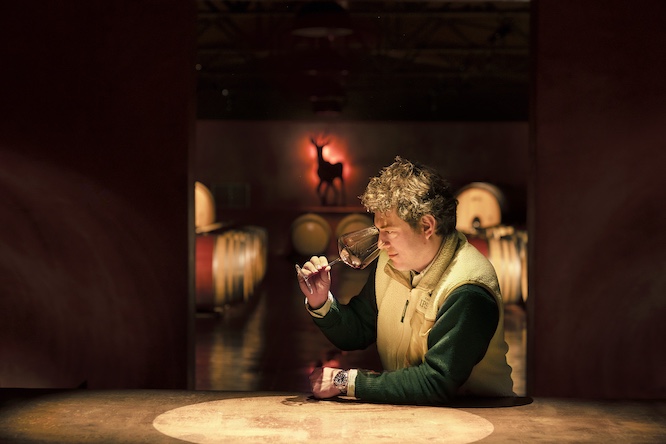
Briefly describe the evolution of your family in
Chianti. Were they producing Chianti before
Ricasoli came up with a formula?
My family has been rooted in
Chianti for generations - over 25 to be precise. We
have always cultivated vines here, long before the
region became formally recognized. When Baron
Ricasoli established his famous formula, it helped
define the identity of Chianti, but for us, it was
more of a natural evolution of what we were already
doing rather than a revolution.
How does IPSUS differ from your other wines? What
is the price in the US?
IPSUS represents our most intimate expression of
Sangiovese. It’s a single-vineyard wine, entirely
organic, and made with a very artisanal approach. We
wanted to capture the soul of our terroir in a
purer, more elegant form. It’s produced in small
quantities, and in the US it retails around $350 a
bottle, depending on the vintage.
Most Chiantis no longer use the lesser varietals
that were once sanctioned by the DOC, like
canaiolo, Malvasia, trebbiano and coloring in
favor of using 100% Sangiovese. Why eliminate
these other grapes?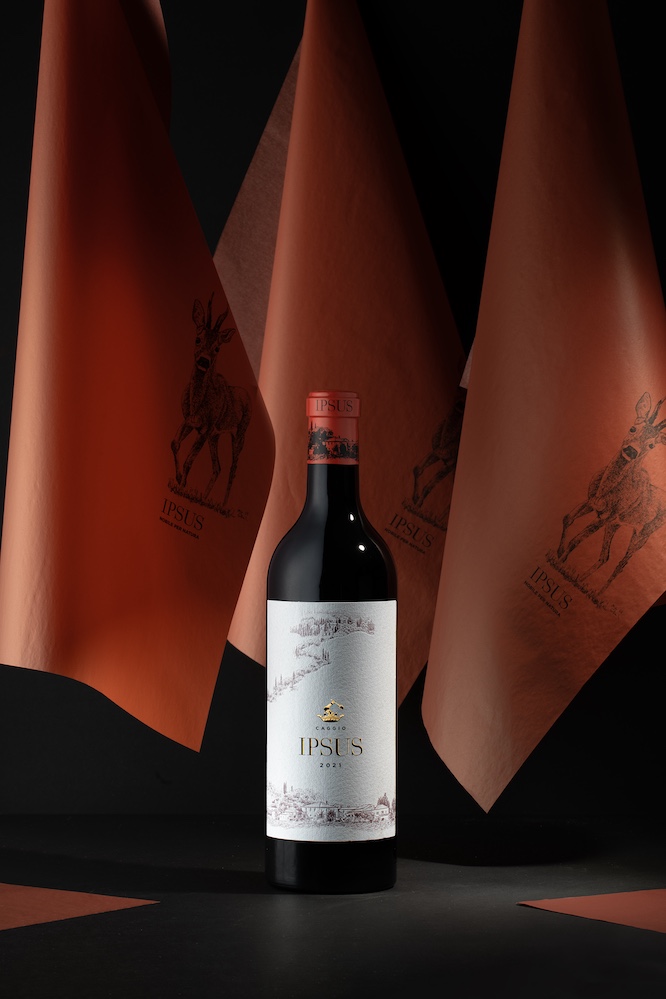
Sangiovese has an extraordinary capacity to
express terroir with its purity, its energy, its
transparency. Over time, many producers, including
us, felt that blending it diluted its character.
That said, I have great respect for those
traditional blends; they belong to our history. But
today, our focus is on showing what Sangiovese can
do on its own, when grown and vinified with care. “I
like to call our Sangiovese a wine with no filter.”
Have Tuscan wineries tried to play down the
unofficial marketing term “Super Tuscan?”
As
long as there remains an appetite and demand for
‘Super Tuscans’ in the market, and as long as they
are recognized for their iconic qualities, they will
continue to be referred to as such. The name “Super
Tuscan” was never chosen by the producers
themselves, but by the consumer.
Less wine is being
consumed globally than a generation ago, including
in Italy. Has Chianti noticed a decline in
consumption?
Yes, there’s been a shift.
People drink less, but better. Quantity has gone
down; quality and awareness have gone up. For
Chianti Classico, that’s actually positive: it means
more appreciation for authenticity, more
appreciation towards wines that can better reflect
our viticulture
Is 14.5% alcohol becoming the norm for Tuscan
wines? If so, why?
It’s true that alcohol levels have risen
slightly in recent years. Warmer vintages and later
ripening play a part in that. But IPSUS has never
reached 14.5%, so it’s absolutely possible to make
wines with lower alcohol while keeping full
expression and depth in these climate conditions.
Having said that, for me, balance is what really
matters. A well-made wine can have 14.5% and still
feel elegant and fresh. The ultimate goal is always
harmony, not numbers. That said, I sometimes think
humans are more resilient to climate change than our
vineyards, so we need to adapt carefully and
respectfully.
Because of global warming will Tuscan wines have
different intensity years from now?
Absolutely. Climate change is already
influencing our work. Slightly earlier harvests,
more extreme weather, different ripening patterns.
But we’re adapting: with improving our vineyard
management, canopy management, careful selection of
clones. I believe Tuscan wines will maintain their
identity, but perhaps with a slightly different
rhythm of intensity in the future. As a matter of
fact, in the region, irrigation is not allowed,
apart from in an emergency. Our family, across all
our vineyards in Chianti Classico, does not irrigate
our vineyards
Do the producers of
Tuscan wines now believe that “Super Tuscan” is a
term they continue to promote?
Answer on the way
Where are your
major exports?
Our
main markets are the United States, the UK, Germany,
Switzerland, and a growing presence in Asia, especially
Japan and South Korea. The US remains our most
important and loyal market.
How will the Trump taxes affect you?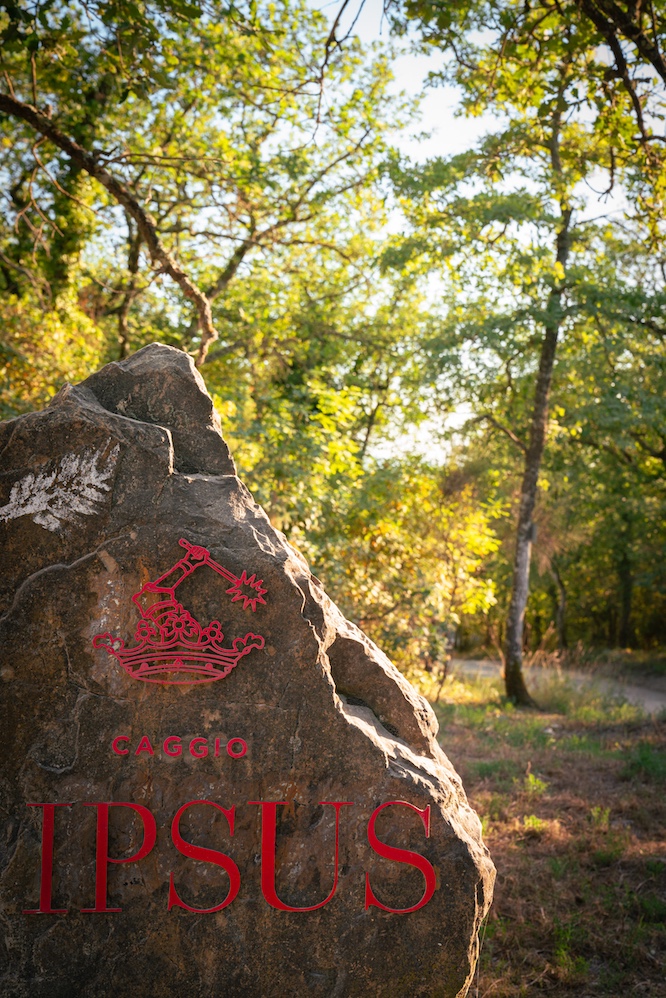
They were certainly a concern when introduced,
as they affected the entire Italian wine sector.
Fortunately, many of those tariffs were suspended
before causing major long-term damage. Still, they
reminded us how fragile international trade can be,
and how important strong relationships with our
importers and clients are. I think we all need to
think more sustainably and look at how to perform
better in the domestic market.
You travel most
weeks out of the month. How much time do you spend
at the estate making and overseeing the wines? Are
others in your family involved?
I try to spend as much time as
possible at the estate; it's where I feel most
grounded. Even when I travel, I stay closely
connected to the team and the vineyards. My family
is deeply involved too; it’s a shared passion and
responsibility. The estate is not just a place of
work, it’s our heritage, our home, our life.
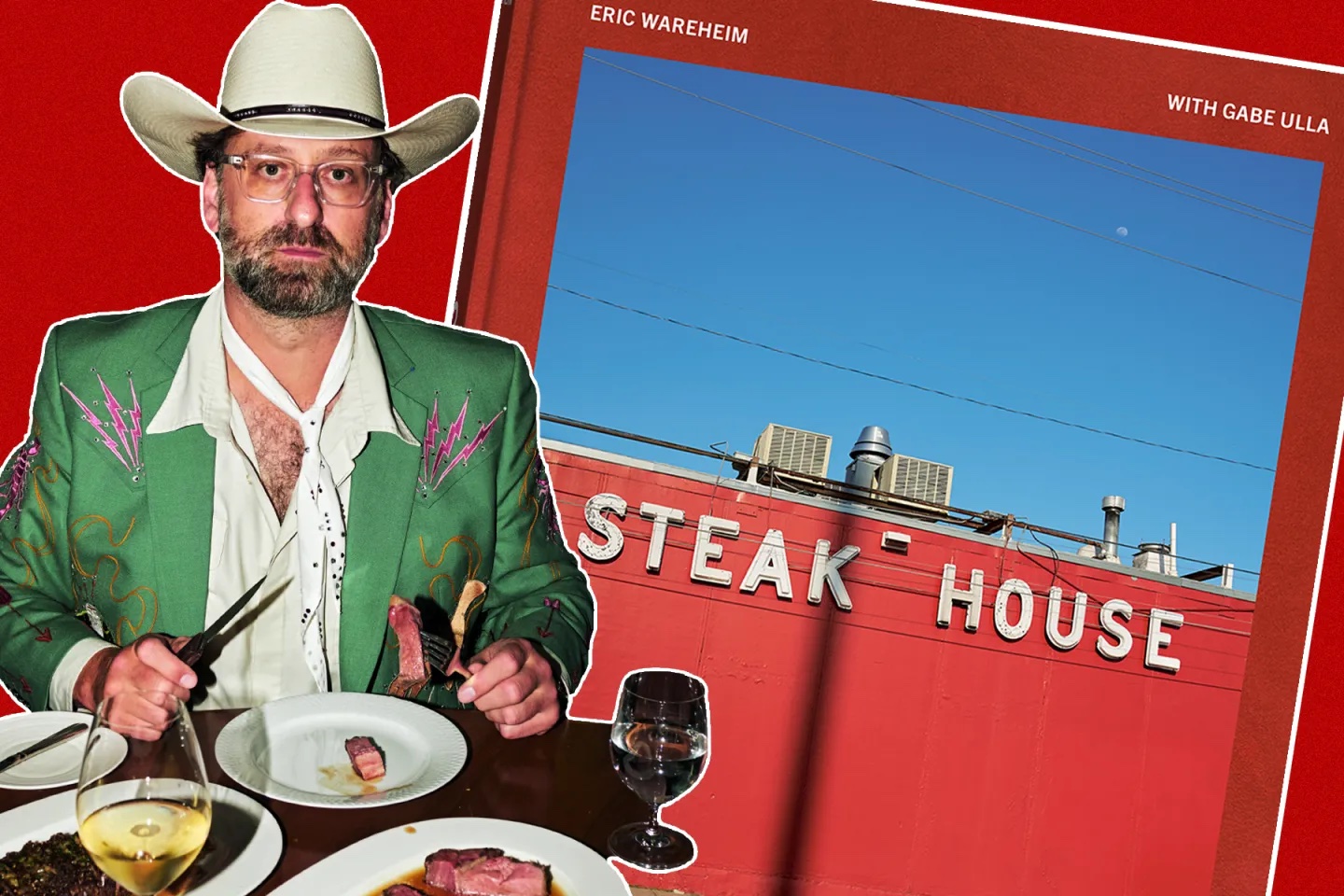
AS JEAN-PAUL SARTRE ONCE
SAID, "WHO CARES?"
"Eric
Wareheim Gets Existential About the Steakhouse. He
went to 65 steakhouses, got ribeye, wedge salad, and
martinis to write his new book ‘Steak House.’”––Eater.com
(10/16)
❖❖❖
Any of John Mariani's books below may be ordered from amazon.com.
 The Hound in Heaven
(21st Century Lion Books) is a novella, and
for anyone who loves dogs, Christmas, romance,
inspiration, even the supernatural, I hope you'll find
this to be a treasured favorite. The story
concerns how, after a New England teacher, his wife and
their two daughters adopt a stray puppy found in their
barn in northern Maine, their lives seem full of promise.
But when tragedy strikes, their wonderful dog Lazarus and
the spirit of Christmas are the only things that may bring
his master back from the edge of despair.
The Hound in Heaven
(21st Century Lion Books) is a novella, and
for anyone who loves dogs, Christmas, romance,
inspiration, even the supernatural, I hope you'll find
this to be a treasured favorite. The story
concerns how, after a New England teacher, his wife and
their two daughters adopt a stray puppy found in their
barn in northern Maine, their lives seem full of promise.
But when tragedy strikes, their wonderful dog Lazarus and
the spirit of Christmas are the only things that may bring
his master back from the edge of despair. WATCH THE VIDEO!
“What a huge surprise turn this story took! I was completely stunned! I truly enjoyed this book and its message.” – Actress Ali MacGraw
“He had me at Page One. The amount of heart, human insight, soul searching, and deft literary strength that John Mariani pours into this airtight novella is vertigo-inducing. Perhaps ‘wow’ would be the best comment.” – James Dalessandro, author of Bohemian Heart and 1906.
“John Mariani’s Hound in Heaven starts with a well-painted portrayal of an American family, along with the requisite dog. A surprise event flips the action of the novel and captures us for a voyage leading to a hopeful and heart-warming message. A page turning, one sitting read, it’s the perfect antidote for the winter and promotion of holiday celebration.” – Ann Pearlman, author of The Christmas Cookie Club and A Gift for my Sister.
“John Mariani’s concise, achingly beautiful novella pulls a literary rabbit out of a hat – a mash-up of the cosmic and the intimate, the tragic and the heart-warming – a Christmas tale for all ages, and all faiths. Read it to your children, read it to yourself… but read it. Early and often. Highly recommended.” – Jay Bonansinga, New York Times bestselling author of Pinkerton’s War, The Sinking of The Eastland, and The Walking Dead: The Road To Woodbury.
“Amazing things happen when you open your heart to an animal. The Hound in Heaven delivers a powerful story of healing that is forged in the spiritual relationship between a man and his best friend. The book brings a message of hope that can enrich our images of family, love, and loss.” – Dr. Barbara Royal, author of The Royal Treatment.
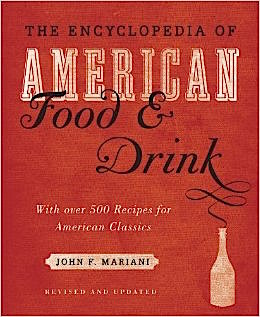 |
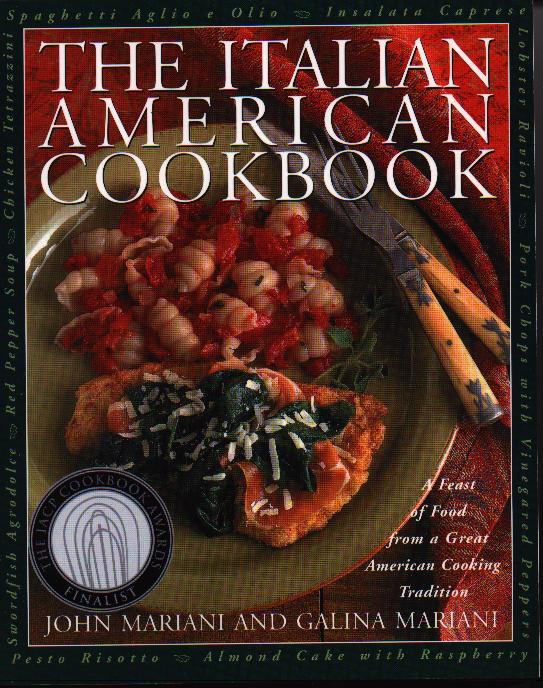
The Encyclopedia of American Food and Drink by John F. Mariani (Bloomsbury USA, $35) Modesty forbids me to praise my own new book, but let me proudly say that it is an extensive revision of the 4th edition that appeared more than a decade ago, before locavores, molecular cuisine, modernist cuisine, the Food Network and so much more, now included. Word origins have been completely updated, as have per capita consumption and production stats. Most important, for the first time since publication in the 1980s, the book includes more than 100 biographies of Americans who have changed the way we cook, eat and drink -- from Fannie Farmer and Julia Child to Robert Mondavi and Thomas Keller. "This book is amazing! It has entries for everything from `abalone' to `zwieback,' plus more than 500 recipes for classic American dishes and drinks."--Devra First, The Boston Globe. "Much needed in any kitchen library."--Bon Appetit. |
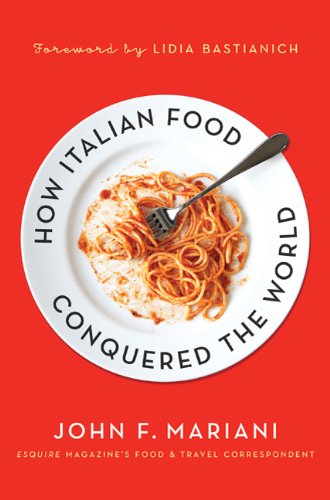
"Eating Italian will never be the same after reading John Mariani's entertaining and savory gastronomical history of the cuisine of Italy and how it won over appetites worldwide. . . . This book is such a tasteful narrative that it will literally make you hungry for Italian food and arouse your appetite for gastronomical history."--Don Oldenburg, USA Today. "Italian
restaurants--some good, some glitzy--far
outnumber their French rivals. Many of
these establishments are zestfully described
in How Italian Food Conquered the World, an
entertaining and fact-filled chronicle by
food-and-wine correspondent John F.
Mariani."--Aram Bakshian Jr., Wall Street
Journal.
"Equal parts
history, sociology, gastronomy, and just
plain fun, How Italian Food Conquered the
World tells the captivating and delicious
story of the (let's face it) everybody's
favorite cuisine with clarity, verve and
more than one surprise."--Colman Andrews,
editorial director of The Daily
Meal.com. "A fantastic and fascinating
read, covering everything from the influence
of Venice's spice trade to the impact of
Italian immigrants in America and the
evolution of alta cucina. This book will
serve as a terrific resource to anyone
interested in the real story of Italian
food."--Mary Ann Esposito, host of PBS-TV's
Ciao
Italia. "John Mariani has written the
definitive history of how Italians won their
way into our hearts, minds, and
stomachs. It's a story of pleasure over
pomp and taste over technique."--Danny Meyer,
owner of NYC restaurants Union Square
Cafe, The Modern, and Maialino.
|
 |
 |
 |
 |
 |
 |
MARIANI'S VIRTUAL GOURMET
NEWSLETTER is published weekly. Publisher: John Mariani. Editor: Walter Bagley. Contributing Writers: Christopher
Mariani, Misha Mariani, John A. Curtas, Gerry Dawes, Geoff Kalish.
Contributing
Photographer: Galina Dargery. Technical
Advisor: Gerry
McLoughlin.
If you wish to subscribe to this
newsletter, please click here: http://www.johnmariani.com/subscribe/index.html
© copyright John Mariani 2025