MARIANI’S
Virtual Gourmet
FEBRUARY 15, 2026
NEWSLETTER
Founded in 1996
ARCHIVE
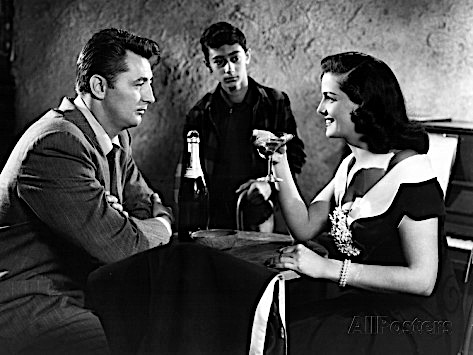
Robert Mitchum and Jane Russell in "His Kind of Woman" (1951)
REMEMBERING JOSEPH SCOGNAMILLO
OF PATSY'S
By John Mariani
NEW YORK CORNER
LESLIE NYC
By John Mariani
THE BISON
CHAPTER TEN
By John Mariani
NOTES FROM THE WINE CELLAR
AUSTRALIAN SHIRAZ
By Geoff Kalish
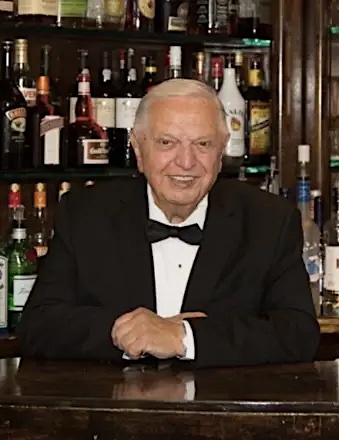
REMEMBERING JOSEPH SCOGNAMILLO
OF PATSY'S
By John Mariani
|
Joseph with his son Sal,
wife Rosie and niece Phylicia |
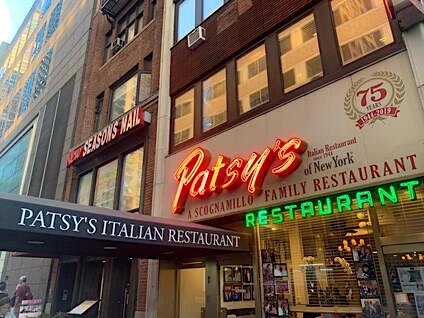 For three
quarters of a century his son
Joseph, born in 1932, worked at the
restaurant, following his father as
chef and maintaining Patsy’s
rigorously Neapolitan roots. As the
torch passed, he became master of
every detail and job, from host,
manager, electrician, plumber and
kibitzer. Along the way Patsy’s
became a magnet for celebrities from
all the arts, including, early on,
Rosemary Clooney, Tony Bennett and
Frank Sinatra, for whom Patsy’s was
his favorite restaurant.
For three
quarters of a century his son
Joseph, born in 1932, worked at the
restaurant, following his father as
chef and maintaining Patsy’s
rigorously Neapolitan roots. As the
torch passed, he became master of
every detail and job, from host,
manager, electrician, plumber and
kibitzer. Along the way Patsy’s
became a magnet for celebrities from
all the arts, including, early on,
Rosemary Clooney, Tony Bennett and
Frank Sinatra, for whom Patsy’s was
his favorite restaurant.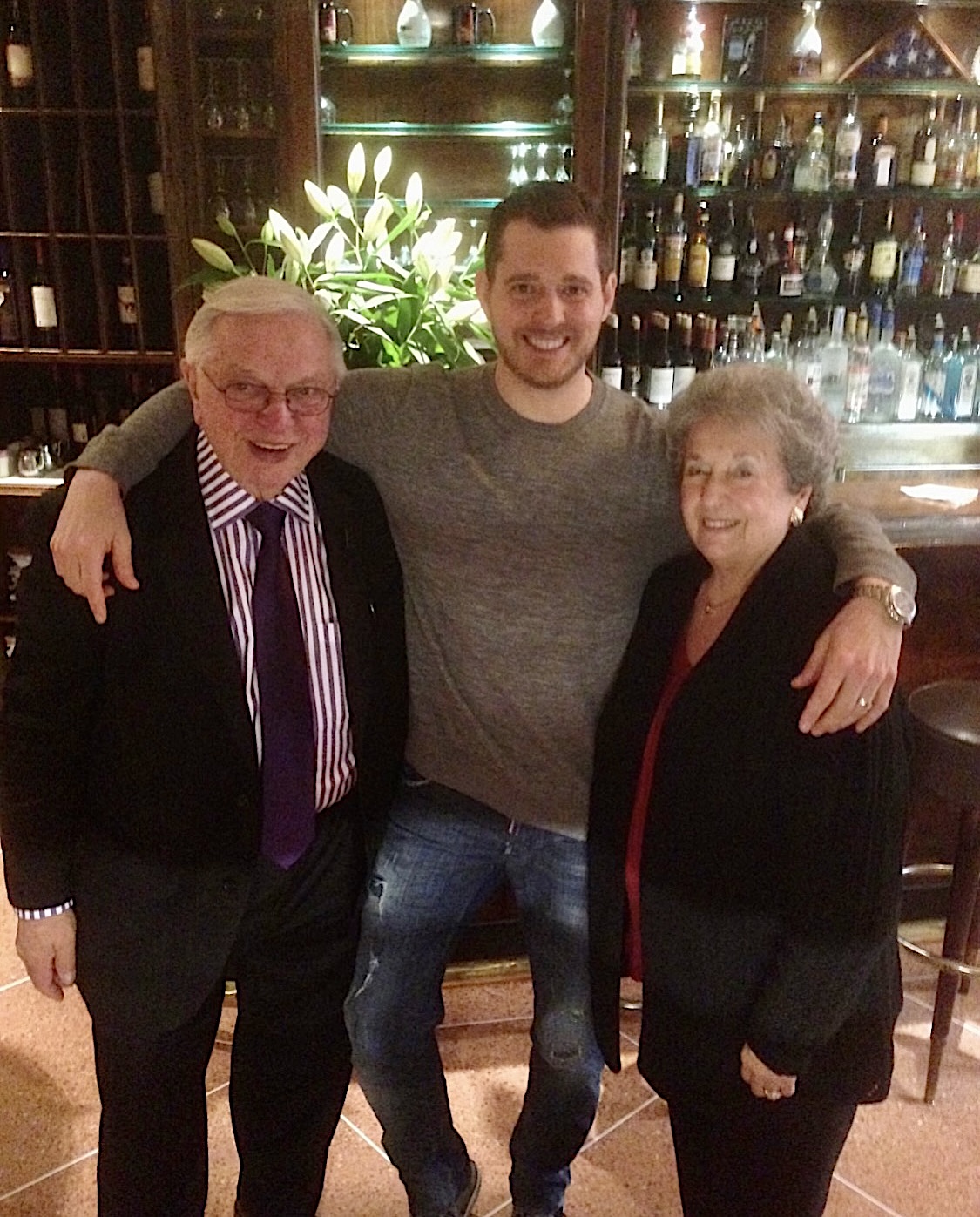
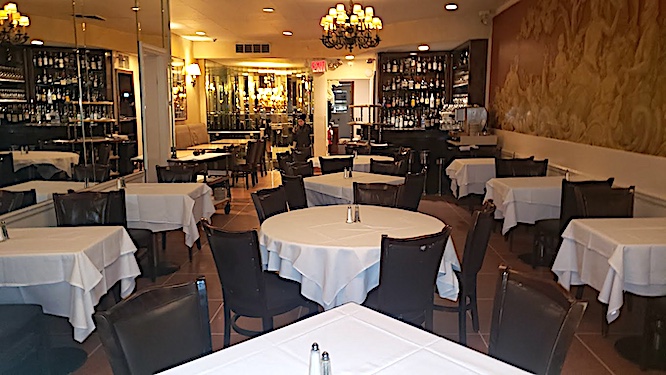 Through
all those years, you would walk
through the door, under the neon
name lights, and be greeted by
Joseph and his wife of 64 years,
Rosie, taking your coat.
Through
all those years, you would walk
through the door, under the neon
name lights, and be greeted by
Joseph and his wife of 64 years,
Rosie, taking your coat. 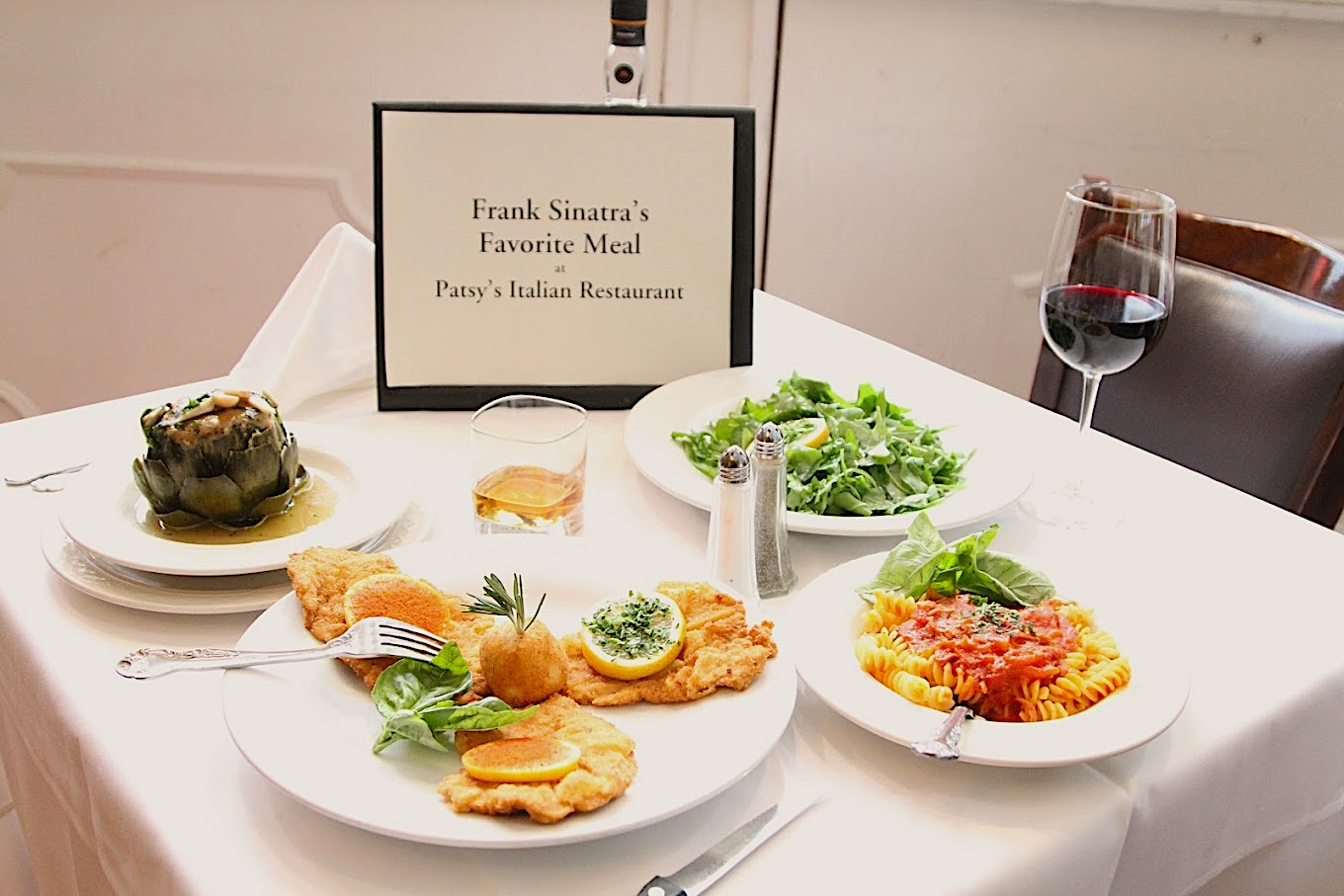 asked
where Sinatra sat and what his
favorite dishes were––very crisp
arugula salad and thin pounded veal
milanese.
asked
where Sinatra sat and what his
favorite dishes were––very crisp
arugula salad and thin pounded veal
milanese.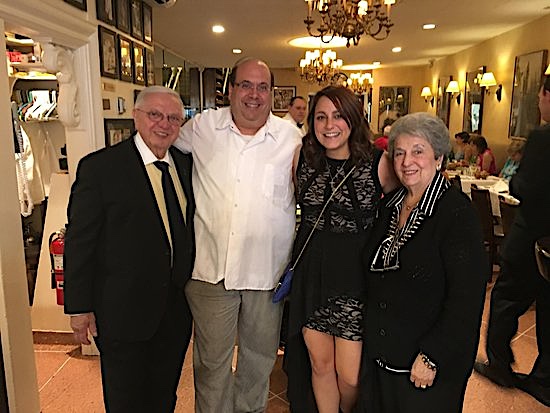 Like
those of his ilk––Italian
restaurateurs who were immigrants or
the sons and daughters of
immigrants––hard work was both a
given and a pleasure and to deliver
and maintain the high level of
cuisine and hospitality with what
Italians called sprezzatura,
the art of concealed art. As sad as
Joseph’s passing is, his legacy is
in the safest and most loving family
hands.
Like
those of his ilk––Italian
restaurateurs who were immigrants or
the sons and daughters of
immigrants––hard work was both a
given and a pleasure and to deliver
and maintain the high level of
cuisine and hospitality with what
Italians called sprezzatura,
the art of concealed art. As sad as
Joseph’s passing is, his legacy is
in the safest and most loving family
hands.
NEW YORK CORNER
LESLIE NYC
636-360-3756
By John Mariani
Murray Hill, which stretches from East 27th Street north to 40th Street, is a quiet neighborhood of landmarked row houses, a few churches, the East River on one side and Fifth Avenue on the other. Dozens of global embassies within sight of the UN building nestle within that space, with the avenues chockablock with pubs, take-out eateries but few singular restaurants. (It does overlap what is nicknamed called Curry Hill, teeming with Indian
 restaurants.)
 Leslie NYC adds measurably to the mix as a pretty, personalized family place owned by Leslie Ames and her chef husband Sebastian Fernandez, who started out opening a Peruvian restaurant in Miami named 33 Kitchen.
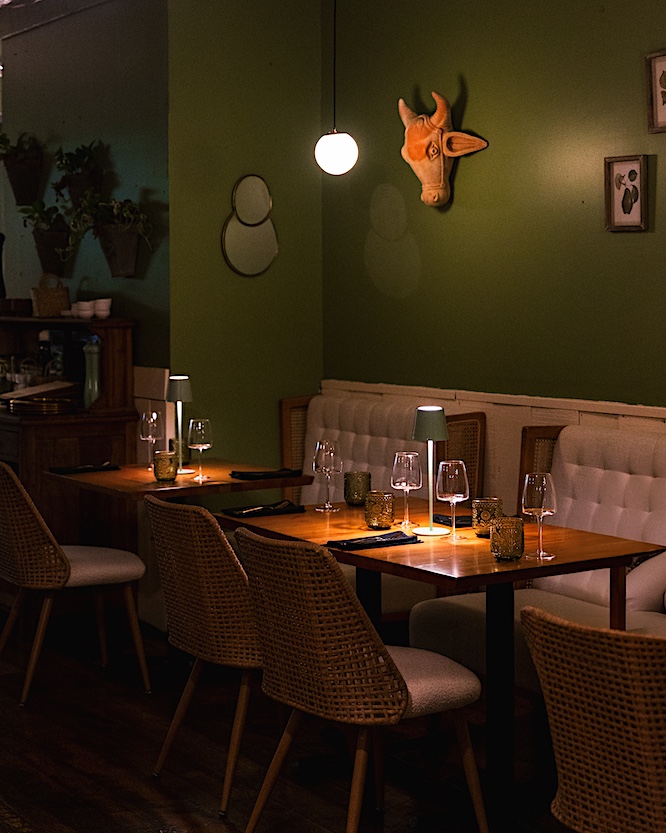
The warm look of brick walls never goes out of style, and there are rack of wine and flower prints arrayed against it. The opposite walls is a gray-green with ceramic folk art. There is space between the wood-topped tables and lamps that throw a pleasant glow, and rattan bistros chairs are as comfortable as ever.
The menu is more or less modern American with some imports, and a fine way to begin is with the refreshing, prettily decorated tuna tartare, preserved lemon, capers, chives and shallots to stimulate the appetite.
 There is a
daily soup suited to the season and nothing could
have been more welcome this month than a hearty,
thick butternut squash potage with crusty baguette
, which also comes with the steamed
mussels with plenty of, Provençal shallots, garlic
and fennel.
There is a
daily soup suited to the season and nothing could
have been more welcome this month than a hearty,
thick butternut squash potage with crusty baguette
, which also comes with the steamed
mussels with plenty of, Provençal shallots, garlic
and fennel.I applaud their serving sea scallops in their original pretty shells, au gratin, but they were overcooked and chewy that night.
Everybody these days loves smash burgers as an antidote to the
 current fad
for overstuffed monsters. Fernandez gives you a double
patty of good well-ground beef, carefully
griddled, with American
Cheese, pickles and big fat baked
potato fries.
current fad
for overstuffed monsters. Fernandez gives you a double
patty of good well-ground beef, carefully
griddled, with American
Cheese, pickles and big fat baked
potato fries.Cacio e pepe, too, is now on every menu Italian or not––so I see little reason for yet another example to show up on every menu in town, and Leslie’s is only a fair example.
 It’s easy
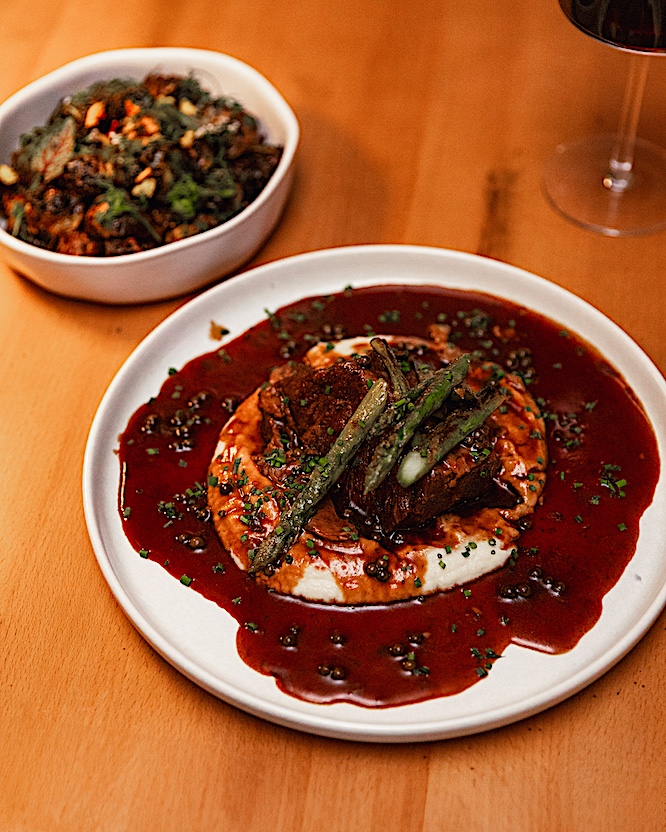
enough to share the tender, meaty long-braised
short ribs with a green
peppercorn sauce and celery root puree, and a
hefty branzino takes on additional interest from ajo
blanco, kale and white Tuscan beans in olive
oil.
It’s easy
enough to share the tender, meaty long-braised
short ribs with a green
peppercorn sauce and celery root puree, and a
hefty branzino takes on additional interest from ajo
blanco, kale and white Tuscan beans in olive
oil. By all means have the desserts here, which include an apple tart with
 ice
cream and a fine crème brûleé.
ice
cream and a fine crème brûleé.One of the nicest things about Leslie NYC is its wine list, short but the majority of bottles are under $100, now a rare thing in Manhattan these days.
You can eat well enough in Murray Hill if you’re up for some Indian food, ramen or bagels, but if you seek to dine at a higher level with the owners taking good care if you, the Leslie NYC is a welcome addition.

Leslie NYC is open for lunch on Sat., and dinner nightly.
❖❖❖
THE
BISON

CHAPTER
ELEVEN
That night around eight David called Katie.
“I read about the New York magazine sale,” he said. “Where do you go with the story from here?”
“According to Alan, nowhere. The story’s over as far as he’s concerned.”
“But you said you were going to be doing kind of a post-mortem, get back to those guys you interviewed and see what their response is.”
“Apparently there’s not enough sizzle in that,” said Katie.
“Well, I read that most of those guys you interviewed were acting like a consortium. They never mentioned that to you?”
“Nope, not one.”

“Well, Jeez, that sounds like a story to me. Billionaires who don’t like one another conspiring to buy a magazine they’ll each own a piece of? How’s that gonna work? They can’t all act as publisher and editor.”
“That bothers me too, David. Forming a consortium is nothing out of the ordinary but keeping it so secret seems a little mysterious to me. Plus the fact that all those guys, and a whole lot more powerbrokers, seem to frequent Epstein’s mansion and his island and the place he calls ‘Zorroland’ (left). It sounds a lot like a real nest of vipers.”
“It sounds to me like all those people in the 1970s from all those industries who were dying to attend one of Hugh Hefner’s parties in Chicago and L.A., with the sleazy underground grotto and wall-to-wall bunnies.”
“True, but that’s not the story Alan assigned.”
“So, maybe you have another story, with the New York sale just as an opening into a world most people don’t even dream of.”
“That’s going to take a lot of convincing to get Alan to stretch the assignment.”
“Okay, what if I do some snooping around on my own. See what I can find out about what goes on in those parties.”
“Well, if they do turn out to be sex parties, that’s more of a story for, well, New York Magazine.”
There was a pause between the two.
“Are you thinking what I’m thinking, Katie?”
“I have a feeling I do.”
“These guys, this coterie becomes a consortium to buy a magazine that might actually blow the lid off their devil’s playgrounds. Most other magazines wouldn’t have the resources or reason to do such a story.”
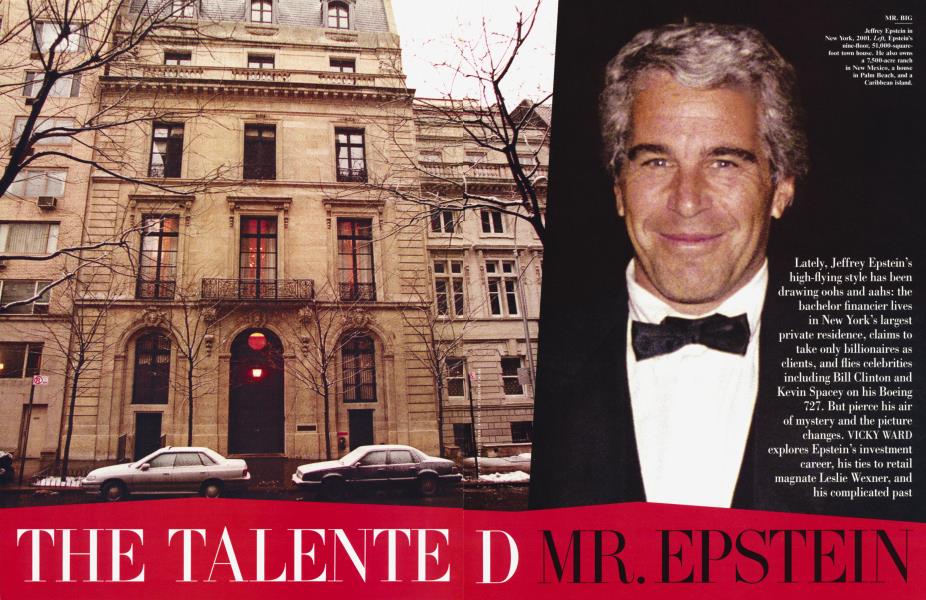
“Vanity Fair already did a story on Epstein" (right).
“Yeah, but you said it didn’t really get beyond the suspicion of foul play, right? And Epstein told you he’d only grant you an interview if you stayed clear of his police problems in Palm Beach, right? So, if he got hold of New York he wouldn’t have to worry about things that look like they’re going to blow over. And in the process all his nasty pals would be protected too.”
“Well, I can hardly turn down your offer to do some digging. When you have something, then I can bring it up with Alan.”
“This wouldn’t be the first time you and I worked together on our instincts, although I’ve got to admit that it took a long time for me to see any crime being committed during the Vermeer story.”
Katie laughed. “Yeah, all it took was an attempt to murder us while we were asleep in our rooms. That kind of put things into perspective for you?”
“It certainly helped,” said David.
David was even better than his word. That day he made a few phone calls to police detectives he’d worked with both in New York and Florida. Some had moved down there to work, others retired there and some did security work.
He also booked a flight to Palm Beach, for although he knew Katie couldn’t just tear herself away from her desk at McCLure’s, he thought his cop friends might speak a bit more freely if a reporter without an assignment wasn’t around. Two days later he was on a flight that got in in around 11 AM. He’d already make plans to meet one of his friends at the airport.
Terry Rush was at the end of the escalator, wearing a too-tight sleeveless Aloha shirt, tan cargo pants and a New York Yankees baseball cap. He had left the NYPD five years ago and got a job with the local police at a detective grade.
 “Are
you retired, in disguise or plainclothes?”
asked David.
“Are
you retired, in disguise or plainclothes?”
asked David.
“Just my day off outfit. Though this is pretty much what we wear for plainclothes, too, down here. How the hell you been?”
The two old friends indulged in the usual small talk, asking about this or that guy they both knew, saying how sad it was someone’s wife had passed away, the usual thing.
“You got here just in time for lunch,” said Rush. “You want to try some Cuban food?
“Fine with me.”
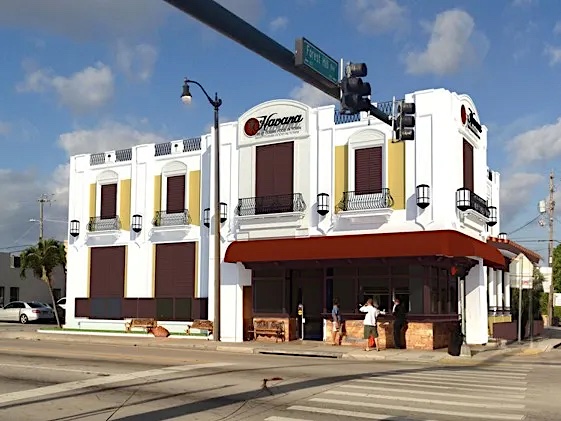
They drove to West Palm Beach to a luncheonette called Havana Restaurant with a green awning out front. They sat down and Rush said, “Okay if I order for us? Start with mojito maybe?”
“I’m not going to say no on a sunny day like this.”
“Always like this. Frankly it can get a little boring and in summer it’s a goddamn steam bath.”
The mojitos came and the friends clinked glasses.
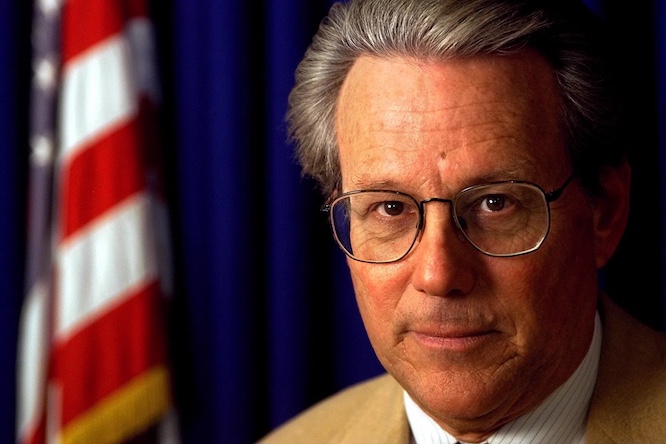
“Here’s to the Mighty Seventh!” said Rush, toasting their old precinct in lower Manhattan. “So you want to talk about this shit going down with Jeffery Epstein? It’s been causing a lot of headaches, and the man knows a lotta people down here. You remember Mike Reiter (right), the city’s police chief? Good guy, goes by the book,
 but
he’s been howling that his investigation has
been dragging because of the County state
prosecutor, a guy named Barry Krischer, who had
a reputation for going easy of sex offenders.
The Palm Beach police presented Krischer with
accusations against Epstein by dozens of girls;
but
he’s been howling that his investigation has
been dragging because of the County state
prosecutor, a guy named Barry Krischer, who had
a reputation for going easy of sex offenders.
The Palm Beach police presented Krischer with
accusations against Epstein by dozens of girls;
 Krischer (below)
indicted him for just one. He never even spoke
to any of
the victims. Once Epstein’s famous defense
attorneys came to town, prosecutors stopped
talking with our office.
Krischer (below)
indicted him for just one. He never even spoke
to any of
the victims. Once Epstein’s famous defense
attorneys came to town, prosecutors stopped
talking with our office.“So the grand jury indicted Epstein on only one charge – felony solicitation of prostitution––even though we found multiple incidents of sexual abuse of about two dozen young women and underage girls. We asked the FBI and federal prosecutors to intervene. Those prosecutors then arranged the infamous ‘deal of the century’ with Epstein’s attorneys, dropping a 60-count federal indictment in exchange for his guilty plea to two prostitution-related felonies in state court. He got eighteen months. None of his victims was notified about the deal. You remember Frank English at the bureau, David?”
“I do indeed,” said David, taking a long sip of the very cold drink. “He and I have had some bad blood since I retired, but he’s actually been pretty helpful with the last two cases Katie and I were investigating. He’s probably not going to want to hear from me.”
“Yeah, well, he’ll talk to me. What do you want to know?”
David explained to Rush their vague theory that all those New York power brokers were both acquaintances of Epstein and frequented his Manhattan mansion, and all of them formed a consortium to buy New York Magazine.
“So Katie and I thought that was a little too cozy for these guys who really don’t like each other much, but they all seem to cater to Epstein and he seems to cater to them.”
“You mean with the girls and the massages?” asked Rush.
David nodded. “Well, whatever it is the Palm Beach police want him for, that’s going to rub off on them in New York.”
“Not to mention Epstein’s ranch and his island retreat. Plus the fact that nobody knows for sure where all Epstein’s money comes from. Obviously he has a lot stashed off shore. So you think he’s like the world’s biggest whoremaster and these guys are worried shitless it will make them look bad?”
“Which will affect their business with the banks and the Feds. By the way, who’s Epstein’s bank down here?”
“Mostly Deutsche Bank and JP Morgan. Facilitated by a Morgan chief executive manager named Jes Staley (below). Now there’s a piece of work.”
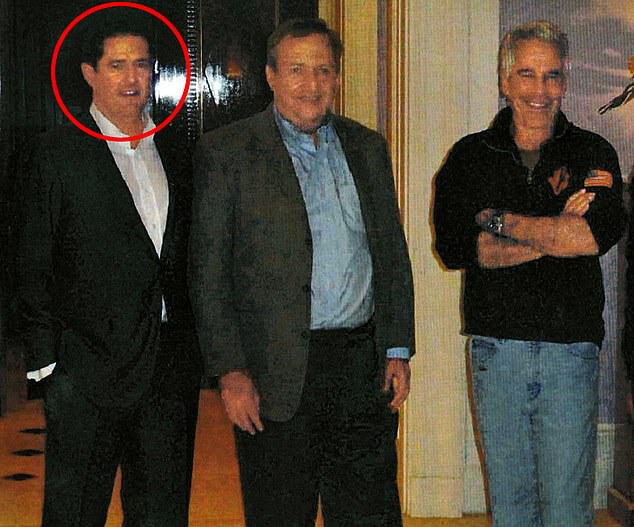 “How so?” asked David. “That’s a pretty
reputable outfit.”
“How so?” asked David. “That’s a pretty
reputable outfit.”“Banks play it fast and loose down here in Florida. Rules are lax, district attorneys look the other way, and all the politicians got where they are by using the same bank managers to transfer money to the Cayman Islands. Staley was making money from Epstein’s business and enjoyed the kind of girls Epstein provided. Staley once sent a thank-you note to Jeffery, saying ‛That was fun. Say hi to Snow White,’ and Jeffrey wrote back, ‛What character would you like next?’”
“Did Staley respond?”
“Yeah, he said ‛Beauty and the Beast.’”
“How do you know that?”
“We’ve seen the e-mails. Hundreds of them.”
David whistled and shook his head.
“I’ll tell you two people you should talk to down here,” said Rush. “Mary Windsor and Ramona Sanchez. Mary’s the local society chronicler, which means gossip columnist, and she’s been rough on Epstein, rightly so. Ramona, well, everybody knows Ramona. She’s a retired madam of a call girl racket, and she brought in a lot of girls for Epstein’s parties. She lives in Little Havana in Miami now.”
“And they’ll talk to me?”
“Good question. Ramona will talk to anyone at this point because she loves nothing better than to be the anti-Mary Windsor. Mary, on the other hand, might be better approached by your friend Katie as a journalist. I can make some calls. How’s your ropa de viejo?”
“A lot better than the ones I’ve had in those Chino-Latino places along Eleventh Avenue.”
“Geez, I remember those places. I ate at them a lot while on stake-outs for drugs coming through the Lincoln Tunnel. Coffee was always good.”
Rush finished his meal and said, “You should also talk to Mike Reiter. Like I said, he’s a good guy and would probably love to get Katie down here to talk to.”
He called for the check, which David picked up, and said, “I’ll send you the numbers for Mary, Ramona and Mike.”
“By the way,” said David. “Were you ever in Epstein’s house down here?”
“Never had the pleasure, but Ramona can tell you about it.”
The two friends parted and David checked into the Red Star Motel (right) on the Gold Coast Highway near the beach. By the time he checked in there was a note from Rush with the telephone numbers. The note read, “Ramona’s dying to talk to you. Mary Windsor won’t.”
Then David called Katie and, dreading the response, Frank English at the FBI.
WORTHY AUSTRALIAN SHIRAZ
by Geoff Kalish
And, indeed a number of wineries had great success with production of “prize worthy” and even collectable wines. But somewhere along the way many producers seemed to have lost track of what they were doing. And now with too cute names like “Don’t Tell Mum,” “The Dead Arm,” “Blue Eyed Boy” and “Fire Station Red,” many consumers don’t take Australian Shiraz seriously. In addition, the quality of many brands decreased markedly and now these wines are generally perceived as mass-produced, high alcohol quaffs, many of which have dramatically increased in price in recent years. Moreover, not all retail outlets carry even one example.
However, as with any class of wine there are exceptions especially for those seeking an elegantly enjoyable reasonably- priced red wine that mates exceptionally well with a wide range of fare. And from a number of recent tastings of these wines, I can enthusiastically recommend that the following are worth searching out.
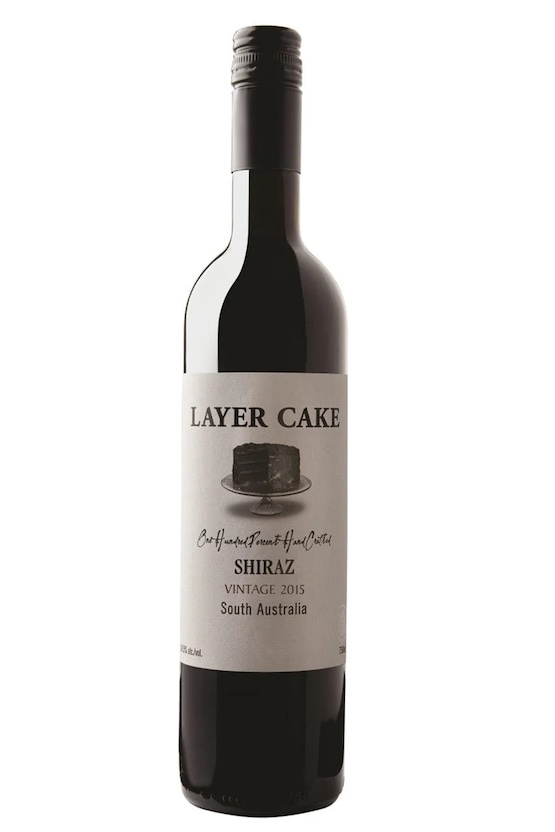 2022
Layer Cake Shiraz ($17)
2022
Layer Cake Shiraz ($17)This medium-bodied, yet easy drinking wine with a bouquet and taste of ripe blackberries and raspberries and notes of cinnamon in its finish hails from from South Australia. It will please most palates as an “everyday” accompaniment to braised beef and pork chops as well as sharp cheese.
2019 Greg Norman Limestone Coast Shiraz ($18)
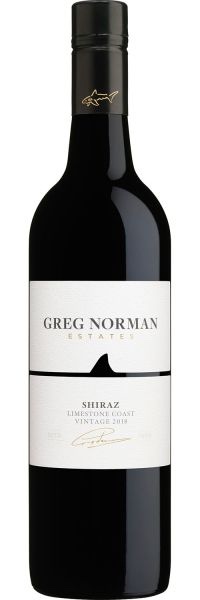
From the estate of premier golfer Greg Norman, this wine is perfect for those who like fruit to dominate their reds, this South African bottle shows a bouquet and taste of ripe plums and black currant with mint and strong notes of raspberry and, cherry in its finish. It marries harmoniously with leg of lamb as well as game girds and even swordfish.
From 30 year-old vines growing in the southern portion of McLaren Vale, this fruit-forward silky-smooth wine shows a bouquet and taste of ripe plums and hints of raspberry and blackberry and notes of licorice in its finish. It mates well with beef, lamb and even game birds and barbecued ribs.
2022 Mollydooker “The Boxer” Shiraz ($28)
Named for the Australian slang term for a left-handed boxer, this wine was made from grapes grown on vineyards in South Australia (Padthaway, McLaren Vale and Langhorne Creek). Following barrel fermentation in American oak the wine was aged in a combination of new and used American oak for a total of over two years. It shows a bouquet and smooth, elegant taste of cherry and plum with notes of chocolate in its finish. Steak, lamb and even grilled salmon pair well with this wine.
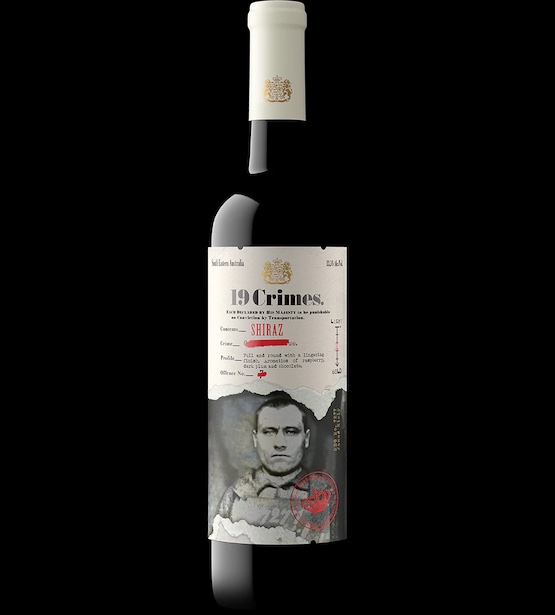
19 Crimes Shiraz ($13)
This versatile wine from winemaker Paul Dahlenburg in South-Eastern Australia has a bouquet and flavor of baked cherries and vanilla with notes of cranberry in its finish. It pairs well with a wide range of fare from appetizers of smoked salmon and guacamole to pasta with red sauce to main course items like broiled lamb chop veal Marsala.
 DEPT.
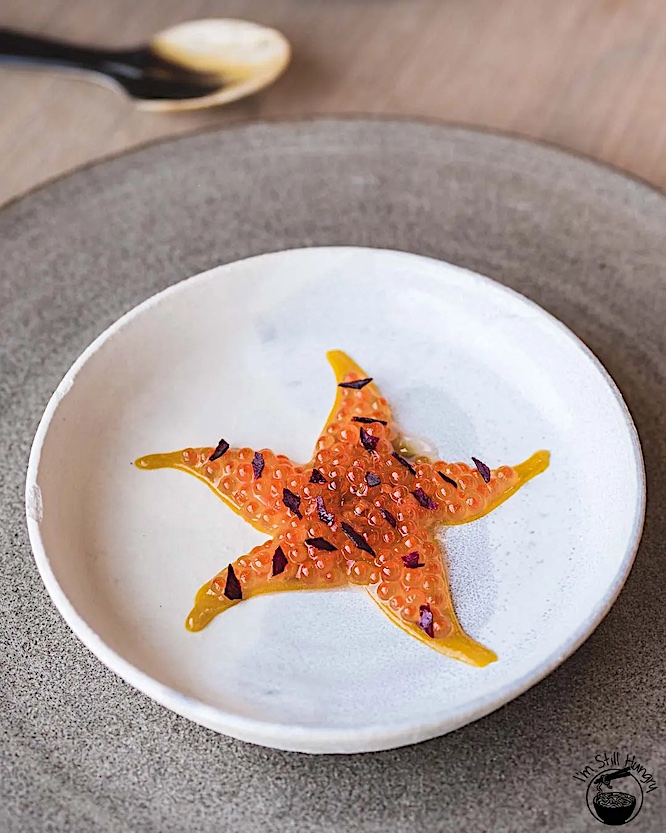
OF WRETCHED EXCESS
DEPT.
OF WRETCHED EXCESSReservations
opened on Tock at 9 a.m. on January 26
for a $1,500-per-person tasting menu
for "Noma LA 2026," featuring the
modernist cuisine of Copenhagen chef
Rene Redzepi. By 9:04, it was
sold out. The residency will run from
March 11 to June 26.
❖❖❖
Any of John Mariani's books below may be ordered from amazon.com.
 The Hound in Heaven
(21st Century Lion Books) is a novella, and
for anyone who loves dogs, Christmas, romance,
inspiration, even the supernatural, I hope you'll find
this to be a treasured favorite. The story
concerns how, after a New England teacher, his wife and
their two daughters adopt a stray puppy found in their
barn in northern Maine, their lives seem full of promise.
But when tragedy strikes, their wonderful dog Lazarus and
the spirit of Christmas are the only things that may bring
his master back from the edge of despair.
The Hound in Heaven
(21st Century Lion Books) is a novella, and
for anyone who loves dogs, Christmas, romance,
inspiration, even the supernatural, I hope you'll find
this to be a treasured favorite. The story
concerns how, after a New England teacher, his wife and
their two daughters adopt a stray puppy found in their
barn in northern Maine, their lives seem full of promise.
But when tragedy strikes, their wonderful dog Lazarus and
the spirit of Christmas are the only things that may bring
his master back from the edge of despair. WATCH THE VIDEO!
“What a huge surprise turn this story took! I was completely stunned! I truly enjoyed this book and its message.” – Actress Ali MacGraw
“He had me at Page One. The amount of heart, human insight, soul searching, and deft literary strength that John Mariani pours into this airtight novella is vertigo-inducing. Perhaps ‘wow’ would be the best comment.” – James Dalessandro, author of Bohemian Heart and 1906.
“John Mariani’s Hound in Heaven starts with a well-painted portrayal of an American family, along with the requisite dog. A surprise event flips the action of the novel and captures us for a voyage leading to a hopeful and heart-warming message. A page turning, one sitting read, it’s the perfect antidote for the winter and promotion of holiday celebration.” – Ann Pearlman, author of The Christmas Cookie Club and A Gift for my Sister.
“John Mariani’s concise, achingly beautiful novella pulls a literary rabbit out of a hat – a mash-up of the cosmic and the intimate, the tragic and the heart-warming – a Christmas tale for all ages, and all faiths. Read it to your children, read it to yourself… but read it. Early and often. Highly recommended.” – Jay Bonansinga, New York Times bestselling author of Pinkerton’s War, The Sinking of The Eastland, and The Walking Dead: The Road To Woodbury.
“Amazing things happen when you open your heart to an animal. The Hound in Heaven delivers a powerful story of healing that is forged in the spiritual relationship between a man and his best friend. The book brings a message of hope that can enrich our images of family, love, and loss.” – Dr. Barbara Royal, author of The Royal Treatment.
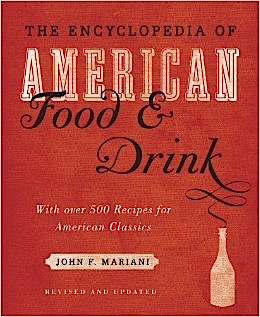 |
The Encyclopedia of American Food and Drink by John F. Mariani (Bloomsbury USA, $35) Modesty forbids me to praise my own new book, but let me proudly say that it is an extensive revision of the 4th edition that appeared more than a decade ago, before locavores, molecular cuisine, modernist cuisine, the Food Network and so much more, now included. Word origins have been completely updated, as have per capita consumption and production stats. Most important, for the first time since publication in the 1980s, the book includes more than 100 biographies of Americans who have changed the way we cook, eat and drink -- from Fannie Farmer and Julia Child to Robert Mondavi and Thomas Keller. "This book is amazing! It has entries for everything from `abalone' to `zwieback,' plus more than 500 recipes for classic American dishes and drinks."--Devra First, The Boston Globe. "Much needed in any kitchen library."--Bon Appetit. |
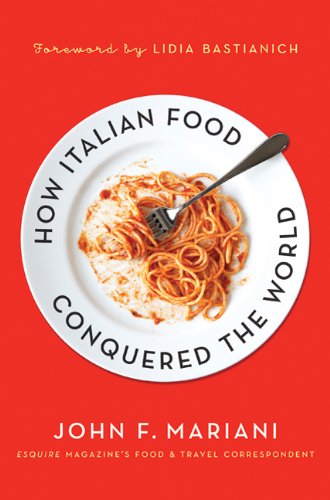
"Eating Italian will never be the same after reading John Mariani's entertaining and savory gastronomical history of the cuisine of Italy and how it won over appetites worldwide. . . . This book is such a tasteful narrative that it will literally make you hungry for Italian food and arouse your appetite for gastronomical history."--Don Oldenburg, USA Today. "Italian
restaurants--some good, some glitzy--far
outnumber their French rivals. Many of
these establishments are zestfully described
in How Italian Food Conquered the World, an
entertaining and fact-filled chronicle by
food-and-wine correspondent John F.
Mariani."--Aram Bakshian Jr., Wall Street
Journal.
"Equal parts
history, sociology, gastronomy, and just
plain fun, How Italian Food Conquered the
World tells the captivating and delicious
story of the (let's face it) everybody's
favorite cuisine with clarity, verve and
more than one surprise."--Colman Andrews,
editorial director of The Daily
Meal.com. "A fantastic and fascinating
read, covering everything from the influence
of Venice's spice trade to the impact of
Italian immigrants in America and the
evolution of alta cucina. This book will
serve as a terrific resource to anyone
interested in the real story of Italian
food."--Mary Ann Esposito, host of PBS-TV's
Ciao
Italia. "John Mariani has written the
definitive history of how Italians won their
way into our hearts, minds, and
stomachs. It's a story of pleasure over
pomp and taste over technique."--Danny Meyer,
owner of NYC restaurants Union Square
Cafe, The Modern, and Maialino.
|
 |
 |
 |
 |
 |
 |
MARIANI'S VIRTUAL GOURMET
NEWSLETTER is published weekly. Publisher: John Mariani. Editor: Walter Bagley. Contributing Writers: Christopher
Mariani, Misha Mariani, John A. Curtas, Gerry Dawes, Geoff Kalish.
Contributing
Photographer: Galina Dargery. Technical
Advisor: Gerry
McLoughlin.
If you wish to subscribe to this
newsletter, please click here: http://www.johnmariani.com/subscribe/index.html
© copyright John Mariani 2025