MARIANI’S
Virtual Gourmet
March
8, 2026
NEWSLETTER
Founded in 1996
ARCHIVE
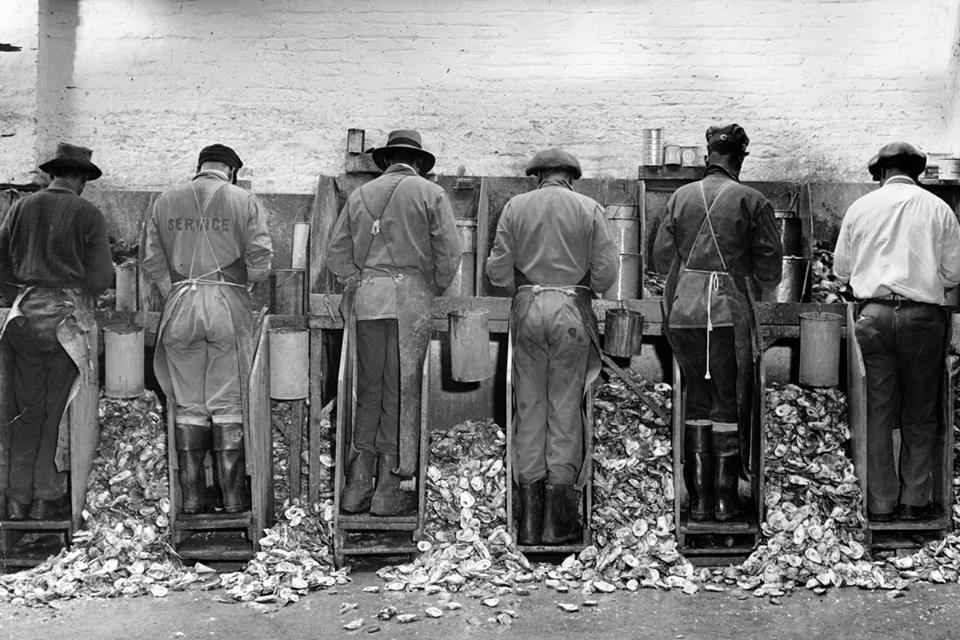
Oyster Shuckers, 1937
THIS WEEK
SMALL IN SIZE AND VERY WEALTHY, BRONXVILLE, NY,
HAS A RICH RESTAURANT SCENE
By John Mariani
THE BISON
CHAPTER THIRTEEN
By John Mariani
NOTES FROM THE WINE CELLAR
California Wineries Have for Years
Promised
More Finesse in
Their Cabernet Sauvignons.
Have They
Abandoned That Goal?
By John Mariani
SMALL IN SIZE AND VERY
WEALTHY,
BRONXVILLE, NY, HAS A
RICH
RESTAURANT SCENE
.jpg)
By John Mariani
The
natives of the Westchester suburb of
Bronxville (35 minutes from, Grand Central)
happily accept its moniker as the “Golden
Square Mile,” given its exceptionally
affluent population of just 6,500 with an
average home income of $430,000. They do,
though, bristle when people erroneously
believe it is part of the Bronx. (The
name comes instead from the Bronx River that
flows through it.)
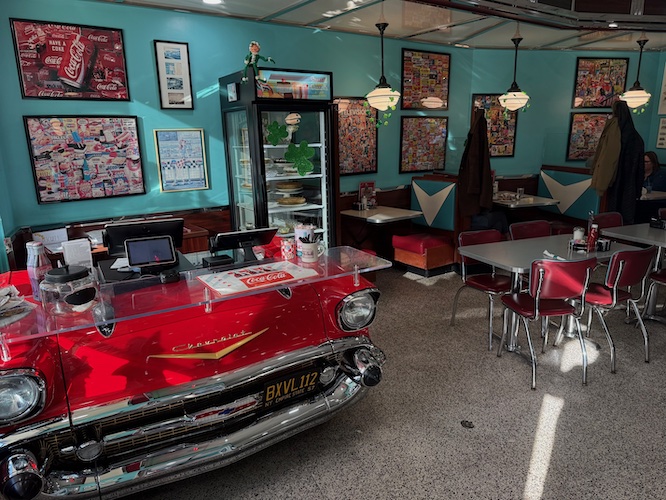 For
a village so small it does have a remarkable
number of restaurants of every stripe, from a Dumpling
& Noodle eatery and The Taco
Project to a delightful fifties-style Diner
(left). Pete’s
Park Place Tavern has been a
burger-and-brew favorite for generations of
Sarah Lawrence and Iona University (formerly
Concordia College) students, and you could
film an episode of “The Real Housewives of
Bronxville” about those decked-out
ladies
under a white tent toying with a Cobb salad at
Underhills Crossing. There's also the
requisite sushi restaurant, Hai-Ku
and Pan-Asian, Wild Ginger.
For
a village so small it does have a remarkable
number of restaurants of every stripe, from a Dumpling
& Noodle eatery and The Taco
Project to a delightful fifties-style Diner
(left). Pete’s
Park Place Tavern has been a
burger-and-brew favorite for generations of
Sarah Lawrence and Iona University (formerly
Concordia College) students, and you could
film an episode of “The Real Housewives of
Bronxville” about those decked-out
ladies
under a white tent toying with a Cobb salad at
Underhills Crossing. There's also the
requisite sushi restaurant, Hai-Ku
and Pan-Asian, Wild Ginger.
As
throughout the county Bronxville is home to
several Italian restaurants, from the lively Il
Bacio and Rosie’s Bistro Italiano
to the shadowy Scalini Osteria and Tredici
Social, along with three pizzerias.
A
brand new addition is La Chitarra (7 Pondfield Road), which is part fresh
pasta shop 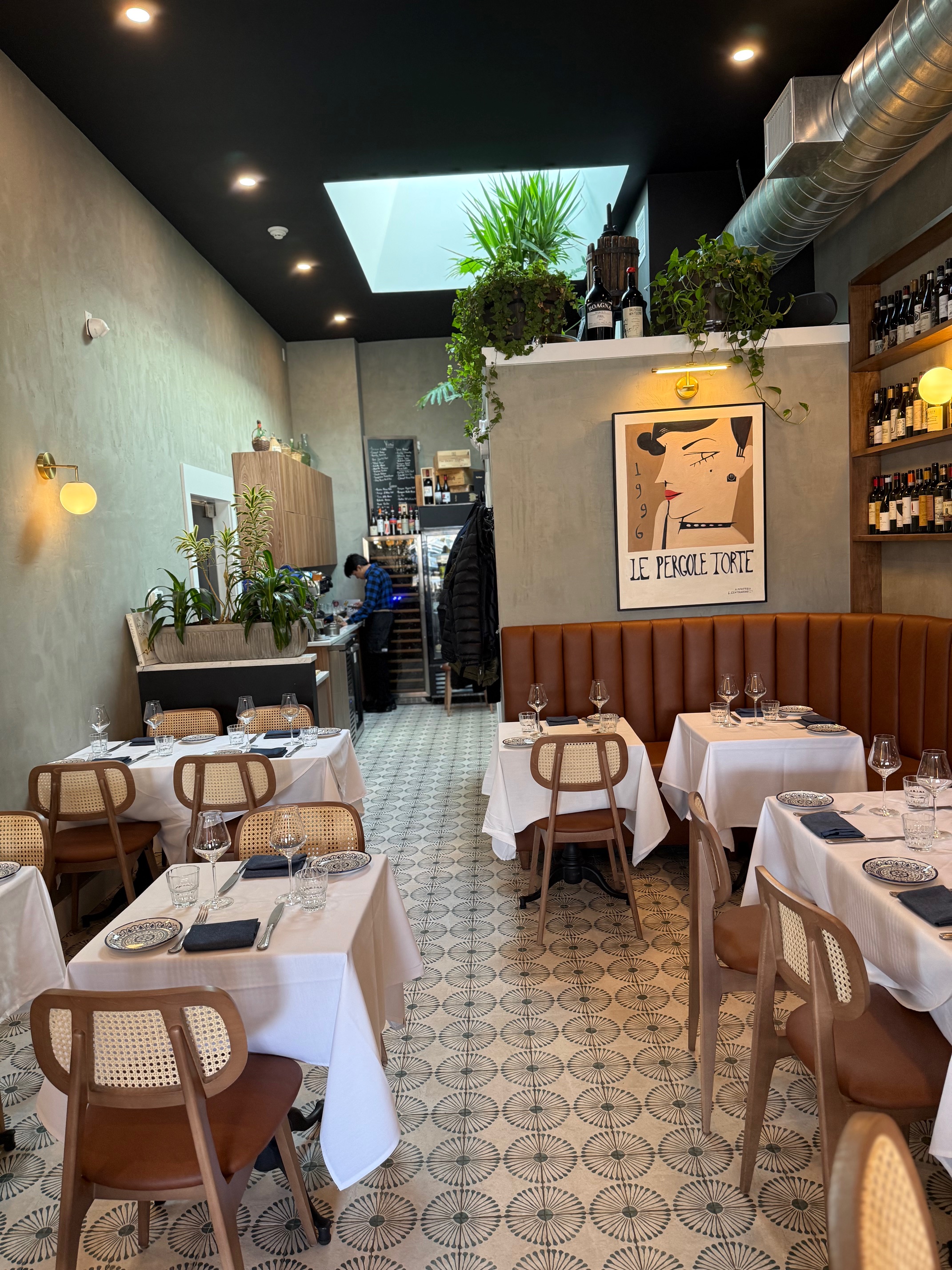 (good
but very expensive) and part snug trattoria,
opened by Randy Restiano, formerly of
Gramercy Tavern, and his cousin Peter Diana,
along with chef John Poiarkoff. The
shop opens onto the restaurant, with a
marble five-seat bar, a wall of wines from a
list of 200 mostly Italian labels, blue-and-white
patterned floor, sconces and rattan
bentwood chairs.
(good
but very expensive) and part snug trattoria,
opened by Randy Restiano, formerly of
Gramercy Tavern, and his cousin Peter Diana,
along with chef John Poiarkoff. The
shop opens onto the restaurant, with a
marble five-seat bar, a wall of wines from a
list of 200 mostly Italian labels, blue-and-white
patterned floor, sconces and rattan
bentwood chairs.
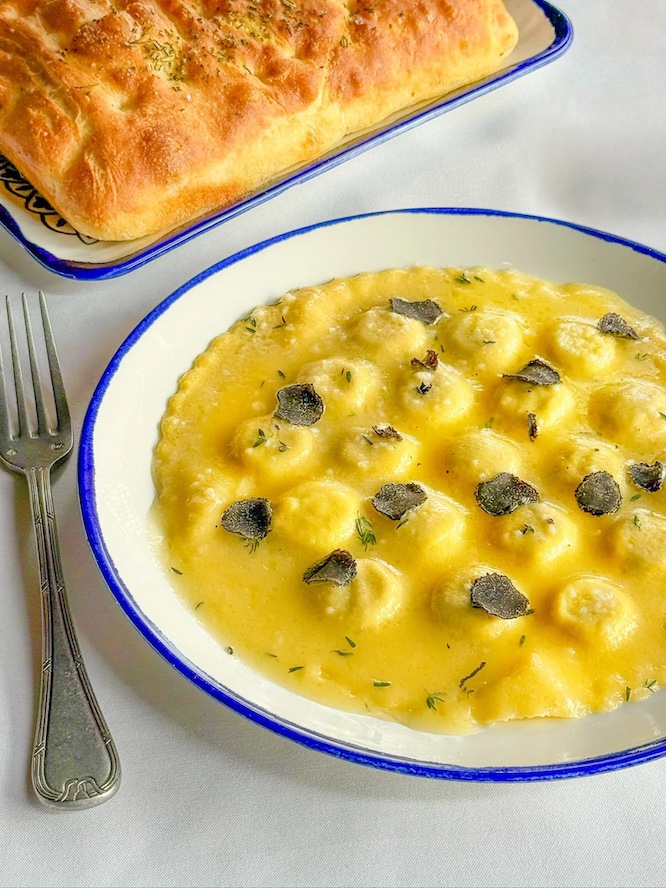 La
Chitarra's menu goes considerably beyond the
standard Italian fare with seasonal specials,
including wild mushrooms foraged from the
Hudson Valley, combined with pastas and
risotto. The restaurant’s name references the
Abruzzese pasta shape spaghetti
alla chitarra,
combined with San Marzano tomatoes, parmigiano
and basil.
La
Chitarra's menu goes considerably beyond the
standard Italian fare with seasonal specials,
including wild mushrooms foraged from the
Hudson Valley, combined with pastas and
risotto. The restaurant’s name references the
Abruzzese pasta shape spaghetti
alla chitarra,
combined with San Marzano tomatoes, parmigiano
and basil.
You’ll
be brought some crusty country bread, so there
is no real reason to
order focaccia at $9. Slickly grilled octopus
comes with potatoes, the mild bite of capers,
olives and tomatoes. There’s a slightly heavy
hand with salt in some dishes, but if you love
roast chicken, La Chitarra's is one of the
better versions around.
La Casa
(7 Pondfield Road) is located in the
former Gramatan Hotel once a retreat for
fleeting assignations by Broadway actors, and
it has long served a slightly elevated style
of Mexican food. Opened by Spencer
Pingel (with a newer Casa in Purchase, NY) the
space is composed of a glittering bar and
large dining room very popular with families.
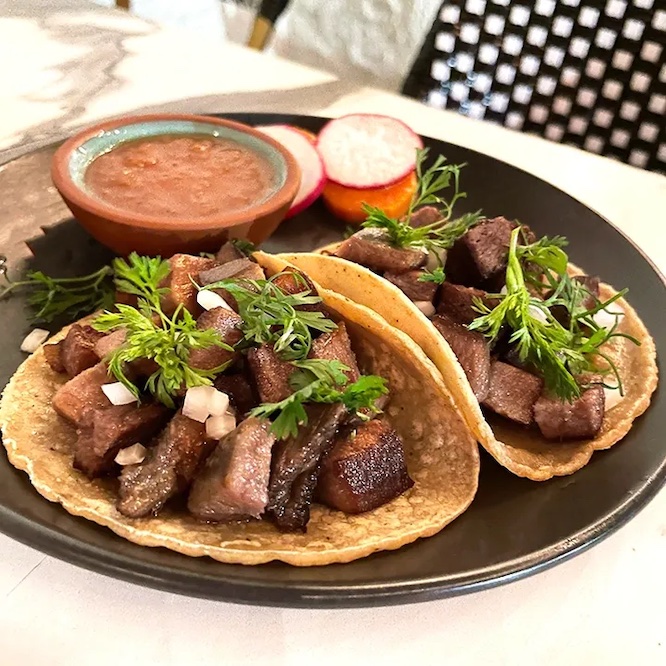 There
are plenty of appetizers deserving of the
name, including excellent octopus grilled on
the plancha; a well-seasoned guacamole
and warm chips; a ceviche of the day’s catch
in lime with cilantro; wonderfully addictive
potatoes with spicy chorizo sausage, beans,
lettuce and rice. There are ten taco
selections––the carnitas and the al
pastor with pineapple were very good, six
quesadillas and a well-rendered, very hearty
There
are plenty of appetizers deserving of the
name, including excellent octopus grilled on
the plancha; a well-seasoned guacamole
and warm chips; a ceviche of the day’s catch
in lime with cilantro; wonderfully addictive
potatoes with spicy chorizo sausage, beans,
lettuce and rice. There are ten taco
selections––the carnitas and the al
pastor with pineapple were very good, six
quesadillas and a well-rendered, very hearty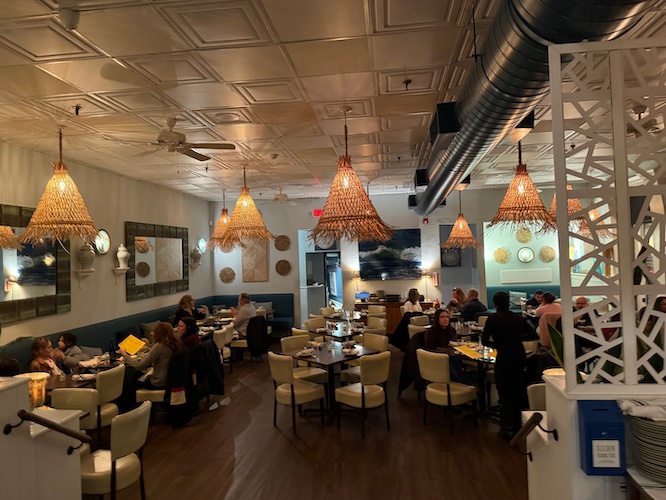 posole stew chock full of hominy, pork
and cabbage. The enchiladas verdes
were fairly
bland, and no one’s going to find the
food here excessively hot with searing chiles.
You’ll have to ask for hot sauce, and you pay
for rice.
posole stew chock full of hominy, pork
and cabbage. The enchiladas verdes
were fairly
bland, and no one’s going to find the
food here excessively hot with searing chiles.
You’ll have to ask for hot sauce, and you pay
for rice.
 Pingel
also just opened a companion restaurant next
door called Ma Maison (7
Pondfield Road), the first French
restaurant in the village in ages. (The first
French restaurant I ever ate in––back in the
‘70s––was Le Bon Viveur in Bronxville, now
called The Urban Hamlet.) Ma
Maison has been a dream of Pingel since
spending three years in Paris, and when the
space turned up, it was logical to combine the
two restaurants’ hotel-size kitchens into one.
Pingel
also just opened a companion restaurant next
door called Ma Maison (7
Pondfield Road), the first French
restaurant in the village in ages. (The first
French restaurant I ever ate in––back in the
‘70s––was Le Bon Viveur in Bronxville, now
called The Urban Hamlet.) Ma
Maison has been a dream of Pingel since
spending three years in Paris, and when the
space turned up, it was logical to combine the
two restaurants’ hotel-size kitchens into one.
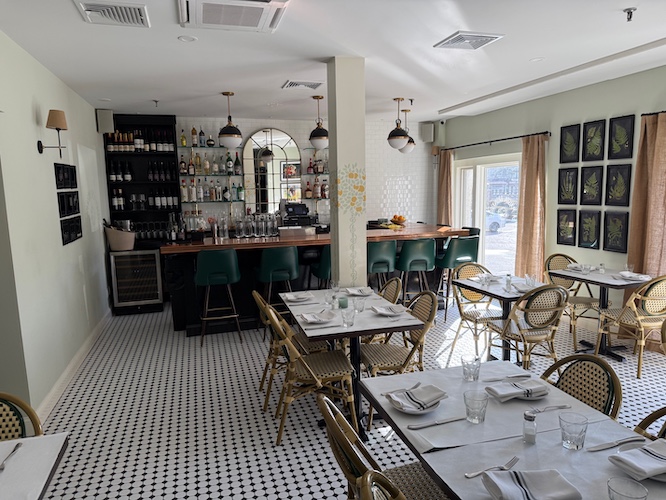
Straw lamps
hang from the ceiling in a main dining room
set with banquettes and bistro chairs, scones,
prints of fruits, with fin de siècle French 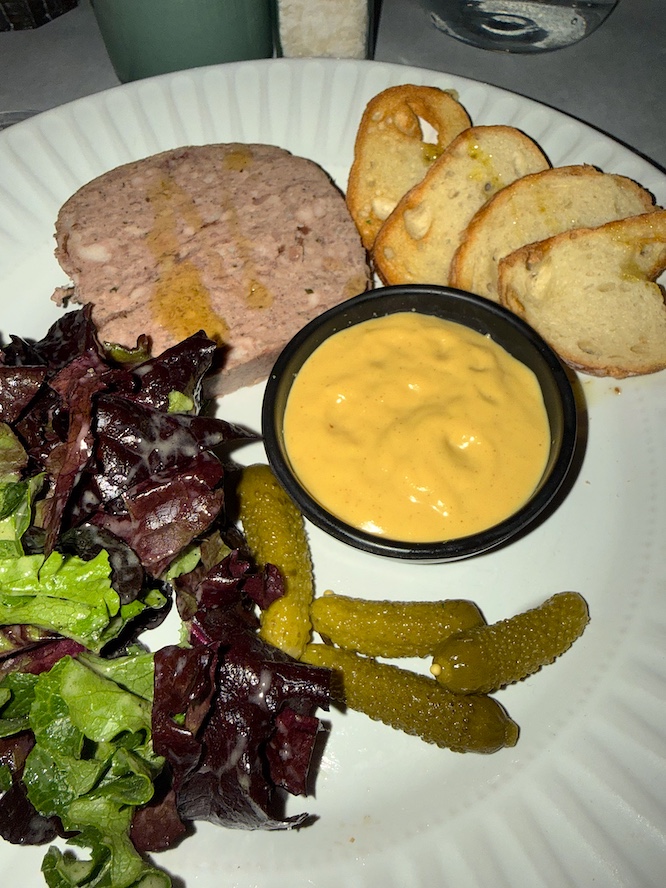 posters
and subway tiles behind a copper-topped bar to
the rear. Another smaller room painted gray is
more cramped than cozy.
posters
and subway tiles behind a copper-topped bar to
the rear. Another smaller room painted gray is
more cramped than cozy.
The opening menu is quite short––five
starters, six entrees––full of bistro classics
like a smooth country-style pâté maison (right)
with gherkins and mustard sauce;, an onion
soup (left) that needed a more deeply
flavorful broth of caramelized onions; tender
mussels in white wine with crisp frites;
and two double-cut lamb chops, perfectly
cooked. For dessert there’s crème brûleé and
apple Tarte Tatin.
The wine list is surprisingly short and
composed of rather dull bottlings. I suspect
this will improve as Ma Maison gets its
footing. I also trust that the menu will rise
above the expected cliches like grilled salmon
and endive salad, for French bistro fare is so
much more extensive. Perhaps Pringale is
testing the waters of a conservative
clientele, but it would be nice to see more
Parisian dishes like wintry cassoulet,
blanquette de veau and île
flottante.
THE BISON
By John Mariani
CHAPTER THIRTEEN
"I
appreciate your seeing me, Mr. Cherico,”
said Katie upon meeting the IRS agent, who
was wearing a yellow tennis shirt, chinos
and deck shoes. He had the appearance of a
bureaucrat shy of retirement. Gray, thinning
hair in a comb-over, paunchy, a slightly
weary look and a forced smile.
“I’m told you know Terry Rush,” he
said. “Good cop.”
“Actually I don’t but a mutual friend
does and helped set up this meeting.”
“The guy you go on all these adventures
with?”
“Uh, yeah. Same guy. His name is David
Greco. You’ve read my articles?”
“I read the one about Al Capone,
because, as you know, it was our office that
put him in prison.”
Katie thought he was trying to sound as
if it was this shabby little office in Palm
Beach that finally brought the mobster to
justice sixty years ago. She wasn’t going to
humor him, and asked, “Terry Rush and Al Barber
from the FBI said you might be able to throw
some light on Jeremy Epstein’s subterfuge.”
“You mean his sex parties? I haven’t a
clue what goes on inside his walls. I’m only
interested on whether he’s a tax felon or
not.”
“Is he?”
Cherico leaned back in his swivel
chair.
“Didn’t Rush or Barber say I can’t talk
about an ongoing case?”
Katie nodded and
raised her eyebrows, then went silent, the
reporter’s trick for making a subject feel ill
at ease and want to tell her something.
Cherico cleared his throat and said, “I
can only say that we are pursuing an
investigation into Mr. Epstein’s taxes, which
we wouldn’t be doing if there was no evidence
of fraud.”
“By ‛pursuing’ you mean it’s an actual
open case?”
Cherico nodded twice but said nothing.
“So
I’m assuming that this might well involve his
involvement with banks in the Caribbean?”
Another nod.
“And his business deductions for his
parties?”
Another nod and Katie realized that’s
how Cherico would indicate what he could not
reveal verbally.
“And you might also be looking into
where his money comes from?”
“I can tell you, because it’s been
reported, that his investment business took a
huge hit a few years ago with the collapse of
that Ponzi scheme with Tower Financial, which
lost something like $450 million, yet he
seemed to walk away free and clear and was
back in the money within the year.”
“Let me ask you this,” she said. “Do
guys this rich get audited every year?”
“Not all of them. They have extremely
capable—let’s make that ‛creative’—lawyers and
accountants who file in bulk year round. The
IRS only has so many agents.”
“And you’re one of the most
persistent?”
Now it was Cherico’s time to pause.
Then, “I do my job wherever it takes me.”
“You enjoy your work, then?”
“It’s a pretty good feeling when you
catch the crooks. When you don’t, you just go
on to the next file. Anyway, I’ll be retiring
next year.”
“Is that enough time to catch a crook
like Epstein?” asked Katie.
“What with the local police and the FBI
looking at him and with us coordinating where
it’s of mutual benefit, I think Epstein should
be very worried these days.”
“Well, the local police seem interested
only in the sex trafficking, aren’t they?”
“If it’s trafficking, someone’s paying
or making money illegally, so that’s something
we’d look at.”
Cherico glanced at the clock.
“Ah, time for me to get home for the
weekend. My wife and I are having a barbecue
with some people coming over. I’m the cook.”
Katie thought, “Why am I not
surprised?” and
thanked him for his time. “You’re helping
bring things together for me, Mr. Cherico.”
“It is a complicated case,” he said.
“If you can keep my name out of it, I’d
appreciate it. If not. . .” He
waved his hand and got up to shake hers.
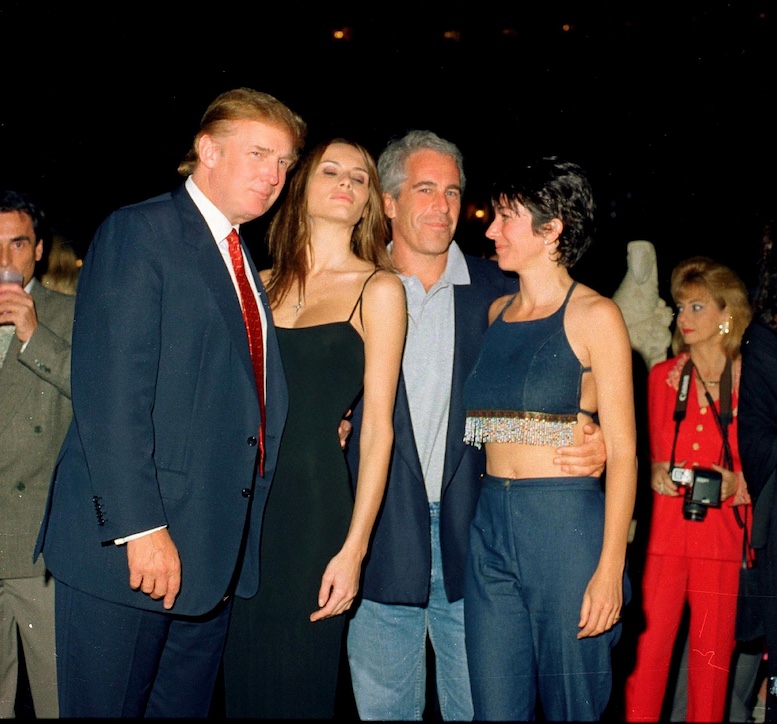
In order to find out what
went on at Epstein’s parties, Katie knew she
needed to find people who had attended them,
some, perhaps, against their will. She
figured Ramona Sanchez would be her best bet,
so she asked David to contact her in Miami.
“I think she’d be eager to speak with
you, Katie,” he said. “She gave me a couple of
names of big wigs like Prince Andrew and
Donald Trump—can you believe
that? —but she’s not going to give us the
names of her own clients or the real names of
the girls she sent to Epstein. I do think she
might tell you how to contact those underage
girls she’s so concerned about, assuming she
knows who they are.”
“If it’s true it’s really despicable,”
said Katie. “I’m thinking that that’s really
the story I’m after, like when we spoke to
those poor women who’d been imprisoned in the
Magdalene Laundries.”
Katie was referring to a prior story
she’d covered with David in Dublin, where the
Magdalene Laundries were hothouses run by the
Catholic church until the mid-1990s to take in
prostitutes and girls pregnant out of wedlock
where they were brutalized and sexually abused
by both nuns and priests.
“Is this a McClure’s story?”
asked David.
“It is if it’s part of a larger
corruption involving people like Prince
Andrew, finance guys and national politicians.
Merely giving out a list of the attendees
might be shocking but the fact these girls are
illegally procured for men who are supposed to
abhor such things is where the story goes
further into how power operates and thrives
off favors. That’s a story Alan might
well go for. So, let’s go see Ramona.”
David called Sanchez and was not
entirely surprised how quickly she agreed to
another meeting the next day, yet again at the
Versailles.
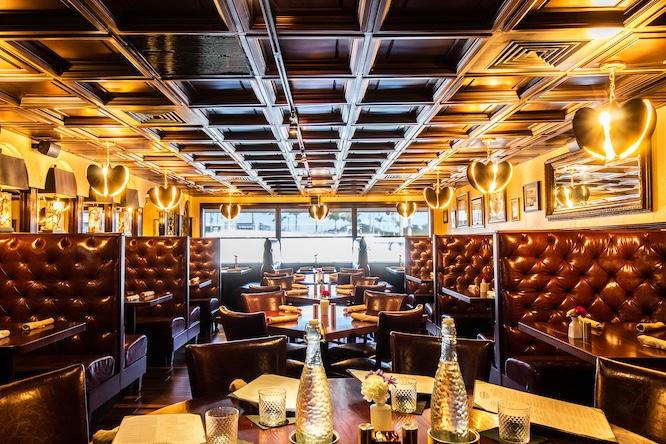 Meanwhile
Katie and David had dinner at what claimed to
be the “oldest steakhouse in Florida,”
Ockeechobee Steakhouse, opened in 1947 as a
drive-in in West Palm Beach and evolved into
an upscale family owned restaurant set within
a squat nondescript one-story building with stone
façade, lantern lights and shingled roof. Inside
it was low-lighted, with a salad bar, dark
brown tufted booths, dark brown wainscoting
and dark brown tables.
Meanwhile
Katie and David had dinner at what claimed to
be the “oldest steakhouse in Florida,”
Ockeechobee Steakhouse, opened in 1947 as a
drive-in in West Palm Beach and evolved into
an upscale family owned restaurant set within
a squat nondescript one-story building with stone
façade, lantern lights and shingled roof. Inside
it was low-lighted, with a salad bar, dark
brown tufted booths, dark brown wainscoting
and dark brown tables.
Katie
and David looked at the menu and he said,
“When in
Rome, go whole hog, or in this case eat
like a Floridian.” The menu item descriptions
had claims attached: “Colossal shrimp with our
famous garlic
butter”; “Famous ‘Old Florida’
crabcake”; a bone-in ribeye—“what steak tastes
like in heaven.” All of which David ordered,
saying, “My treat. So you want to try a
caipirhiña?”
“Not my favorite,” said
Katie, “but if it’s good enough for Ramona,
it’s good enough for me.”
The meal was a good break
from the day’s work, and the couple did not
brainstorm about the connections of the
investigations and agreed to go over some
questions for Sanchez while they drove down to
Miami the next day. They
skipped dessert and coffee, returned to the
hotel and agreed to meet at eight AM. 
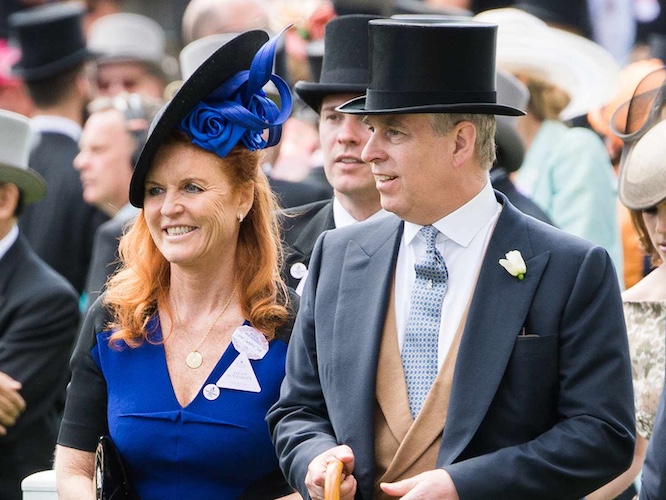
Katie had brought her new
laptop, so she looked up information on Prince
Andrew. As the third child and second son of Queen
Elizabeth II and Prince
Philip,
Duke of Edinburgh, Andrew was eighth in
the line of succession
to
the British throne. He dutifully served in
the Royal Navy as a
helicopter pilot and instructor, and during
the Falklands War, he flew on multiple
missions.
In 1986, he married Sarah Ferguson with whom he
had two daughters, Princess Beatrice and Princess Eugenie. The couple
separated in 1992 and divorced in 1996, with
Ferguson receiving £350,000 in cash, £500,000
from the Queen to buy a house for herself and
the children, and a monthly allowance.
 As Duke of
York, he served as the UK's Special Representative
for International Trade and Investment, but his own sources of income beyond
the Royal dole were always questionable, as
when he paid £18
million for a Swiss chalet in Verbier with
help from a mysterious benefactor.
As Duke of
York, he served as the UK's Special Representative
for International Trade and Investment, but his own sources of income beyond
the Royal dole were always questionable, as
when he paid £18
million for a Swiss chalet in Verbier with
help from a mysterious benefactor.
The British press first
linked the Prince with Jeffrey Epstein in
February 1999, their meeting arranged through
Ghislaine Maxwell, flying on Epstein’s private
Gulfstream jet to his Little St. James island.
A year later both Epstein and Maxwell (as an
uninvited “plus one”) were invited to a
star-studded guest at a
Windsor Castle party called the Dance of the
Decades, hosted by 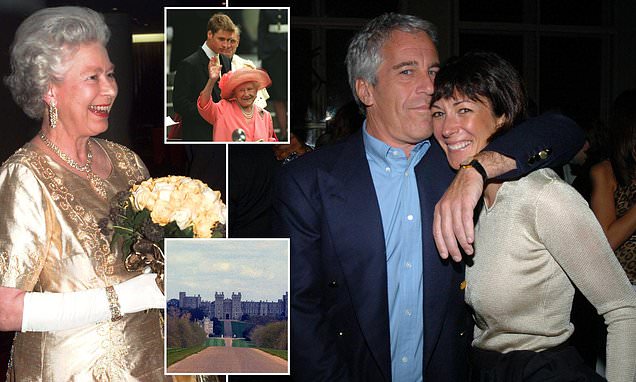 the
Queen.
the
Queen.
In December 2000 Andrew
threw a
surprise birthday party at Sandringham, the
Queen's estate in Norfolk, for Maxwell, with
Epstein among the guests, which Andrew told
the BBC was a "straightforward shooting
weekend."
By then Epstein was publicly boasting
that the Prince was his “best friend,” flying
off together with Maxwell on trips to Florida
and Thailand, and that, according to an Evening
Standard report, Epstein had joined the
Prince on five such occasions over the
previous 12 months. Andrew told the BBC that
he used to see Epstein a “maximum of three
times a year” but confirmed he had been on his
private plane, stayed at his private island
and stayed at his homes in Palm Beach and New
York. It also came to light that Andrew had
arranged in secret to have Epstein pay off
£15,000 of Sarah Ferguson’s debts.
Katie lay back
on her bed, telling herself this story was,
quoting Alice in Wonderland,
“curiouser and curiouser.” The caipirhiña and
the red wine from dinner sent her straight to
sleep.
❖❖❖
California Wineries Have
for Years Promised More Finesse in Their
Cabernet Sauvignons. Have They Abandoned That
Goal?
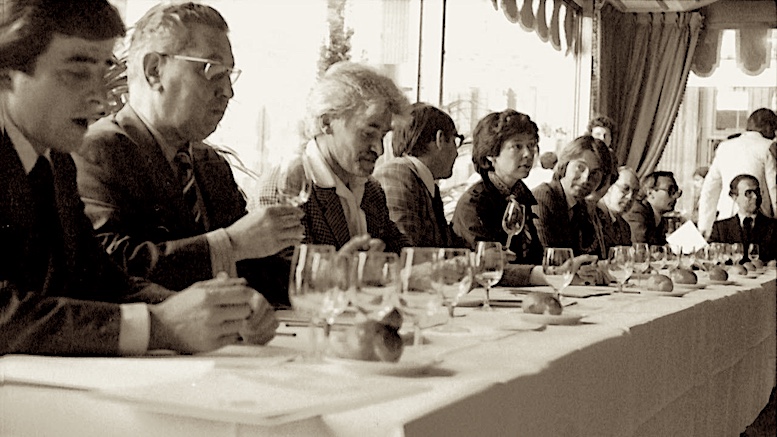
The Judgment of Paris, 1976
Back
in the 1970s when the California wine industry was
starting to simmer with labels like Robert
Mondavi, Stag’s leap Cellars, Chateau Montelena,
Beaulieu, Heitz
Cellars and others they made headlines for what
were called “blockbuster Cabs”––most famously at
the 1976 Judgment
of Paris blind tasting where Californian Cabernet
Sauvignons beat out famous French Bordeaux. At
that moment Napa Valley wines had broken through
and were no longer considered pale shadows of
French counterparts.
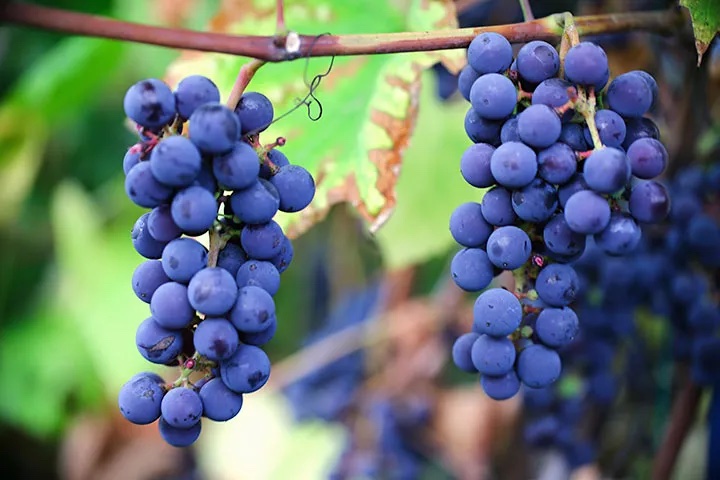 Back then Napa
Cabs were usually made from 100% Cab. As a result
they had bigger body and more tannin, unlike in
Bordeaux where they blend in other grapes like
Cabernet Franc, Merlot and Petit Verdot to achieve
complexity and equilibrium among fruit, acid and
tannins.
Back then Napa
Cabs were usually made from 100% Cab. As a result
they had bigger body and more tannin, unlike in
Bordeaux where they blend in other grapes like
Cabernet Franc, Merlot and Petit Verdot to achieve
complexity and equilibrium among fruit, acid and
tannins.
To boot, the
emerging U.S. wine media, led by Robert
Parker (below) in his Wine Advocate
newsletter, hailed these hefty, fruit-driven wines
with scores in the high 90s out of 100.  Rightly,
the French complained that Cal Cabs were out of
balance and drunk right off the wine store shelf,
without benefit of aging to mellow them out. Yet the
big, bold Napa wines were the ones people bought and
paid high prices for.
Rightly,
the French complained that Cal Cabs were out of
balance and drunk right off the wine store shelf,
without benefit of aging to mellow them out. Yet the
big, bold Napa wines were the ones people bought and
paid high prices for.
Many wine
lovers, myself included, thought these wines were
indeed one-dimensional monsters that, as one
sommelier giddily told me, “will blow your doors
off.” I was sniffed at by one wine California wine
writer who said, “You have an East Coast palate, and
that’s why you can’t enjoy West Coast wines.”
Aside from
their lack of finesse, they were also high in
alcohol at 14.5% and getting higher all the time.
Almost in secret, however, many Napa vintners were
aware that their wines lacked balance and
refinement, but in 1988 a group formed the Meritage
Association, whose members sought to develop wines
that had more complexity than traditional California
varietals, to be achieved by blending in classic
Bordeaux varieties. Such wines needed to be limited
in production to no more than twenty-five thousand
cases from each vintage by a single winery.
 At
first their colleagues scoffed at the whole idea,
but gradually it took hold, and wineries both in and
out of the Association began insisting in the media
that it was now their aim to produce more nuanced
Cabs that the blended varietals helped add to, so
that by 2000, few Napa Cabs were any longer 100% of
that varietal. A few still are, including Colgin,
Neal Family, Napa Cellars and others.
At
first their colleagues scoffed at the whole idea,
but gradually it took hold, and wineries both in and
out of the Association began insisting in the media
that it was now their aim to produce more nuanced
Cabs that the blended varietals helped add to, so
that by 2000, few Napa Cabs were any longer 100% of
that varietal. A few still are, including Colgin,
Neal Family, Napa Cellars and others.
But now, a
quarter century later, Napa vintners seemed to
forget their promise to make better, more mellow
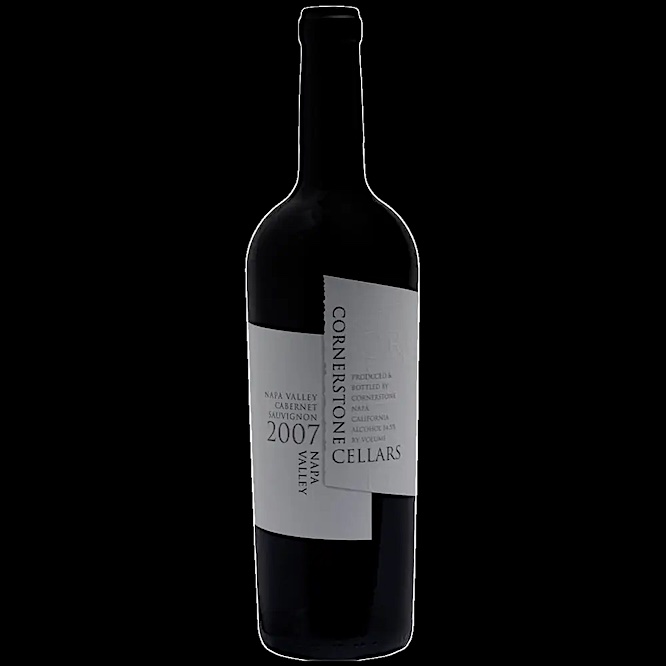
Cabs. What I find is that many of the most touted
labels are as full-bodied and immature as ever with
alcohol levels going to 16% in some bottlings like
Cornerstone Cellars Benchmark and Amulet Estate “The
Dark Ark.” By comparison, most Bordeaux reds begin
at 13.5% and rarely go to 14.5%.
Alcohol in and of itself does not
make a Cab a monster, but the reasons for it can
range from a warming climate to the Napa tendency to
pick grapes later in the season, when they have more
sugar that turns into more alcohol. Sugar content
creates “phenolic ripeness,” and Napa producers want
that bigger, hotter, fruitier, in-your-face style
gained by picking late. So you may not taste the
alcohol but you’ll feel it. As Karen MacNeil (below),
author of The Wine Bible,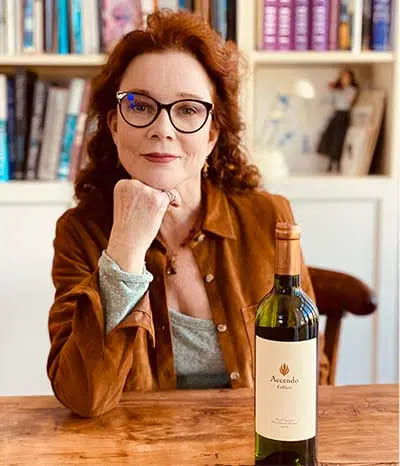 said recently, “A wine may
mellow in the glass, but the alcohol does not go
away.” Nor will it even if the wine is kept in a
cellar to age, as is done in Bordeaux.
said recently, “A wine may
mellow in the glass, but the alcohol does not go
away.” Nor will it even if the wine is kept in a
cellar to age, as is done in Bordeaux.
The over-ripe
flavor of such Napa Cabs are impressive on first
sip, and, granted, many people like that style, just
as they may like an over-oaked, over-ripe Chardonnay
at 15% alcohol.
Technically,
even legally, speaking, the U.S. Standards of
Identity specifies that “Table wine is
grape wine having an alcoholic
content not in excess of 14 percent by volume.”
Those in excess of that level are deemed “Dessert
Wines,” like Port and Sherry.
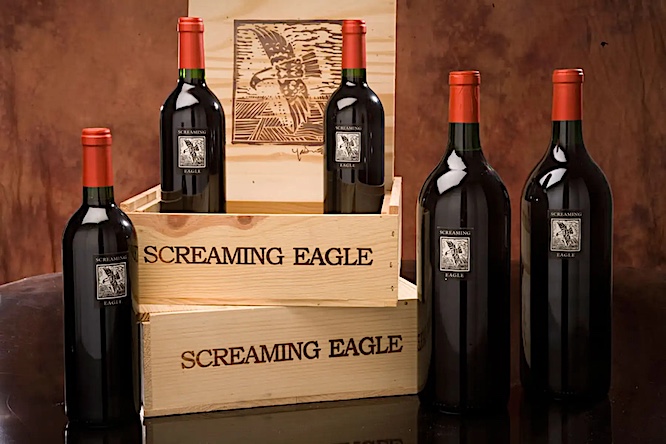
“Finesse” itself,
according to any dictionary, as refinement
or
delicacy of workmanship, structure, or texture,
are not virtues one associates with massive, tannic-
and alcohol-driven Cabs of a kind that drives the
U.S. market today. Yet many of these wines are among
the highest-priced “trophy” names in Napa, like
Screaming Eagle, selling for up to $3,500 a bottle.
By comparison, a First Growth Bordeaux like Mouton
Rothschild 2021 goes for about $500-$600.
It's not unlike comparing the purchase of a Maserati
A6G for $4 million to an Aston Martin DB11 at
$217,000, which may say more about
the person who buys one over another. As Oscar Wilde
once observed, “A cynic is one who knows the price
of everything and the value of nothing.”
❖❖❖

❖❖❖
Any of John Mariani's books below may be ordered from amazon.com.
 The Hound in Heaven
(21st Century Lion Books) is a novella, and
for anyone who loves dogs, Christmas, romance,
inspiration, even the supernatural, I hope you'll find
this to be a treasured favorite. The story
concerns how, after a New England teacher, his wife and
their two daughters adopt a stray puppy found in their
barn in northern Maine, their lives seem full of promise.
But when tragedy strikes, their wonderful dog Lazarus and
the spirit of Christmas are the only things that may bring
his master back from the edge of despair.
The Hound in Heaven
(21st Century Lion Books) is a novella, and
for anyone who loves dogs, Christmas, romance,
inspiration, even the supernatural, I hope you'll find
this to be a treasured favorite. The story
concerns how, after a New England teacher, his wife and
their two daughters adopt a stray puppy found in their
barn in northern Maine, their lives seem full of promise.
But when tragedy strikes, their wonderful dog Lazarus and
the spirit of Christmas are the only things that may bring
his master back from the edge of despair. WATCH THE VIDEO!
“What a huge surprise turn this story took! I was completely stunned! I truly enjoyed this book and its message.” – Actress Ali MacGraw
“He had me at Page One. The amount of heart, human insight, soul searching, and deft literary strength that John Mariani pours into this airtight novella is vertigo-inducing. Perhaps ‘wow’ would be the best comment.” – James Dalessandro, author of Bohemian Heart and 1906.
“John Mariani’s Hound in Heaven starts with a well-painted portrayal of an American family, along with the requisite dog. A surprise event flips the action of the novel and captures us for a voyage leading to a hopeful and heart-warming message. A page turning, one sitting read, it’s the perfect antidote for the winter and promotion of holiday celebration.” – Ann Pearlman, author of The Christmas Cookie Club and A Gift for my Sister.
“John Mariani’s concise, achingly beautiful novella pulls a literary rabbit out of a hat – a mash-up of the cosmic and the intimate, the tragic and the heart-warming – a Christmas tale for all ages, and all faiths. Read it to your children, read it to yourself… but read it. Early and often. Highly recommended.” – Jay Bonansinga, New York Times bestselling author of Pinkerton’s War, The Sinking of The Eastland, and The Walking Dead: The Road To Woodbury.
“Amazing things happen when you open your heart to an animal. The Hound in Heaven delivers a powerful story of healing that is forged in the spiritual relationship between a man and his best friend. The book brings a message of hope that can enrich our images of family, love, and loss.” – Dr. Barbara Royal, author of The Royal Treatment.
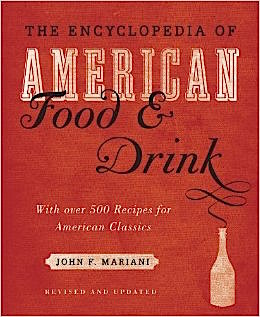 |
The Encyclopedia of American Food and Drink by John F. Mariani (Bloomsbury USA, $35) Modesty forbids me to praise my own new book, but let me proudly say that it is an extensive revision of the 4th edition that appeared more than a decade ago, before locavores, molecular cuisine, modernist cuisine, the Food Network and so much more, now included. Word origins have been completely updated, as have per capita consumption and production stats. Most important, for the first time since publication in the 1980s, the book includes more than 100 biographies of Americans who have changed the way we cook, eat and drink -- from Fannie Farmer and Julia Child to Robert Mondavi and Thomas Keller. "This book is amazing! It has entries for everything from `abalone' to `zwieback,' plus more than 500 recipes for classic American dishes and drinks."--Devra First, The Boston Globe. "Much needed in any kitchen library."--Bon Appetit. |
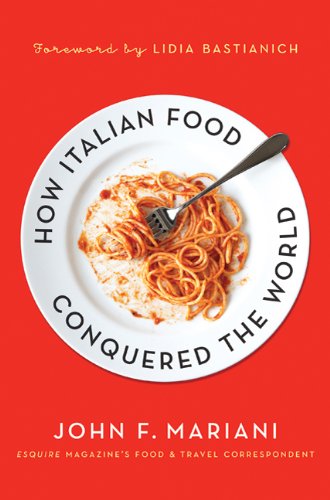
"Eating Italian will never be the same after reading John Mariani's entertaining and savory gastronomical history of the cuisine of Italy and how it won over appetites worldwide. . . . This book is such a tasteful narrative that it will literally make you hungry for Italian food and arouse your appetite for gastronomical history."--Don Oldenburg, USA Today. "Italian
restaurants--some good, some glitzy--far
outnumber their French rivals. Many of
these establishments are zestfully described
in How Italian Food Conquered the World, an
entertaining and fact-filled chronicle by
food-and-wine correspondent John F.
Mariani."--Aram Bakshian Jr., Wall Street
Journal.
"Equal parts
history, sociology, gastronomy, and just
plain fun, How Italian Food Conquered the
World tells the captivating and delicious
story of the (let's face it) everybody's
favorite cuisine with clarity, verve and
more than one surprise."--Colman Andrews,
editorial director of The Daily
Meal.com. "A fantastic and fascinating
read, covering everything from the influence
of Venice's spice trade to the impact of
Italian immigrants in America and the
evolution of alta cucina. This book will
serve as a terrific resource to anyone
interested in the real story of Italian
food."--Mary Ann Esposito, host of PBS-TV's
Ciao
Italia. "John Mariani has written the
definitive history of how Italians won their
way into our hearts, minds, and
stomachs. It's a story of pleasure over
pomp and taste over technique."--Danny Meyer,
owner of NYC restaurants Union Square
Cafe, The Modern, and Maialino.
|
 |
 |
 |
 |
 |
 |
MARIANI'S VIRTUAL GOURMET
NEWSLETTER is published weekly. Publisher: John Mariani. Editor: Walter Bagley. Contributing Writers: Christopher
Mariani, Misha Mariani, John A. Curtas, Gerry Dawes, Geoff Kalish.
Contributing
Photographer: Galina Dargery. Technical
Advisor: Gerry
McLoughlin.
If you wish to subscribe to this
newsletter, please click here: http://www.johnmariani.com/subscribe/index.html
© copyright John Mariani 2026