VIRTUAL GOURMET
JULY 5, 2026
NEWSLETTER
ARCHIVE

HAPPY FOURTH OF JULY
WHAT IS AMERICAN FOOD?
By John Mariani
NEW YORK CORNER
BRASSERIE COGNAC AMÉRICAIN
By John Mariani
THE BISON
CHAPTER TWENTY-EIGHT
By John Mariani
WHAT IS AMERICAN FOOD?
BY John Mariani

Cynics
have always derided American food as
simplistic, unhealthy, adulterated and
favoring quantity over quantity. And for a
while in the post-World War II period that
seemed to be the case as the food industry
made cheap food available to everyone in
abundance, even if frozen or boxed.  Yet for
all the criticism the next phase of
frozen, instant, and packaged foods was even
worse—“gourmet dishes,” such as fettuccine
Alfredo, asparagus with hollandaise sauce, and
“Oriental” vegetables. The final blow to
American taste came with the plethora of diet
foods, which were either traditional processed
foods made with less sugar, oil, or syrup or
smaller portions of the same old stuff. In
recent years, nutritional terrorists have
tried to sting Americans into believing that
most of what they consume on an everyday basis
is going to kill them—sooner or later.
Yet for
all the criticism the next phase of
frozen, instant, and packaged foods was even
worse—“gourmet dishes,” such as fettuccine
Alfredo, asparagus with hollandaise sauce, and
“Oriental” vegetables. The final blow to
American taste came with the plethora of diet
foods, which were either traditional processed
foods made with less sugar, oil, or syrup or
smaller portions of the same old stuff. In
recent years, nutritional terrorists have
tried to sting Americans into believing that
most of what they consume on an everyday basis
is going to kill them—sooner or later.
It is no wonder, then,
that American food deserved the hard knocks it
once took before a revolution took place in
the 1970s that stressed freshness, local
ingredients, ethnic variety and a turning away
from junk food, which at first meant  snacks,
candies, and other less than nutritious items
but came to encompass “fast foods” sold at
roadside stands usually run by nationwide
chains. Several such operations have
specialized in some of the more obvious items
in the American kitchen—hamburgers, hot dogs,
fried chicken, french-fried potatoes, apple
pie, and ice cream—serving them lickety-split
from assembly lines of griddles and deep
fryers at the hands of patently chummy young
people in standardized uniforms. Cheap,
casual, and geared for ingestion of product
rather than the pleasure of dining, these
places reduced the flavor of such foods to the
point where Henry Miller’s comment about
drowning the original taste with
sweet-and-sour condiments began to make sense.
snacks,
candies, and other less than nutritious items
but came to encompass “fast foods” sold at
roadside stands usually run by nationwide
chains. Several such operations have
specialized in some of the more obvious items
in the American kitchen—hamburgers, hot dogs,
fried chicken, french-fried potatoes, apple
pie, and ice cream—serving them lickety-split
from assembly lines of griddles and deep
fryers at the hands of patently chummy young
people in standardized uniforms. Cheap,
casual, and geared for ingestion of product
rather than the pleasure of dining, these
places reduced the flavor of such foods to the
point where Henry Miller’s comment about
drowning the original taste with
sweet-and-sour condiments began to make sense.
More disturbing was the
fact that small, family-owned restaurants,
where such food was traditionally made
according to old recipes, were being nudged
aside in favor of the fast-food eateries, so
that even American institutions like the diner
and the cafeteria, where excellent American
fare could be had, found it difficult if not
impossible to compete with the fast-food
places’ prices and “fun atmosphere.”
The reaction to all
this was the development of a culinary elitism
that once again pronounced the excellence of
French, Italian, and Oriental cuisines and the
horrid state of American gastronomy. Even a
charming Boston woman named Julia Child
enjoyed a long run on public television
showing Americans how to cook, not turkey with
stuffing, clam chowders, or scrod, but rôti de
porc poêle, canard a l’orange, and choux de
Bruxelles. Credit must be given to such
a television program and to Mrs. Child for
relieving the inferiority complex American
cooks had about French food and complex
cooking processes in general. Her tone was
typically Yankee and refreshingly reassuring,
and she taught a generation how to care about
excellent ingredients and attention to detail.
And in her TV series in the 1980s, Child did
feature American cooking and championed
California wines.
 There
also appeared in the 1970s a number of works
by authors who began seriously to restore
traditional American fare to its proper
perspective. James Beard, Craig Claiborne,
James Villas, and Waverley Root spoke with
authority and great affection of their
childhood memories of catfish, Dungeness crab,
pork barbecue, grits, blueberry bread, hot
chilies, New England boiled dinner, Pacific
oysters, potato salad, and scores of other
delectables that many people had forgotten
could be so very good when prepared with care
and love and served with those same homely
virtues.
There
also appeared in the 1970s a number of works
by authors who began seriously to restore
traditional American fare to its proper
perspective. James Beard, Craig Claiborne,
James Villas, and Waverley Root spoke with
authority and great affection of their
childhood memories of catfish, Dungeness crab,
pork barbecue, grits, blueberry bread, hot
chilies, New England boiled dinner, Pacific
oysters, potato salad, and scores of other
delectables that many people had forgotten
could be so very good when prepared with care
and love and served with those same homely
virtues.
At the same time, food
magazines like Gourmet,
Cuisine, Food & Wine, and others
began devoting more space to American cookery,
and even the Culinary Institute of America, a
cooking school in Hyde Park, New York, long
devoted to Continental cuisine, opened a
separate course of study on American food.
The publication in 1970
of Time-Life’s beautifully produced Foods of
the World included seven volumes on
regional American cookery (right),
which gave the food a legitimacy of the kind
afforded French, Italian, and Japanese
cuisines. Well written, gorgeously
illustrated, and full of well-tested, explicit
recipes, these volumes on New England, Creole
and Acadian, Northwest, Eastern Heartland,
Southern Style, Great West, and Melting Pot
regional cooking showed just how diverse this
nation’s cookery is. They revealed the wealth
of tradition and history behind each dish and
a people’s pride in every preparation.
Thousands of other
authoritative regional cookbooks have appeared
since then, ranging from specific books on a
single item like chili or cheesecake to thick
volumes of recipes compiled by women’s
organizations throughout the United States.
Several excellent histories of American food
and drink have appeared within the last
decade, along with delightful compendiums of
lore and anecdotes on everything from candy
bars and ice cream to North American fish.
American wines, which in the 1970s became
internationally respected, have been boosted
by wine writers and recorded in narratives and
encyclopedias with the same care and devotion
to accuracy given the vineyards of Bordeaux
and Burgundy. Things seem to be on the right
track again.
 Since the first edition of my
book The Dictionary of American Food &
Drink appeared in 1983––now as The
Encyclopedia of American Food & Drink
in its 5th edition––American restaurants have
garnered worldwide reputations, the American
marketplace has absorbed thousands of new
foods from every corner of the globe, the
American farmer is now raising everything from
kiwifruit to foie gras,
Since the first edition of my
book The Dictionary of American Food &
Drink appeared in 1983––now as The
Encyclopedia of American Food & Drink
in its 5th edition––American restaurants have
garnered worldwide reputations, the American
marketplace has absorbed thousands of new
foods from every corner of the globe, the
American farmer is now raising everything from
kiwifruit to foie gras,  and the
American consumer has become far more
sophisticated and demanding about the quality,
availability, and safety of his or her food.
And finally, the FDA has put some meaning and
muscle into monitoring and defining what goes
into our processed foods.
and the
American consumer has become far more
sophisticated and demanding about the quality,
availability, and safety of his or her food.
And finally, the FDA has put some meaning and
muscle into monitoring and defining what goes
into our processed foods.
It is worth noting that
when the foreign soccer players came to the
U.S. for FIFA, they loved our food, not only
because they found it tasty and new but
because it was so American.
As ever, but even more so
now, American food is diversified, modified,
substantial, complex, heterogeneous, subtle,
humdrum, exciting, excessive, embracing,
soul-warming and stomach-filling, hot, cold,
prepared with honesty, concocted with
audacity, promoted with passion, consumed with
courage, debated with conviction, tossed in a
pot, simmered in a kettle, fried in a skillet,
chilled in a bowl, shaken in a canister,
brewed in an urn, topped off, tossed out,
shoved down, pushed aside, got through, held
up, jiggled at the end of a pole, brought down
with an arrow, skinned with a knife, tested
with a finger, squeezed with a hand, sniffed
at, cursed at, argued over, and beloved by a
people who will try anything once.
What is American food?
It
is all of this.
NEW YORK CORNER
BRASSERIE COGNAC
AMÉRICAIN
212-470-5889
By John Mariani

The
announcement that master chef Michael Lomonaco
(below), formerly of Porter House, was
appointed as chef and partner for a new
Brasserie Cognac set across from the New York
Public Library was very good news. The chain
of four restaurants under that name,  run by
the Serafina Group owned by Fabio Granato and
Vittorio Assaf, adds the fifth iteration that
is quite a spectacular advance set over two
stories. It has a bright glistening horseshoe
bar, broad dining room, banquettes, beautiful
white marble tables and, somehow, a noise
level that is not as high as you might expect
in a place with these high ceilings.
run by
the Serafina Group owned by Fabio Granato and
Vittorio Assaf, adds the fifth iteration that
is quite a spectacular advance set over two
stories. It has a bright glistening horseshoe
bar, broad dining room, banquettes, beautiful
white marble tables and, somehow, a noise
level that is not as high as you might expect
in a place with these high ceilings.
Open only a month when I visited, the
service staff was in full swing, from the
charming hostesses who greet you to manager
Bruce
Crystal’s smooth ministrations and the
waiters who keep the pace going.
 Thus
far,
the new Brasserie’s all day menu doesn’t differ
much from the other branches’ with a
few new items and a separate “La Boucherie”
section with six cuts from steak frites to a
30-ounce côte de boeuf.
Thus
far,
the new Brasserie’s all day menu doesn’t differ
much from the other branches’ with a
few new items and a separate “La Boucherie”
section with six cuts from steak frites to a
30-ounce côte de boeuf.
The wine list is not huge
but more than serviceable for brasserie cuisine.
The thick wineglasses are not.
You’ll begin with good
bread and butter, but the cheese-rich gougeres
were a hit as much for four adults as for a
young child who gobbled his up with obvious
relish. The Alsatian onion tart was made with
goat’s cheese and bacon, and it’s always good to
find silky leeks au vinaigrette
gribiche with warm shallots in summer. There’s a
big roast marrow bone, and the sauteed duck foie
gras was particularly luscious via its sour
cherry compote and brioche toast. Unexpected but
delicious was an ahi tuna bowl of sushi rice,
avocado, pineapple, edamame, relish and
cucumber.
Steak frites was made
with the butcher’s hanger cut with maître d
butter and a mess of perfect French fries. I’ve
seen a return of the classic old canard à
l’orange on French menus, and here the
magret breast, cooked rare, came with a sauce
deeply reduced and spiked with Grand Marnier,
accompanied by butter-rich potato puree.
 I
was torn about ordering from the burgers and
sandwiches section, which contains a fried
chicken club, a Croque monsieur or madame, a
lobster roll, even a French dip of roast sirloin
with caramelized onions sopping up beef juices.
In the end I went with the LaFrieda Signature
burger––LaFrieda being a top meat supplier in
New York–– which was made with Prime beef
cheese, grilled onion, lettuce, tomato and
French fries. It was fine burger, if not the
best in a city where competition is fierce.
I
was torn about ordering from the burgers and
sandwiches section, which contains a fried
chicken club, a Croque monsieur or madame, a
lobster roll, even a French dip of roast sirloin
with caramelized onions sopping up beef juices.
In the end I went with the LaFrieda Signature
burger––LaFrieda being a top meat supplier in
New York–– which was made with Prime beef
cheese, grilled onion, lettuce, tomato and
French fries. It was fine burger, if not the
best in a city where competition is fierce.
For seafood there is a
finely grilled branzino à la Provençale with a
tangy ratatouille.
A good brasserie’s jolly
atmosphere demands ordering desserts, and
Brasserie Cognac is delivering with practiced
attention to getting the crust of the crème
brûleé perfect (below); the generous
portion of chocolate laced profiteroles;  and
a seven-layer deep dark chocolate cake that is
more sky high American than Parisian and welcome
for that distinction.
and
a seven-layer deep dark chocolate cake that is
more sky high American than Parisian and welcome
for that distinction.
This
version of Brasserie Cognac has immediately
become the company’s flagship, and at a time
when restaurateurs are said to be cautious about
capital investment, Serafina has gone all out
and given the city a spectacular venue fittingly
across from the magnificent Library. The
neighborhood seems to be a new nexus, with the
Grand Central Oyster Bar and Restaurant around
the corner, Wolfgang’s Steakhouse under the
highway bridge, the haute cuisine Gabriel
Kreuther down the block and Daniel Boulud’s Le
Pavillon on Vanderbilt Avenue. It’s simple
logic: New York can never have enough great
restaurants.
Open daily four lunch
and dinner. Brunch Sat. &
Sun.
THE BISON
By John Mariani
 It was now the beginning
of March and the weather had begun to
change. The snow had mostly disappeared in
the Hudson Valley and David had even seen
some crocuses pushing through the ground
in his garden. He was hoping against hope
that winter had killed off the invasive
Giant Hogweed plants but that, too, looked
like it was coming back.
It was now the beginning
of March and the weather had begun to
change. The snow had mostly disappeared in
the Hudson Valley and David had even seen
some crocuses pushing through the ground
in his garden. He was hoping against hope
that winter had killed off the invasive
Giant Hogweed plants but that, too, looked
like it was coming back.
He had kept in touch with Rush but no
body had been found. The police had spoken
to Vargas but learned nothing. They’d also
contacted informers they’d used in the past,
though, given the corruption among the Palm
Beach Police force, most of what they got
was of negligible value. There were rumors
out on the streets about a murder—murders
were almost non-existent in Palm Beach but
not so rare across the bridges in grittier
West Palm Beach—but no one had any evidence
to corroborate it. Rush had also tried to
contact the girls who had first spoken to
Susannah, but it seemed none of them was any
longer on Epstein’s premises.
Then, one morning, Rush
called David with an update.
“We
found out about a girl named Sarah Doyle,”
he said. “The FBI checked its data base on
missing teenagers and found a girl by that
name who had lived in Sealy, west of
Houston. From what they could find out from
the parents, she’d gone on a trip to New
York during school break and never came
back, but she did let them know she was okay
and mentioned being in New Mexico and
Florida. Never mentioned Epstein.”
“When was this?”
“She left Texas about five months
ago. Last her parents heard from her was
about six weeks ago. Since then, nothing.”
“Didn’t they contact the FBI?” asked
David.
“Well, they knew she hadn’t been
kidnapped, so what could they tell the FBI?
But at least this helps confirm that there
was this girl named Sarah Doyle and that she
lived at Epstein’s homes. The Feds opened a
file on her. Nothing else in it, though.”
David knew from experience that that
was not enough to get a search warrant to
get into Epstein’s premises in Palm Beach.
If no one reports a person as missing,
there’s no reason to investigate. Without a
dead body, there was no crime to investigate
either.
Rush said, “I also spoke with our
friend Cherico at the IRS and told him it
seemed like Epstein had flown the coop to
Cuba so he could check out any transfer of
funds. Believe it or not, it’s easier to
track illegal money in Cuba than it is to
the Virgin Islands or the Caymans.”
“Find anything?”
“Not in Cuba, but it seems one of
Epstein’s shell companies gave a load of
money to the Colombian President he flew to Havana.
The transfer came via JP Morgan.”
“Hedging his bets?”
“Never a bad thing to have friends who
owe you one. That said, it looks like
Epstein’s set to fly back to Palm Beach
tomorrow. He must feel he’s safe, or maybe
protected, from prosecution for the time
being. I’m sure he knows that we haven’t found
a body, which long ago became fish food in the
Atlantic.”
David felt the remark was pretty crude
and said, “If I were still a cop in New York.
. . ”
“Well, you’re not, David. So please
stop with all this bullshit about how you’d
handle an investigation. I used to work up
there, too, remember?”
David apologized and said he
appreciated all Rush had been telling him thus
far.
“Without someone on the inside
talking,” said Rush, “this investigation is
stalled.”
Katie was feeling wholly
frustrated by the lack of progress on what she
felt sure was a story with a murder in it
attached to the horrors of the Epstein
perfidies. Now, with Epstein blithely back at
the supposed scene of the crime, she wracked
her brain as to how to penetrate the shield
Epstein had erected around him with the help
of highly placed and very powerful men, not
just in Palm Beach and the rest of the United
States  but even outside of
it.
but even outside of
it.
It came as a surprise, then, when she
received a phone call from Ghislaine Maxwell,
asking if Katie could meet her at her
townhouse that afternoon.
This time Maxwell greeted Katie at the
door and brought her downstairs into a room
that served as a wine cellar, closing the door
behind them.
“What are we doing down here,
Ghislaine?” asked Katie, feeling ill at ease
in the cool, temperature-controlled room.
Maxwell twirled her finger in the air
and looked around the room, indicating there
were no cameras or recording devices, then
said, “No one can hear or see us down here.”
Katie got a chill from the cold air,
and said, “So, why did you want to see me?”
“I’m telling you this on deep
background, all right? No notebook, no
recorder.”
Katie said that was fine, crossing her
legs and putting her hands in her lap.
“So?”
“Remember I told you that I had very
negative feelings about Angus
Pierce?
And I said the reasons were personal and had
nothing to do with Jeffrey? Well, as you may
know, my father Robert was very helpful to
Jeffrey at the beginning of his career. By the
time my father died, Jeffrey was very well set
up and, though he was always on good terms
with my father, Jeffrey had developed a very
large coterie of powerful friends.”
Katie wanted to say, “Friends he
entertained at sex parties and expected favors
from,” but she thought it better neither to
bring up the obvious nor put Maxwell at on the
defensive.
Maxwell went on: “One of those men was
Angus Pierce, whom my father despised, as they
both did Rupert Murdoch. I think one of the
reasons Jeffrey wanted to buy New York
magazine was to own a tiny piece of the kind
of media those men controlled in abundance.”
 Katie
interrupted. “Excuse me for stopping you
there, but did Jeffrey ever show any interest
in buying McClure’s?”
Katie
interrupted. “Excuse me for stopping you
there, but did Jeffrey ever show any interest
in buying McClure’s?”
Maxwell shook her head. “Not that he
ever mentioned to me.”
Katie said, “Please go on.”
“Well, as you know, my father was in
some financial trouble the year he died, but,
as I told you, that was not the first time and
he would always laugh such things off. My
father had an ego, and he could be very tough.
He loved getting out of tight spots. So, when
it looked like he was close to bankruptcy,
there were suitors to buy this or that piece
of his media empire, and Angus was one of
them. But although my father entertained some
of the offers he had, he swore to me and said
publicly, he would never sell so much as a
copy of a newspaper to Angus, no matter how
sweet the offer.”
“And that hatred of Pierce carried over
into your own opinion of him?”
“I didn’t really have much of an
opinion of him at first. But when he had my
father murdered, I obviously developed a
deep-seated hatred for the man but could not
act on it.”
Katie shook her head. “Hold on, hold
on. You’re saying you believe Pierce had your
father thrown off the ship at sea?”
Maxwell’s eyes became watery. “In my
heart of hearts I’m sure of it. But there was
what was said to be a very thorough
investigation that could not determine how his
going overboard occurred. They couldn’t
discount the possibility someone pushed him
over or that he committed suicide or that he
simply fell somehow, but they could not come
up with a conclusion.”
“Did you tell the authorities you
thought it was Pierce who’d ordered a hit?”
“I told them I was positive it was a
murder but I was too scared at that point to
make an accusation. There I was, not knowing
what was going to happen to me, financially
and otherwise—I never saw my father’s will and
was sure it would go through endless
probate—but I was also scared of what Angus
might do to me.”
“Couldn’t you turn to Jeffrey for
help?”
“I hadn’t even met Jeffrey by then. And
when we finally did get together and Jeffrey
helped me financially, he was already friendly
with Angus. I hadn’t the power or clout to
tell Jeffrey to push Angus out of his
circle—they’d become very close, and Angus had
helped him out, probably more than my father
had by then.”
“And you never told Jeffrey you thought
Pierce had your father murdered?”
“I did,” said Maxwell, “but there was
no proof, and Jeffrey accepted the
conclusion—or non-conclusion—of the
official investigation. He told me he wasn’t
going to break off his friendship with Angus
on the basis of what he said was only my
hunch.”
 “So,
why are you telling me this now?” asked Katie.
“So,
why are you telling me this now?” asked Katie.
Maxwell wiped her eyes with a tissue,
took a deep breath, paused and said, “Because,
Katie, I do think it was Angus who had a role
in that girl’s death. Maybe it was an
accident, but it happened, and I’ve been
devastated ever since I heard about it.”
Once again, Katie sat in disbelief at
hearing people like Sanchez and Maxwell
express being appalled at crimes committed
within webs of wickedness they themselves had
helped spin.
“Did you ask Jeffrey about all this?”
“Yes, and he said there had been an
accident—a girl overdosed —but he refused to
say Angus was involved. And there I was again,
scared of what Angus might do to me or anyone
who knew about the incident.”
“You mean the other girls in the
house?”
“Yes. Jeffrey sent them off to his
island and to Zorro. I suspected why, but
couldn’t be sure. It seemed impossible to
conceive of Angus murdering each of them.
Jeffrey most certainly had not been involved
in any such actions.”
“You really think Pierce is capable of
intentional murders like that?”
“I told you. I’m sure he had my father
killed, just to get hold of his empire. Why
wouldn’t he kill to cover up something like
this? A lot of Jeffrey’s friends get away with
murder in a figurative sense all the time, but
not real murder. If Angus were found out, all
Jeffrey’s friends would turn on both of them
in order to show they had not ever been
involved in such a horrific thing. And Katie,
another reason I’m telling you this is because
I don’t want you to get into Angus’s cross
hairs. I don’t know if he knows how involved
you are in your investigation, but if he finds
out he’s going to try to stop you somehow.”
“He already has,” said Katie.
Maxwell’s eyes widened. “What do you
mean? You’ve been threatened?”
“No, at least not yet, but I’m pretty
sure who’s trying to buy McClure’s.”
❖❖❖

WHY THERE'LL ALWAYS
BE AN ENGLAND
"I’m not saying that Dante,
at Claridge’s in Mayfair, is the ultimate American
restaurant, but ooh, do you feel you are entering a
seductive, soothing, expensive, smoothly grinning
money machine as you are ushered through the foyer
and into the bowels of the hotel’s clean new
restaurant. . . . It’s
certainly a lot of money for martinis that aren’t
real, to sit at tables that are too big, in a
place that’s clattery in a way the Wolseley never
is, among Americans whom the hotel only considers
desirable because at least they aren’t Middle
Easterners."––Camilla Long, "Dante," London
Times (6/21/26).
❖❖❖
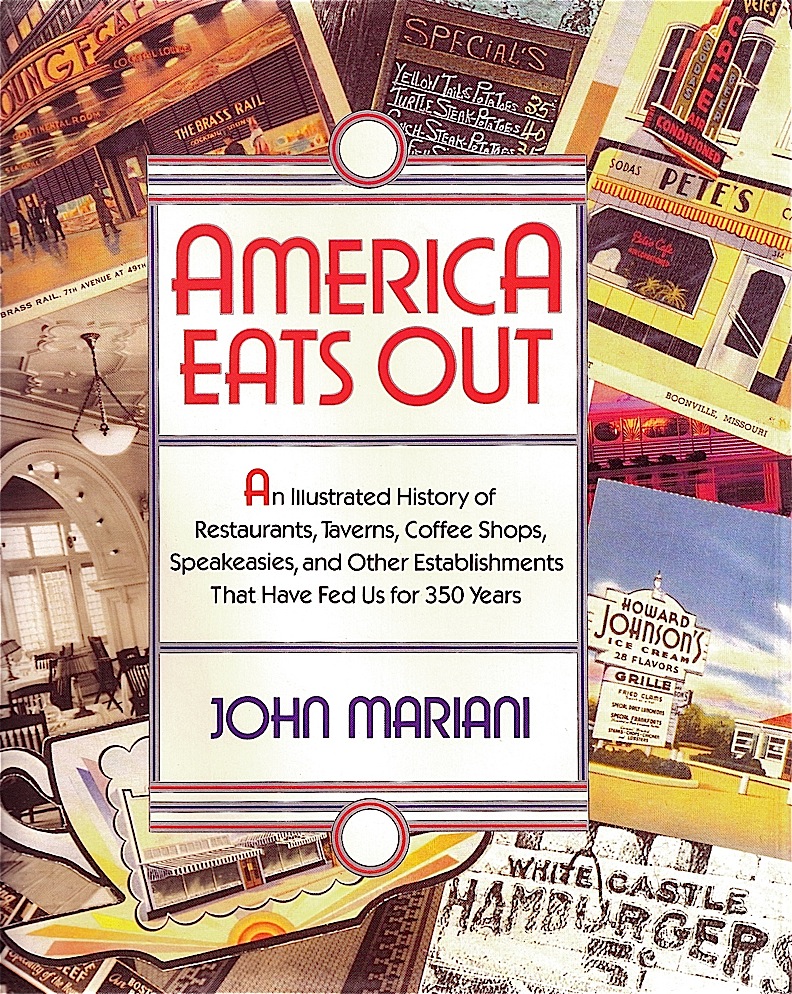
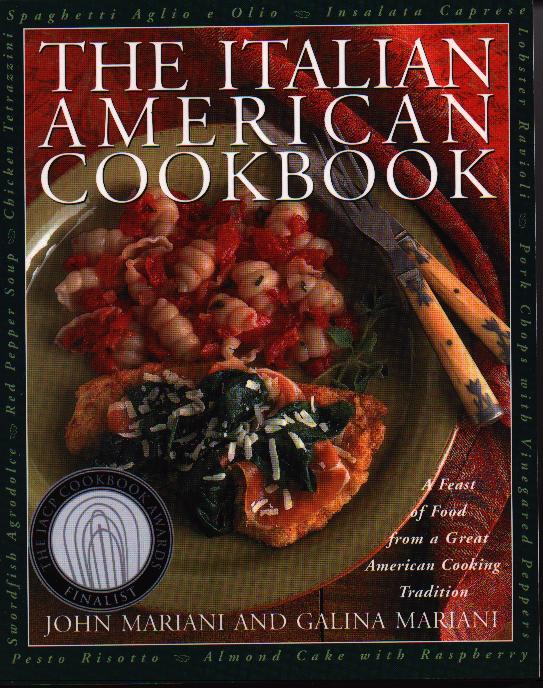
Any of John Mariani's books below may be ordered from amazon.com.
 The Hound in Heaven
(21st Century Lion Books) is a novella, and
for anyone who loves dogs, Christmas, romance,
inspiration, even the supernatural, I hope you'll find
this to be a treasured favorite. The story
concerns how, after a New England teacher, his wife and
their two daughters adopt a stray puppy found in their
barn in northern Maine, their lives seem full of promise.
But when tragedy strikes, their wonderful dog Lazarus and
the spirit of Christmas are the only things that may bring
his master back from the edge of despair.
The Hound in Heaven
(21st Century Lion Books) is a novella, and
for anyone who loves dogs, Christmas, romance,
inspiration, even the supernatural, I hope you'll find
this to be a treasured favorite. The story
concerns how, after a New England teacher, his wife and
their two daughters adopt a stray puppy found in their
barn in northern Maine, their lives seem full of promise.
But when tragedy strikes, their wonderful dog Lazarus and
the spirit of Christmas are the only things that may bring
his master back from the edge of despair. WATCH THE VIDEO!
“What a huge surprise turn this story took! I was completely stunned! I truly enjoyed this book and its message.” – Actress Ali MacGraw
“He had me at Page One. The amount of heart, human insight, soul searching, and deft literary strength that John Mariani pours into this airtight novella is vertigo-inducing. Perhaps ‘wow’ would be the best comment.” – James Dalessandro, author of Bohemian Heart and 1906.
“John Mariani’s Hound in Heaven starts with a well-painted portrayal of an American family, along with the requisite dog. A surprise event flips the action of the novel and captures us for a voyage leading to a hopeful and heart-warming message. A page turning, one sitting read, it’s the perfect antidote for the winter and promotion of holiday celebration.” – Ann Pearlman, author of The Christmas Cookie Club and A Gift for my Sister.
“John Mariani’s concise, achingly beautiful novella pulls a literary rabbit out of a hat – a mash-up of the cosmic and the intimate, the tragic and the heart-warming – a Christmas tale for all ages, and all faiths. Read it to your children, read it to yourself… but read it. Early and often. Highly recommended.” – Jay Bonansinga, New York Times bestselling author of Pinkerton’s War, The Sinking of The Eastland, and The Walking Dead: The Road To Woodbury.
“Amazing things happen when you open your heart to an animal. The Hound in Heaven delivers a powerful story of healing that is forged in the spiritual relationship between a man and his best friend. The book brings a message of hope that can enrich our images of family, love, and loss.” – Dr. Barbara Royal, author of The Royal Treatment.
|
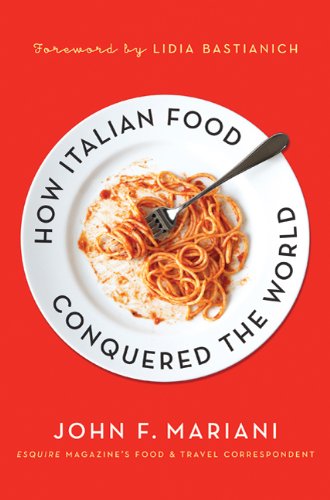
The Encyclopedia of American Food and Drink by John F. Mariani (Bloomsbury USA, $35) Modesty forbids me to praise my own new book, but let me proudly say that it is an extensive revision of the 4th edition that appeared more than a decade ago, before locavores, molecular cuisine, modernist cuisine, the Food Network and so much more, now included. Word origins have been completely updated, as have per capita consumption and production stats. Most important, for the first time since publication in the 1980s, the book includes more than 100 biographies of Americans who have changed the way we cook, eat and drink -- from Fannie Farmer and Julia Child to Robert Mondavi and Thomas Keller. "This book is amazing! It has entries for everything from `abalone' to `zwieback,' plus more than 500 recipes for classic American dishes and drinks."--Devra First, The Boston Globe. "Much needed in any kitchen library."--Bon Appetit. |
"Eating Italian will never be the same after reading John Mariani's entertaining and savory gastronomical history of the cuisine of Italy and how it won over appetites worldwide. . . . This book is such a tasteful narrative that it will literally make you hungry for Italian food and arouse your appetite for gastronomical history."--Don Oldenburg, USA Today. "Italian
restaurants--some good, some glitzy--far
outnumber their French rivals. Many of
these establishments are zestfully described
in How Italian Food Conquered the World, an
entertaining and fact-filled chronicle by
food-and-wine correspondent John F.
Mariani."--Aram Bakshian Jr., Wall Street
Journal.
"Equal parts
history, sociology, gastronomy, and just
plain fun, How Italian Food Conquered the
World tells the captivating and delicious
story of the (let's face it) everybody's
favorite cuisine with clarity, verve and
more than one surprise."--Colman Andrews,
editorial director of The Daily
Meal.com. "A fantastic and fascinating
read, covering everything from the influence
of Venice's spice trade to the impact of
Italian immigrants in America and the
evolution of alta cucina. This book will
serve as a terrific resource to anyone
interested in the real story of Italian
food."--Mary Ann Esposito, host of PBS-TV's
Ciao
Italia. "John Mariani has written the
definitive history of how Italians won their
way into our hearts, minds, and
stomachs. It's a story of pleasure over
pomp and taste over technique."--Danny Meyer,
owner of NYC restaurants Union Square
Cafe, The Modern, and Maialino.
|
 |
 |
 |
 |
 |
 |
MARIANI'S VIRTUAL GOURMET
NEWSLETTER is published weekly. Publisher: John Mariani. Editor: Walter Bagley. Contributing Writers: Christopher
Mariani, Misha Mariani, John A. Curtas, Gerry Dawes, Geoff Kalish.
Contributing
Photographer: Galina Dargery. Technical
Advisor: Gerry
McLoughlin.
If you wish to subscribe to this
newsletter, please click here: http://www.johnmariani.com/subscribe/index.html
© copyright John Mariani 2026