MARIANI’S
Virtual Gourmet
SEPTEMBER 6, 2026
NEWSLETTER
Founded in 1996
ARCHIVE
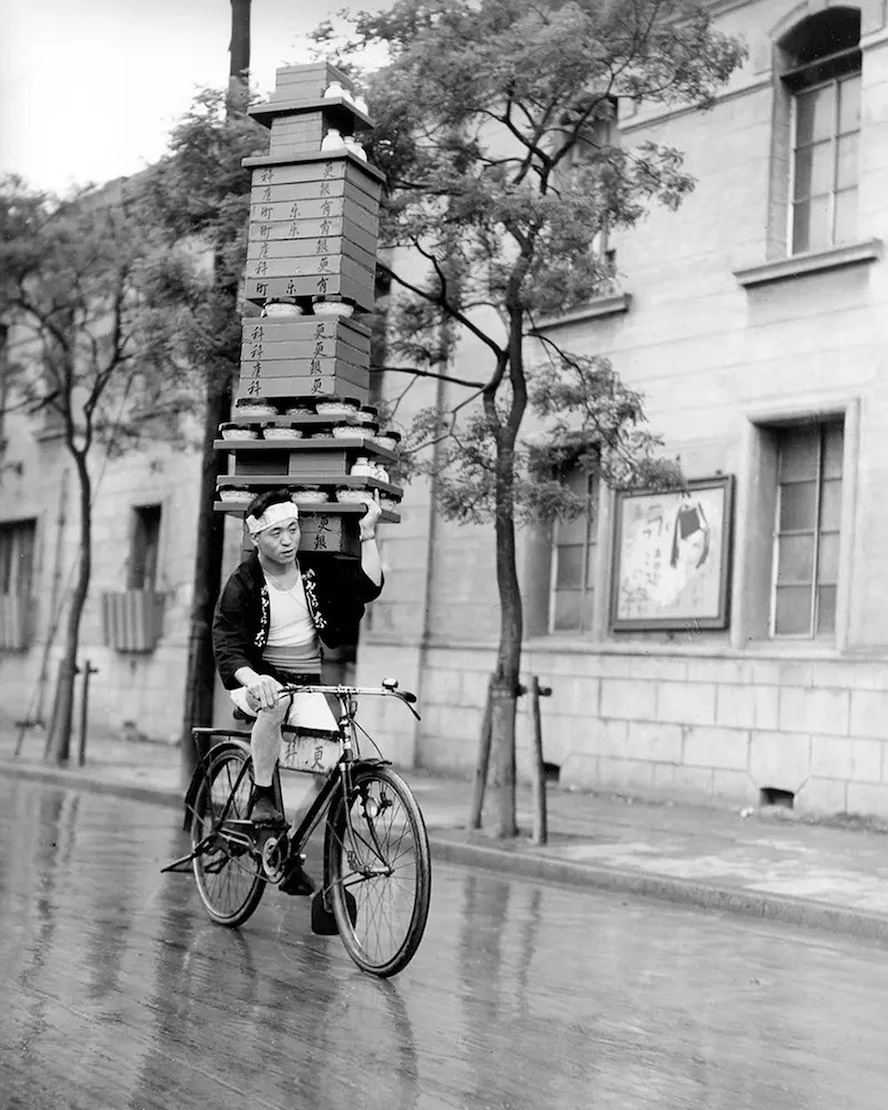
Soba Noodle Delivery, Japan
ZONING OUT IN THE CAYMAN ISLANDS
By John Mariani
NEW YORK CORNER
CASA SALVO
By John Mariani
THE BISON
CHAPTER THIRTY-EIGHT
By John Mariani
HEMINGWAY AND THE BOB
By John Mariani
NOTES FROM THE WINE CELLAR
WINES OF THE DOURO VALLEY
By John Mariani
ZONING OUT IN THE CAYMAN ISLANDS
By John Mariani

If
your idea of island bliss is to have so
little to do that you do very
little at all, you should well consider the
appeal of the Cayman Islands, where the
attractions are wholly provided by Nature.
The first time I ever set foot on Grand
Cayman 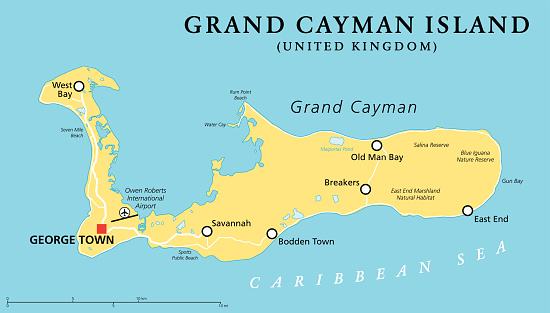 forty years ago, I
was driven from the island after three days
by swarms of gnats and a lack of anything to
do but lie on the beach or snorkel––neither
my cup of tea. Hotels were rudimentary,
restaurants dreary. But gee whiz! What a
difference a mere four decades can make!
forty years ago, I
was driven from the island after three days
by swarms of gnats and a lack of anything to
do but lie on the beach or snorkel––neither
my cup of tea. Hotels were rudimentary,
restaurants dreary. But gee whiz! What a
difference a mere four decades can make!
The gnats are still there but,
I suppose, insect repellents have gotten
better (and I stayed off the beach).  The
attractions are the same, with the magnificent
Seven Mile Island the biggest draw, along with
Crystal Caves, bird watching, swimming with
the sting rays, a botanic park and hiking.
What has vastly improved are the hotels and
restaurants, which have better access to
better ingredients (almost nothing is grown on
the islands) and highly professional chefs who
have brought a wide range of cuisines that go
beyond the fish kabobs grilled on the beach.
The
attractions are the same, with the magnificent
Seven Mile Island the biggest draw, along with
Crystal Caves, bird watching, swimming with
the sting rays, a botanic park and hiking.
What has vastly improved are the hotels and
restaurants, which have better access to
better ingredients (almost nothing is grown on
the islands) and highly professional chefs who
have brought a wide range of cuisines that go
beyond the fish kabobs grilled on the beach.
The Caymans were discovered in 1503 by
Columbus on
his fourth
and final voyage to the New World when winds
blew his ship off-course. He named the islands
“Las Tortugas” for its abundance of turtles;
then it became
“Lagartos,”
meaning alligators or large lizards and by
1530 the
“Caimanas,” derived from the native word
for crocodiles. The more remote islands,
Cayman Brac and Little Cayman are still
largely untouched. 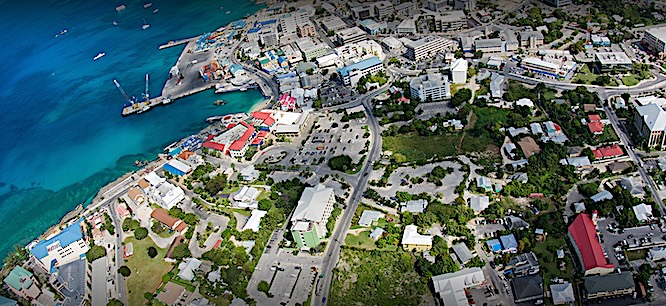
The earliest
settlers arrived around 1658 as deserters from
the British Army in Jamaica, followed by
fishermen, slaves, sailors and refugees from
the Spanish Inquisition, and it eventually
became, and still is, a British territory. Population
is currently only about 90,577, so tourism
is clearly the major industry. It’s about a
fifty-fifty split of locals and immigrants. English
is the official language, and while they use
Caymanian dollars, U .S. dollars are
accepted as well.

Tourism
has increased sharply in the last ten years,
now that there is a wide range of hotels on
Grand Cayman, including the Ritz-Carlton,
Hotel
Indigo, the Kimpton Seafire, Palm
Heights and the brand new One GT,
which I shall be reporting on soon. There is a
ten-story limit on the height of buildings,
and Grand Cayman. Tere are also 79 banks, 68
of which generally conduct
business with non-resident international
clients.
George Town itself
is only one-and-a-half blocks of duty free
shopping, local vendors and not much else.
A lot of Grand
Cayman’s restaurants copycat each other’s
resort-style menus as a mix of burgers and
beef, a few Caribbean items and plenty of
newfangled cocktails. Eleven years ago 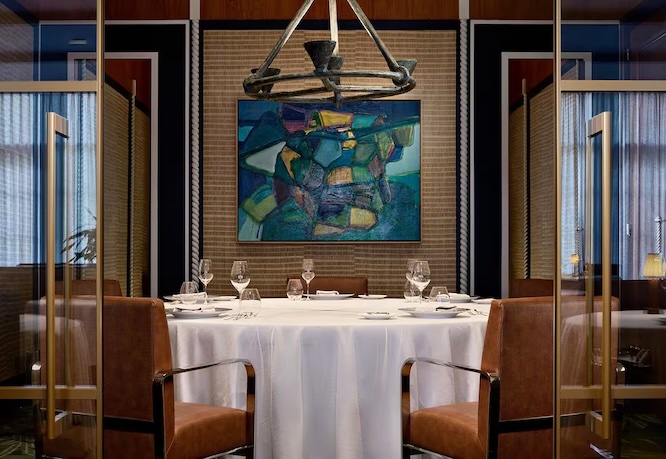 the
Ritz-Carlton threw down the gauntlet, however,
upon hiring Eric Ripert of New York’s
illustrious Le Bernardin to open Blue (right),
a fine dining room (currently on hiatus until
November 2), which features highly refined
seafood overseen by Chef Michele Tenzone.
the
Ritz-Carlton threw down the gauntlet, however,
upon hiring Eric Ripert of New York’s
illustrious Le Bernardin to open Blue (right),
a fine dining room (currently on hiatus until
November 2), which features highly refined
seafood overseen by Chef Michele Tenzone.
Palm Heights
(below), opened in 1019, has the lovely
Lillie’s with a soothing leafy outdoor
terrace impeccably set and managed by an
ebullient Italian named Davide Spada.
It has quite a varied menu and this June I
very much enjoyed some remarkably light,
well-seasoned crisp conch fritters with
crema, a squirt of cucumber juice and
lacing of lemongrass oil, as 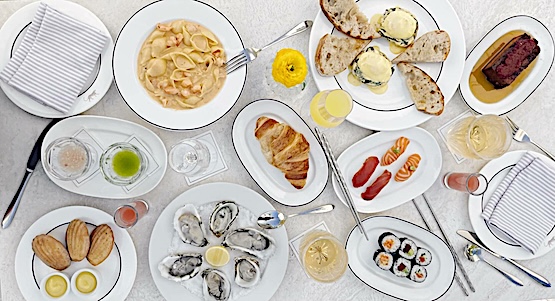 I
sipped a perfect daiquiri. A sashimi of tuna
was pristinely fresh with aji peppers,
leche de tigre, red onion and sweet
potato. The catch of the day (which is as
local as can be had on the island) is done alla
milanese, crisply breaded with cucumber,
sweet avocado and yuzu kosho. The
desserts are wonderfully sophisticated but
Davide recommended the very popular soft-serve
vanilla ice cream sundae that was an ideal
sweet to end with.
I
sipped a perfect daiquiri. A sashimi of tuna
was pristinely fresh with aji peppers,
leche de tigre, red onion and sweet
potato. The catch of the day (which is as
local as can be had on the island) is done alla
milanese, crisply breaded with cucumber,
sweet avocado and yuzu kosho. The
desserts are wonderfully sophisticated but
Davide recommended the very popular soft-serve
vanilla ice cream sundae that was an ideal
sweet to end with.
Grand Cayman's higher-end
free-standing restaurants tend to be found at
the far end of the island, and one of the best
is Agua (47 Forum Lane), opened
on the waterfront in 2018 as a ristorante
specializing in seafood with a touch of
Peruvian influence. It
has a large menu of many categories and one of
the best wine lists in the Caribbean that took
me several minutes to peruse.
You might start off
with a trio selection of ceviches, but the
pastas are outstanding, including agnolotti
del plin, a rarely encountered dish from
Turin of little packets of braised beef
shoulder and Parmigiano in a
sauce of
butter scented with sage. Potato gnocchi
al pesto was very good, and,
despite the bland summer truffles, a dish of
house-made tagliolini with truffle
sauce was admirable. Two fishes are
listed––Agua tuna with potato compote, and
snapper majarisco with wild shrimp,
calamari, octopus and mashed plantains.
Grand Cayman also has a few
highly localized eateries serving down island
fare, and everyone I asked recommended the Mango
Tree (518 Shedden Road,
Georgetown) right across from the
airport. It doesn’t look like much from either
the outside or inside, but the staff is very
congenial and happy to guide you through the
every day and the daily menus. They do a great
deal of take-out. Unfortunately the only
beverages are celery juice, lemonade or orange
soda––none of which goes well with this
food––and no beer.
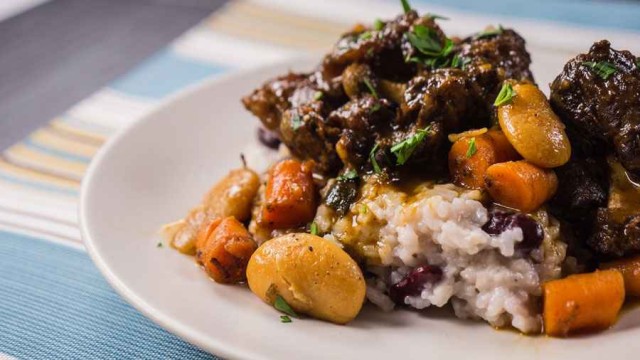
Everybody gets the
rich chicken soup with noodles, and I was
delighted with the hearty oxtail stew full of
beans (left). The meat fell from the
bone into the deep brown soup, to be enjoyed
with plantain fritters, white rice and
cole slaw. I also had Cayman style shrimp,
which was pretty good, fried with a
peppery-sweet seasonings.
NEW YORK CORNER
CASASALVO
212-334-1013
By John Mariani
Photos by Alex Staniloff
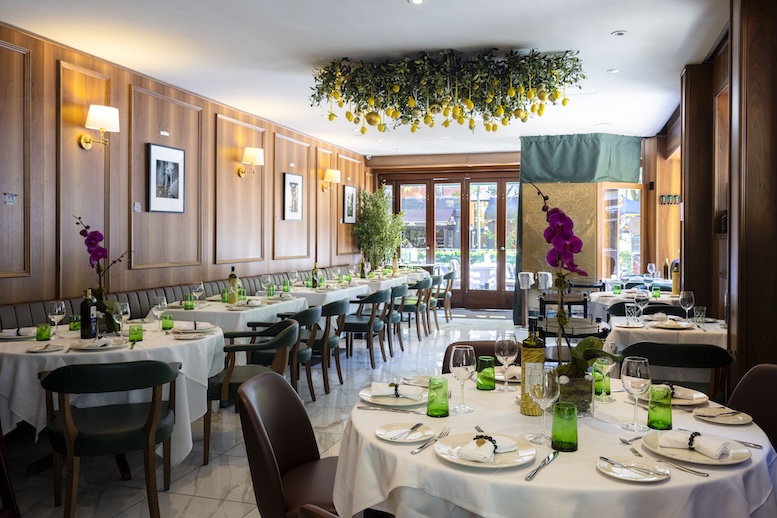
For some reason, Spring
Street east of Sixth Avenue is less frenetic
than it is west in Soho, and the year-old
Casasalvo has a refinement wholly missing in
places like Balthazar, Boqueria Soho and
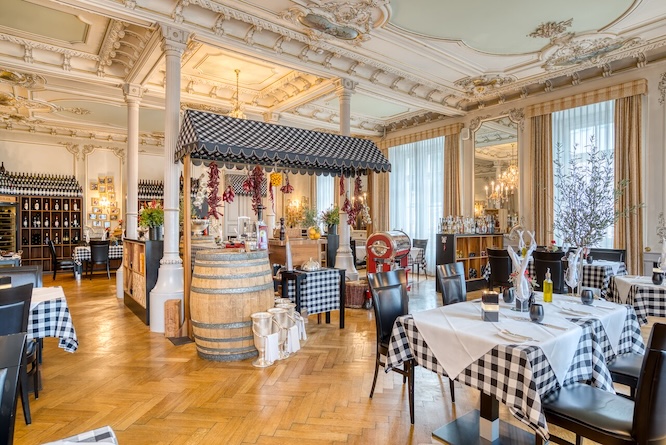
Mothers Run. From the moment you walk in,
there is a calm not unlike you’d find in a ristorante
in Verona or Lecce, with warm varnished
wooden walls, sconces, mirrors, greenery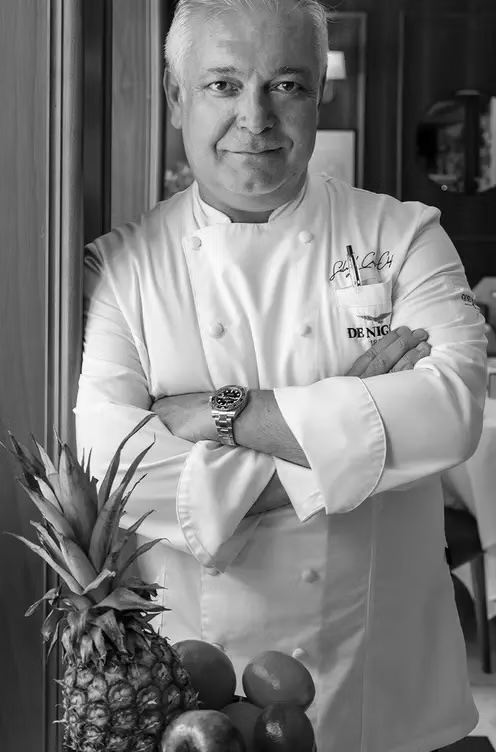 and well-set
tables topped with double linens. Indeed, it
may remind you a bit of Harry’s Bar in Venice.
A charming chandelier is hung with Sicilian
lemons. Stemware is excellent, colored
water glasses are Murano, wines are poured
into ship’s decanters,
cocktails are made alla tavola,
breadsticks are baked in-house and the
200-label wine list is exceptionally broad and
deep.
and well-set
tables topped with double linens. Indeed, it
may remind you a bit of Harry’s Bar in Venice.
A charming chandelier is hung with Sicilian
lemons. Stemware is excellent, colored
water glasses are Murano, wines are poured
into ship’s decanters,
cocktails are made alla tavola,
breadsticks are baked in-house and the
200-label wine list is exceptionally broad and
deep.
Chef
Owner Salvo LoCastro has seen to every detail to
make his restaurant as close to an Italian
experience as possible, based on a long, varied
career that included years cooking for
Popes John Paul II and Benedict XVI. He was born
in Catania, Sicily, had his first restaurant job
at the age of twelve, received a catering
diploma from the Giovanni Falcone Institute in
Giarre, then pursued his culinary and service
talents across Italy and Romania.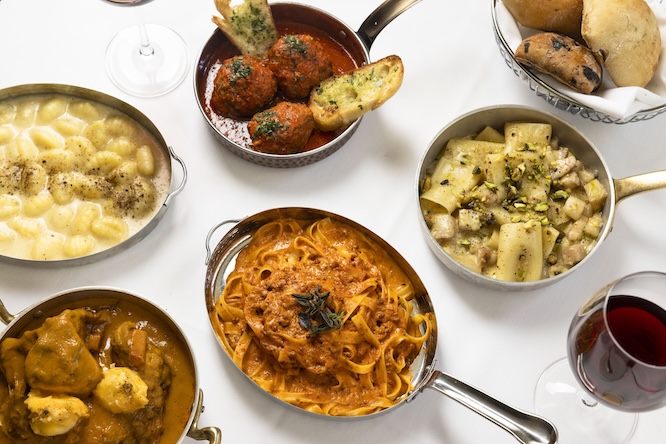
As a proud son of Sicilian
heritage, LoCastro focuses his menu on the
savory cucina of the island waters and
the Mediterranean, starting with various crudi
of mazza red shrimp carpaccio and
bluefin tuna tartare.
I told LoCastro to send out whatever he
liked, and we started off with little loaves of
tuna sashimi topped with caviar––served
correctly with mother of pearl spoons––that set
the tone for the evening of simple tastes done
with delicacy. Very tender veal meatballs “alla
Etna” (Catania lies in the shadow of the
volcano) derived from his 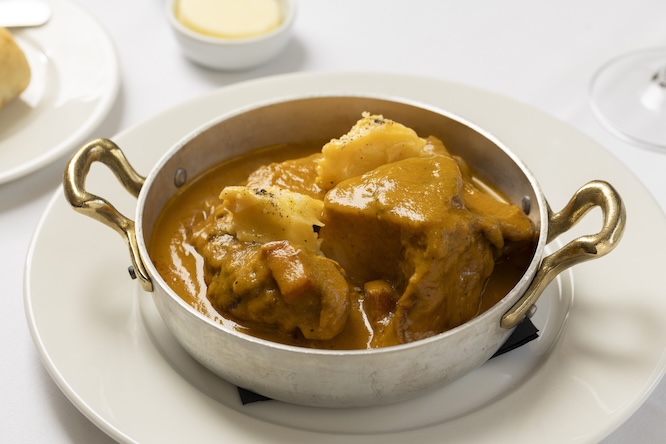 grandfather’s
recipe , and cacocciuli is a Sicilian
rendering of artichokes in a rich cream of
Pecorinio cheese with parsley, mint and garlic.
An arancino
was a cone of rice in tomato and melted
mozzarella.
His signature fettuccine alla Casasalvo is
housemade noodles in a veal ragù that
is simmered for eight hours to achieve a density
and complexity of seasonings and flavors,
lavished with Parmigiano
and a little oregano, while another of his
signature is a plate of flat paccheri
noodles in a pistachio sauce made from Bronte
pistachios grown in the lava-rich soil of
grandfather’s
recipe , and cacocciuli is a Sicilian
rendering of artichokes in a rich cream of
Pecorinio cheese with parsley, mint and garlic.
An arancino
was a cone of rice in tomato and melted
mozzarella.
His signature fettuccine alla Casasalvo is
housemade noodles in a veal ragù that
is simmered for eight hours to achieve a density
and complexity of seasonings and flavors,
lavished with Parmigiano
and a little oregano, while another of his
signature is a plate of flat paccheri
noodles in a pistachio sauce made from Bronte
pistachios grown in the lava-rich soil of 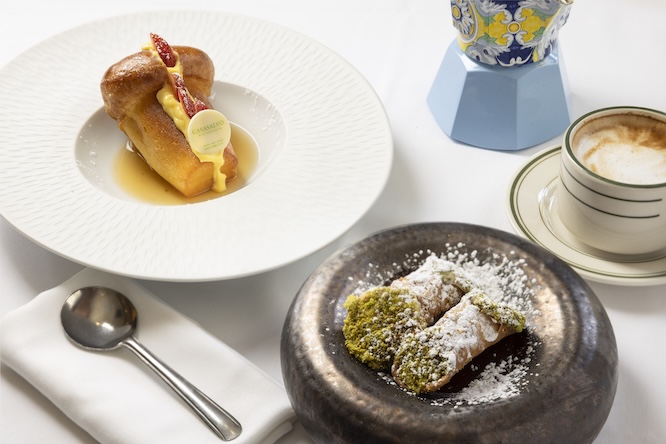 Etna,
dotted with sauteed guanciale bacon.
Etna,
dotted with sauteed guanciale bacon.
A dish of stewed calamari was
disappointingly chewy and fishy.
The main
course for our table was a generous
ossobuco of veal shank that seemed to have
fallen from its bone all on its own after long,
careful cooking, served with luscious braised
beef ravioli.
LoCastro was of course going to serve his
own cannoli, which tells you why Sicilians
rightly boast of their eminence in crafting this
pastry and creamy confection.
Prices are high for SoHo, with pastas
costing $25-$45 and osso buco $75 and lamb chops
$100, but you don't find the kind of
sophistication and hospitality elsewhere in SoHo
you do at Casasalvo, where genteel calm rules.
Open daily for lunch and dinner
❖❖❖
THE BISON
By John Mariani

CHAPTER
THIRTY-EIGHT
Word
traveled fast around the globe, with
background stories about Angus Pierce and
his dealings in worldwide media. Opinion
pieces ran the gamut from expressing
surprise to declaring it was bound to
happen.
The connection to Maxwell was
everywhere noted with “alleged” cautiously
attached to the words “involved in his
murder.”
Since the connection to
the death of Sarah in Palm Beach was still
sketchy, the media generally only alluded to
“possible involvement” and Pierce’s long
friendship with Epstein. The Times
of London, which was owned by Rubert
Murdoch, pounced on the Pierces as being
monsters and assigned reporters to dig
further into the Maxwell case. Those media
owned by the Pierces reported the news
without comment.
The case itself would be
brought by both the St. Moritz local police
and the Strafgesetzbuch (SGB) agency that
oversees the Swiss canton, in St. Moritz’s
case, Graubünden, which was notorious for
under reporting crime figures. In the
Pierces’ case, any charges brought against
them for the murders of Maxwell and Sarah
would be under the jurisdiction of their
national citizenship —
American and British— and would require
extradition, which, given that the Pierces
were foreigners in Switzerland, seemed
assured.
While waiting to leave,
David called Terry Rush in Palm Beach to
find out his reaction.
“Well, the shit
sure hit the fan,” said Rush. “The battle to
get the Pierces extradited is going to be an
entanglement that’s going to take months,
maybe years.”
“Well, if the Swiss convict him of
trying to murder Katie and me over here,
will he ever be extradited to the U.S.?”
asked David.
“Hard
to say. I don’t know what kind of sentences
they get over there for attempted murder.
First degree murder gets a minimum of ten
years. Maybe attempted murder gets five?”
“I can find out. So, then, who gets
their hands on the Pierces if they serve time
in Switzerland?”
“Probably the UK, for a big name like
Maxwell rather than a prostitute in Palm
Beach. We’re going to investigate further then
file a request to arrest and the D.A. to
indict. It could take years. Richard
Pierce
will claim the girl’s death was an overdose
accident, but if he provided the drugs, then
he’s guilty of involuntary manslaughter.”
“Well, as long as the bastards are in
jail, that’s what counts.”
“From what I hear Swiss prisons are
heavily into ‛re-socialization,’ and they’re a
lot nicer places than most other countries’.
One prisoner to a cell, for starters.”
“Sounds like a good reason for the
Pierces to want to serve a full term. If
they’re convicted. Now, is this reason enough
to get a court order to allow you to enter
Epstein’s house?”
“That’s something we’re looking into. But,
hey, I haven’t heard Katie’s tape recording,
so I don’t know what kind of evidence is on
there. The papers only say the girl may have
died from an accidental overdose.”
“So, why didn’t Richard
Pierce call 911?”
“Right, he’s standing over a dead
sixteen-year-old girl’s body in Jeffrey
Epstein’s compound, and he tells the cops he
had nothing to do with it. Not a smart move.
He, probably with Epstein’s help, got rid of
the body, and until you and Katie got Angus to
spill the beans, he was free and clear. Her
body’s gotta be long gone. What all this media
attention will do is to flush out all
of Epstein’s very vulnerable friends.”
“Who, I’m sure, will express utter
shock that such a thing could happen,” said
David. “But
if you can get them under oath, it will be
tough for them to lie their way out of it.”
“These kinds of guys will hide behind
squads of lawyers, but it still won’t be
pretty. Some heads have gotta roll, even if
indictments of the Pierces take forever.
Meanwhile, I think you two should stay out of
both Pierce’s and Epstein’s reach.”
“Somehow I don’t think Boris is going
to be lurking around New York when we get
back.”
“You never saw his face, right? You
don’t even know if that’s some bullshit name
Pierce gave you.”
“I’m pretty good at watching
my back,” said David. “A lot of mob guys would
have loved to stick an ice pick in my neck.
After I left NYPD one actually did try to kill
Katie and me.” Katie nodded, remembering the
Capone episode when a mobster tried to murder
them both.
“Anyway, the quicker she gets that
article written and filed with her editor, the
better. Then they won’t have much reason to
want you two disposed of.”
“I’ll tell her to type as fast as she
can. The tape recording has the whole story
already.”
“Where’s the original recording?” asked
Rush.
“We have it and the Swiss police have a
copy, and they made us a copy. The original is
at the moment in our hotel safe. The
copy we already sent to Katie’s editor by
overnight DHL. If you want, we’ll have him
shoot you a copy, too.”
“That was my next question. Even if
Pierce’s admission on tape is enough for the
Swiss to arrest them, it’s pretty flimsy
evidence this side of the Atlantic. Having you
testify in court is another thing. I’d like to
play your recording for a judge and see if we
can get a search warrant for Epstein’s house.”
The two Americans had one
more session with the canton police, the day
before they were to leave St. Moritz.
Apparently the Pierces were easily able to
make a substantial bail payment, but they were
confined to house arrest at their lodge and
forced to wear leg monitors.
 Katie
and David had their last dinner with
Baldassari, who had been filing story after
story about the incident and the Pierces. The
town’s society had clearly turned against
them, and, although some spoke off the record,
most were only too happy to go on the record
about the Pierces’ behavior and standing in
the social whirl of St. Moritz. Richard in
particular was gossiped about endlessly, and
Baldassari
heard stories so scandalous she could
not bring herself to publish them.
Katie
and David had their last dinner with
Baldassari, who had been filing story after
story about the incident and the Pierces. The
town’s society had clearly turned against
them, and, although some spoke off the record,
most were only too happy to go on the record
about the Pierces’ behavior and standing in
the social whirl of St. Moritz. Richard in
particular was gossiped about endlessly, and
Baldassari
heard stories so scandalous she could
not bring herself to publish them.
“Up until this incident,” she said over
dinner at an Italian restaurant named Da
Adriano (left) of beef carpaccio and a
mix of fried lake fish, “I was always careful
to tell interesting stories that didn’t
reflect badly on the people here. But for this
story I’ve had to dismiss any pretense of
cordiality. The Pierces deserve whatever
terrible punishment they receive.”
The next day as they left the hotel,
Katie and David were surprised to see a flock
of news reporters and paparazzi outside. Yet
unlike their counterparts in other European
cities like London and Rome, they were not
loudly shouting for the attentions of the
Americans, instead asking “May we take a photo
of you?” and “Would it be possible to get a
statement from you about the murder?”
Katie and David looked
at each other and nodded. “We’ll take a few
questions,” said David, “but we have a train
to catch in twenty minutes.”
The reporters were polite even to each
other, as the photographers’ cameras clicked
away. The questions were intended to get
details from the Americans, not to provoke
them, and David did most of the talking. After
five minutes, swooping into view, was
Baldassari, who addressed her colleagues in
German, indicating that the Americans needed
to get to the train station immediately,
ushering them into a waiting car.
“Are your reporters always so polite?”
asked David.
“Pretty much so,” said Baldassari.
“They don’t get many stories like yours to
cover, so they’re really not sure how to
approach it. With all the celebrities in town,
they have a relationship both sides respect.
They get to ask cordial questions and the
celebrities get to answer them with the same
politeness. We also don’t have droves of
reporters and paparazzi here. This is
Switzerland and St. Moritz is a small town;
it’s not
Hollywood or Monte Carlo.”
The station was only five minutes away,
and there were a few more members of the
media, mostly to take pictures and to ask if
the Americans had any parting remarks.
One reporter asked a question that
caused her colleagues to look surprised.
“May I ask as you leave if you will
ever come back to St. Moritz, and do you now
have a bad impression of us?”
Katie smiled and said, “I’m a reporter,
too, you know. And I’d never judge what
happened to us as common to any city,
especially not St. Moritz. I will probably be
coming back for a deposition and certainly for
the trial, wherever that’s held. But, yes, you
have a lovely city, and David and I would love
to return some day.”
She glanced at David, who
smiled and nodded, though he really couldn’t
care less if he ever set foot in St. Moritz
again.
❖❖❖
HEMINGWAY AND THE BOB
By John Mariani
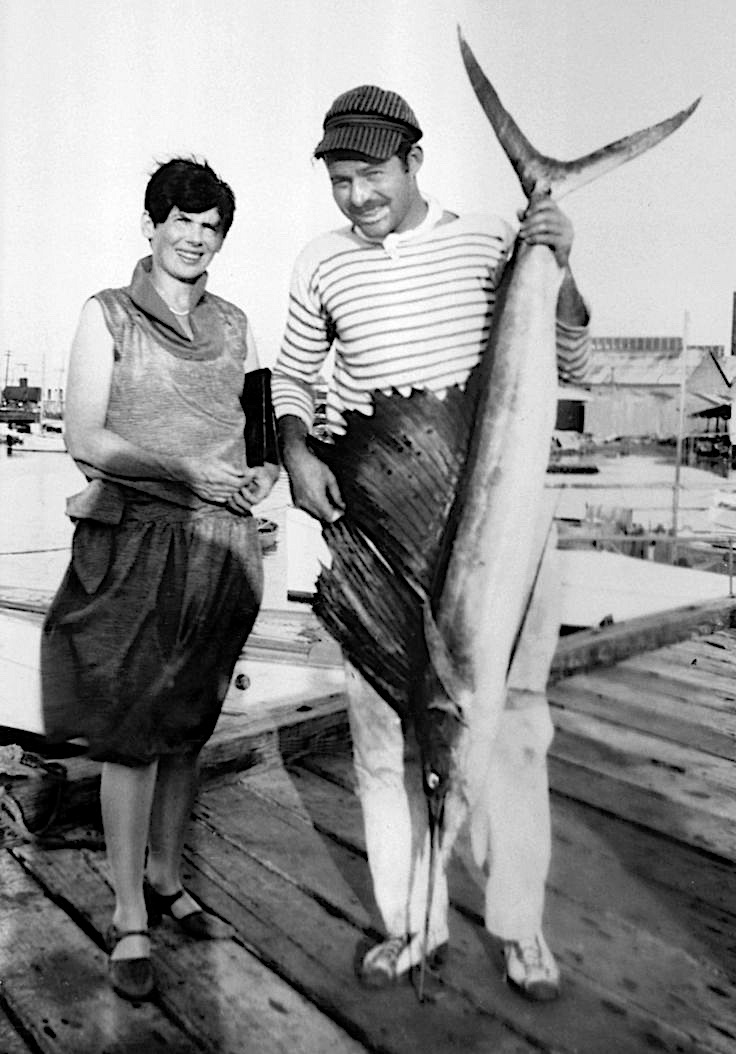
The
critical assault on Ernest Hemingway’s reputation
as a hyper-macho, swaggering bully whose toxic
character flaws show up on every page of his vast
number of works seems to have abated somewhat in
the last few years as more objective scholars and
literary critics have recognized that an artist’s
personal life and character and his or her work
are two very different things.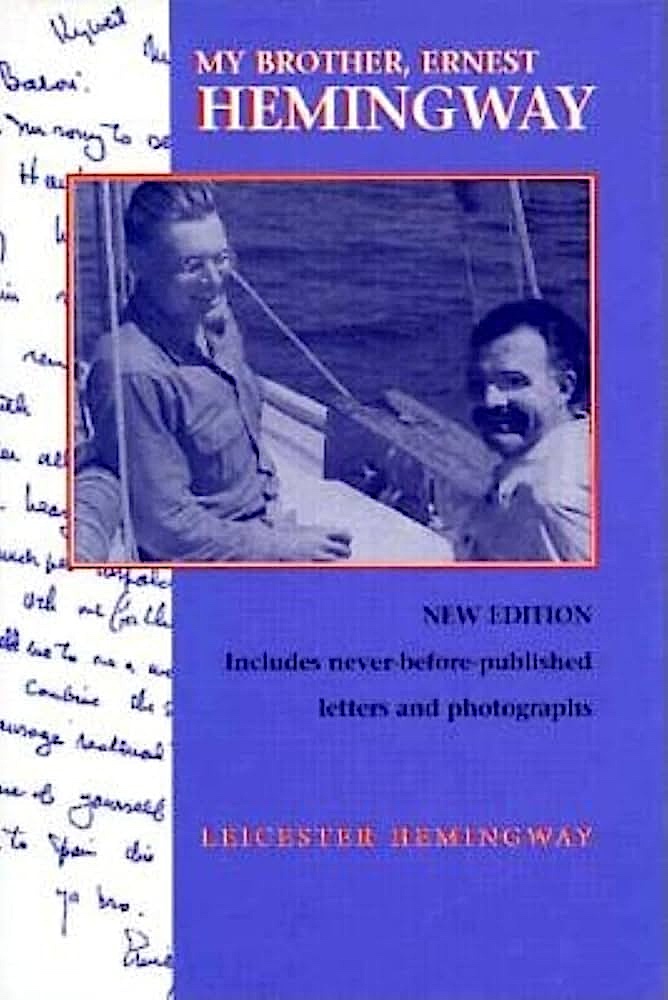
Yet
while the sins and failings of other artists, from
Caravaggio to Picasso, have had their apologists, Hemingway’s
harshest critics come down hard in an effort to show
how his own surly character and love of manly blood
sports seeped into his work so as to make the work
itself socially reprehensible. Furthermore,
it was argued, any author so consumed with themes of
masculine adventure is likely to be a closeted
homosexual who deliberately leaves hints all over
his books and stories that his upbringing and
chromosome count overpowered his artistic restraint.
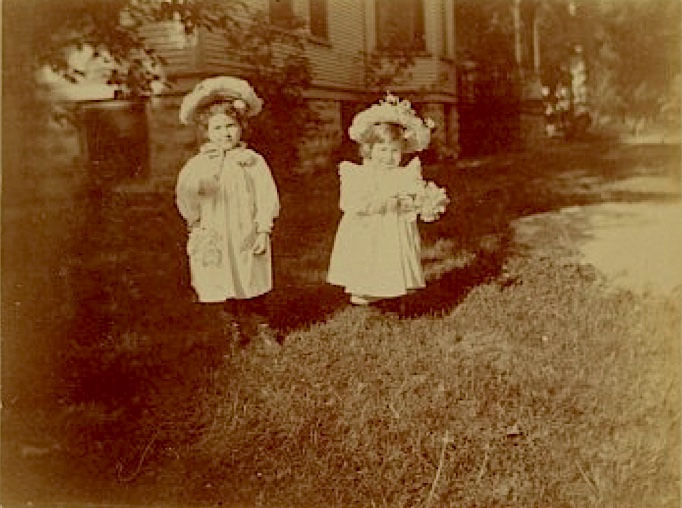 Academic hounds sniffing
around his leavings have centered on how his mother
dressed him in girl’s clothing as a child (left),
while admitting that this was common practice in
families at the turn of the century. (Ernest’s
brother Leicester Hemingway mentions nothing about
this subject in his memoir, My Brother Ernest
Hemingway.)
Academic hounds sniffing
around his leavings have centered on how his mother
dressed him in girl’s clothing as a child (left),
while admitting that this was common practice in
families at the turn of the century. (Ernest’s
brother Leicester Hemingway mentions nothing about
this subject in his memoir, My Brother Ernest
Hemingway.)
Unless evidence suddenly turns up
that young Ernest sought desperately to play Juliet
in an Oak Park, Illinois, high school production of
Romeo and Juliet, there simply aren’t any
instances of cross dressing in his bio. (His mother
also forced him to learn the cello, but his ill
feelings for that experience never showed up in his
work.)
Nevertheless, critics’
accusations of submerged feelings of homo- or
bisexuality without any solid evidence come in the
form of the old dodge phrases like “Is it not
likely. . .” and “What we do know would 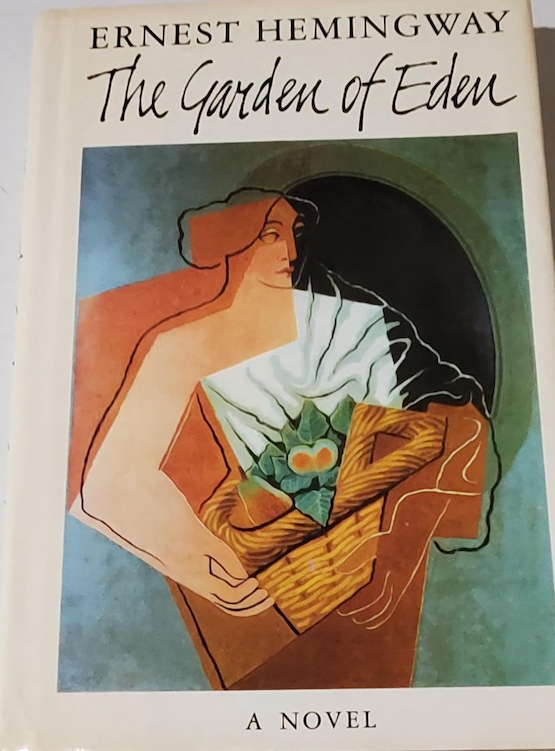 seem to
suggest. . . .”
seem to
suggest. . . .”
And then we get to his . . . thing
. . . about his liking women with short
hair. Critics have rifled his work and his bio for
instances where he dared express such a thought,
culminating in the plot of his late experimental,
unfinished, uncorrected novel The Garden of Eden,
only issued in a highly truncated form in 1986.
Hemingway’s supposed obsession with short hair
“crops up everywhere in his writing,” insists
biographer James R. Mellow.
Hemingway biographer Michael
Reynolds, ever on the lookout for what he calls
“gender issues,” contends that “Throughout all
those Oak Park years [1899-1921], it was always
hair: his several sisters’ hair, his mother’s hair
as long as Gertrude [Stein’s]. He remembered when
[his sister] Marceline bobbed her hair and how his
father looked at her across the table without
saying a word. Remember his mother drying her hair
in the afternoon sun at Windermere with only a
slight breeze coming off the lake, long hair
thinned out on the hillside blanket.”
Those are Reynolds’s words
(trying to sound Hemingway-esque),
not his subject’s. Similar in their commentary are
scholars like Debra Moddelmog (“Hemingway and Queer
Studies,” State of the Field: Gender
Studies, Sexuality Studies, and Hemingway”) Mark
Spilka (Hemingway’s Quarrel with Androgyny);
and Carl Eby (Hemingway’s Fetishism:
Psychoanalysis and the Mirror of Manhood). Richard
Bradford in his provocatively titled The Man
Who Wasn’t There, resorting constantly to
“suggestions” and “possibilities” and
“assumptions,” sets
out to show Hemingway as an inveterate liar who
came to delude himself as to what was real and
fiction.
 A far more judicious biographer,
Mary V. Dearborn (left), wrote, “By
definition, studying Hemingway is about the rough
opposite, the cultural construction of gender –
how sex roles are determined by the forces around
us rather than our genes. It is through figures
like Hemingway that masculinity gets defined –
even if that same cultural construction affects
him in turn.”
A far more judicious biographer,
Mary V. Dearborn (left), wrote, “By
definition, studying Hemingway is about the rough
opposite, the cultural construction of gender –
how sex roles are determined by the forces around
us rather than our genes. It is through figures
like Hemingway that masculinity gets defined –
even if that same cultural construction affects
him in turn.”
When Dearborn plumbs the shallows
of her subject’s fascination with hair, she
calls it a “deep-seated preoccupation,” twice, an
“obsession” and his fantasies about it “frankly
pornographic,” but she believes Hemingway’s
fascination with the way short hair feels and
looks “should not be taken to suggest any
homosexual impulse on Ernest’s part.”
Perusing his letters published
thus far by The Hemingway Letters Project (with
sixteen volumes projected) will not turn up any. And
within Hemingway’s huge oeuvre mentions of short
haircuts are very few and far between and have
little importance beyond the page on which they are
referenced.
In “The Last Good Country” Nick
Adams’s sister, Littless, cuts her hair off so she
can be just like her older brother, which is not so
hard to imagine of many younger siblings, especially
tomboys. In the story
“Cat in the Rain,” the wife says she wants to grow
her hair out because she’s tired of it, “looking
like a boy.” 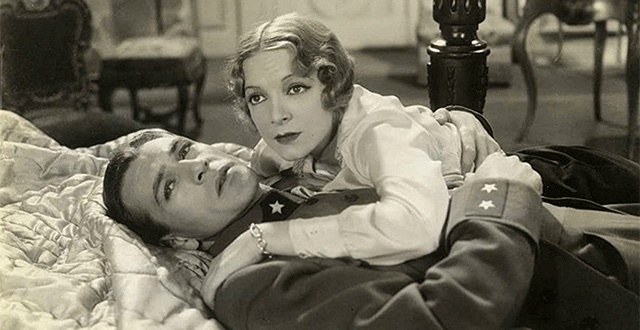 The husband, whose reading
in bed she has interrupted, says nothing more than
that he likes it the way it is—a similar moment
repeated in the novel A Farewell
to Arms (1929) when the character of
Catherine, whose hair is luxuriously long, so that
when Frederick removes the last two pins, “it all
came down and she would drop her head and we would
both be inside of it, and it was the feeling of
inside a tent or behind of falls. She had
wonderful hair and I would lie sometimes and watch
her twisting it up in the light that came in the
open door and it shone even in the night as water
shy and sometimes just before it is really
daylight.” It
is Catherine who says, “I’m
tired of it,” she tells him, “It’s an awful
nuisance in the bed at night,” and suggests that
if they both cut their hair, “We’d be just alike
except only one of us is blonde and the other one
dark,” noting “It would be fun.” Frederick doesn’t
seem to care one way or the other, saying “I like
it the way it is.” None of which seems to
The husband, whose reading
in bed she has interrupted, says nothing more than
that he likes it the way it is—a similar moment
repeated in the novel A Farewell
to Arms (1929) when the character of
Catherine, whose hair is luxuriously long, so that
when Frederick removes the last two pins, “it all
came down and she would drop her head and we would
both be inside of it, and it was the feeling of
inside a tent or behind of falls. She had
wonderful hair and I would lie sometimes and watch
her twisting it up in the light that came in the
open door and it shone even in the night as water
shy and sometimes just before it is really
daylight.” It
is Catherine who says, “I’m
tired of it,” she tells him, “It’s an awful
nuisance in the bed at night,” and suggests that
if they both cut their hair, “We’d be just alike
except only one of us is blonde and the other one
dark,” noting “It would be fun.” Frederick doesn’t
seem to care one way or the other, saying “I like
it the way it is.” None of which seems to 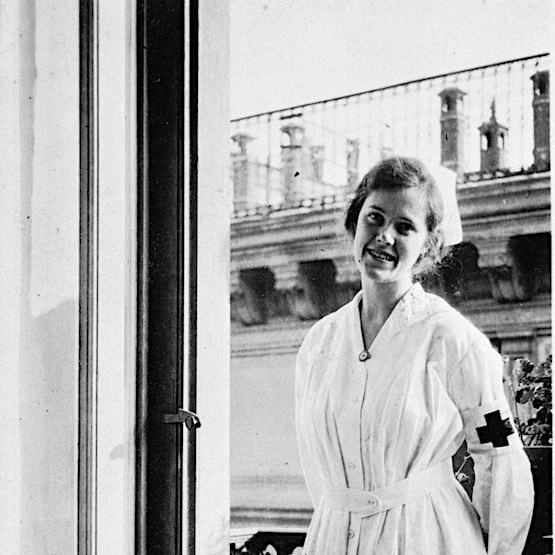 rise to
the level of obsession on either his
characters’—or Hemingway’s—part. In the film
version made in 1932, Catherine, played by Helen
Hayes (above, with Gary Cooper) had curly short
hair. The woman Catherine was based on was a nurse
named Agnes von Kurowsky (right), with whom
he had a romance while recovering from his wartime
wounds.
rise to
the level of obsession on either his
characters’—or Hemingway’s—part. In the film
version made in 1932, Catherine, played by Helen
Hayes (above, with Gary Cooper) had curly short
hair. The woman Catherine was based on was a nurse
named Agnes von Kurowsky (right), with whom
he had a romance while recovering from his wartime
wounds.
-3.jpeg) In
For Whom the Bell Tolls American expatriate
Robert Jordan asks Maria, whose hair had been
cruelly shaven off by the Fascists, to leave it
short and he will cut his to be like hers so that
“I am thee and thou art me,” which can be
read as a very caring man’s way of assuaging his
lover’s shame—especially in a country where long
hair was a mark of a young woman’s femininity—while
also stating precisely the sentiment of the Catholic
wedding ceremony that man and wife are being joined
together to form a “mystical union.” It is a
sentiment Robert expresses again at the end of the
book when Maria is carrying their child and he is
about to face certain death. At left is Ingrid
Bergman as Maria, with Gary Cooper, in the 1943 film
version.
In
For Whom the Bell Tolls American expatriate
Robert Jordan asks Maria, whose hair had been
cruelly shaven off by the Fascists, to leave it
short and he will cut his to be like hers so that
“I am thee and thou art me,” which can be
read as a very caring man’s way of assuaging his
lover’s shame—especially in a country where long
hair was a mark of a young woman’s femininity—while
also stating precisely the sentiment of the Catholic
wedding ceremony that man and wife are being joined
together to form a “mystical union.” It is a
sentiment Robert expresses again at the end of the
book when Maria is carrying their child and he is
about to face certain death. At left is Ingrid
Bergman as Maria, with Gary Cooper, in the 1943 film
version.
The fact is that in the 1920s and
1930s, short haircuts were so ubiquitous on women
and so much a  coy rebellion against the
long hair of the first two decades of the 20th
century when the Gibson Girl’s abundance of hair
massed atop her head (right) was the fashion,
that Hemingway, who upon arriving in Paris wore his
own hair long, would have seen nothing but bobs
on the women of Paris. Any suggestion that he was
sexually obsessed by the look of a woman with a bob
would only make sense if he
actually had a wide range of women’s hairstyles to
choose from.
coy rebellion against the
long hair of the first two decades of the 20th
century when the Gibson Girl’s abundance of hair
massed atop her head (right) was the fashion,
that Hemingway, who upon arriving in Paris wore his
own hair long, would have seen nothing but bobs
on the women of Paris. Any suggestion that he was
sexually obsessed by the look of a woman with a bob
would only make sense if he
actually had a wide range of women’s hairstyles to
choose from.
In The
Sun Also Rises 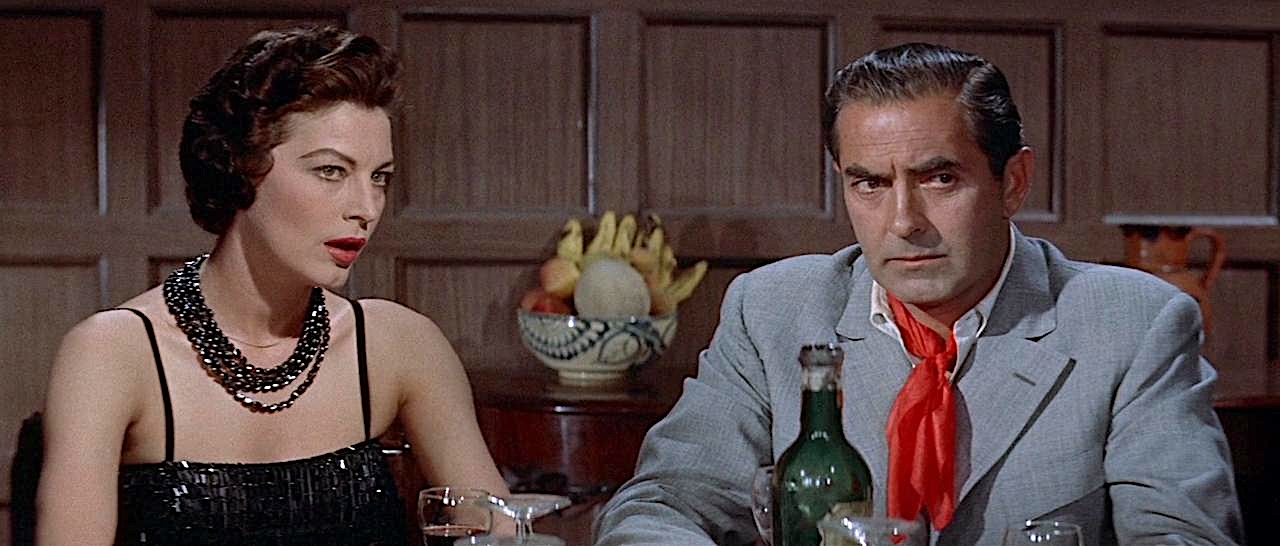 (below), with Ava
Gardner and Tyrone Power in the 1957 movie) Brett
Ashley’s short hair “brushed back like a boy’s”
was simply the style every woman in the 1920s
sported, just as did Hemingway’s fist wife,
Hadley, (right) and his second wife, Pauline
Pfeiffer (below, left).
(below), with Ava
Gardner and Tyrone Power in the 1957 movie) Brett
Ashley’s short hair “brushed back like a boy’s”
was simply the style every woman in the 1920s
sported, just as did Hemingway’s fist wife,
Hadley, (right) and his second wife, Pauline
Pfeiffer (below, left). 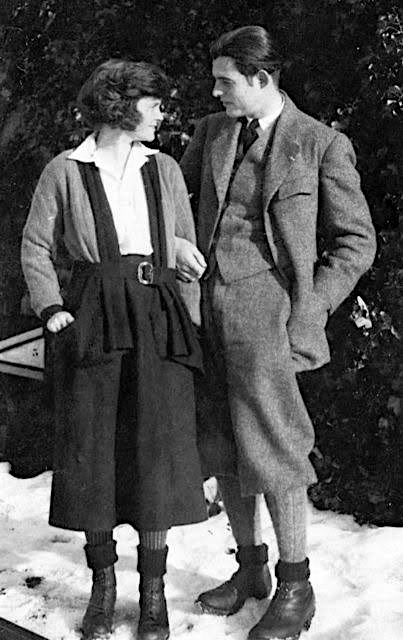 It
would have been highly unusual and individualistic
on Brett’s part had she run around Paris with long
hair. No woman would.
It
would have been highly unusual and individualistic
on Brett’s part had she run around Paris with long
hair. No woman would.
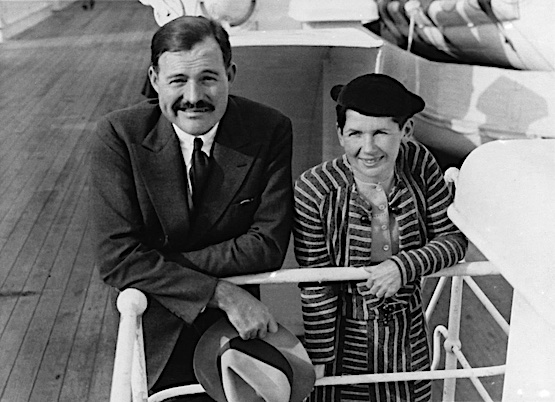 Various
claims have been made as to who the first stylist
was to create what became known as “the bob.” In
1908 couturier Paul Poiret’s dress collection showed
women with short hair (below),
Various
claims have been made as to who the first stylist
was to create what became known as “the bob.” In
1908 couturier Paul Poiret’s dress collection showed
women with short hair (below), 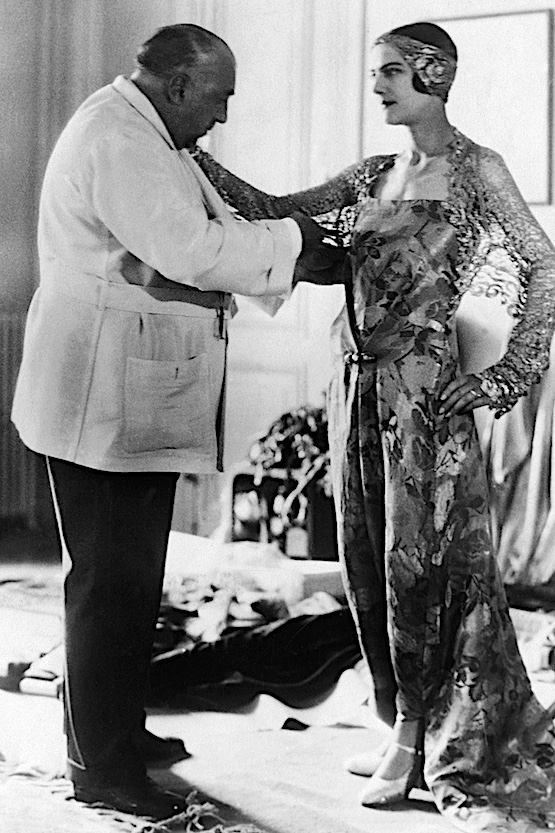 but
it was based on the women’s hairstyles, with
ringlets, of ancient Greece to complement his
clothes. Credit for the bob has gone to dancer and
fashion icon Irene Castle (left), who in 1915
sported a curly short haircut that came to be called
the
but
it was based on the women’s hairstyles, with
ringlets, of ancient Greece to complement his
clothes. Credit for the bob has gone to dancer and
fashion icon Irene Castle (left), who in 1915
sported a curly short haircut that came to be called
the 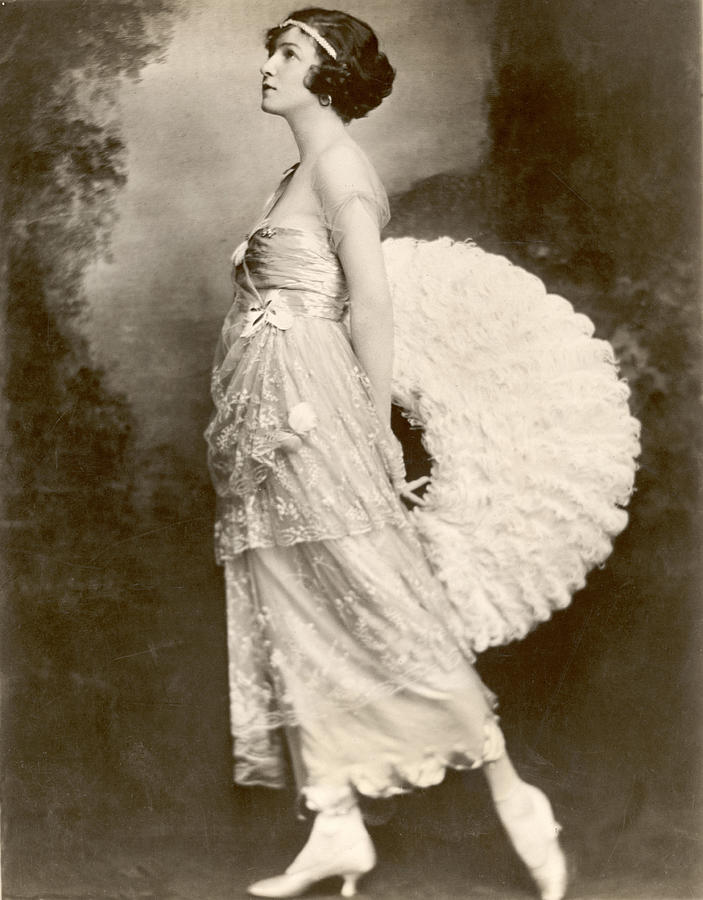 “Castle bob.” Burgeoning
French couturier Coco
Chanel claimed she cut her hair short as of 1917
that made her look like “a young boy, a little
shepherd” (right) which, along with her
jackets, slacks and straw hats, overnight became
the rage of young women in Europe and America.
“Castle bob.” Burgeoning
French couturier Coco
Chanel claimed she cut her hair short as of 1917
that made her look like “a young boy, a little
shepherd” (right) which, along with her
jackets, slacks and straw hats, overnight became
the rage of young women in Europe and America. 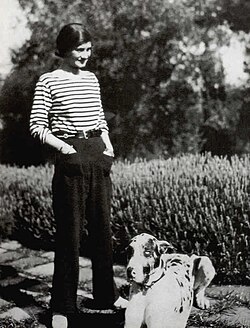
On May 1, 1920, the Saturday
Evening Post published F. Scott
Fitzgerald’s “Bernice Bobs Her Hair,” at
the start of the Roaring Twenties. In the story a
teenage girl named Marjorie suggests her friend
Bernice bob her hair: "‘I think it's unmoral,’
affirmed Bernice gravely. ‘But, of course, you've
either got to amuse people or feed 'em or shock
'em.’ Marjorie had culled this from Oscar Wilde.
It was greeted with a ripple of laughter from the
men and a series of quick, intent looks from the
girls.”
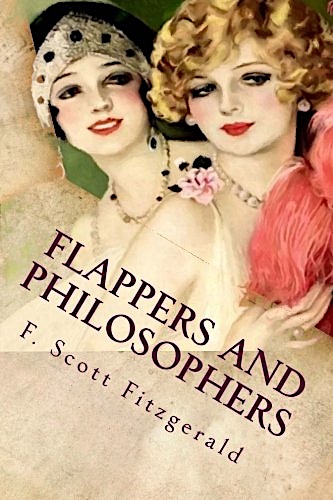 The “New Woman” (a term coined
in 1894 by an Irish feminist Sarah Grand and
popularized by American novelist Henry James) embraced
the new radical hairstyle and the provocative
sobriquet of “the flapper,” as portrayed in
Fitzgerald’s 1920 short story collection Flappers
and
Philosophers
and boosted that same year by the movie The
Flapper. Requisite to the style of the
flapper was bobbed hair, an unconstructed dress
that just touched the knee and a cloche
hat—exemplified in the couture designs of Coco
Chanel; a cigarette and cocktail glass completed
the look.
The “New Woman” (a term coined
in 1894 by an Irish feminist Sarah Grand and
popularized by American novelist Henry James) embraced
the new radical hairstyle and the provocative
sobriquet of “the flapper,” as portrayed in
Fitzgerald’s 1920 short story collection Flappers
and
Philosophers
and boosted that same year by the movie The
Flapper. Requisite to the style of the
flapper was bobbed hair, an unconstructed dress
that just touched the knee and a cloche
hat—exemplified in the couture designs of Coco
Chanel; a cigarette and cocktail glass completed
the look.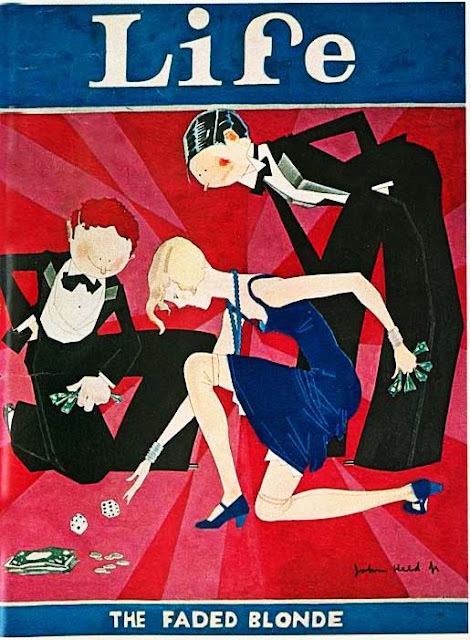
The bobbed flapper made
illustrator John Held Jr. famous and
wealthy for his satirical depictions of her, spindle
thin in her short dresses and long necklaces in
magazines like Life and College Humor.
In 1925, a story in the Washington
Post was headlined “Economic Effects of
Bobbing” about
how the style had increased the number of
hairdressing shops in the U.S. in 1920 from 5,000 to
21,000 shops by 1925, and that number did not
include men’s barbershops, which the article said
did “a rushing business with bobbing.” The cut
would be kept in place by bobby pins.
 Short hair was just about the only
length any woman wore for two decades, when flappers
and vamps were the “it” girls, epitomized by the
cleanly cropped, helmet-like bob of seductive
actress Louise Brooks (left); Colleen Moore
(right) became an overnight star in Flaming
Youth (1923)
Short hair was just about the only
length any woman wore for two decades, when flappers
and vamps were the “it” girls, epitomized by the
cleanly cropped, helmet-like bob of seductive
actress Louise Brooks (left); Colleen Moore
(right) became an overnight star in Flaming
Youth (1923) 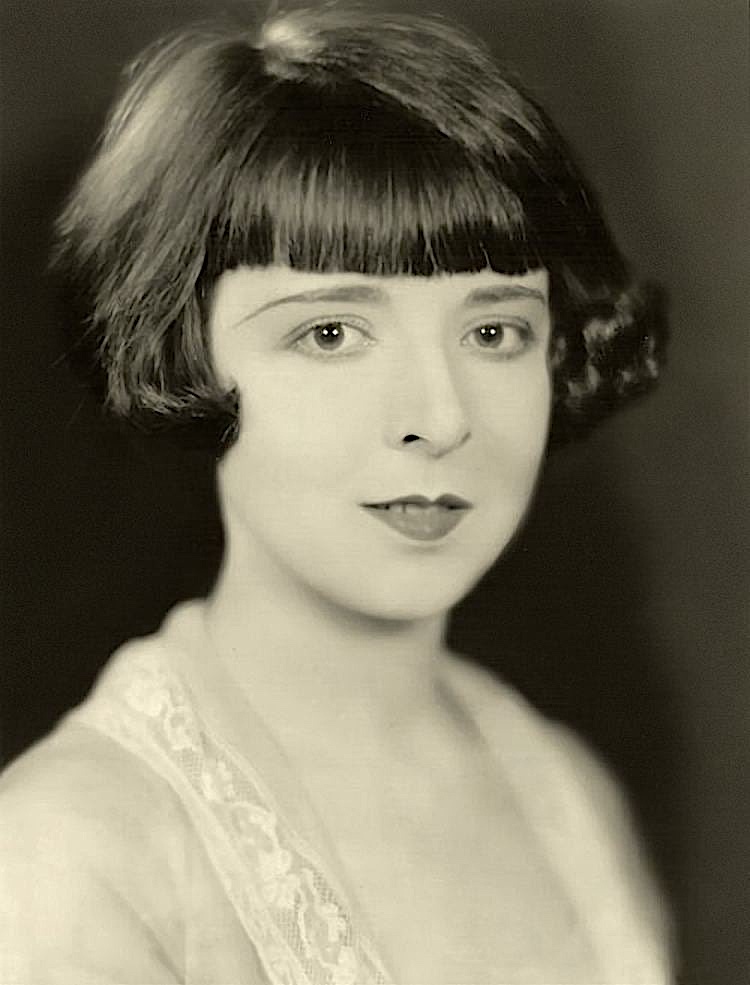 and The Perfect
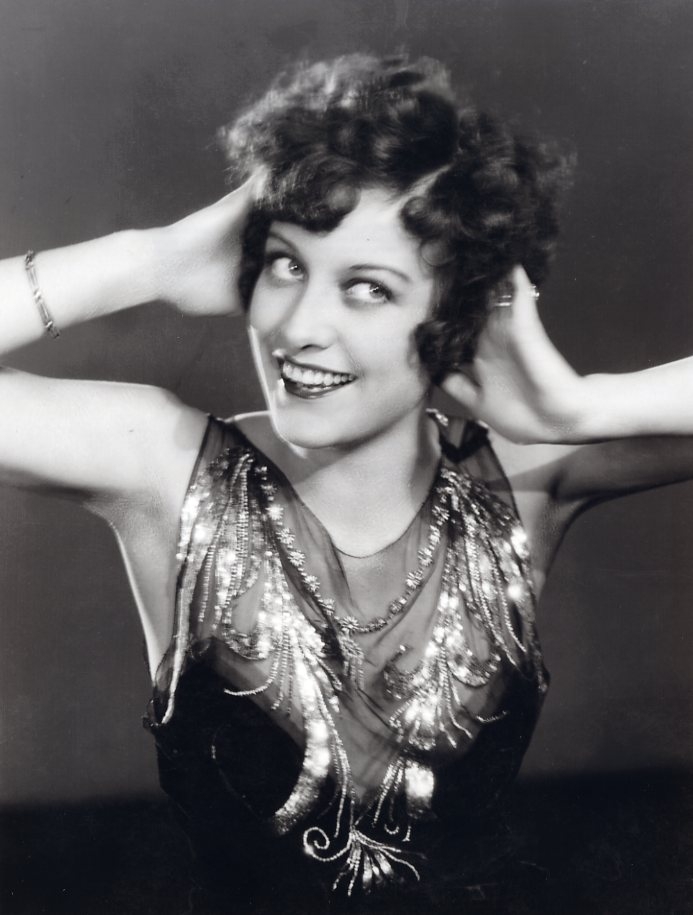
Flapper (1924). The type
persisted in a new star of whom Fitzgerald wrote,
“Joan Crawford is doubtless the best example of the
flapper, the girl you see in smart night clubs,
gowned to the apex of sophistication, toying iced
glasses with a remote, faintly bitter expression,
dancing deliciously, laughing a great deal, with
wide, hurt eyes. Young things with a talent for
living” (left).
and The Perfect
Flapper (1924). The type
persisted in a new star of whom Fitzgerald wrote,
“Joan Crawford is doubtless the best example of the
flapper, the girl you see in smart night clubs,
gowned to the apex of sophistication, toying iced
glasses with a remote, faintly bitter expression,
dancing deliciously, laughing a great deal, with
wide, hurt eyes. Young things with a talent for
living” (left).
 Unless
they were playing historic characters like Scarlett
O’Hara or Maid Marian the Hollywood actresses on
the 1930s all wore short hair, on and off-screen,
including Jean Harlow, Carole Lombard, Ginger
Rogers, Greta Garbo, Myra Loy and Claudette Colbert.
The
shortest cut, the “Eton,” was worn by entertainer
Josephine Baker (right).
Unless
they were playing historic characters like Scarlett
O’Hara or Maid Marian the Hollywood actresses on
the 1930s all wore short hair, on and off-screen,
including Jean Harlow, Carole Lombard, Ginger
Rogers, Greta Garbo, Myra Loy and Claudette Colbert.
The
shortest cut, the “Eton,” was worn by entertainer
Josephine Baker (right).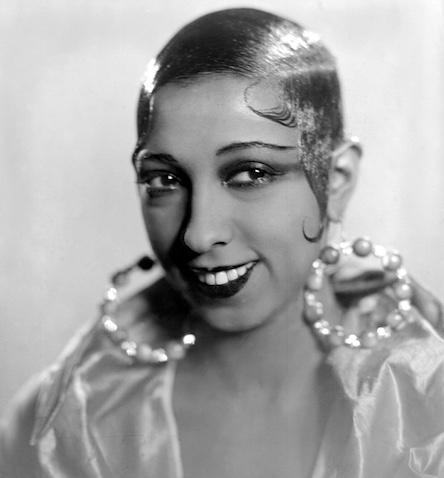
There was no question that the
bob had an androgynous suggestiveness about
it—Marlene Dietrich’s Lola Lola (below, left)
in The Blue Angel (1930) blatantly made that
clear—and no woman of the 1920s and 1930s was more
ravishingly alluring for that suggestion than Amelia Earhart, who, with her 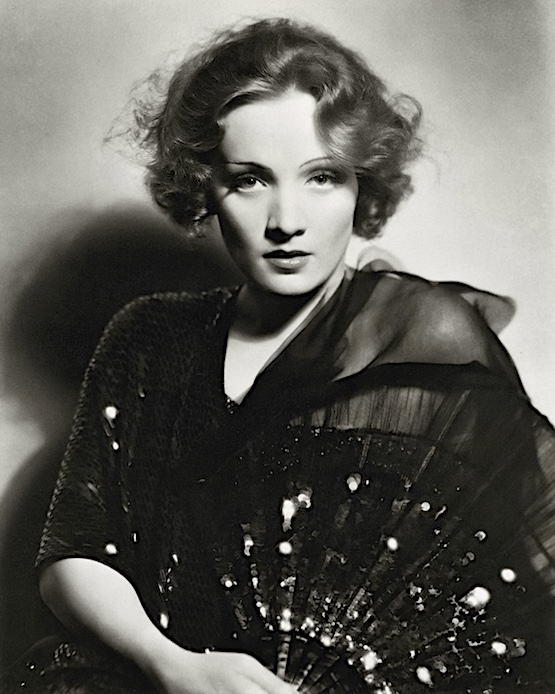 curly,
cropped hair, might have shared genes with Charles
Lindbergh. As naturally pretty as she was handsome,
with sky gray eyes and high cheekbones, Earhart’s
look gave her a unique tomboy innocence and
androgynous sexiness all at once. She would
dress in a flying man’s no-nonsense work clothes:
Baggy khaki pants, worn leather jacket and a
flowered scarf jauntily knotted around
curly,
cropped hair, might have shared genes with Charles
Lindbergh. As naturally pretty as she was handsome,
with sky gray eyes and high cheekbones, Earhart’s
look gave her a unique tomboy innocence and
androgynous sexiness all at once. She would
dress in a flying man’s no-nonsense work clothes:
Baggy khaki pants, worn leather jacket and a
flowered scarf jauntily knotted around 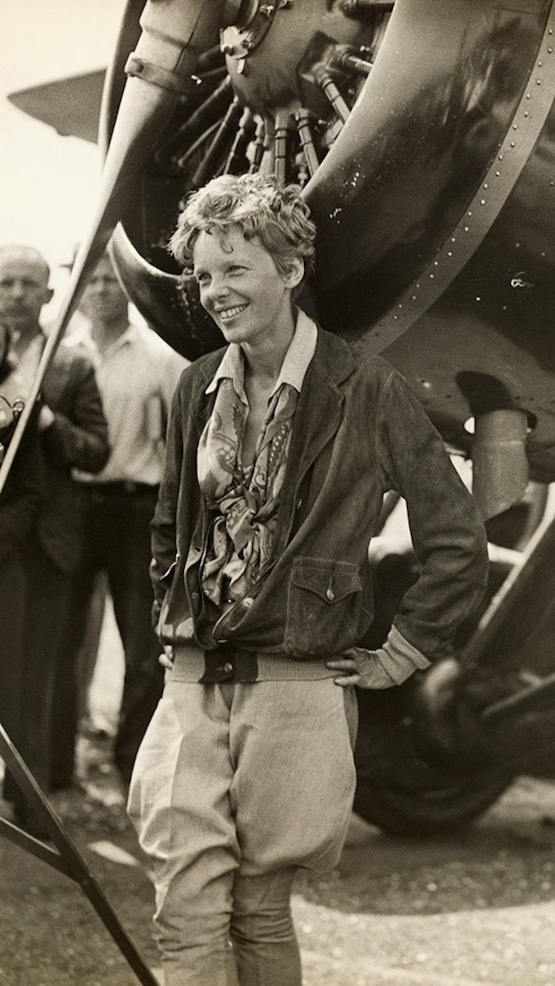 her slender neck. In her
white flight suit with cap and goggles she exuded
the Jazz Age chic of a Vogue cover girl.
And she carried it all off with the dexterity of a
long-limbed cat leaping onto the wing of an
airplane. Indeed, she might well have had a major
career in Hollywood. In 1935 actress Myrna Loy copied
her style as a woman aviator with a curly bob in Wings
in the Dark in which she wore a
glamorous white flight suit.
her slender neck. In her
white flight suit with cap and goggles she exuded
the Jazz Age chic of a Vogue cover girl.
And she carried it all off with the dexterity of a
long-limbed cat leaping onto the wing of an
airplane. Indeed, she might well have had a major
career in Hollywood. In 1935 actress Myrna Loy copied
her style as a woman aviator with a curly bob in Wings
in the Dark in which she wore a
glamorous white flight suit.
An
adventurer like Hemingway would certainly be
fascinated by such a daring and independent woman as
Earhart, short hair and all, as the epitome of
“grace under pressure.” As one obituary put it, “She had helped
make all women less afraid. For hers was a deeply
feminine valor that could look life and death in the
eye as unflinchingly as any man.” Hemingway could
not have said it better.
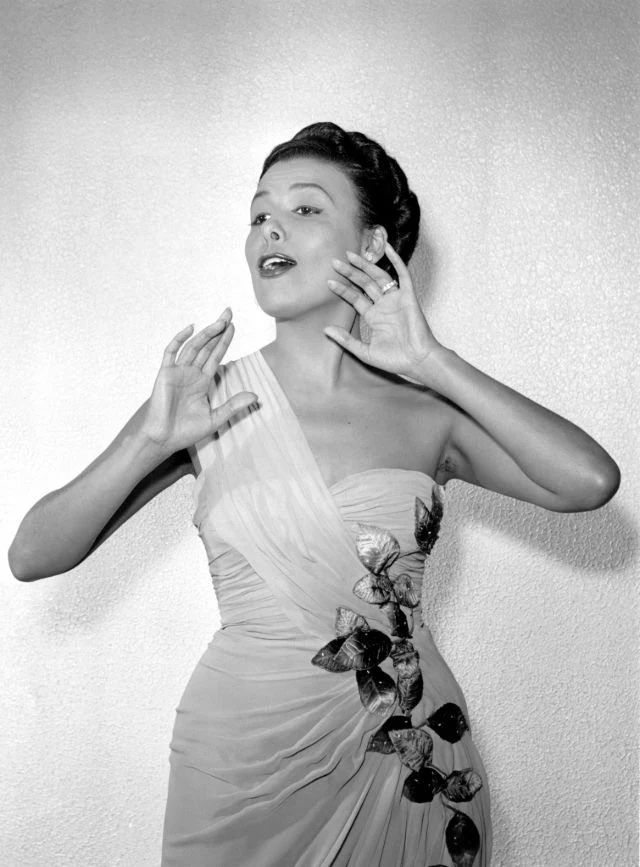 Women’s hairstyles became far more
varied in the1940s; the severely cropped bob had
become passé, but women in the movies and fashion
magazines by and large still wore their hair above
their shoulders, as evidenced by stars like Bette
Davis, Gene Tierney, Merle Oberon, Lena
Horne (left), June Allyson and Jane Powell.
Onscreen, a highly sexualized new kind of woman
emerged, one with hair below the shoulders that came
straight from the sexually charged covers of pulp
fiction novels and pin-up art. Actresses
Women’s hairstyles became far more
varied in the1940s; the severely cropped bob had
become passé, but women in the movies and fashion
magazines by and large still wore their hair above
their shoulders, as evidenced by stars like Bette
Davis, Gene Tierney, Merle Oberon, Lena
Horne (left), June Allyson and Jane Powell.
Onscreen, a highly sexualized new kind of woman
emerged, one with hair below the shoulders that came
straight from the sexually charged covers of pulp
fiction novels and pin-up art. Actresses 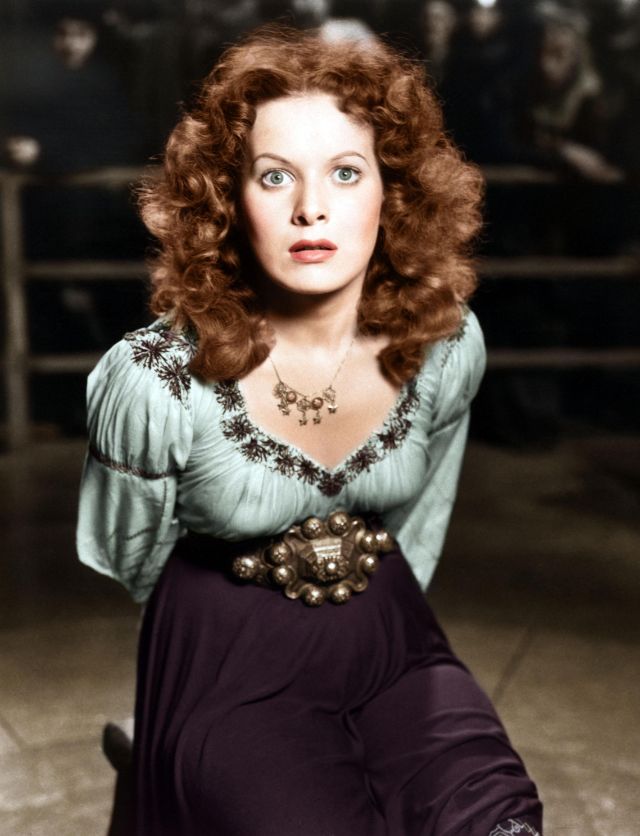 were
coiffed to be as seductive as Delilahs (whom Hedy
Lamarr played) and Salome (played by tress-tossing
Rita Hayworth); Maureen O’Hara (right) was
the fiery redheaded Irish woman, and Jane Russell
the voluptuous brunette; Dorothy
Lamour was the Polynesian fantasy girl in a sarong
with long Gauguin-esque black hair.
were
coiffed to be as seductive as Delilahs (whom Hedy
Lamarr played) and Salome (played by tress-tossing
Rita Hayworth); Maureen O’Hara (right) was
the fiery redheaded Irish woman, and Jane Russell
the voluptuous brunette; Dorothy
Lamour was the Polynesian fantasy girl in a sarong
with long Gauguin-esque black hair. 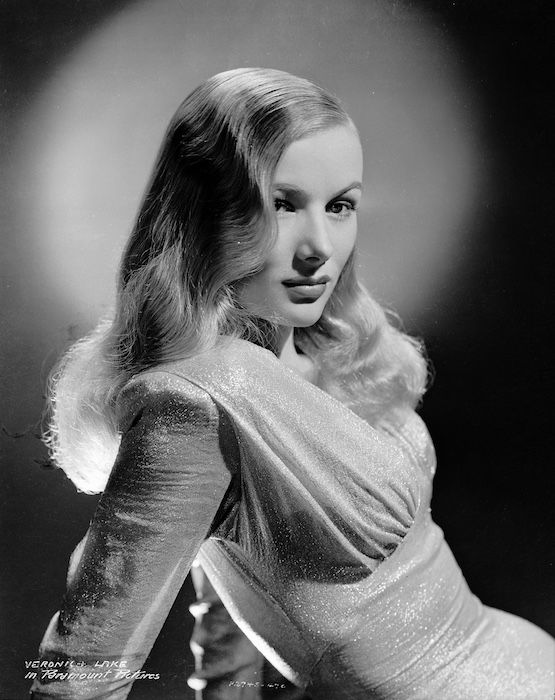 Veronica
Lake’s sultry blonde trademark peekaboo wave over
one eye (left) was so copied by American
women that government officials asked her to cut it,
lest women in the wartime factories catch their hair
in machinery; she obliged. Women in
the military had no choice but to wear their hair
down to the uniform collar.
Veronica
Lake’s sultry blonde trademark peekaboo wave over
one eye (left) was so copied by American
women that government officials asked her to cut it,
lest women in the wartime factories catch their hair
in machinery; she obliged. Women in
the military had no choice but to wear their hair
down to the uniform collar.
Two actresses of the period whom Hemingway
knew well were Lauren Bacall,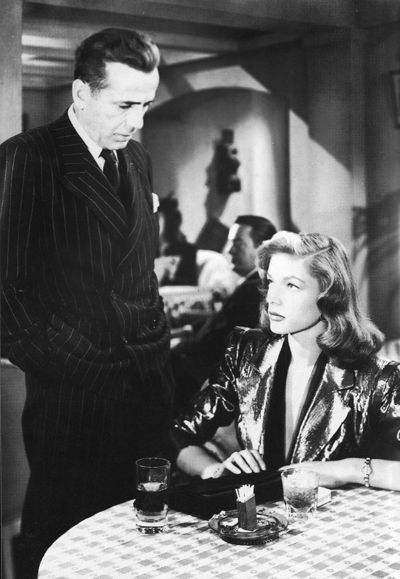 who played a seductive nightclub singer with long
wavy blond hair (right) in To Have and
Have Not (1944), and Ava Gardner, who burned
through the screen as a gangster’s moll in The
Killers (1946) with feline black hair that
tumbled below her shoulders (below). She
would also appear in The Snows of Kilimanjaro
(1952) as short-haired Cynthia and was a perfect
(bobbed)
who played a seductive nightclub singer with long
wavy blond hair (right) in To Have and
Have Not (1944), and Ava Gardner, who burned
through the screen as a gangster’s moll in The
Killers (1946) with feline black hair that
tumbled below her shoulders (below). She
would also appear in The Snows of Kilimanjaro
(1952) as short-haired Cynthia and was a perfect
(bobbed) 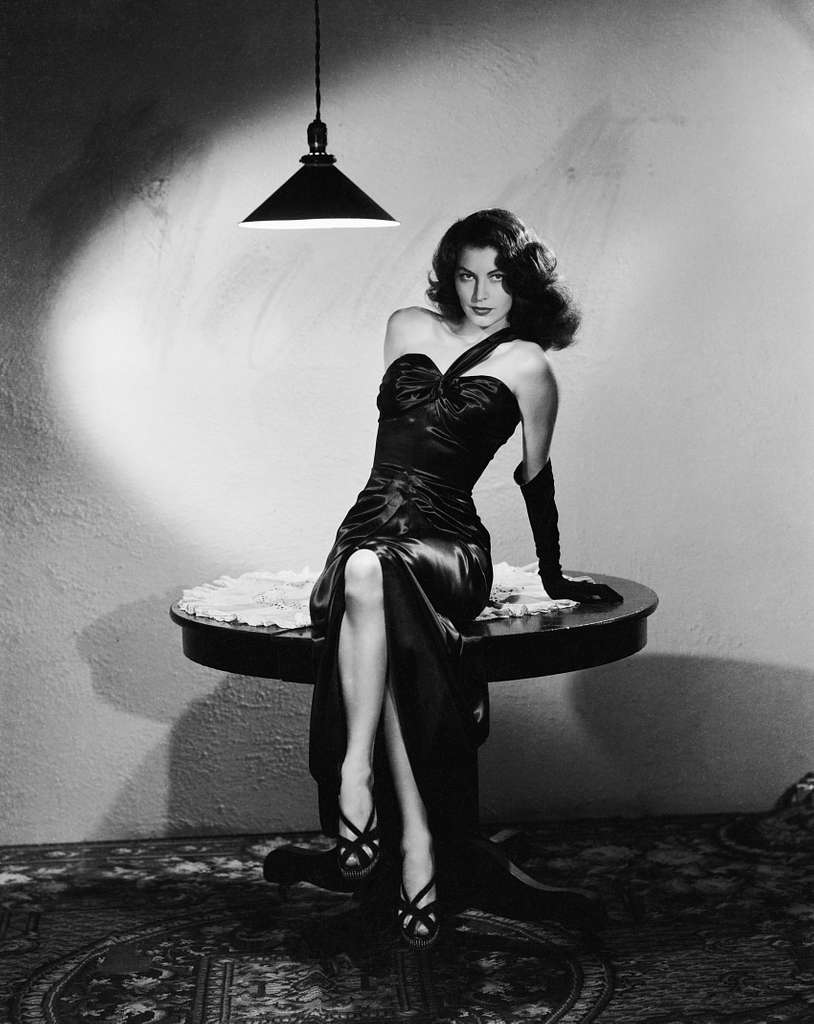 Brett Ashley in The
Sun Also Rises (1957). She became good
friends with Hemingway, who even visited her bedside
while she was passing gall stones, one of which he
asked to keep. Of those movies Hemingway told her, “The
Killers was okay. But the only good thing in
Snows of Kilimanjaro was you and the dead
cat.” (In her autobiography Gardner insisted
Hemingway said it was the hyena, which makes more
sense.) He
was also good friends with Ingrid Bergman, who had
played Maria in the film version of For Whom the
Bell Tolls (1943), but who off screen wore
more of a pageboy style. Joan
Bennett’s hair as Margot in The Macomber
Brett Ashley in The
Sun Also Rises (1957). She became good
friends with Hemingway, who even visited her bedside
while she was passing gall stones, one of which he
asked to keep. Of those movies Hemingway told her, “The
Killers was okay. But the only good thing in
Snows of Kilimanjaro was you and the dead
cat.” (In her autobiography Gardner insisted
Hemingway said it was the hyena, which makes more
sense.) He
was also good friends with Ingrid Bergman, who had
played Maria in the film version of For Whom the
Bell Tolls (1943), but who off screen wore
more of a pageboy style. Joan
Bennett’s hair as Margot in The Macomber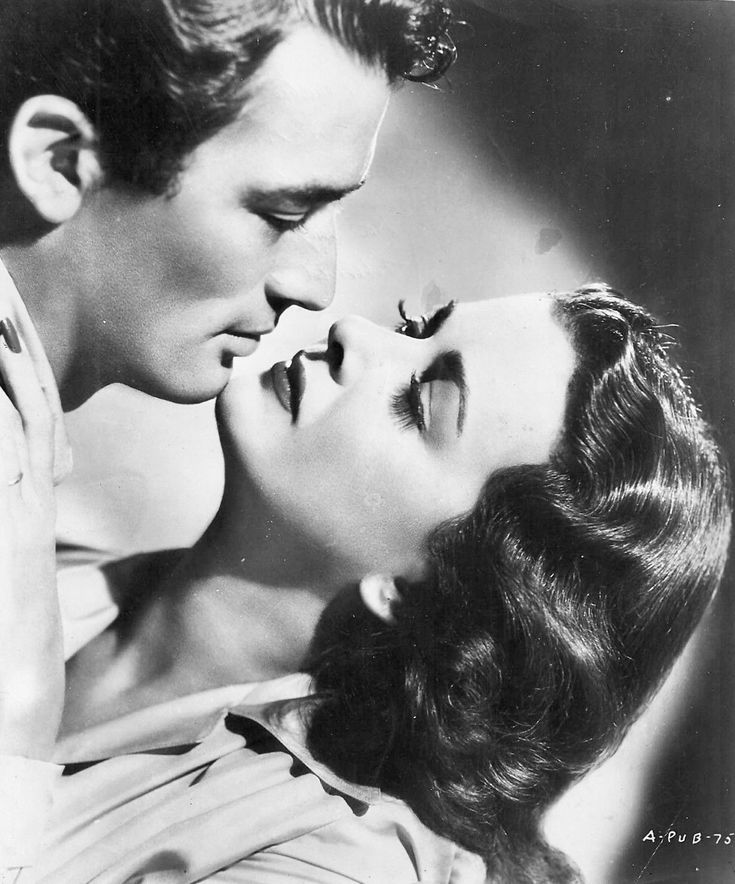 Affair (1947) was just to her
shoulders (right), and the beautiful
socialite “Slim” Keith, with whom Hemingway was
infatuated, never wore her hair short.
Affair (1947) was just to her
shoulders (right), and the beautiful
socialite “Slim” Keith, with whom Hemingway was
infatuated, never wore her hair short.
For a man charged with being obsessed with
short hair there is simply no pattern of hair styles
at all in the women he married or loved. His third
wife, 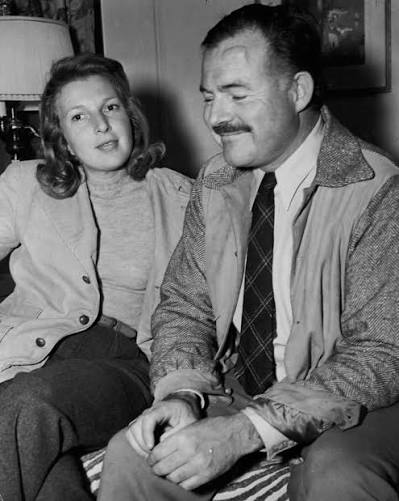 Martha
Gelhorn (left), who wrote for Collier’s,
wore her much-admired wavy hair at a moderate length
to be easily manageable, as did all female wartime
reporters like Margaret Bourke White of Time,
Georgette “Dickey” Chapelle of American Home
and Janet Flanner of The New Yorker. His
fourth and last wife, Mary Welsh (right),
wore her hair in several styles in the 1950s,
looking more like Judy Holliday or Deborah Kerr than
Jean Seberg.
Martha
Gelhorn (left), who wrote for Collier’s,
wore her much-admired wavy hair at a moderate length
to be easily manageable, as did all female wartime
reporters like Margaret Bourke White of Time,
Georgette “Dickey” Chapelle of American Home
and Janet Flanner of The New Yorker. His
fourth and last wife, Mary Welsh (right),
wore her hair in several styles in the 1950s,
looking more like Judy Holliday or Deborah Kerr than
Jean Seberg. 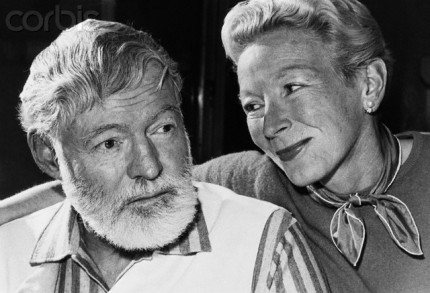
In his later fiction Hemingway’s women
characters had a variety of haircuts, or they were
not remarked on at all. Francis
Macomber’s wife Margot, a former model, is only
described as an “extremely handsome and well-kept
woman of beauty,”
with no mention of her hair, though it would be
ridiculous for a woman to go on an African big
game hunt wearing anything but short hair. So,
too, the wife on safari in “The Snows of
Kilimanjaro” is only referred to as “still a good-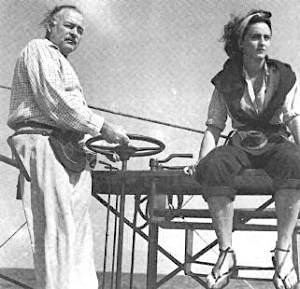 looking woman. . . and she had a
pleasant body.” Hemingway’s
post-war 18-year-old heroine Renata in Across
the River and Into the Trees (1950),
supposedly based on his infatuation with a
long-haired woman named Ariana Ivancich (left)
has
long hair that
blows in the wind. In all of his work there are
less than half a dozen references to short hair, Indeed,
there are probably more dancing bears in John
Irving’s novels than hair references in Hemingway’s.
looking woman. . . and she had a
pleasant body.” Hemingway’s
post-war 18-year-old heroine Renata in Across
the River and Into the Trees (1950),
supposedly based on his infatuation with a
long-haired woman named Ariana Ivancich (left)
has
long hair that
blows in the wind. In all of his work there are
less than half a dozen references to short hair, Indeed,
there are probably more dancing bears in John
Irving’s novels than hair references in Hemingway’s.
But then, there is The Garden
of Eden, begun in 1945 but never finished,
after some 800 manuscript pages. The book was
published posthumously
in 1986 in a highly truncated form of 247 pages, a
shrinkage that was roundly criticized. E.L.
Doctorow wrote in his review of the book, “This cannot
have been the book Hemingway envisioned as the
most ambitious moments of his struggle to realize
it, a struggle that occupied him intermittently
for perhaps 15 years.”
Whether Hemingway ever intended
to publish it at all, is unknown; nor is it known if
he intended for the world to know that he —as
opposed to his characters—had a consuming interest
in transgender role playing based on short haircuts.
When George Plimpton, who had no
knowledge of the existence of the Garden manuscript,
famously interviewed Hemingway for the Paris
Review in 1954, he asked, “Have you ever
described any type of situation of which you had no
personal knowledge?” to which Hemingway answered,
“That is a strange question. By personal knowledge
do you mean carnal knowledge? In that case the
answer is positive,”which,
without mentioning Garden, meant that he
could, if he wished, write about transgender sex
without having personal “carnal” knowledge of it.
What Garden shows, in a
discombobulated and rambling form, is that Hemingway
did find the subject of trans-gender well worth
exploring. Set on the Riviera and in Spain, the plot
begins with the honeymoon of David and Catherine
Bourne, with David as narrator. One day
Catherine announces she has a “big surprise” that
is both “very simple but it’s very complicated.”
She returns from town with her hair “cropped as
short as a boy’s”— as David’s already is— and that
night in bed tells him she does not want to be
called a girl and to “Please love me David the way
I am,” insisting that David should change into her
“girl Catherine.” She then convinces him to
dye his hair blond so that they look like
androgynous twins.
The whole idea is hers, not David’s, who
is clearly not enthusiastic about his wife’s
wanting to try gender-bending.
Later, the couple
meets a woman named Marita and both sleep with her,
but David is finding the demands for gender roles
increasingly difficult (his secret name for her
becomes “Devil”), and Marita becomes more closely
his wife than is Catherine. The marriage
deteriorates, Catherine
taunts David’s work as "worthless” and burns the
manuscript of his book-in-progress.
It is certainly not uninteresting to read of
such escapades in Garden, however
eviscerated it was in print, but what reasonable conclusions
can we come to regarding Hemingway and hair? First,
that he was a man who apparently liked women with
short hair, as others do redheads or women with
bangs, though never to the exclusion of women in his
life who had long hair. Second, that none of the
women he married or had affairs with had ever been
coerced by Hemingway to cut their hair short or
bleach it blond. Third, he might well have had
fantasies about transgender sex or switching around
positions in bed, but that would only make him the
average male. I find it odder, or perhaps just plain
silly, that he called his much younger women friends
and lovers “Daughter,” including the fictional
Renata in Across the River and Into the Trees.)
Every man who gets together with
male friends will occasionally say what physical
attributes of a woman he finds most appealing, and
hair is no exception, which is why call girls draw
on a variety of wigs in their business. What that
says about their clients is, usually, not much.
How much an artist’s personal history invests
his or her subjects or themes depends wholly on the
artist. Were Andy Warhol’s Brillo boxes and
Coca-Cola bottles in any way expressive of his
deep-seated mental issues? Was Praxiteles’s
character manifest in his sculptures of perfect
human forms? Was Ravel a little bonkers to compose
something as sensational as “Bolero?”
Pinning a pseudo-sexual
rap on Hemingway for something as trivial, even
adolescent, as liking women with short hair
indicates the degree critics and scholars will go to
dissect a writer’s brain to explain a writer’s work
or a writer’s work to explain the writer’s
brain. If art is said to hold a mirror up to life,
the life it mirrors is not necessarily that of the
artist himself.
❖❖❖
NOTES FROM THE WINE CELLAR
THE TABLES WINES OF THE DOURO VALLEY
By John Mariani
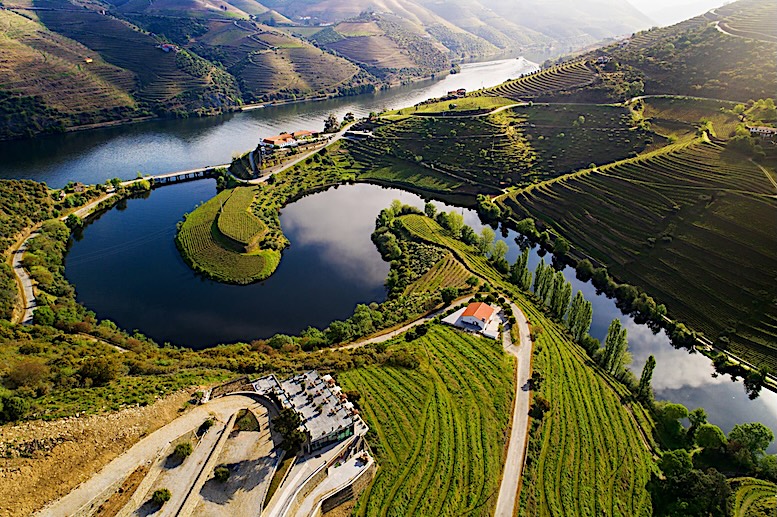
This summer marked the earliest start of grape picking that anyone in Portugal’s Douro Valley can remember. The Valley gets very hot every year, but the intense, enduring heat of 2026 showed the impact of global warming that is affecting all vineyards everywhere. Fortunately reports from the Douro’s wine makers are positive as to the health and quality of the grapes this year, with good fruit and acidity.
 The Douro Valley
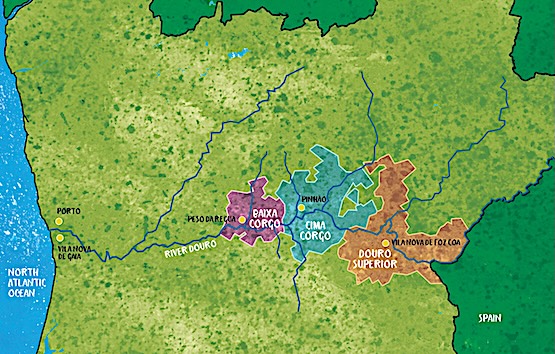
(a World Heritage Site), in northeast Portugal, is
best known for making Port, though only 26,000 out
of 38,000 hectares are authorized for that fortified
wine, the rest as table wine. I have, over decades,
enjoyed Douro’s red wines aside from Port, but in
recent tastings, always with food, I found them
better than ever and now worth speaking of alongside
Spain’s notable reds from Rioja and Priorat.
The Douro Valley
(a World Heritage Site), in northeast Portugal, is
best known for making Port, though only 26,000 out
of 38,000 hectares are authorized for that fortified
wine, the rest as table wine. I have, over decades,
enjoyed Douro’s red wines aside from Port, but in
recent tastings, always with food, I found them
better than ever and now worth speaking of alongside
Spain’s notable reds from Rioja and Priorat.
The mountains of the Valley allow for cooler temperatures at higher altitudes and the Douro River itself offers reprieve from the heat, with the cooler vineyards located in the regions of Lamego, Vila Real, Alijó and São João de Pequeira, while Port is largely made in Cima Corgo. About 250 grape varieties exist, promiscuously, in the region, but the best for red wines are considered Touriga Nacional, Touriga Franca, and Tinta Roriz (known as Tempranillo in Spain). The best white grapes are Rabigato, Gouveio, Viosinho, and Malvasia Fina. It should be noted that almost all Douro wines are blended.
All the reds are robust and have good
minerality, and in the hands of a modern vintner
show more finesse than they have traditionally.
But it’s really been just in the last
twenty years that the wines have proved capable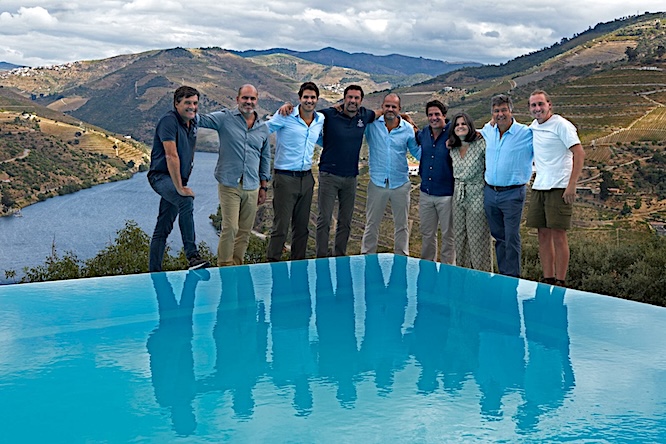 of international comparison and competition. The
gauntlet was thrown in 2023 when a group of five
noted producers who call themselves The Douro Boys
(right) began promoting not only
their well-regarded Ports but also their still
wines, putting all their experience and modern
enology into focusing on the best grapes and plots
on which to make still wines in the Valley. The
group included the owners of Quinta do Vallado, Niepoort
Vinhos, Quinta do Crasto, Quinta
do Vale Dona Maria and Quinta
do Vale Meão.
of international comparison and competition. The
gauntlet was thrown in 2023 when a group of five
noted producers who call themselves The Douro Boys
(right) began promoting not only
their well-regarded Ports but also their still
wines, putting all their experience and modern
enology into focusing on the best grapes and plots
on which to make still wines in the Valley. The
group included the owners of Quinta do Vallado, Niepoort
Vinhos, Quinta do Crasto, Quinta
do Vale Dona Maria and Quinta
do Vale Meão. 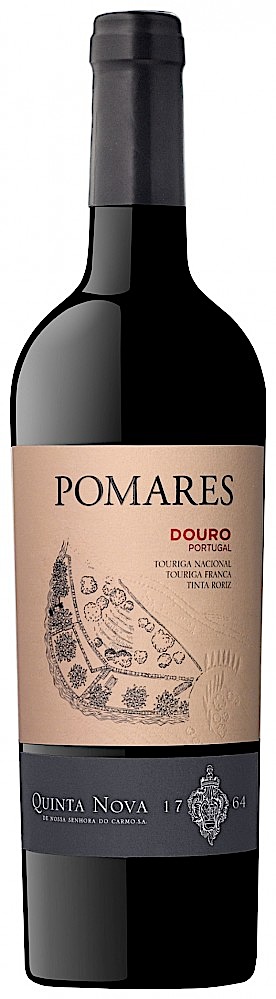 I have not tasted examples from all
these, but those I have were impressive, very clear
indication of careful modern winemaking.
I have not tasted examples from all
these, but those I have were impressive, very clear
indication of careful modern winemaking.
I was
delighted with Quinta Nova
de Nossa Senhora Do Carmo’s Pomares 2022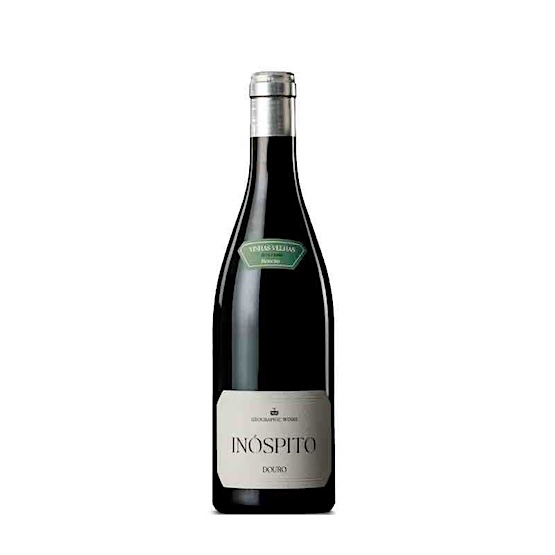 ($22),
first harvested in 2004, from the Cima Corgo Zone.
Its body came from being unfiltered and nine months
in French oak, yet it had a notable 13.5% alcohol
that shows how much intensity you can get in such
wines without a high alcohol level.
($22),
first harvested in 2004, from the Cima Corgo Zone.
Its body came from being unfiltered and nine months
in French oak, yet it had a notable 13.5% alcohol
that shows how much intensity you can get in such
wines without a high alcohol level.
Another wonderful Douro wine was from Inóspito
Vinhas Veilhas 2023 ($13), a real bargain for
such a substantial, easy-to-drink red .
White Douro wines I’ve sampled have been more
satisfying than distinctive, but I have to applaud a
field blend (meaning several grapes were grown in
the same vineyard and harvested collectively) called
Lento
Branco ($13), made from Rabigato,
Gouveio, Viosinho, Codega
de Larinho, Siria and Folgasao, which had the
expected complexity of flavors, with an
easy-to-sip 12.5% alcohol.
❖❖❖
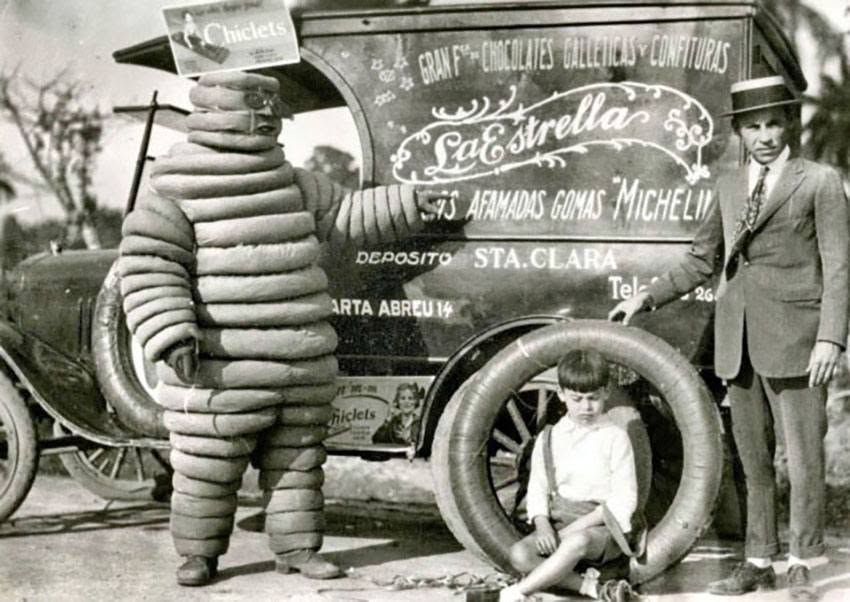 True
to form, the new Michelin Guide to the
US Southwest awarded stars to three French
restaurants and one Spanish in Las Vegas: One
star: L’Atelier de Joël Robuchon, Guy Savoy and
É by José Andrés; two stars to Joël Robuchon.
None got 3 stars, and no restaurant in Arizona
received a single star, despite Arizona Office
of Tourism paying $200,000 to bring Michelin
inspectors to review Arizona restaurants in
2026.
True
to form, the new Michelin Guide to the
US Southwest awarded stars to three French
restaurants and one Spanish in Las Vegas: One
star: L’Atelier de Joël Robuchon, Guy Savoy and
É by José Andrés; two stars to Joël Robuchon.
None got 3 stars, and no restaurant in Arizona
received a single star, despite Arizona Office
of Tourism paying $200,000 to bring Michelin
inspectors to review Arizona restaurants in
2026.
❖❖❖
Any of John Mariani's books below may be ordered from amazon.com.
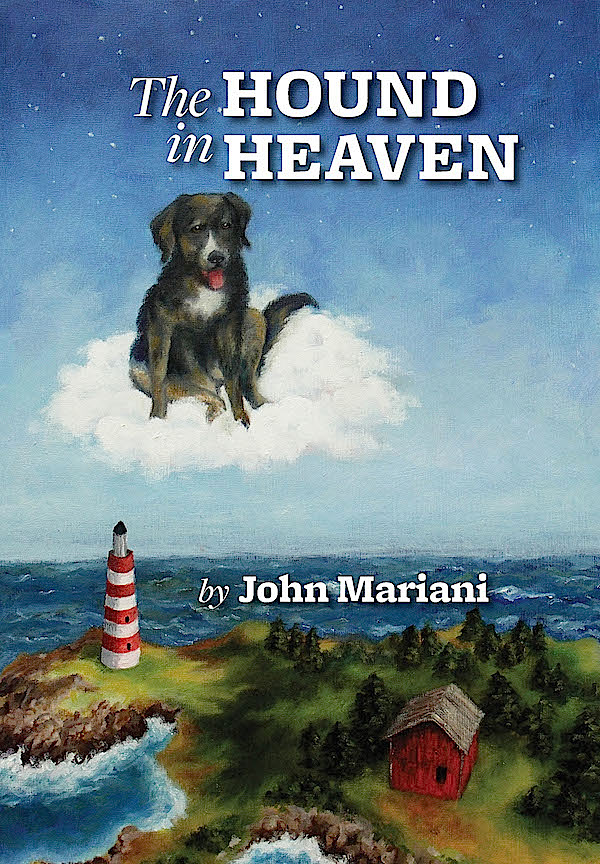 The Hound in Heaven
(21st Century Lion Books) is a novella, and
for anyone who loves dogs, Christmas, romance,
inspiration, even the supernatural, I hope you'll find
this to be a treasured favorite. The story
concerns how, after a New England teacher, his wife and
their two daughters adopt a stray puppy found in their
barn in northern Maine, their lives seem full of promise.
But when tragedy strikes, their wonderful dog Lazarus and
the spirit of Christmas are the only things that may bring
his master back from the edge of despair.
The Hound in Heaven
(21st Century Lion Books) is a novella, and
for anyone who loves dogs, Christmas, romance,
inspiration, even the supernatural, I hope you'll find
this to be a treasured favorite. The story
concerns how, after a New England teacher, his wife and
their two daughters adopt a stray puppy found in their
barn in northern Maine, their lives seem full of promise.
But when tragedy strikes, their wonderful dog Lazarus and
the spirit of Christmas are the only things that may bring
his master back from the edge of despair. WATCH THE VIDEO!
“What a huge surprise turn this story took! I was completely stunned! I truly enjoyed this book and its message.” – Actress Ali MacGraw
“He had me at Page One. The amount of heart, human insight, soul searching, and deft literary strength that John Mariani pours into this airtight novella is vertigo-inducing. Perhaps ‘wow’ would be the best comment.” – James Dalessandro, author of Bohemian Heart and 1906.
“John Mariani’s Hound in Heaven starts with a well-painted portrayal of an American family, along with the requisite dog. A surprise event flips the action of the novel and captures us for a voyage leading to a hopeful and heart-warming message. A page turning, one sitting read, it’s the perfect antidote for the winter and promotion of holiday celebration.” – Ann Pearlman, author of The Christmas Cookie Club and A Gift for my Sister.
“John Mariani’s concise, achingly beautiful novella pulls a literary rabbit out of a hat – a mash-up of the cosmic and the intimate, the tragic and the heart-warming – a Christmas tale for all ages, and all faiths. Read it to your children, read it to yourself… but read it. Early and often. Highly recommended.” – Jay Bonansinga, New York Times bestselling author of Pinkerton’s War, The Sinking of The Eastland, and The Walking Dead: The Road To Woodbury.
“Amazing things happen when you open your heart to an animal. The Hound in Heaven delivers a powerful story of healing that is forged in the spiritual relationship between a man and his best friend. The book brings a message of hope that can enrich our images of family, love, and loss.” – Dr. Barbara Royal, author of The Royal Treatment.
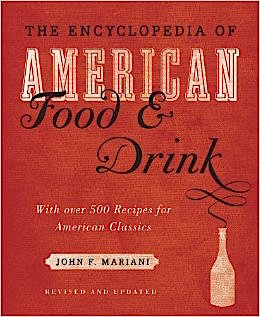 |
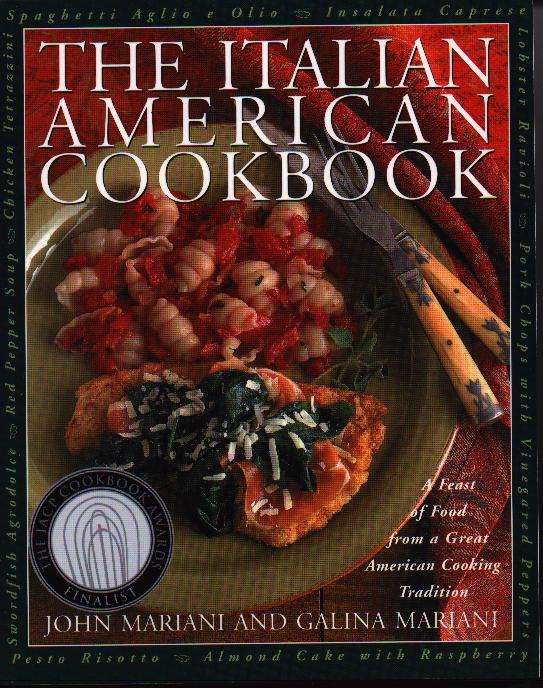
The Encyclopedia of American Food and Drink by John F. Mariani (Bloomsbury USA, $35) Modesty forbids me to praise my own new book, but let me proudly say that it is an extensive revision of the 4th edition that appeared more than a decade ago, before locavores, molecular cuisine, modernist cuisine, the Food Network and so much more, now included. Word origins have been completely updated, as have per capita consumption and production stats. Most important, for the first time since publication in the 1980s, the book includes more than 100 biographies of Americans who have changed the way we cook, eat and drink -- from Fannie Farmer and Julia Child to Robert Mondavi and Thomas Keller. "This book is amazing! It has entries for everything from `abalone' to `zwieback,' plus more than 500 recipes for classic American dishes and drinks."--Devra First, The Boston Globe. "Much needed in any kitchen library."--Bon Appetit. |
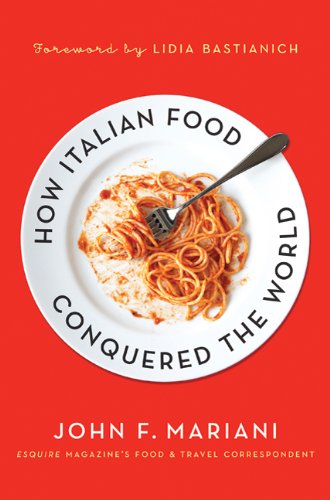
"Eating Italian will never be the same after reading John Mariani's entertaining and savory gastronomical history of the cuisine of Italy and how it won over appetites worldwide. . . . This book is such a tasteful narrative that it will literally make you hungry for Italian food and arouse your appetite for gastronomical history."--Don Oldenburg, USA Today. "Italian
restaurants--some good, some glitzy--far
outnumber their French rivals. Many of
these establishments are zestfully described
in How Italian Food Conquered the World, an
entertaining and fact-filled chronicle by
food-and-wine correspondent John F.
Mariani."--Aram Bakshian Jr., Wall Street
Journal.
"Equal
parts history, sociology, gastronomy, and
just plain fun, How Italian Food Conquered
the World tells the captivating and
delicious story of the (let's face it)
everybody's favorite cuisine with clarity,
verve and more than one surprise."--Colman
Andrews, editorial director of The Daily
Meal.com. "A
fantastic and fascinating read, covering
everything from the influence of Venice's
spice trade to the impact of Italian
immigrants in America and the evolution of
alta cucina. This book will serve as a
terrific resource to anyone interested in
the real story of Italian food."--Mary Ann
Esposito, host of PBS-TV's Ciao Italia. "John Mariani
has written the definitive history of how
Italians won their way into our hearts, minds,
and stomachs. It's a story of pleasure
over pomp and taste over technique."--Danny
Meyer, owner of NYC restaurants Union Square
Cafe, The Modern, and Maialino.
|
 |
 |
 |
 |
 |
 |
MARIANI'S VIRTUAL GOURMET
NEWSLETTER is published weekly. Publisher: John Mariani. Editor: Walter Bagley. Contributing Writers: Christopher
Mariani, Misha Mariani, John A. Curtas, Gerry Dawes, Geoff Kalish.
Contributing
Photographer: Galina Dargery. Technical
Advisor: Gerry
McLoughlin.
If you wish to
subscribe to this newsletter, please click here: http://www.johnmariani.com/subscribe/index.html
© copyright John Mariani 2026